




What Is a Packed Ice Carbide Kit? The I.C.E. Blade System Explained
A packed ice carbide kit is a specialized cutting-edge system designed to break thick, bonded ice instead of scraping it. Where a standard edge skims the surface of a crust, a packed ice kit…
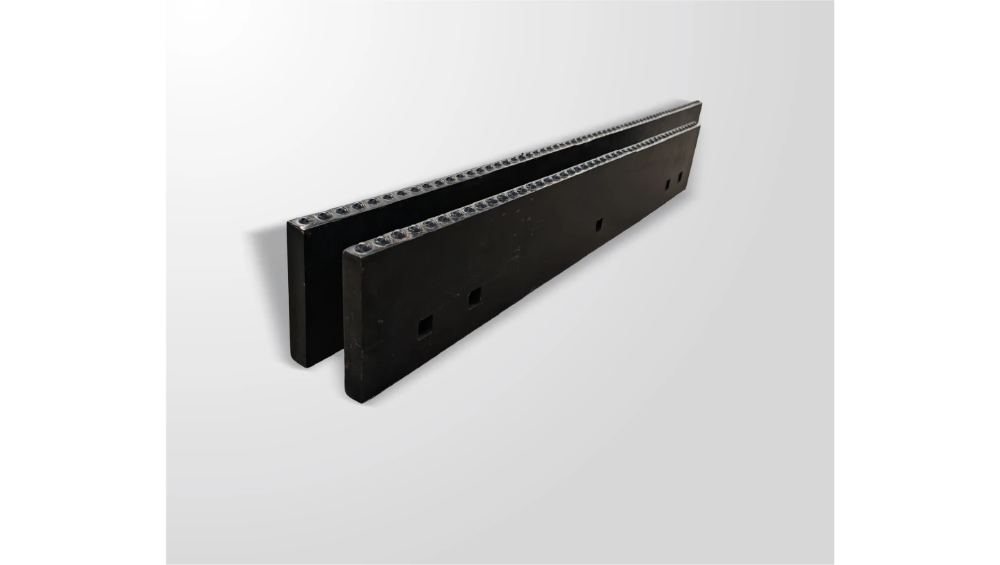
A packed ice carbide kit is a specialized cutting-edge system designed to break thick, bonded ice instead of scraping it. Where a standard edge skims the surface of a crust, a packed ice kit focuses downward force into the ice structure to fracture it, separate it from the pavement, and let follow-up plows clear the pieces. It is the tool for the corridors where standard blades fail and chemical use climbs.
This article is the reference guide to the product family: what a packed ice carbide kit is, how its geometry differs from a standard edge, how it breaks ice, and where it belongs in a fleet’s blade lineup.
Defining the packed ice carbide kit
A packed ice carbide kit is a set of carbide-edged sections engineered for ice-breaking duty. The construction shares DNA with other carbide blades, but the geometry and insert layout are specialized for fracture rather than general scraping.
SENTHAI, a Thailand-based manufacturer, describes itself as an OEM manufacturer for I.C.E. Blades, with extensive experience manufacturing tungsten carbide inserts and patented advantages in blade manufacturing. Its packed ice carbide kit page is the product reference, and the kit is built around two design ideas: a specialized cutting geometry and an isolated insert layout.
The term “packed ice” describes the target condition: thick, compacted, bonded ice that builds on roads through traffic and refreezing. The kit exists because that condition has its own failure mode, and a standard scraping edge does not solve it.
It is worth separating the product name from the physics. “Packed ice” is not a single measured state; it is a range from a firm crust that a heavy edge can crack to a deep, bonded layer that only focused fracture will break. The kit is designed for the harder end of that range, which is why its geometry is specialized rather than general-purpose.
What makes dome heads and isolated inserts different?
Two design features separate a packed ice kit from a conventional carbide edge.
Dome-head geometry. The carbide cutting elements use a rounded, dome-shaped head rather than a flat scraping face. SENTHAI describes this geometry as focusing downward pressure on the ice’s crystalline structure, fracturing thick layers rather than cutting into the road’s surface. The dome concentrates force into a small contact area, which is what breaks the crust.
Isolated insert design. The carbide inserts are separated from one another rather than arranged in a continuous line. SENTHAI describes this isolation as preventing lateral cracking and maintaining structural integrity under repeated high-speed impacts. When one insert takes a hit, the crack cannot travel across the section to its neighbors.
The combination is the point: the dome delivers the fracture force, and the isolation keeps the system intact while it does. That is why the kit is built for repeated high-speed work on ice rather than occasional light scraping.
How it breaks ice instead of scraping it
The mechanism is mechanical fracture, not abrasion. A standard edge scrapes the surface of the ice and polishes it; a packed ice kit fractures the crust into pieces.
The process works in stages. The dome heads concentrate downward pressure on the ice’s crystalline structure, creating fracture lines through the layer. The fractured ice separates from the pavement, and the resulting slush or pieces are easier for follow-up plows to clear. Because the ice-pavement bond is broken mechanically, chemicals have less intact ice to work on, which is why SENTHAI states the kit can allow a significant reduction in salt application, often by up to 25–40%.
That salt figure is a manufacturer claim and depends on routes and practices, but the mechanism is not: fracture removes bonded ice that chemicals would otherwise have to melt.
The operating sequence matters as much as the geometry. The kit works best when the mechanical pass comes at the right point in the storm cycle: late enough that the ice has bonded and can be fractured, early enough that the pieces are still removable and the remaining film is thin. Crews that time the pass correctly get the fracture benefit; crews that run the kit as a general scraper at the wrong moment spend the investment without the result. That is why the trial design, not just the product, is part of the decision.
Where the system earns its keep
A packed ice kit earns its keep on the corridors where standard edges fail:
| Corridor | Why the kit earns its keep |
|---|---|
| Shaded sections and bridge decks | Ice bonds first and hardest |
| Highways and arterials | Plowing speeds are high and the crust is thick |
| Routes with high chemical use | The blade cannot remove the bonded layer |
| Municipal and contractor programs | Measured on passes and salt consumption |
It is not the right tool for every route. Light snow, frost, and slush do not justify a fracture-capable edge, and general scraping duty is better served by a standard carbide blade. The kit belongs where the ice profile demands it, which is a corridor-level decision, not a fleet-wide one.
The corridor evidence is easy to collect: routes that require repeated passes on the same ice, corridors where chemical use climbs every storm, and sections where the standard edge leaves a bonded layer behind. Those are the signatures of packed ice, and they are the same signatures the kit is designed to change.
The trial is what turns the signature into a decision. Equip one unit on the worst corridor, keep a comparison section on the standard edge, and record passes, chemical use, and service quality for the same storms. The kit either changes the numbers or it does not, and either result is information. The corridor evidence justifies the trial; the trial justifies the rollout.
How it fits a blade lineup
The packed ice kit is one member of a complete blade lineup, and it works alongside the others:
- Carbide snow plow blades for general scraping on high-abrasion routes;
- JOMA-style segments for uneven surfaces and impact-heavy duty;
- Packed ice kits for bonded crust corridors;
- Carbide inserts for replacement and assembly programs.
SENTHAI supplies all four families, which means the fleet can assign the right edge per corridor instead of forcing one product to do everything. The snow plow product range shows how the families sit together.
The lineup also matters for the maintenance plan. A fleet running all four families needs a per-corridor assignment sheet, a per-family inspection routine, and a stock plan that matches the edge to the route. The kit is not an add-on to the fleet; it is a member of a system, and the system is what delivers the result.
Is an ice kit right for your routes?
The decision starts with the ice audit, not the catalog. Identify the corridors where standard edges fail on bonded ice, where chemical use is high, and where extra passes are routine. If those corridors exist, a packed ice kit deserves a controlled trial; if they do not, the kit is an unnecessary investment.
To evaluate it for your operation, send the route list and ice history through the contact page and ask for the kit configuration and trial terms. The kit configuration reference is the product reference; the route data is the decision input.
Expert view — SENTHAI engineering team: “The kit breaks what the scraper cannot. The fracture is the geometry’s work, and the geometry is the specification.”
Frequently Asked Questions
What is a packed ice carbide kit? It is a specialized carbide-edged system designed to fracture thick, bonded ice instead of scraping it, using dome-head geometry and isolated insert construction.
How is it different from a standard carbide blade? The dome heads concentrate force to fracture the crust, and the isolated inserts prevent cracks from spreading. A standard blade scrapes; the kit breaks.
Does the kit really reduce salt use? SENTHAI states the kit can allow a significant reduction, often by up to 25–40%, because mechanical fracture removes bonded ice that chemicals would otherwise melt. Verify the number with a controlled trial on your routes.
Where should the kit be used? On corridors with thick, bonded crust: shaded sections, bridges, highways, and routes with high chemical use. Light snow and frost do not justify it.
Can the kit replace all other blades? No. It is one member of a lineup that includes standard carbide blades, JOMA-style segments, and inserts. Assign per corridor.
What is the isolated insert design? The inserts are separated from one another to prevent lateral cracking under repeated impact, keeping the section intact during high-speed ice breaking.
How should I test the kit? Choose the worst ice corridor, run a controlled trial against a comparison section, and measure passes, chemical use, and service quality before scaling.
How many sections does a plow need? It depends on the moldboard width and the section length. Confirm the combination plan on the drawing so the sections cover the working width without gaps, and include end-section hardware in the order.
Sources
Related articles
 Plow Skid Shoes vs Plow Feet: What They Do and How to Set ThemCore TopicsCost-per-Mile for Plow Blades: A KPI Buyers Can Actually UseCore Topics
 Why Carbide Blades Crack in Deep Cold: Stress Relief, Brazing, and HandlingCore Topics
 JOMA-Style vs Rigid Carbide Blades: Matching the Edge to the RouteCore Topics