




What Is a JOMA-Style Snow Plow Blade System and How Does It Work?
A JOMA-style snow plow blade is an articulating cutting-edge system made of carbide-reinforced steel segments encased in a rubber shell. The segments flex independently, follow the contours of the road, keep the carbide teeth…
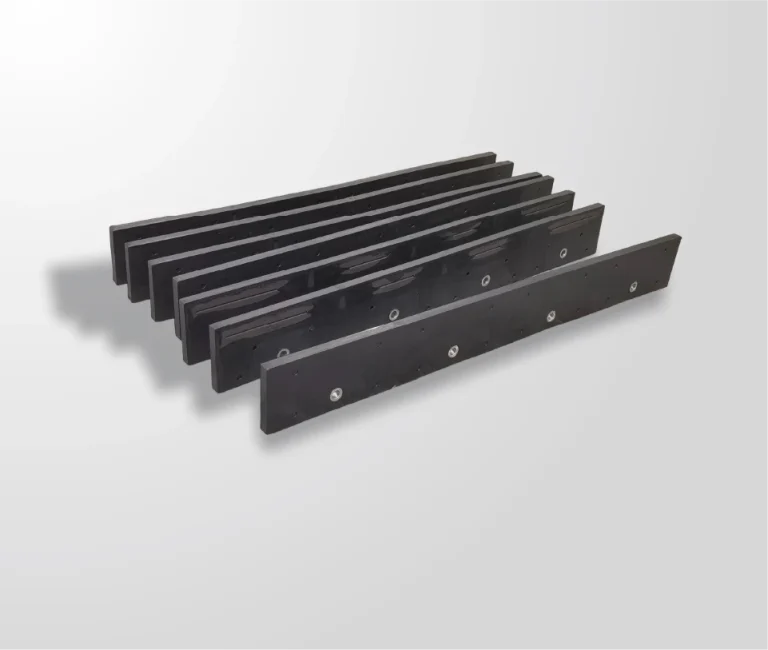
A JOMA-style snow plow blade is an articulating cutting-edge system made of carbide-reinforced steel segments encased in a rubber shell. The segments flex independently, follow the contours of the road, keep the carbide teeth in contact with the pavement, and absorb impacts that would otherwise travel into the moldboard. For fleets and distributors, the practical results are cleaner scraping on uneven surfaces, less vibration and noise, and longer intervals between blade changes.
(Last modified date: September 7, 2026)
Quick definition: The performance of a JOMA-style segment depends on how three layers work together
Key Takeaways
- The name describes a design family and a compatibility approach, not a single product or brand — JOMA® is a registered trademark and “JOMA-style” refers to functional aftermarket compatibility.
- Each segment is a three-layer unit: tungsten carbide cutting teeth, reinforced steel holders, and a rubber shell that allows controlled flexing and cushions impacts.
- Articulation keeps carbide in contact on crowned, rutted, or jointed pavement where a rigid edge bridges over low spots.
- Verify dimensions, hole patterns, and mounting hardware against your own plow before ordering; see the JOMA-style blade page and carbide insert shapes and specifications.
Defining the JOMA-Style Blade System
A JOMA-style blade is a segmented cutting edge that combines three materials into one working unit: tungsten carbide inserts form the cutting teeth, steel segments hold the inserts and give the system its structure, and a rubber shell bonds around the assembly to allow controlled flexing and cushion impacts. The system mounts on the moldboard in place of a conventional one-piece edge, and each segment works as an independent unit — which is why the system is described as articulating. When the plow crosses a crowned road, a rutted lane, a bridge joint, or a patch of uneven asphalt, the segments flex independently and follow the surface instead of bridging over the low spots.
One clarification matters for legal and sourcing reasons: JOMA® is a registered trademark. The term “JOMA-style” is used only to describe aftermarket blade sections designed for functional compatibility with this type of articulating rubber-encased carbide system. SENTHAI is not affiliated with, licensed by, or endorsed by the trademark owner. Any buyer evaluating a JOMA-style product should confirm dimensions, hole patterns, and mounting hardware against their own plow rather than relying on the name alone.
What Is Inside a Rubber-Carbide Segment?
The performance of a JOMA-style segment depends on how three layers work together:
- The carbide layer is the working edge. Tungsten carbide inserts form the cutting teeth, holding an edge far longer than plain steel through abrasive winter conditions.
- The steel layer is the skeleton. Each insert is brazed into a reinforced steel holder; proprietary brazing technology keeps inserts locked under impact and vibration.
- The rubber layer is the shock absorber. It bonds the assembly, allows controlled flex, dampens vibration and noise, and protects the segments from curb and joint impacts.
See also how to audit a carbide blade factory and underbody scraper blade wear.
How Does Articulation Improve Pavement Contact?
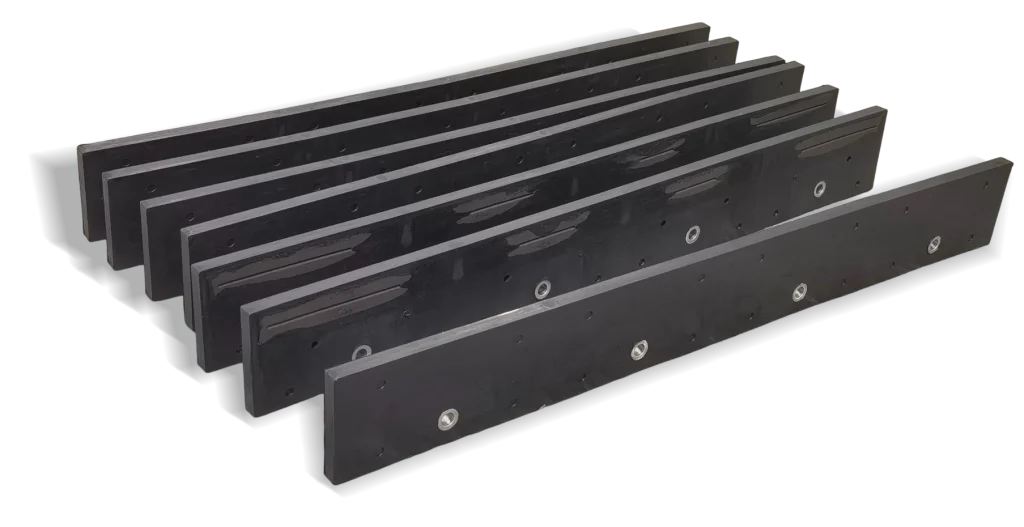
Articulation is the core advantage. A rigid edge contacts only the high points of a crowned or rutted road, leaving snow and ice in the gaps. A JOMA-style system lets each segment move independently, keeping carbide teeth in contact across the full width of the blade. The result is a cleaner scrape on uneven surfaces, better road following on residential streets and jointed concrete, and lower vibration transmitted to the moldboard and cab.
Where the System Delivers the Most Value
JOMA-style systems deliver the most value on municipal residential streets, roads with joints and manholes, patched asphalt, and impact-heavy routes where a rigid edge would chatter or bridge over low spots. They also benefit noise-sensitive areas because the rubber shell dampens vibration. On long, straight, highly abrasive highways, a rigid carbide edge remains the simpler and often more economical choice — the route decides.
What a Complete System Includes
A complete system typically includes the segmented blade sections, existing clamp bars, and Grade 8 mounting hardware. SENTHAI provides blade sections only and assumes customers use their existing standard clamping bars and hardware; verify the condition and specification of your hardware before ordering. SENTHAI lists 4-foot and 3-foot sections plus cast steel segments and carbide inserts, with 12-inch and 8-inch AASHTO-style configurations for selected sections, and custom sizes available from drawings, samples, or specifications. Sample blades can be arranged for field testing. See also the packed ice carbide kit page, the carbide snow plow blade page, and the cost-per-mile ROI case.
FAQs
Is a JOMA-style blade the same as the JOMA brand?
No. JOMA® is a registered trademark, and “JOMA-style” is a compatibility and construction description used for aftermarket articulating rubber-carbide edges. SENTHAI is not affiliated with or endorsed by the trademark owner.
Can JOMA-style sections replace standard edges on an existing plow?
In many cases yes, but fit depends on the plow’s clamp bars, hole pattern, and mounting geometry. SENTHAI lists 12-inch and 8-inch AASHTO-style configurations for selected sections; verify the full pattern against your assembly before ordering.
How long do rubber-carbide segments last compared with steel edges?
SENTHAI states its JOMA-style products are engineered for extended service life and lower cost-per-mile. Actual life depends on route, speed, abrasives, temperature, and maintenance, so treat the claim as a starting point and validate on your own routes.
Do JOMA-style blades reduce noise and vibration?
By design, yes. The rubber shell absorbs shock and dampens vibration and noise, which is why segmented edges are used on municipal and residential routes.
Do I need to buy new clamp bars and hardware?
Not necessarily. SENTHAI provides blade sections only and assumes customers use existing standard clamping bars and Grade 8 mounting hardware. Verify the condition and specification of your hardware before ordering.
What sizes are available, and can I test a sample?
SENTHAI lists 4-foot and 3-foot sections plus cast steel segments and carbide inserts, with custom sizes available from drawings, samples, or specifications. The company states that sample blades can be arranged for field testing — request a compatibility review.
Related Articles
- How to Audit a Carbide Blade Factory: Equipment, Records, and What to Look For
- Underbody Scraper Blade Wear: Setup, Edge Selection, and Full-Width Scraping Problems
- Carbide Snow Plow Blade ROI: Building the Cost-per-Mile Case
Official Resources
- SENTHAI — JOMA Style Blade Product Page
- SENTHAI — Snow Plow Products
- SENTHAI — About the Company
- SENTHAI — Contact and Quotation
Sources
- FHWA — Manual of Practice for an Effective Anti-icing Program
- FHWA — Road Weather Management
- OSHA — Winter Weather Preparedness
Related articles
 Plow Skid Shoes vs Plow Feet: What They Do and How to Set ThemCore Topics
 What Is a Packed Ice Carbide Kit? The I.C.E. Blade System ExplainedCore TopicsCost-per-Mile for Plow Blades: A KPI Buyers Can Actually UseCore Topics
 Why Carbide Blades Crack in Deep Cold: Stress Relief, Brazing, and HandlingCore Topics