




Why Carbide Inserts Pop Out of Plow Blades, and How Brazing Prevents It
A carbide insert that pops out of a snow plow blade is not a cosmetic problem. The blade loses its cutting tooth at the exact spot where it needs to scrape, the remaining inserts…
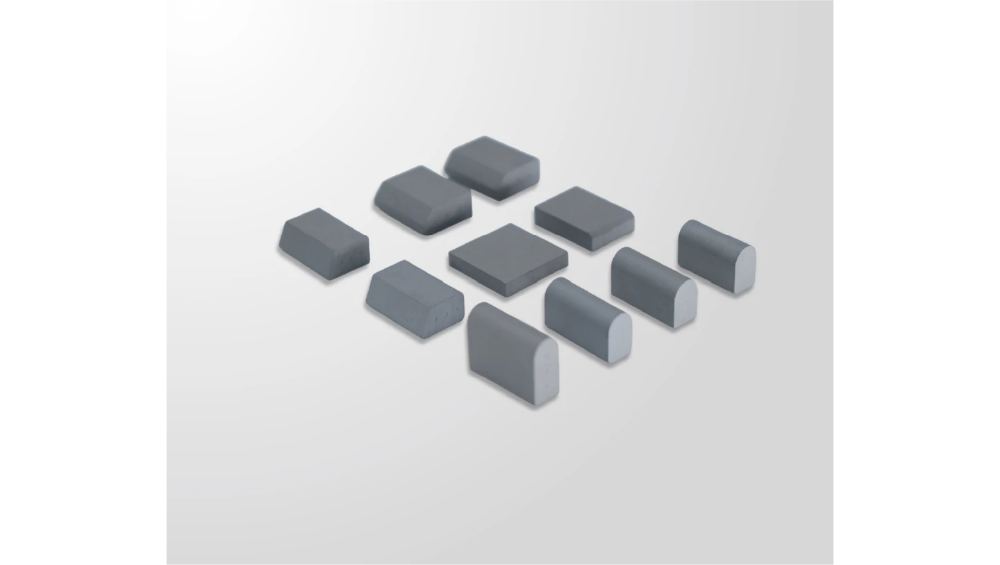
A carbide insert that pops out of a snow plow blade is not a cosmetic problem. The blade loses its cutting tooth at the exact spot where it needs to scrape, the remaining inserts carry more load and wear faster, and the exposed steel begins to abrade in a location the design never intended. In the middle of a storm, a popped insert can turn a scheduled changeout into an emergency one.
This article explains why inserts come loose, what the manufacturer controls to prevent it, and what a buyer should verify before ordering. The focus is on the bond: the brazed connection between the tungsten carbide insert and the steel carrier, and the rubber encapsulation that protects that connection in segmented blades.
A popped insert costs more than the insert
The insert itself is the smallest cost in the failure chain. What follows is what hurts: the blade section may need replacement, the plow keeps scraping without a full edge, and the changeout happens at the worst time, usually during a storm when maintenance labor and downtime are most expensive.
There is also a safety dimension. A blade with a missing insert leaves a gap in the cutting edge, which means uneven scraping, more passes, and more chemical use on the affected route. Fleets that inspect regularly catch the condition early; fleets that do not may run for hours with a degraded edge before anyone notices.
The economic point is simple: retention is a design and process question, and it should be treated as one during supplier selection, not discovered in the field. A few minutes spent asking about brazing and inspection at the quotation stage costs nothing; a failed insert mid-storm costs labor, downtime, and a second trip to the route.
What are the four reasons inserts come loose?
Insert loss almost always traces back to one of four failure mechanisms:
1. Impact overload. A blade striking a manhole, curb head, or frozen ridge at speed applies force the bond was not sized for. Over time, repeated high-energy hits fatigue the joint even when no single impact looks dramatic.
The loading pattern matters as much as the force itself. A plow that works the same curb line every storm concentrates impacts on the same inserts, so a fatigue failure appears in a predictable zone. That is why field inspection should focus on the sections that see the most obstacles, and why a blade that has survived one season of impact-heavy routes cannot be assumed to survive a second without a close look at the inserts in that zone.
2. Brazing defects. A weak joint can result from an improperly prepared surface, insufficient brazing alloy, or temperature control that leaves a partial or “cold” joint. The insert may look seated and still have little real bond underneath.
3. Surface contamination. Oils, mold release agents, oxides, or residual processing residues on the insert or the steel prevent the brazing alloy from wetting the surface properly. The result is a bond that fails under load even though it passed a visual check.
4. Corrosion and chemical attack. Road brine and calcium chloride attack the joint zone over a season. In a segmented blade, the rubber shell is designed to seal the steel and the bond area; if the seal fails, chemicals reach the joint and accelerate the loosening process.
| Failure mechanism | What happens | What prevents it |
|---|---|---|
| Impact overload | Force exceeds the bond’s capacity on manholes, curb heads, and frozen ridges | A bond sized for the duty and validated on obstacle-heavy routes |
| Brazing defects | A weak joint from poor surface prep, insufficient alloy, or temperature control | Controlled brazing with acceptance criteria and inspection |
| Surface contamination | Oils, mold release agents, and oxides prevent the alloy from wetting | Specialized surface preparation before brazing |
| Corrosion and chemical attack | Road brine and calcium chloride weaken the joint zone over a season | Rubber encapsulation and a sealed design in segmented blades |
Brazing and surface prep that hold inserts
The manufacturer’s answer to these failure modes starts before the brazing torch is lit. SENTHAI describes a specialized surface conditioning process, including precision sandblasting, that cleans the insert surface and exposes a cobalt-rich layer. That preparation matters because brazing depends on wetting: the alloy has to spread and bond to a clean, active surface, and contamination is the enemy of wetting.
The brazing itself has to be controlled for temperature, alloy flow, and joint geometry. SENTHAI describes its brazing as proprietary and engineered specifically to withstand high-velocity impacts against manholes and road obstructions. Whatever the exact process, the requirements for a durable joint are the same: a clean surface, the right alloy, controlled heat, and an acceptance check that goes beyond a visual pass.
Expert view — SENTHAI engineering team: “A joint that looks perfect can be nearly empty inside. The surface preparation decides whether the alloy wets, and the temperature control decides whether the bond forms. That is why we treat sandblasting and process monitoring as part of the joint, not a step before it.”
How does vulcanization protect the bond?
In a JOMA-style segmented blade, the bond has a second line of defense: the rubber encapsulation. The steel holders with their brazed inserts are integrated into a rubber matrix during high-pressure vulcanization, which serves three purposes for retention.
First, the rubber cushions the impacts that would otherwise concentrate entirely on the brazed joint. Second, the encapsulation distributes load across the segment, so a strike on one insert is partly absorbed by the surrounding structure. Third, the rubber seals the joint zone against the road chemicals that attack it over the season.
SENTHAI describes its process as chemically and mechanically integrating the holders into the rubber matrix so the blade absorbs shock without compromising the inserts. The vulcanization step is therefore not packaging; it is part of the retention system.
Verifying retention before you buy
Buyers cannot test bond strength with a glance, but they can ask the right questions and use the right evidence:
- Ask which surface preparation the manufacturer uses before brazing and what records support it;
- Ask for the brazing acceptance criteria and the inspection method, such as ultrasonic or destructive sampling;
- Ask how the bond behaves in the product’s stated application, and request the conditions behind any impact or retention claim;
- Run a sample on your worst route, including obstacle-heavy sections, and inspect the inserts after a defined number of passes;
- Check the batch records so the sample’s bond quality is tied to a production run, not a one-off.
SENTHAI states that sample blades can be arranged for field testing, which is the right way to validate retention in the conditions that matter to you. Document the inspection points before the trial so the result is measurable rather than anecdotal.
In the shop, add a simple retention check to the regular inspection: look for inserts that sit proud of the surface, rock slightly under hand pressure, or show a visible gap at the bond line. Any of those signs means the joint is already failing and the section should be replaced before it sheds an insert in service. The check takes seconds per section and catches most problems before they become roadside failures.
Ask about bonding technology in your RFQ
Retention should be a line item in your request for quotation, not an afterthought. Ask the supplier to describe its surface preparation, brazing process, and inspection method, and to confirm what records will ship with the order. The answers separate manufacturers who control the joint from suppliers who simply assemble parts.
For segmented blades, include the vulcanization question as well: how the rubber is bonded to the steel, and how the seal is verified against salt and brine. SENTHAI’s JOMA-style blade page describes the brazing and vulcanization approach, and its carbide inserts page covers the surface preparation side of the joint. Send your application details through the contact page and ask for the bonding documentation that applies to your order.
Frequently Asked Questions
Why do carbide inserts pop out of plow blades? The common causes are impact overload, brazing defects, surface contamination that prevents a proper bond, and corrosion reaching the joint zone. Retention depends on the bond, not just the insert.
What is a cold joint in brazing? A cold joint is a partial bond where the brazing alloy did not wet or fill the joint completely, so the insert is seated but weakly attached. It usually results from temperature or surface-preparation problems.
Why does sandblasting matter for brazing? Sandblasting removes contamination and exposes a clean, cobalt-rich surface that the brazing alloy can wet, which is a precondition for a strong bond. SENTHAI describes precision sandblasting as part of its insert surface conditioning.
How does the rubber shell keep inserts in place? In segmented blades, vulcanization integrates the steel holders into the rubber matrix, cushioning impacts, distributing load, and sealing the joint against chemicals.
Can I test insert retention before a bulk order? Yes. Run a sample on an obstacle-heavy route, inspect the inserts after a defined number of passes, and compare the results against the manufacturer’s stated acceptance criteria.
What documentation should I request about bonding? Ask for the surface preparation method, brazing acceptance criteria and inspection method, and the batch records that tie the shipped product to a controlled production run.
Does SENTHAI guarantee inserts will never pop out? No supplier should make that claim. SENTHAI describes brazing and vulcanization designed to resist impact and chemical exposure; field validation on your own routes is the responsible way to confirm retention.
Sources
Related articles
 Plow Skid Shoes vs Plow Feet: What They Do and How to Set ThemCore Topics
 What Is a Packed Ice Carbide Kit? The I.C.E. Blade System ExplainedCore TopicsCost-per-Mile for Plow Blades: A KPI Buyers Can Actually UseCore Topics
 Why Carbide Blades Crack in Deep Cold: Stress Relief, Brazing, and HandlingCore Topics