




How to Qualify a Carbide Snow Plow Blade Manufacturer: A Buyer’s Checklist
Qualifying a carbide snow plow blade manufacturer is a sourcing decision, not a price negotiation. A factory can show clean certificates and still ship inconsistent batches, and a trading company can quote a low…
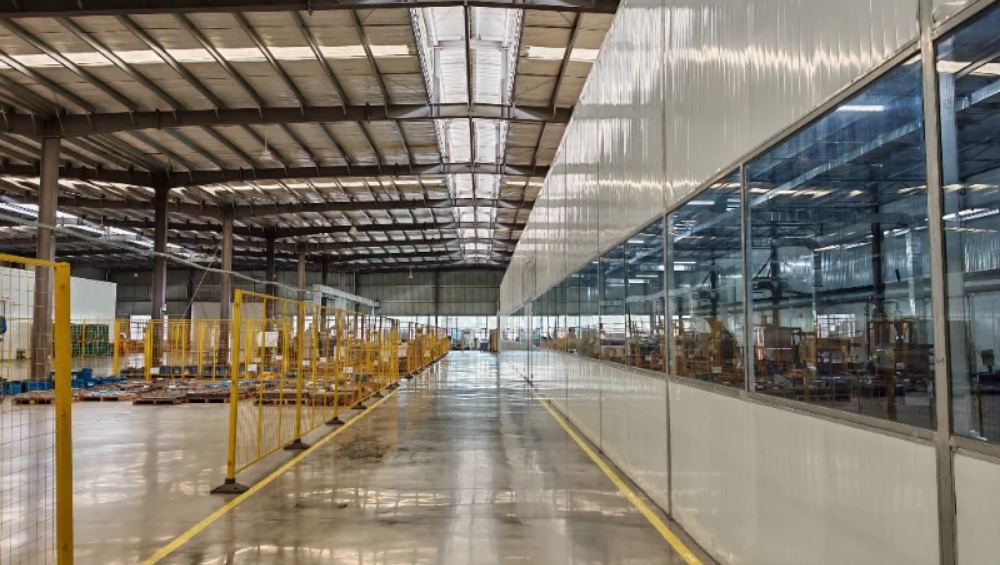
Qualifying a carbide snow plow blade manufacturer is a sourcing decision, not a price negotiation. A factory can show clean certificates and still ship inconsistent batches, and a trading company can quote a low price without controlling any part of the process. The practical question for a procurement team is not who is cheapest, but who can prove they can build the specified blade, batch after batch, through several winters.
This checklist gives buyers a structured way to answer that question. It covers six qualification criteria, the red flags that should stop the process, remote verification methods for buyers who cannot visit Thailand, and the information to put in a first request for quotation. Use the scoring table in section two as a working document, not just a reading list.
Why qualification starts before the first quote
The most expensive mistake in winter wear-part buying is qualifying on paperwork instead of process. A manufacturer’s brochure describes what it wants to be; its quality system, production records, and samples describe what it actually does.
Qualification exists to close the gap between claims and evidence. For a carbide snow plow blade the gap matters more than for commodity parts, because the product is a metallurgical assembly: carbide teeth brazed into a steel carrier, with tolerances that decide whether the blade fits the plow and wears predictably. SENTHAI, a US-invested manufacturer based in Rayong, Thailand, describes its production as covering powder metallurgy through welding and vulcanization, with every batch fully traceable. That description is a starting point for verification, not a substitute for it.
Timing is the second reason qualification must come first. Winter wear parts run on a seasonal cycle. A supplier that fails qualification in October leaves a fleet with no approved source in December. Running the evaluation before the buying season gives you time to test samples, review records, and validate fit while you still have options.
Six criteria that separate capable suppliers from weak ones
Use the same six criteria for every candidate. They work for complete blades, JOMA-style sections, and replacement inserts.
1. Legal identity and documentation. Confirm the legal entity, registration, and the name that will appear on your order and shipping documents. SENTHAI’s site identifies its head office as Senthai Cemented Carbide Tools (Thailand) Co., Ltd. in Rayong Province; buyers should confirm which entity will contract with them. Also check current certificates: SENTHAI’s quality-control page notes that certificate files are published only after verification, which is the behavior of a controlled company.
2. Production and process control. The goal is not “everything in-house,” it is control. Determine which operations are performed in-house, which are subcontracted, and how the supplier controls and traces outsourced processes. A qualified manufacturer may outsource plating or heat treatment and still control it with specifications and records; an unqualified one may do everything in-house with no documented process. Ask for the process map and the control points that apply to your product.
Expert view — SENTHAI engineering team: “Control matters more than ownership. A factory that outsources heat treatment but specifies, inspects, and traces it is easier to qualify than one that does everything in-house without records. Ask for the process map and the control points; that conversation separates a manufacturer from a trader faster than any brochure.”
3. Quality control at defined stages. Look for control at defined points, not a single final inspection. SENTHAI describes incoming material review, in-process checks, final product sampling, and pre-packaging review. Ask for the inspection plan that applies to your product, including the acceptance criteria, not a generic quality statement.
4. Traceability. Every shipped batch should connect back to materials, process conditions, and inspection records. Traceability is what makes a warranty claim or a root-cause investigation possible. SENTHAI states that every shipped batch is fully traceable and that batches are archived at each production stage.
5. Customization and engineering support. Winter fleets and OEMs rarely run only standard sizes. Confirm that the supplier can work from drawings, samples, and specifications, and that an engineer reviews your application rather than a sales rep quoting from a price list. SENTHAI states that products can be customized, including length, carbide grade, edge profile, and packaging.
6. Commercial terms and support. MOQ, pricing, lead time, sample terms, and warranty belong in writing for each order. SENTHAI’s ordering page states that these terms are order-specific and confirmed in written documents. Also assess responsiveness: a supplier that names the person who answers a technical question is easier to manage than one that does not.
Qualification scorecard
Copy this table into your supplier file and score each candidate.
| Check item | Evidence to request | Acceptance signal | Risk if missing |
|---|---|---|---|
| Legal entity | Registration and contract entity | Names match across documents | High |
| Carbide grade | Material specification or certificate of analysis | Grade and batch identifiable | High |
| Steel carrier | Material certificate for carrier steel | Specified grade, documented | High |
| Brazing control | Process record or test report | Acceptance criteria documented | High |
| Traceability | Sample batch record | Raw material to shipment traceable | High |
| Dimensional fit | Drawing confirmation and inspection report | Meets drawing and hole pattern | High |
| Sample | Dimensional check and field trial | Meets drawing and wear target | Medium |
| Commercial terms | Written quotation and order documents | MOQ, price, lead time, warranty stated | Medium |
Red flags that should stop the process
Some findings are fixable. These are not:
- No batch records. If the supplier cannot show a batch number, material record, or inspection log for a shipped order, traceability is a slogan, not a system.
- No drawing confirmation. If the supplier quotes your custom dimensions without asking for a drawing or confirming hole patterns, the quote is guesswork.
- Vague material answers. “High quality carbide” is not a specification. A supplier that cannot name the material basis cannot control it.
- No sample path. A manufacturer with production control can arrange a sample; a trader often cannot because it does not control the process.
- No written terms. Price, MOQ, lead time, and warranty belong in the order documents. A supplier that keeps everything verbal is unmanageable when something fails.
- Claims without scope. “10 to 20 times longer life” or “fits all plows” without conditions, baseline material, or equipment is marketing, not data.
How do you verify a supplier without flying out?
Factory visits are valuable, but most decisions start remotely. Remote verification works when you ask for the right evidence:
- Samples. The strongest single test is a physical sample. Measure its dimensions, check the hole pattern against your drawing, and run it on a real route. SENTHAI states that sample blades can be arranged for field testing.
- Batch and inspection records. Ask for a sample batch record: material lots, process parameters, inspection results, and packaging information. A controlled manufacturer can produce one without editing.
- Video walkthrough. A live or recorded walkthrough of the line is weaker than a visit but stronger than a brochure. Ask to see the stages that matter for your product: sintering, brazing, vulcanization, inspection.
- Third-party inspection. For high-value orders, use an independent inspection company at the factory or at receiving, and compare its report with the supplier’s records.
- Document verification. Verify certificates and test reports with the issuing body or check scope and validity dates. SENTHAI’s quality-control page is a useful model: it separates verified documents from files pending verification instead of displaying unverifiable badges.
- Reference conversations. Ask for customers in your industry and application. Ask about consistency, lead time, and problem resolution, and keep confidentiality in mind.
Keep the evidence in the supplier file so the decision can be reviewed next season without starting over.
What should go into your first RFQ?
A complete RFQ saves weeks. Include the information a manufacturer needs to quote accurately:
- Product type and intended application, including plow position if relevant;
- Overall dimensions, thickness, profile, and mounting-hole pattern;
- Existing part number, drawing, photographs, or a physical sample;
- Required quantity and whether this is a sample, replacement, custom, or recurring order;
- Delivery country or destination and any required packaging or documentation;
- Operating conditions that affect selection, such as surface, speed, abrasives, temperature, and salt exposure.
On the request side, ask for: drawing confirmation before production, material specifications for the carbide and steel carrier, the inspection plan and acceptance criteria, traceability documentation, sample terms, MOQ and lead time, and warranty terms for the order documents. SENTHAI’s ordering guidance lists exactly these items as the information needed to prepare an accurate quotation.
If the RFQ also covers replacement inserts, pair this guide with the carbide insert specifications so the material and dimensional questions are asked at the component level, not only at the blade level. And when the commercial case matters, use the carbide blade ROI and payback page to turn supplier answers into a financial comparison.
Next step: start the conversation
Qualification does not require a perfect request. It requires a structured one. Gather your plow models, blade drawings or samples, route information, and target quantity, then send that package to the manufacturer and let its engineers respond with a drawing-based confirmation and a quote.
For SENTHAI, the contact page is the entry point for a request for quotation or sample discussion. The company states that its sales and engineering teams respond with cost-efficient solutions and that samples can be arranged for field testing. Start with your requirements, not a vague catalog request, and the qualification process will do the rest.
Frequently Asked Questions
How long does supplier qualification take? It depends on your process, but a remote qualification built on samples, records, and reference checks can be completed in weeks rather than months. Starting before the buying season protects your timeline.
Can I qualify a supplier without visiting the factory? Yes. Samples, batch records, video walkthroughs, third-party inspection, and document verification cover most of what a visit provides.
Does a manufacturer have to do everything in-house? No. What matters is control: which operations are in-house, which are subcontracted, and how outsourced processes are specified, inspected, and traced. In-house production does not automatically mean higher quality.
Should certificates like ISO 9001 decide the qualification? No. Management-system certificates are a floor, not a verdict. Verify current certificates and still require product-level evidence for your specific order.
What should I do if a supplier claims very long blade life? Ask for the conditions behind the claim: baseline material, route, speed, temperature, abrasives, and test method. If the claim has no scope, treat it as marketing and validate with a field trial.
Does SENTHAI provide samples before a bulk order? SENTHAI states that sample blades can be arranged for field testing, with sample terms confirmed in writing before supply. Confirm fees, lead time, and test purpose before shipping anything.
Sources
Related articles
 Plow Skid Shoes vs Plow Feet: What They Do and How to Set ThemCore Topics
 What Is a Packed Ice Carbide Kit? The I.C.E. Blade System ExplainedCore TopicsCost-per-Mile for Plow Blades: A KPI Buyers Can Actually UseCore TopicsWhy Carbide Blades Crack in Deep Cold: Stress Relief, Brazing, and HandlingCore Topics