




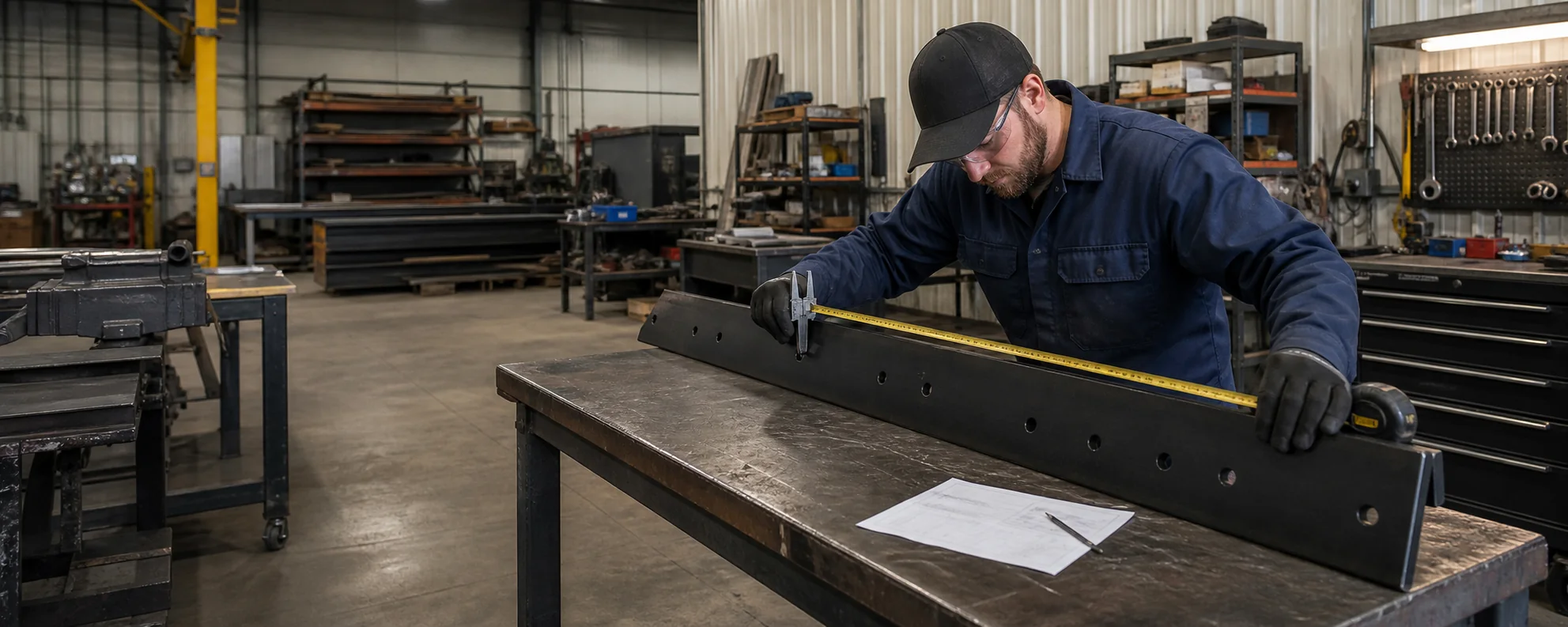
Segment length should follow the moldboard width and the mounting pattern, then the flex and the rubber hardness follow the surface you work on.
Three-foot, four-foot and custom segments change how the edge behaves over crowns and dips. Shorter segments follow broken surfaces better; longer segments are cheaper per metre and easier to handle. The choice is a compromise between surface compliance and handling.
The mounting interface decides whether the flex the design relies on can actually happen. Bolted too tightly, or with the wrong hardware, a flexible edge behaves like a rigid one and loses its advantage.
Less noise, less vibration, less surface damage and better contact on uneven roads — at the cost of some wear life on heavy ice.
The rubber body absorbs the vibration that a rigid edge transmits into the moldboard, the truck and the operator. That is why the family is chosen for night-time residential work, hospital and campus routes, and any surface where marking is unacceptable.
Segments wear and can be replaced individually, which changes the maintenance model from replacing a blade to replacing sections. Rotation matters as much as it does on a rigid edge, and the wear rate is higher on heavy ice.
The family is widely bought as a private-label or OEM programme, which changes what a specification has to cover and how lead times are planned.
Distributors buying under their own brand need the mounting interface, the rubber compound and the segment lengths fixed, and the packaging and labelling defined. Those three items are what make a programme repeatable across orders.
On heavy packed ice and on high-speed highway work, a rigid carbide or ice-cutting edge outperforms a flexible one. Choosing the JOMA style for those duties is choosing flexibility the route does not need.
If the complaint is noise, surface marking or lost contact on an uneven road, it is. If the complaint is wear life on heavy ice, it probably is not.
Flexible segmented edges solve contact and surface problems, and they cost wear life when the duty is heavy ice. Matching the construction to the complaint rather than to a preference is the whole decision.
Segment length, rubber compound and mounting pattern follow from the moldboard and the climate. Those three fix the specification and make later orders repeatable.
It is a segmented edge with carbide inserts encased in a rubber body, so the edge flexes over uneven surfaces instead of skipping across them.
On abrasive or heavy ice duty, usually not. On the routes they are designed for — crowned, patched, noise-sensitive — they last well enough and clear better.
Fitment depends on the mounting pattern, segment lengths and the down-pressure the machine can apply. The interface is checked exactly as it would be for a rigid edge.
Match the segment length to the moldboard width and the surface roughness. Shorter segments follow broken surfaces better; longer segments are cheaper and easier to handle.
Yes, and they are widely used on residential and downtown routes where noise and surface damage matter. High-speed highway work usually suits a rigid edge better.
Sizes, flex and matching to the moldboard.
Bolt patterns and mounting practice.
Why the rubber body matters on sensitive routes.
Private label and repeat supply.
Tell us the surface and the noise or marking constraint and we will say whether a flexible segmented edge is the right answer.
✓ Surface type and roughness
✓ Noise or surface-damage constraints
✓ Machine, moldboard width and mounting
✓ Quantity and delivery destination
Email: [email protected]