




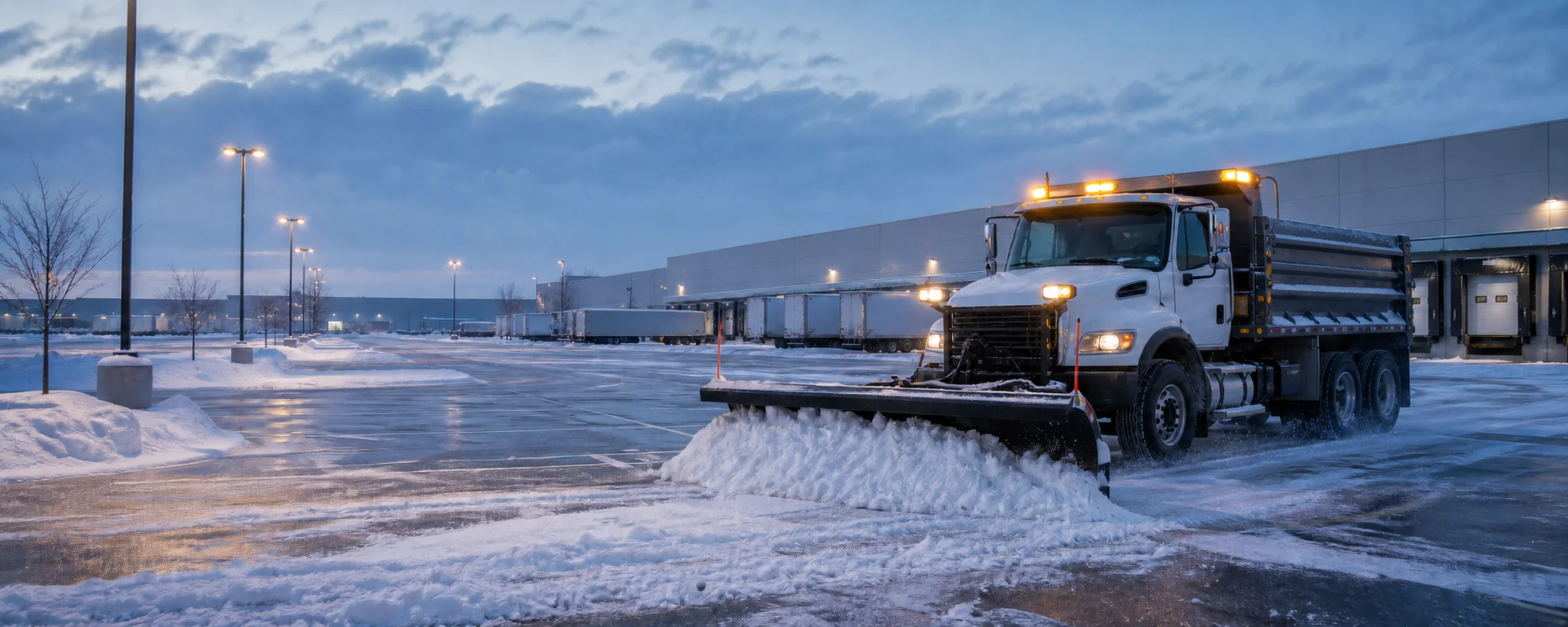
A blade is loaded by three things: the weight the machine can carry on the nose, the speed it travels, and the down-pressure mechanism it uses. Change any one of them and the correct edge changes with it.
A wider blade on a light machine does not clear more snow; it lifts the front axle and skips. The useful limit is what the machine can hold against the surface at operating speed, which is why quad and UTV setups fail for reasons that have nothing to do with the edge.
The blade is the easy part. Quick-release kits, skid shoes, light kits and bucket adaptors decide whether an owner actually uses the attachment or leaves it in the shed. Buy the mounting system you can fit alone, in the cold, in under a minute.
Compact and utility tractors are the fastest-growing plow platform and the least standardised. Sizes that fit one series rarely fit the next, and bucket-mounted blades bring their own geometry questions.
Residential and small commercial work, usually at low speed and with a light machine. The failure mode is almost always traction and surface marking rather than edge wear.
High torque, high down-pressure, and a hydraulic system willing to push an edge through anything — including things it should not. Shock resistance matters more here than abrasion resistance.
The reference platform for the rest of the archive: high speed, high mileage, and a service life measured in thousands of lane-kilometres. Edge economics dominate here, and so does rotation discipline.
Residential contractors, ice-resurfacing machines and Olympic-grade venues all sit outside the main classes but keep turning up in purchasing decisions.
Only if the mounting pattern, thickness and width all match, which is uncommon. The blade itself may be physically interchangeable while the down-pressure mechanism is not, and the result is an edge that skips on one machine and over-scrapes on the other.
Usually because the edge is too aggressive for the surface or the skid shoes are missing or set too high. On decorative concrete and sealed driveways a rubber-encased or flexible edge removes the marking problem almost entirely.
A wider blade is better only up to the point where the front axle stays planted. Beyond that the blade rides up on the snow, and you clear less per pass with more fuel. Match width to the machine’s usable front load.
Often yes. Skid steers deliver far higher down-pressure at low speed, which destroys edges through shock rather than abrasion. Choose for impact resistance and check the mounting plate before the edge.
The machine make, model and series, the mounting arrangement, the current blade dimensions and hole pattern, and a photograph of the mount. That is usually enough to confirm whether a standard edge fits or a custom one is required.
Straight, V, wing, underbody, back-drag and pusher compared.
Sizes across major brands, bolt patterns and the hardware that lasts.
Send the machine details and we will confirm what fits.
Machine class is the first thing our engineers ask about. Give us the model and mounting arrangement and the review starts from the right place.
✓ Machine make, model and series
✓ Mounting arrangement or adaptor plate
✓ Current blade dimensions and hole pattern
✓ Surface and ice conditions
✓ Quantity and delivery country
Email: [email protected]