
Matching Cutting Edges to Material Type and Machine Weight
Cutting edge selection by material is the step most fleets skip, and it is the reason the same edge specification can be excellent on one machine and poor on the next. Sand displaces, gravel…
Cutting edge selection by material is the step most fleets skip, and it is the reason the same edge specification can be excellent on one machine and poor on the next. Sand displaces, gravel scratches, crushed rock both scratches and strikes, clay sticks and loads the machine rather than the edge, and frozen ground combines abrasion with impact. Machine weight then decides how much of that duty reaches the edge, because a heavier machine transfers more load through a thinner section. Fixing material class first, and machine class second, produces a specification that can be repeated across a fleet instead of re-argued at every order.
Why Material Type Drives the Decision
Abrasion and impact, not distance, set edge life.
The material worked determines which of two wear mechanisms dominates, and that decides whether hardness, toughness or protection is the priority.
Two mechanisms cause almost all edge wear. Sliding abrasion occurs where hard, angular particles pass across the surface, removing metal and rounding the profile. Impact occurs where the edge meets large or bonded particles at speed, bending, chipping or fracturing it instead. Every material sits somewhere between the two, and that position is what a specification should describe.
Road and earthmoving programmes already work in material terms when they plan work. Unpaved road programmes, the duty on which many municipal and county edges are consumed, are described in the guidance published by FHWA, and surface material is a first-order factor in how the programme is executed. For an edge specification the same logic holds: two machines working the same stretch of road can need different edges if one is working a gravel surfacing and the other is cutting back a clay shoulder.
The material class also determines how the edge is used, not only how it wears. In loose sand and gravel the edge mostly shapes and moves material; in compacted or bonded material it has to penetrate and keep penetrating, so a held cutting profile is worth more than extra thickness. In mixed rock the priority reverses, and a section with enough mass to absorb impact matters more than hardness.
Abrasion and Impact Rating in Practice
Abrasion and impact ratings are working shorthand rather than laboratory classifications, but they are useful because they convert a description of the job into a direction for the specification. The abrasion side is dominated by silica content, particle angularity and particle hardness; the impact side by particle size, cobbles or bonded material, machine speed and operator down-pressure.
| Material | Abrasion | Impact | What the specification should favour |
|---|---|---|---|
| Loose sand, silt, topsoil | Low to moderate | Low | Moderate section; profile retention matters little |
| River gravel, rounded aggregate | Moderate | Low to moderate | Hardened section; standard edge geometry |
| Crushed aggregate, angular gravel | High | Moderate | Higher hardness; heavier section; consider carbide inserts |
| Shot rock and blasted material | Moderate to high | High | Toughness and section mass over hardness |
| Clay and wet cohesive ground | Low to moderate | Low | Profile and clean release; load handling rather than edge wear |
| Frozen or ice-bonded ground | Moderate | High | Profile retention plus toughness; carbide where bonding is severe |
Two sources make these ratings usable. Standardised abrasion and hardness test methods published by ASTM give a common basis for comparison, and aggregate industry context is available from bodies such as the National Stone, Sand & Gravel Association. Neither replaces the fleet’s record of where each edge failed and on what surface.
Machine Weight and Traction Limits
Machine weight acts on edge selection in two directions at once, and the two are often confused. More weight means more down-pressure available to penetrate hard material, which is useful; it also means more load transferred through the edge, the fasteners and the moldboard, which requires a heavier section and better end protection. A section chosen for a light machine and fitted to a heavy one bends between the holes before it wears out, while a heavy section on a light machine wastes money and can reduce the machine’s ability to keep the edge in contact with irregular ground.
Traction sets the practical limit on penetration. Once a machine is spinning rather than cutting, additional sharpness produces nothing, so an edge working at its traction limit should favour durability and profile retention over deeper cutting. This is also where machine class conventions matter: the attachment and interface conventions that determine what fits and what load the structure is designed for are published through SAE.
Fleet cost data is the third input. The cost of a machine hour, and therefore the value of avoiding a change-out, varies widely between operations, and the research published by bodies such as ATRI on fleet operating economics illustrates how much of that cost sits outside the part price. Where an hour costs more, a heavier and harder edge earns its place sooner.
Edge Geometry Options
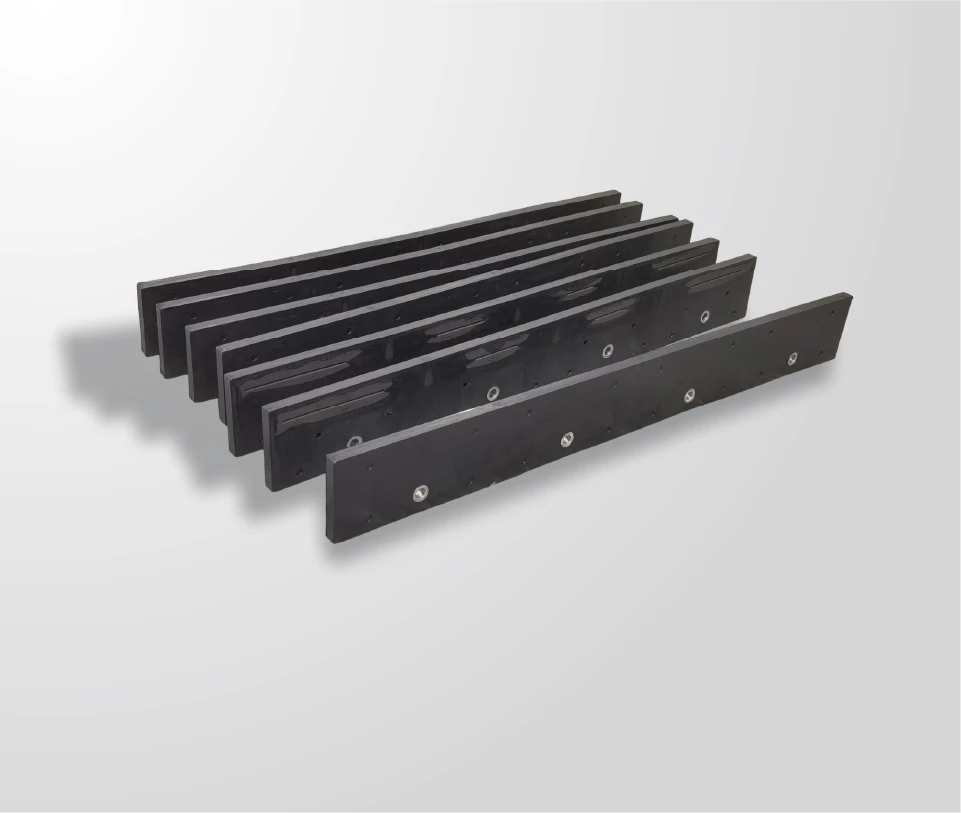
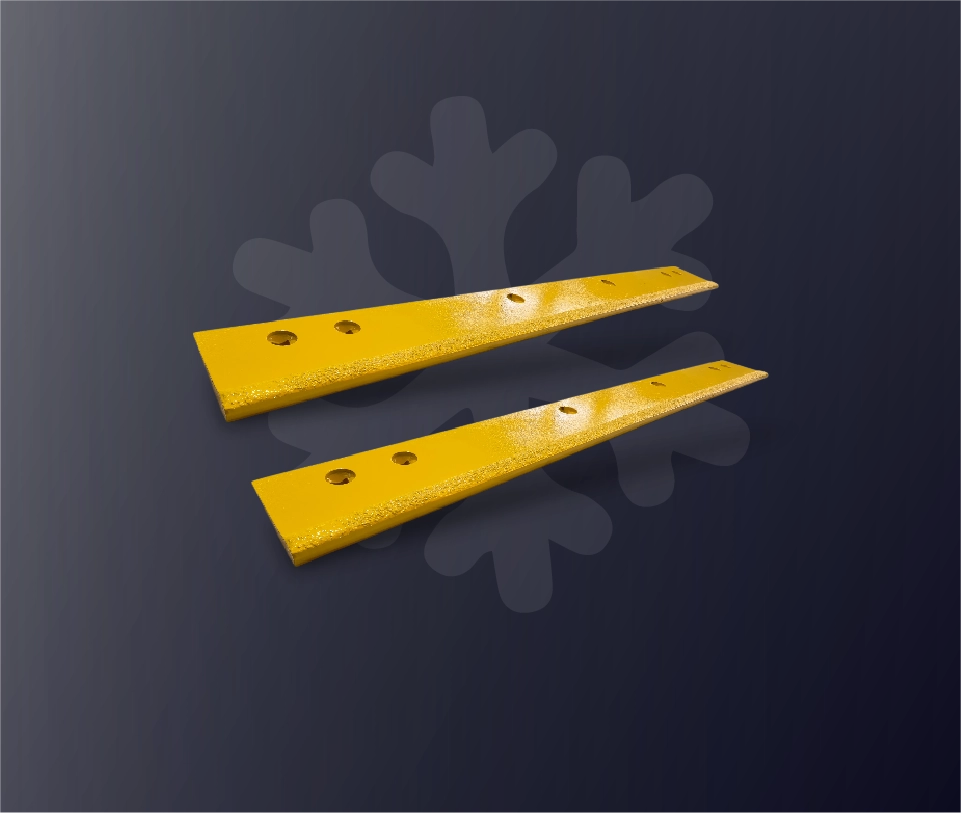
Geometry decides how material is cut and how the edge behaves as it wears, and it is the variable most often left at whatever the last supplier provided. A straight section gives predictable penetration and is the default for grading and spreading. A beveled section throws loosened material clear of the blade and stalls less readily in bulk work. A curved or formed section follows the equipment’s arc and controls how the cut rolls into a bucket or bowl. A serrated or toothed profile is used where the surface has to be broken up rather than sliced.
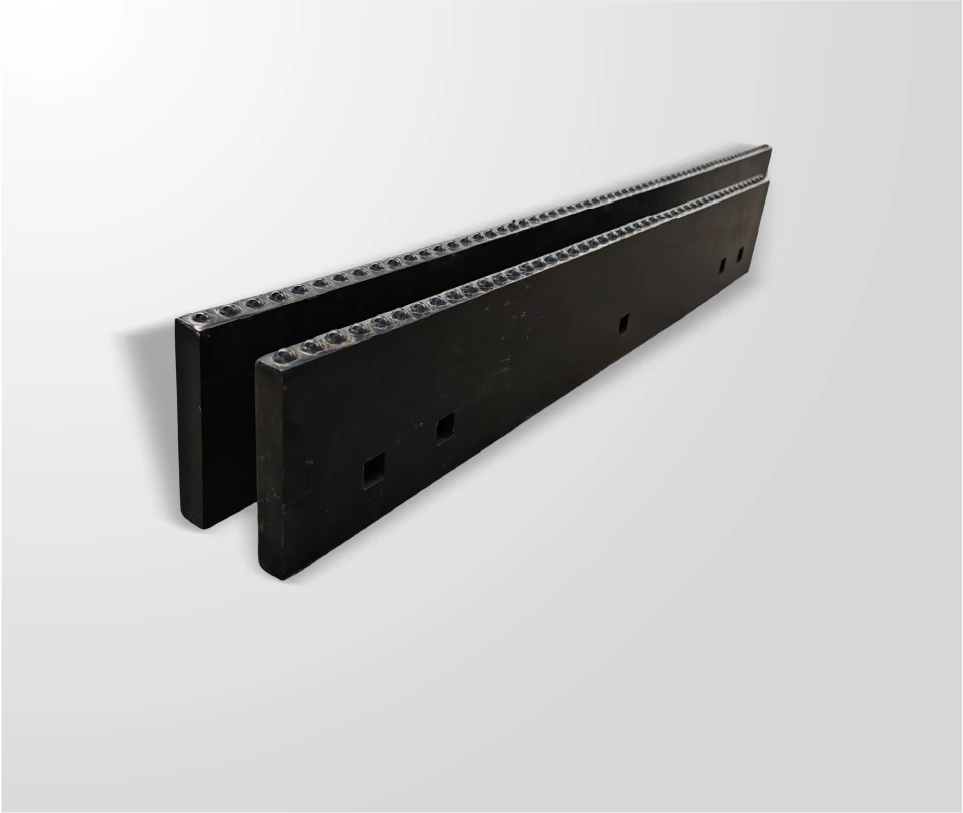
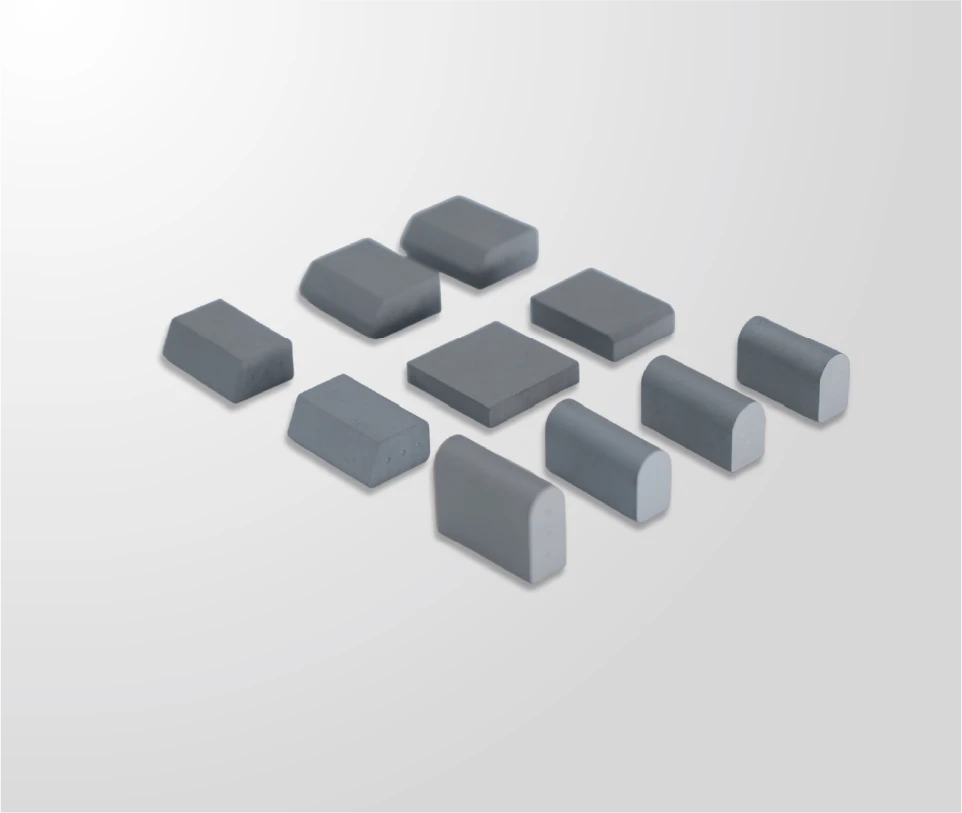
Where a carbide-tipped edge is used, the insert profile is part of the geometry decision. Trapezoid profiles present a defined cutting face; bullnose profiles spread the load over a broader contact. Both are produced in micro-grain carbide, so hardness and toughness are balanced within a finer grain structure, and both are specified with the body that carries them rather than chosen separately.
Two rules keep the geometry decision honest. Choose the profile for the material and the machine, not for the previous specification, and check that the profile can still cut as it wears, because a geometry that depends on a sharp tip is only as good as its first hours of service.
Fitment and Tolerance Requirements
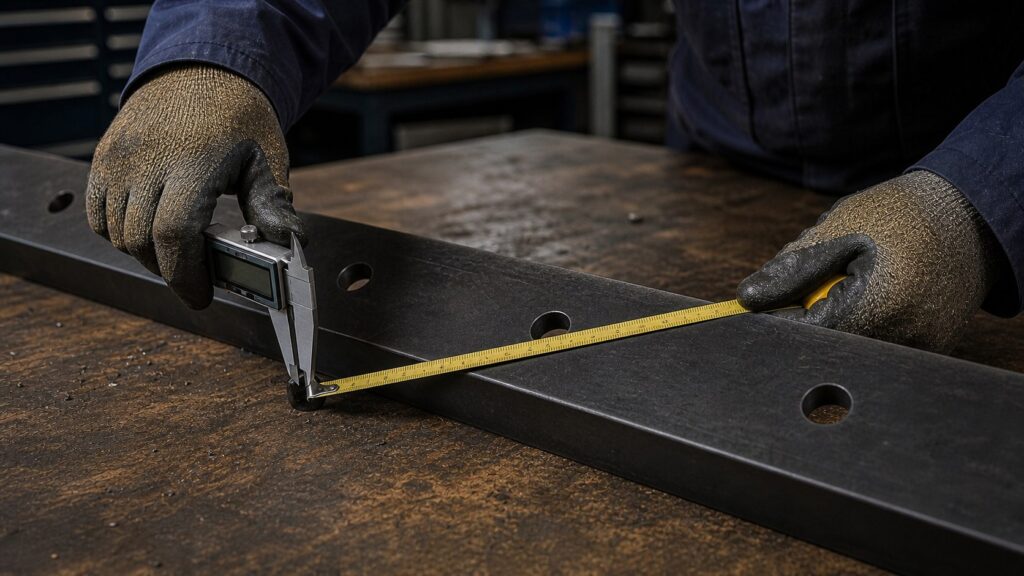
Fitment converts a selection decision into a usable part, and it is where most specification errors become visible. Pattern, section, profile and countersink all have to match the machine, and the record is short enough to keep for every machine in a fleet. A worked example of that measurement process is set out in the guide to specifying an edge by measurement, and it applies equally to buckets, moldboards and bowls.
Four measurements and one check belong on every order: hole diameter and count per section; centre-to-centre hole spacing including end distances; the distance from the hole centre to the cutting edge; section thickness, width and profile; and confirmation that the countersink angle matches the fastener. Where a drawing is not available, the machine is measured or a worn edge is sent as a physical reference, because a pattern that is close is still a pattern that does not fit.
Where carbide-tipped assemblies are specified, the dimensional expectation is tighter. SENTHAI validates bolt patterns against the drawing or a physical sample, and machines insert pockets to a dimensional tolerance of plus or minus 0.02 mm, so an assembly ordered to a recorded pattern fits the machine without hand work. That tolerance, rather than the insert grade, is what most often decides whether a carbide edge performs as intended.

Documentation to Request With the Quote
The documentation set should be agreed when the specification is agreed, not after a failure. It has four parts: the material specification, naming grade and condition of supply with a hardness band and the test method behind it; the fitment record, being the pattern drawing or measured record; the inspection and traceability arrangement, including batch identification; and the commercial annex holding the terms agreed for the order.
The purpose of the set is to make later questions answerable: a wear complaint can be checked against a batch record, a fitment issue settled against the agreed drawing, and a review run against what was supplied rather than what was intended. SENTHAI operates lot-level traceability with every batch inspected and archived, which is the arrangement a buyer should look for in any supplier and confirm in writing.
Sampling and first-article arrangements belong to the same conversation. Where a fleet is changing material class or moving a machine group to a carbide edge, an approved sample before volume production removes most of the risk from the change. Whether sampling is available, what it costs and what it covers are matters for the offer rather than for a general policy, and the arrangements are stated in the written quotation or order documents.
Building a Selection Matrix for the Fleet
A selection matrix turns scattered experience into a rule the whole fleet can apply. It has two axes: material class on one side and machine class on the other, with the edge specification at the intersection. Building it takes a short exercise, and the result is a document that survives staff changes.
- List the machines by class, with blade or bucket width and the section currently fitted.
- Record the material each machine works, using the abrasion and impact terms in this article rather than a road name.
- Assign a duty band to each combination: light, general, abrasive or impact-dominated.
- Choose one specification per band for edge, end bits and guards, and hold it constant across orders.
- Record the pattern for each machine group once, and reuse it.
- Log consumption by machine, material, hours and volume so the matrix can be tested against real cost.
Two refinements usually emerge from the exercise. The first is that a small number of bands covers most of a fleet, which reduces both the number of specifications and the number of part numbers held. The second is that the machines with the highest downtime cost justify a harder or carbide-tipped specification even where the material alone would not require it, which is a decision about operations rather than about wear. Programme-level research on maintenance and material practice is published through the Transportation Research Board, and where the duty involves unpaved roads, the respirable dust exposure documented by NIOSH is a further reason to define duty bands carefully rather than accepting the current edge by default.
Once the matrix exists, the hub view of wear parts beyond plows shows where each band sits against the rest of the range, and specifications can be reviewed rather than rebuilt.
Cutting edge selection is a two-axis decision: what the material does to the edge, and what the machine does to the material. Abrasion and impact ratings place the duty, machine class sets the section and the protection needed, and geometry decides how the edge cuts and how it behaves as it wears. Fitment then determines whether the correct part can be used at all, and a documented specification set is what allows the choice to be repeated, reviewed and defended across a fleet and a season.
Send SENTHAI the machine list with weights and widths, the materials each machine works and the pattern or a worn sample for reference, and the technical team will propose a specification by duty band with the fitment and documentation to go with it.
Related reading: the hub article on wear parts beyond plows covers the full range of ground-engaging parts these duty bands apply to.
Frequently Asked Questions
How do I choose a cutting edge for gravel?
Start with the gravel itself. Rounded river gravel is moderately abrasive with little impact, so a hardened and tempered section with standard geometry works well. Crushed or angular gravel is more abrasive and carries some impact, which points to higher hardness, a heavier section and, where edge changes are limiting production, a carbide-tipped edge. The decisive figure is how often the edge would be changed in a season, because that is where the labour and downtime sit.
Does a heavier machine need a thicker cutting edge?
Yes, generally. A heavier machine transfers more load through the edge, the fasteners and the structure, and a section too light for the class will bend between the holes before it wears out. The counter-case is a light machine fitted with a heavy section, which wastes money and can reduce the machine’s ability to keep the edge in contact with uneven ground. Section is therefore tied to machine class rather than chosen on wear expectations.
What edge specification suits clay or wet cohesive ground?
Clay and wet cohesive material wear an edge comparatively slowly, but they load the machine heavily and can build up on the blade. The priority shifts from abrasion resistance to profile retention and clean material release, together with sufficient section for the traction the machine can apply. In frozen or bonded clay, impact enters the picture and the specification should move toward toughness, with carbide-tipped edges used where the material is bonded hard enough to justify them.
What should be documented with a cutting edge order?
Four things: the material specification with grade, condition of supply and a hardness band plus test method; the fitment record, being a pattern drawing or measured record; the inspection and traceability arrangement, including batch identification; and the commercial terms agreed for the order. Sampling or first-article arrangements are agreed in the offer rather than as a general policy, and the applicable terms are stated in the written quotation or order documents.
{
“@context”: “https://schema.org”,
“@type”: “FAQPage”,
“mainEntity”: [
{
“@type”: “Question”,
“name”: “How do I choose a cutting edge for gravel?”,
“acceptedAnswer”: {
“@type”: “Answer”,
“text”: “Start with the gravel itself. Rounded river gravel is moderately abrasive with little impact, so a hardened and tempered section with standard geometry works well. Crushed or angular gravel is more abrasive and carries some impact, which points to higher hardness, a heavier section and, where edge changes are limiting production, a carbide-tipped edge. The decisive figure is how often the edge would be changed in a season, because that is where the labour and downtime sit.”
}
},
{
“@type”: “Question”,
“name”: “Does a heavier machine need a thicker cutting edge?”,
“acceptedAnswer”: {
“@type”: “Answer”,
“text”: “Yes, generally. A heavier machine transfers more load through the edge, the fasteners and the structure, and a section too light for the class will bend between the holes before it wears out. The counter-case is a light machine fitted with a heavy section, which wastes money and can reduce the machine’s ability to keep the edge in contact with uneven ground. Section is therefore tied to machine class rather than chosen on wear expectations.”
}
},
{
“@type”: “Question”,
“name”: “What edge specification suits clay or wet cohesive ground?”,
“acceptedAnswer”: {
“@type”: “Answer”,
“text”: “Clay and wet cohesive material wear an edge comparatively slowly, but they load the machine heavily and can build up on the blade. The priority shifts from abrasion resistance to profile retention and clean material release, together with sufficient section for the traction the machine can apply. In frozen or bonded clay, impact enters the picture and the specification should move toward toughness, with carbide-tipped edges used where the material is bonded hard enough to justify them.”
}
},
{
“@type”: “Question”,
“name”: “What should be documented with a cutting edge order?”,
“acceptedAnswer”: {
“@type”: “Answer”,
“text”: “Four things: the material specification with grade, condition of supply and a hardness band plus test method; the fitment record, being a pattern drawing or measured record; the inspection and traceability arrangement, including batch identification; and the commercial terms agreed for the order. Sampling or first-article arrangements are agreed in the offer rather than as a general policy, and the applicable terms are stated in the written quotation or order documents.”
}
}
]
}
Related articles
 Aftermarket Versus OEM Cutting Edges: Fitment and DocumentationScraper, dozer and earthmoving cutting edges
 End Bits and Corner Guards: Protecting the Blade StructureScraper, dozer and earthmoving cutting edges
 Carbide Versus Through-Hardened Edges: Choosing by Abrasion LevelScraper, dozer and earthmoving cutting edges
 Hot-Rolled Versus Quenched-and-Tempered Cutting EdgesScraper, dozer and earthmoving cutting edges