
End Bits and Corner Guards: Protecting the Blade Structure
End bits and corner guards are the two cheapest parts on a ground-engaging blade and the only things standing between the cutting edge and the moldboard structure. They are also the parts most often…

End bits and corner guards are the two cheapest parts on a ground-engaging blade and the only things standing between the cutting edge and the moldboard structure. They are also the parts most often left on the machine until they are gone, because nothing about them announces a problem: the blade keeps cutting as the corner wears, and the wear shows up later as a damaged end, an elongated bolt hole or a distorted section that no replacement edge will sit on properly. Managing them is a matter of inspection at the right interval and replacement before the structure is reached.
What This Looks Like in the Field
Corners wear first and cost most to ignore.
End bits and guards take the highest load per unit of material because they lead the blade into kerbs, joints and uneven ground, so they wear faster than the edge behind them.
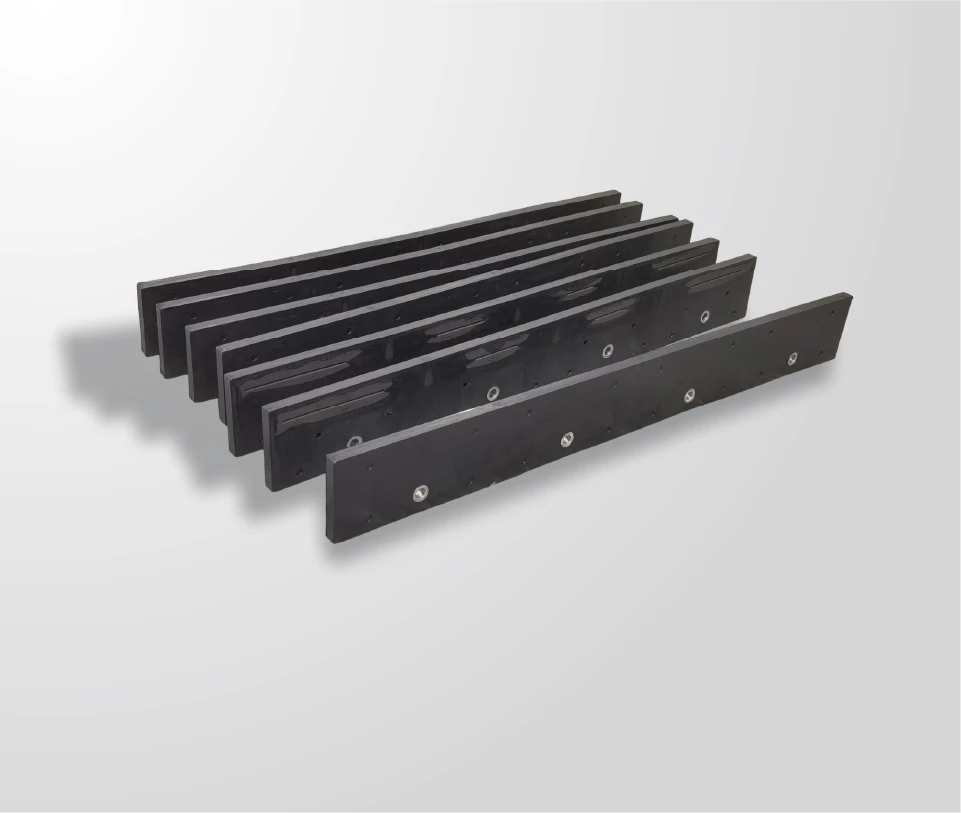
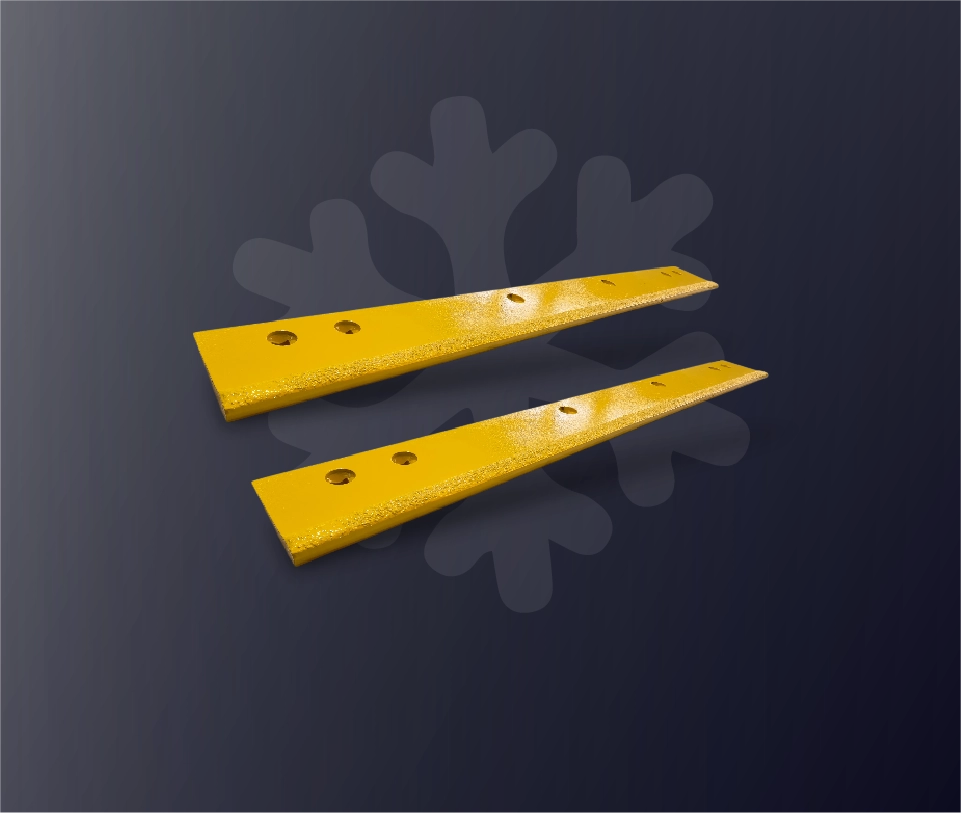
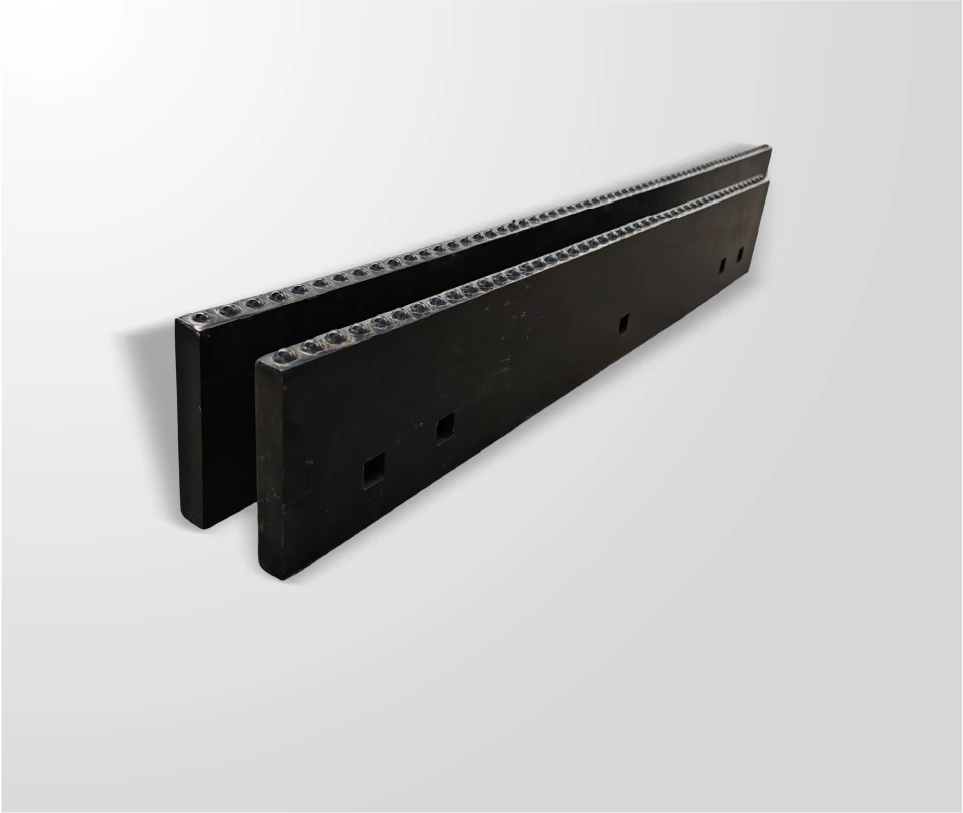
On a grader, dozer or loader blade, the end bits sit at the outer ends of the cutting edge and the corner guards wrap the corner where the edge meets the moldboard side. On a crowned road, a kerb line or a shoulder drop-off the outer corners meet the hardest obstacles and are the first to lose material. The operator notices indirectly: the blade cuts a wider line, the shoulder edge frays, and more passes are needed to bring the surface back to profile.
What the parts protect is more expensive than the parts themselves. Once a corner has worn past its guard, the load transfers to the moldboard end, the side plate and the structure around the end bolts, and repair means welding, straightening or replacing a blade body rather than a bolted consumable. Attachment interface conventions, which decide how these parts mount and what the structure is designed to carry, are published through SAE, so a fitment record for end bits is worth as much as one for the edge.
Four observations cause most early replacements: a rounded or cupped corner, a guard worn flush with the edge it protects, movement or fretting at the end bolts, and a gap where fines have worked between the parts. None needs instruments to detect, and all are cheaper to act on than to ignore.
Failure Modes and What They Signal
Each failure mode points to a different cause, and separating them makes a replacement decision useful rather than routine. An evenly rounded corner indicates normal abrasion on a hard surface; a cupped, cracked or bent corner indicates impact from a kerb, joint or rock; fasteners that have loosened or sheared indicate a fitment, torque or hardware problem rather than wear.
| Symptom | Likely cause | Useful response |
|---|---|---|
| Corner rounded evenly | Sliding abrasion; expected wear | Replace at the measured limit |
| Corner cupped, cracked or bent | Impact from kerbs, joints or rock | Review section and guard coverage for the duty |
| End bolts loose or sheared | Fitment, torque or re-used fasteners | Re-measure the pattern; replace hardware with the parts |
| Guard worn flush with the edge | Guard left in service past its limit | Replace guard and inspect the moldboard end immediately |
| Fines packed between the parts | Gap in fit-up or fretting movement | Check straightness and seating of both parts |
Hardness and abrasion behaviour can be compared through standardised test methods published by ASTM, but the decisive field evidence is dimensional: how much corner remains, how much guard thickness remains, and whether the structure underneath is sound. A wear-resistant part fitted to a damaged corner only protects the damage.
Inspection Intervals and What to Record
Inspection intervals should be tied to working hours and edge changes rather than to a calendar, because the corner wears with contact events rather than the passage of time. Inspect the ends at every cutting edge change, and additionally at an interval set by the duty: shorter on kerb lines, shoulders and roads with joints and drainage furniture, longer on clean bulk earthmoving.
Four measurements and two observations make the record useful: remaining corner length, remaining guard thickness, bolt hole condition and seating of the parts against the blade end, plus which end is wearing faster and whether the wear is even or one-sided. The left-right comparison is often the most valuable single record a fleet keeps, because it separates a route or operator effect from a specification problem.
Recording turns those numbers into a selection decision. A machine whose corners reach their limit before its cutting edge needs different end protection rather than a harder edge, and that pattern only appears when wear is logged against hours, material and route. SENTHAI operates lot-level traceability with every batch inspected and archived, so where a batch question does arise it can be investigated against production records; the inspection arrangement is described on the quality control page.
Conditions That Change the Wear Rate
Wear on end bits and guards is dominated by contact events rather than distance travelled, which is why two machines with similar hours can have very different corner histories. Kerbs, manhole covers, bridge joints, drainage grates and concrete joint edges present hard, fixed obstacles exactly where the corner leads, so a blade working a kerb line wears its outer corner in a way a machine working the middle of a haul road never does.
Road crown and crossfall matter too: a pronounced crown makes the operator angle and tilt the blade to follow the surface, loading one corner more than the other. Shoulder drop-offs have the same effect and also mean the corner is working unsupported material that can shift under load. In winter, ice ridges and frozen shoulder edges transfer concentrated impact into the corner rather than even abrasion.
Operator practice is the largest variable. Travel speed, angle and down-pressure change how hard the corner strikes an obstacle far more than a change of material grade. A fleet that fits heavier guards without adjusting technique recovers only part of the benefit, and a fleet that records which operator and route preceded a failure usually finds the cause before it finds a specification problem, which makes protection for a specific route an empirical question answered by records.
Repair, Rotation or Replacement
Three options exist when an end bit or guard reaches its limit, and the decision depends on how far the wear has gone and whether the design allows the part to be turned. Rotation is cheapest: where end bits are designed for it, swapping left and right or turning a part end to end doubles the material available before replacement, provided the pattern and countersink arrangement are symmetric.
Repair by welding is the narrowest option. Building up a worn corner changes the geometry and the metallurgy of the part, and a weld deposit on a corner that sees impact is a common source of later cracking. Where a repair is made it should restore the profile rather than add material, and it should be followed by a local hardness check, since the specified hardness applies to the part as supplied. Welding and consumable selection guidance is published by the AWS.
Replacement is the right answer once a guard has worn flush with the edge it protects, once bolt holes have elongated, or once the corner has cracked or bent. Where these parts are being specified for an agency programme, the material and replacement requirements usually travel with specifications such as those adopted by transportation agencies and indexed through the AASHTO publications store. What governs a replacement, a credit or a warranty investigation is not a general policy but the terms agreed for the order, which are described on the warranty and shipping page and stated in the written quotation or order documents.
Tools, Hardware and Safe Handling
The work of changing end bits and guards is short, heavy and done at the machine, which makes it a handling task as much as a maintenance task. Assemblies are awkward to lift, fasteners are usually tight and corroded, and the parts being removed frequently have sharp or burred edges, so the routine should be planned around the person doing it rather than around the parts.
Hardware practice is the first control. Plow bolts and nuts are replaced with the parts rather than reused, because a stretched or corroded fastener will not hold torque and lets the guard fret; the countersink has to be clean so the head seats flush and stays out of the wear path; and a consistent tightening sequence keeps the parts seated against the blade rather than against each other. Hand and power tool practice in an industrial workshop, including guarding, is covered by the general industry requirements in eCFR 29 CFR 1910.
Manual handling is the second control and the source of most injuries in this task. Lifting aids, two-person handling for heavier assemblies and positioning the machine so the work sits at a workable height all reduce the load on the person, and the guidance published by the UK Health and Safety Executive on musculoskeletal disorders is a useful reference for structuring the task. Dust exposure during transport and cleaning is a further consideration, covered by the occupational exposure guidance published by NIOSH. Isolating the machine, blocking raised components and releasing stored hydraulic pressure belong to the routine before any part is unbolted.
Storing Spares Between Seasons
Spares stored badly arrive at the machine out of specification, a cost that never appears in a wear record. Two rules prevent most of it: support parts flat rather than leaning them on a working edge, and keep them dry and clear of the floor. A guard or end bit standing on its cutting corner can be deformed by its own weight over months, and a bowed part does not seat; damp storage corrodes the parts, the hardware and the countersinks.
Hardware should be stored with the parts rather than in a general fastener bin, so fasteners match the countersink of the part they will be fitted to; the right guard with the wrong bolt works loose. Where several machine groups are held, identifying each set by machine and pattern keeps the store usable by anyone, which matters more in a season than an optimised inventory.
Stock levels should come from the consumption record rather than a rule of thumb. End bits and guards wear at a rate specific to the route and material, so the holding that keeps a machine working follows that rate and the lead time agreed for the order. One complete set per critical machine, cycled first in and first out so new material does not sit behind older stock, keeps a season running without a warehouse of parts that fit nothing.
End bits and corner guards are cheap parts guarding expensive structure, so the decisions that matter are how often they are inspected, what is recorded against hours and material, and when a part is replaced rather than repaired or rotated. Wear concentrates at the front corner because that is where contact events occur, which makes route and practice the dominant variables and the left-right wear comparison the most useful single record. Rotation is the cheapest extension of life, welding is the narrowest and riskiest option, and replacement on measurement is what keeps the moldboard out of the repair shop.
Send SENTHAI the machine list, the routes each blade works and the pattern or a worn end bit for reference, and the technical team will review end protection, guard coverage and hardware specification for each machine group.
Related reading: the hub article on wear parts beyond plows shows how end bits, guards and cutting edges fit into the wider product range.
Frequently Asked Questions
What are end bits and corner guards on a blade?
End bits are the replaceable parts bolted at the outer ends of a cutting edge, and corner guards wrap the corner where the edge meets the side of the moldboard or bucket. Both are consumables that take the corner load, which is the highest load per unit of material on the blade because the corner leads into kerbs, joints and uneven ground. Their purpose is to keep wear off the blade structure, which costs far more to repair than the parts themselves.
How often should end bits be inspected?
At every cutting edge change, plus an interval set by the duty rather than the calendar: shorter where a machine works kerb lines, shoulders or roads with joints and drainage furniture, and longer on clean bulk earthmoving. Check remaining corner length, remaining guard thickness, the condition of the bolt holes and the seating of the parts, and record which end wears faster. Contact events drive the wear, so hours alone are a poor interval measure.
Can end bits be swapped from side to side?
Where the design allows it, yes, and rotation is the cheapest way to double the material available before replacement. It depends on the pattern being symmetric and the countersink arrangement permitting the part to be turned or exchanged between ends. Machines whose left and right ends wear unevenly may benefit less from rotation, which is why the left-right wear record is worth keeping before a rotation policy is adopted.
Why do corner guards wear faster than the cutting edge?
Because they meet the hardest and most concentrated contact: kerbs, manhole covers, bridge joints, concrete joint edges and frozen shoulder ridges are all fixed obstacles that the corner strikes first. The cutting edge wears mostly through sliding abrasion across its length, while the corner combines abrasion with repeated impact. That is also why guard coverage and section, rather than edge hardness, are the effective controls.
What happens if a delivered end bit or guard does not fit?
Fitment questions are resolved against the pattern agreed for the order, so the first step is to compare the delivered part with the drawing or measured record and with the fasteners supplied. Where the pattern was recorded from a worn part rather than the machine, a small measurement error can be the cause. What governs a replacement, a credit or a warranty investigation is the agreed order, and the applicable terms are stated in the written quotation or order documents.
{
“@context”: “https://schema.org”,
“@type”: “FAQPage”,
“mainEntity”: [
{
“@type”: “Question”,
“name”: “What are end bits and corner guards on a blade?”,
“acceptedAnswer”: {
“@type”: “Answer”,
“text”: “End bits are the replaceable parts bolted at the outer ends of a cutting edge, and corner guards wrap the corner where the edge meets the side of the moldboard or bucket. Both are consumables that take the corner load, which is the highest load per unit of material on the blade because the corner leads into kerbs, joints and uneven ground. Their purpose is to keep wear off the blade structure, which costs far more to repair than the parts themselves.”
}
},
{
“@type”: “Question”,
“name”: “How often should end bits be inspected?”,
“acceptedAnswer”: {
“@type”: “Answer”,
“text”: “At every cutting edge change, plus an interval set by the duty rather than the calendar: shorter where a machine works kerb lines, shoulders or roads with joints and drainage furniture, and longer on clean bulk earthmoving. Check remaining corner length, remaining guard thickness, the condition of the bolt holes and the seating of the parts, and record which end wears faster. Contact events drive the wear, so hours alone are a poor interval measure.”
}
},
{
“@type”: “Question”,
“name”: “Can end bits be swapped from side to side?”,
“acceptedAnswer”: {
“@type”: “Answer”,
“text”: “Where the design allows it, yes, and rotation is the cheapest way to double the material available before replacement. It depends on the pattern being symmetric and the countersink arrangement permitting the part to be turned or exchanged between ends. Machines whose left and right ends wear unevenly may benefit less from rotation, which is why the left-right wear record is worth keeping before a rotation policy is adopted.”
}
},
{
“@type”: “Question”,
“name”: “Why do corner guards wear faster than the cutting edge?”,
“acceptedAnswer”: {
“@type”: “Answer”,
“text”: “Because they meet the hardest and most concentrated contact: kerbs, manhole covers, bridge joints, concrete joint edges and frozen shoulder ridges are all fixed obstacles that the corner strikes first. The cutting edge wears mostly through sliding abrasion across its length, while the corner combines abrasion with repeated impact. That is also why guard coverage and section, rather than edge hardness, are the effective controls.”
}
},
{
“@type”: “Question”,
“name”: “What happens if a delivered end bit or guard does not fit?”,
“acceptedAnswer”: {
“@type”: “Answer”,
“text”: “Fitment questions are resolved against the pattern agreed for the order, so the first step is to compare the delivered part with the drawing or measured record and with the fasteners supplied. Where the pattern was recorded from a worn part rather than the machine, a small measurement error can be the cause. What governs a replacement, a credit or a warranty investigation is the agreed order, and the applicable terms are stated in the written quotation or order documents.”
}
}
]
}
Related articles
 Aftermarket Versus OEM Cutting Edges: Fitment and DocumentationScraper, dozer and earthmoving cutting edges
 Matching Cutting Edges to Material Type and Machine WeightScraper, dozer and earthmoving cutting edges
 Carbide Versus Through-Hardened Edges: Choosing by Abrasion LevelScraper, dozer and earthmoving cutting edges
 Hot-Rolled Versus Quenched-and-Tempered Cutting EdgesScraper, dozer and earthmoving cutting edges