
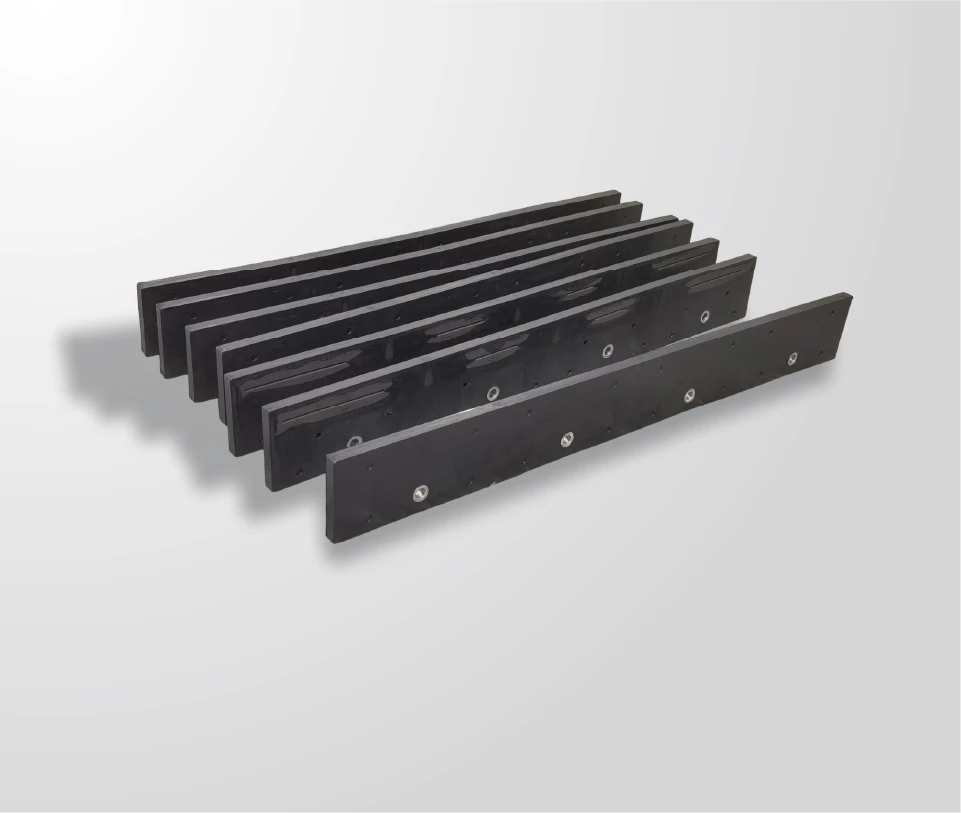
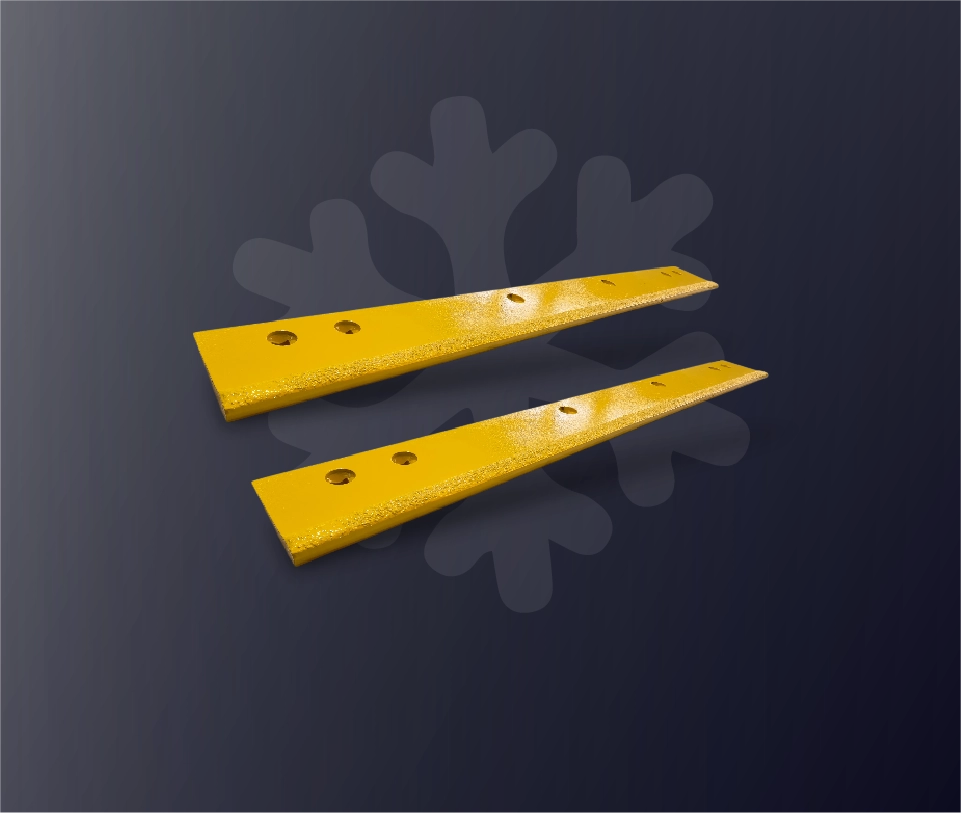
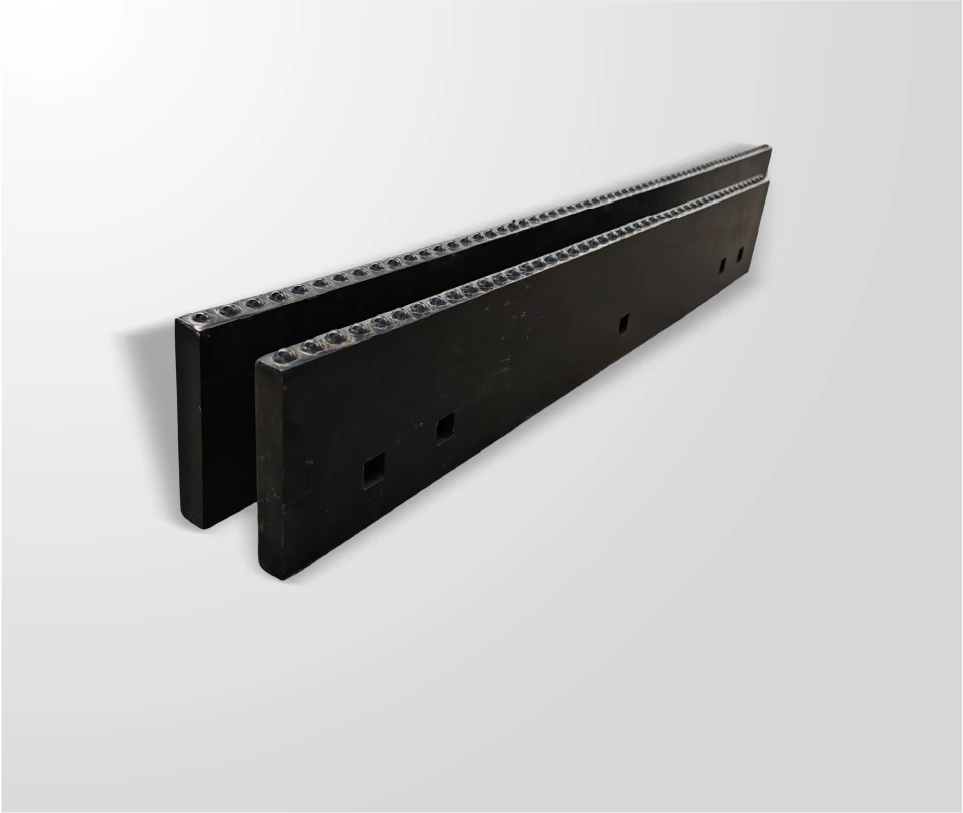
Hot-Rolled Versus Quenched-and-Tempered Cutting Edges
A quenched and tempered cutting edge and a hot-rolled one can be the same section, the same pattern and the same nominal grade, and still behave as two different products on the machine. The…

A quenched and tempered cutting edge and a hot-rolled one can be the same section, the same pattern and the same nominal grade, and still behave as two different products on the machine. The difference is the condition of supply: hot rolling leaves the steel in the state it was rolled in, while quenching and tempering takes the section to a controlled hardness band after forming. On abrasive ground the quenched and tempered cutting edge is normally replaced less often, but it also gives up weldability and straightness is harder to hold, so the decision is a duty question rather than a price question.
What Each Process Produces
Hot rolling forms the section; quenching sets the band.
Hot rolling delivers a ductile as-rolled section; quenching and tempering delivers a harder, stronger section to a specified hardness band, at higher cost and with tighter process controls.
Hot rolling is a forming operation. The section is rolled above its recrystallisation temperature and cooled in air, which leaves a scale on the surface, a relatively soft structure and good ductility. It can be cut, drilled and welded with ordinary workshop practice, and it deforms rather than fractures under impact — an advantage on frozen ground, a disadvantage on abrasive gravel. Section thickness is the only real wear control available, because the hardness is whatever the mill produced.
Quenching and tempering is a heat treatment applied after forming. The section is austenitised, quenched to form a hard structure, then tempered to bring hardness and toughness into a controlled balance. That is what allows a hardness band to be specified and repeated across batches, and it is the process behind most edges sold for road maintenance and earthmoving. The trade is that the treatment which raises hardness also raises distortion risk, makes welding more procedure-sensitive and adds cost per unit.
The designations buyers use to describe both come from the grade conventions maintained by standards bodies such as SAE. The important point in a specification is not the designation but the condition: a grade number alone does not state whether the part was supplied as-rolled or heat treated, and two suppliers quoting the same number may be quoting different products.
Hardness Depth and Wear Through the Section
An edge wears toward its bolt line one millimetre at a time, and what matters at each stage is the hardness of the metal about to become the cutting face. That property, hardness depth, separates the process routes more sharply than the surface figure does.
| Route | Hardness at the working face | Through the section | What the buyer should require |
|---|---|---|---|
| Hot-rolled, as supplied | Low | Uniformly low | Section thickness and a stated grade |
| Quenched and tempered | Controlled band | Band maintained to the core | Band plus the test method used to verify it |
| Surface or induction hardened | High | Case depth finite; core stays tough | A stated case depth against expected wear |
The practical consequence is that a through-hardened edge keeps its abrasion advantage as it wears, while a surface-hardened edge only keeps it until the case is consumed. Where a case depth is used, it has to exceed the wear expected between inspections, otherwise the edge performs well for one interval and then behaves like plain steel.
Hardness itself should be a verified number rather than a claimed one. The test methods used to quote it, and the published material standards those methods sit in, come from ASTM, and the reference material on how heat treatment produces the structure being tested is published by ASM International. Abrasion performance is a separate property, documented by wear-steel producers such as SSAB, and a buyer should ask for the conditions behind a comparative abrasion figure rather than accept the figure alone.
Straightness, Flatness and Fit-Up
Heat treatment introduces distortion, so straightness and flatness are process outcomes rather than drawing details, and they are the most common reason a heat-treated edge is rejected at goods-in. A rolled section arrives straight because it was rolled straight; a quenched section can bow, twist or lose flatness depending on how it was supported and cooled, and the longer and thinner the section, the greater the risk.
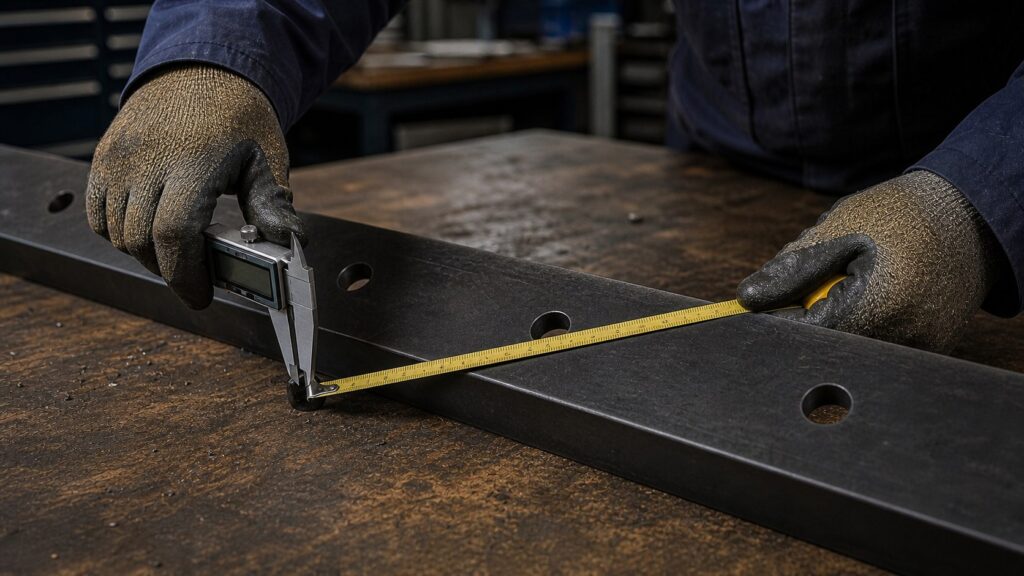
Three dimensions need checking. Straightness along the length decides whether the edge sits flat without gaps, flatness across the width decides how the cutting face presents to the ground, and hole position decides whether the fasteners can be fitted at all, since a small movement at the hole line makes a correct pattern unusable.
Where these features are specified by an agency rather than by a fleet, the requirement usually travels with the material and edge specifications that state transportation agencies adopt, which are indexed through the AASHTO publications store. For the buyer, the discipline is the same whether the edge goes onto a municipal blade or a construction machine: record straightness, flatness and pattern, check them at goods-in, and reject rather than correct on site, because field correction removes the evidence that supports any later claim.
How Process Is Documented and Verified
Ask for the band, the method and the batch.
A quotation should state the hardness band, the test method used to verify it, the condition of supply and the batch identity, and the goods-in check should confirm the dimensions.
Documentation for a heat-treated edge has four parts. The first is the specification: grade, condition of supply and hardness band, with the test method. The second is the inspection record: where hardness was taken, what the result was, and how the batch was identified. The third is dimensional: straightness, flatness and pattern, recorded against the drawing. The fourth applies where an assembly is involved and covers joining, including the process controls and any post-joining thermal treatment.
Verification follows the same order. Check the dimensional record and the visible condition of the part first, because a pattern or straightness failure is decisive and is not a metallurgical debate. Then check the hardness documentation against the specification. Where the duty is severe, hardness depth can be checked on a sectioned sample, and that check is a sampling arrangement rather than a routine one, with the applicable terms stated in the written quotation or order documents.
Traceability is what holds the set together. Lot-level identification, with every batch inspected and archived, is what allows a complaint about premature wear to be investigated against a production record instead of being settled by opinion. Without it, a hardness or process question can only be answered by re-testing the part in front of you, which says nothing about the batch it came from.
Where Each Option Fails Differently
Hot-rolled deforms; heat-treated cracks or bows.
A hot-rolled edge mushrooms and rounds off on abrasive ground, while a heat-treated edge fails through impact cracking, a heat-affected zone from field welding or distortion at the ends.
The failure signature of a hot-rolled edge is predictable: the cutting profile rolls over and dulls quickly, holes elongate as the softer material deforms around the fasteners, and the gradual loss is often missed because the machine keeps working at reduced efficiency.
A quenched and tempered edge fails less often on wear and more often on events. Impact cracking at a corner or between holes is the classic mode where the hardness band is at the top of its range for the ground being worked. Field welding produces a hard, brittle heat-affected zone that cracks later, and distortion at the ends of a thin section can leave gaps that fill with fines and work the fasteners loose.
The two failure sets call for different responses. On a hot-rolled edge, the answer is usually to change the specification, because the process cannot be improved by inspection. On a heat-treated edge, the answer is often to review the duty, the thickness and the repair practice, since the same specification can be reliable on one machine and problematic on another working harder ground.
Cost Per Hour Compared
Unit price favours the hot-rolled edge and rarely survives the arithmetic. Cost per hour of machine work includes the change-out labour, the fasteners and the production lost while the machine stands, and those recur every time an edge is replaced.
| Driver | Hot-rolled | Quenched and tempered |
|---|---|---|
| Unit price | Lower | Higher |
| Edges consumed per season | Higher count | Lower count on abrasive ground |
| Labour per change | Paid most often | Paid least often |
| Production penalty as it dulls | Large | Small until the profile is consumed |
| Repair and welding | Straightforward | Procedure-controlled; not a field operation |
Two cautions belong with the comparison. Change-out cost is not constant: a shop-based fleet with edges on the shelf carries far less per change than a contractor paying call-out rates at a remote site. And a quoted multiple of service life only holds under the conditions it was measured in, so the useful question is not how much longer a heat-treated edge lasts but on what ground and machine that was established, which is where the wear literature published by producers such as voestalpine is more useful than a headline number.
Selecting by Duty Cycle
Duty cycle, meaning hours per year and the material worked in those hours, decides the process route. A machine working a few weeks a season on soft surfaces cannot repay a heat-treated edge through wear savings, while one running high hours on crushed aggregate repays it quickly. Within a fleet, a heavy machine on abrasive ground and a light machine on shoulders may need different answers.
- Low annual hours, soft or clean surfaces: hot-rolled or as-rolled sections, replaced on measurement.
- High annual hours, mixed material: quenched and tempered as the working standard.
- Abrasive gravel or crushed rock: heat treated, with thickness fixed for the machine class.
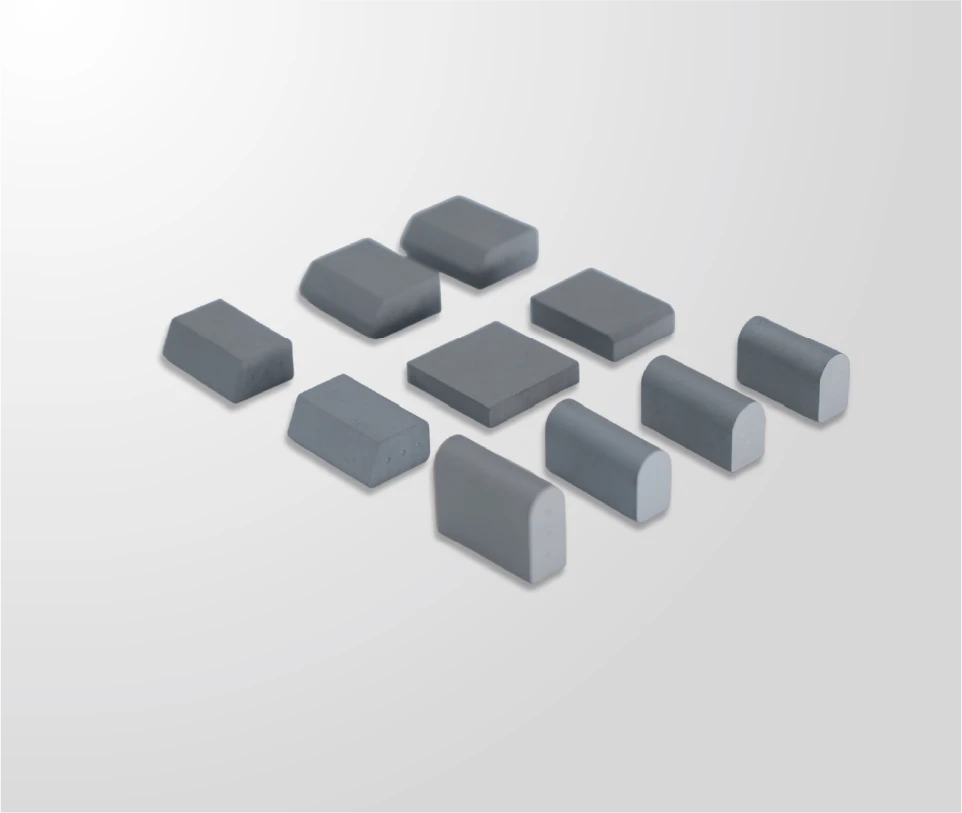
- Impact-heavy or frozen ground: heat treated at the tougher end of the band, or a carbide-tipped edge where abrasion and downtime justify it.
- Repair-intensive operations: weigh the weldability of a heat-treated edge against the wear benefit before standardising.
- Before ordering: require the condition of supply, hardness band and test method, and a straightness and pattern record.
Programme-level maintenance practice is documented through state transportation departments such as MnDOT, and that material is a useful cross-check when a specification is written for a public fleet. Where the material is aggressive enough that steel hardness is no longer the deciding factor, the alternative is a tungsten carbide edge, and the separate comparison of carbide and through-hardened edges sets out where that line falls.

The process route decides properties that a grade number does not describe. Hot rolling leaves a ductile, weldable, inexpensive section that wears away gradually and is well suited to low-hour, soft-surface duty. Quenching and tempering produces a controlled hardness band that holds a cutting profile far longer under abrasion, at the cost of weldability, distortion risk and procedure-sensitive repair. Hardness depth then determines whether that advantage survives wear, straightness and fit-up determine whether the edge can be used at all, and the documentation set is what makes the band a verifiable fact rather than a claim.
Send SENTHAI the machine list, annual hours, material worked and the current edge specification, and the technical team will review condition of supply, hardness band, thickness and fit-up requirements for each duty cycle.
Related reading: the edge materials section of the carbide edge guide and the hub article on wear parts beyond plows set these choices against the other ground-engaging products.
Frequently Asked Questions
What is the difference between hot-rolled and quenched-and-tempered steel?
Hot rolling forms the section above its recrystallisation temperature and cools it in air, leaving a softer, ductile, as-rolled product that is easy to cut, drill and weld. Quenching and tempering is a heat treatment applied after forming: the section is austenitised, quenched and then tempered to a controlled hardness band. The properties that follow differ substantially, in wear resistance, strength, distortion risk and repairability, even when the same base grade and section are used.
Does a quenched and tempered edge stay hard as it wears?
That depends on hardness depth rather than on the surface figure alone. A through-hardened and tempered edge carries its hardness band to the core, so the face that is exposed by wear is still hard. A surface or induction hardened edge has a finite case depth, and once the case is consumed the remaining metal wears at the base rate. Where a case is used, its depth should exceed the wear expected between inspections.
Can a quenched and tempered edge be welded on site?
It can be welded with the correct procedure, but it is not an ordinary workshop operation. Heat input, preheat and cooling control all affect the heat-affected zone, and a poorly controlled repair leaves a hard, brittle zone that can crack later in service. High-carbon and fully hardened sections are the least forgiving. Where an edge is near its wear limit, welding is not a substitute for replacement in any case.
What should I ask for with a quotation for a hardened cutting edge?
Ask for the grade and condition of supply, the hardness band and the test method used to verify it, the inspection and batch identification arrangement, and a dimensional record covering straightness, flatness and pattern. Where an assembly is involved, ask how the joint is made and controlled. Sampling and testing arrangements beyond the standard documentation, and the applicable commercial terms, are stated in the written quotation or order documents.
{
“@context”: “https://schema.org”,
“@type”: “FAQPage”,
“mainEntity”: [
{
“@type”: “Question”,
“name”: “What is the difference between hot-rolled and quenched-and-tempered steel?”,
“acceptedAnswer”: {
“@type”: “Answer”,
“text”: “Hot rolling forms the section above its recrystallisation temperature and cools it in air, leaving a softer, ductile, as-rolled product that is easy to cut, drill and weld. Quenching and tempering is a heat treatment applied after forming: the section is austenitised, quenched and then tempered to a controlled hardness band. The properties that follow differ substantially, in wear resistance, strength, distortion risk and repairability, even when the same base grade and section are used.”
}
},
{
“@type”: “Question”,
“name”: “Does a quenched and tempered edge stay hard as it wears?”,
“acceptedAnswer”: {
“@type”: “Answer”,
“text”: “That depends on hardness depth rather than on the surface figure alone. A through-hardened and tempered edge carries its hardness band to the core, so the face that is exposed by wear is still hard. A surface or induction hardened edge has a finite case depth, and once the case is consumed the remaining metal wears at the base rate. Where a case is used, its depth should exceed the wear expected between inspections.”
}
},
{
“@type”: “Question”,
“name”: “Can a quenched and tempered edge be welded on site?”,
“acceptedAnswer”: {
“@type”: “Answer”,
“text”: “It can be welded with the correct procedure, but it is not an ordinary workshop operation. Heat input, preheat and cooling control all affect the heat-affected zone, and a poorly controlled repair leaves a hard, brittle zone that can crack later in service. High-carbon and fully hardened sections are the least forgiving. Where an edge is near its wear limit, welding is not a substitute for replacement in any case.”
}
},
{
“@type”: “Question”,
“name”: “What should I ask for with a quotation for a hardened cutting edge?”,
“acceptedAnswer”: {
“@type”: “Answer”,
“text”: “Ask for the grade and condition of supply, the hardness band and the test method used to verify it, the inspection and batch identification arrangement, and a dimensional record covering straightness, flatness and pattern. Where an assembly is involved, ask how the joint is made and controlled. Sampling and testing arrangements beyond the standard documentation, and the applicable commercial terms, are stated in the written quotation or order documents.”
}
}
]
}
Related articles
 Aftermarket Versus OEM Cutting Edges: Fitment and DocumentationScraper, dozer and earthmoving cutting edges
 End Bits and Corner Guards: Protecting the Blade StructureScraper, dozer and earthmoving cutting edges
 Matching Cutting Edges to Material Type and Machine WeightScraper, dozer and earthmoving cutting edges
 Carbide Versus Through-Hardened Edges: Choosing by Abrasion LevelScraper, dozer and earthmoving cutting edges