
Aftermarket Versus OEM Cutting Edges: Fitment and Documentation
An aftermarket cutting edge is usually compared with an OEM part on price, which is the one comparison that does not predict which will survive the season. What decides the outcome is whether the…

An aftermarket cutting edge is usually compared with an OEM part on price, which is the one comparison that does not predict which will survive the season. What decides the outcome is whether the replacement was built to the same pattern, section and grade as the part it replaces, and whether the supplier can show the records that prove it. A buyer who writes the specification, demands the documentation and defines the acceptance check gets a part that behaves like the original for less money; a buyer who compares brands and prices gets a variable that cannot be evaluated until it fails.
What the Buyer Actually Controls
Control the specification, not the badge.
Pattern, section, grade and the documentation set are what a buyer controls, and they determine whether a replacement part performs like the original.
Four levers belong to the buyer regardless of who supplies the part. The first is the specification: pattern, section thickness, cutting profile, countersink and material grade with a hardness band. The second is the documentation set: the drawing or measured pattern record, the material and inspection evidence, and the batch identification. The third is the acceptance check that will be applied at goods-in, agreed in advance and simple enough for a store to apply. The fourth is the commercial structure, including quantity tiers, delivery terms and how repeat orders are priced.
Those levers are the same ones a public buyer uses. Federal procurement practice published by the US General Services Administration describes how requirements are defined and evaluated against a specification rather than a brand, and the same principle scales down to a municipal fleet or a single contractor. A buyer who cannot state the specification in writing cannot evaluate two offers, and will end up comparing prices for products that are not the same.
What the buyer does not control is the supplier’s internal process, which is why the documentation set matters more than any claim: it is the only part of that operation that travels with the order.
Specification Versus Brand
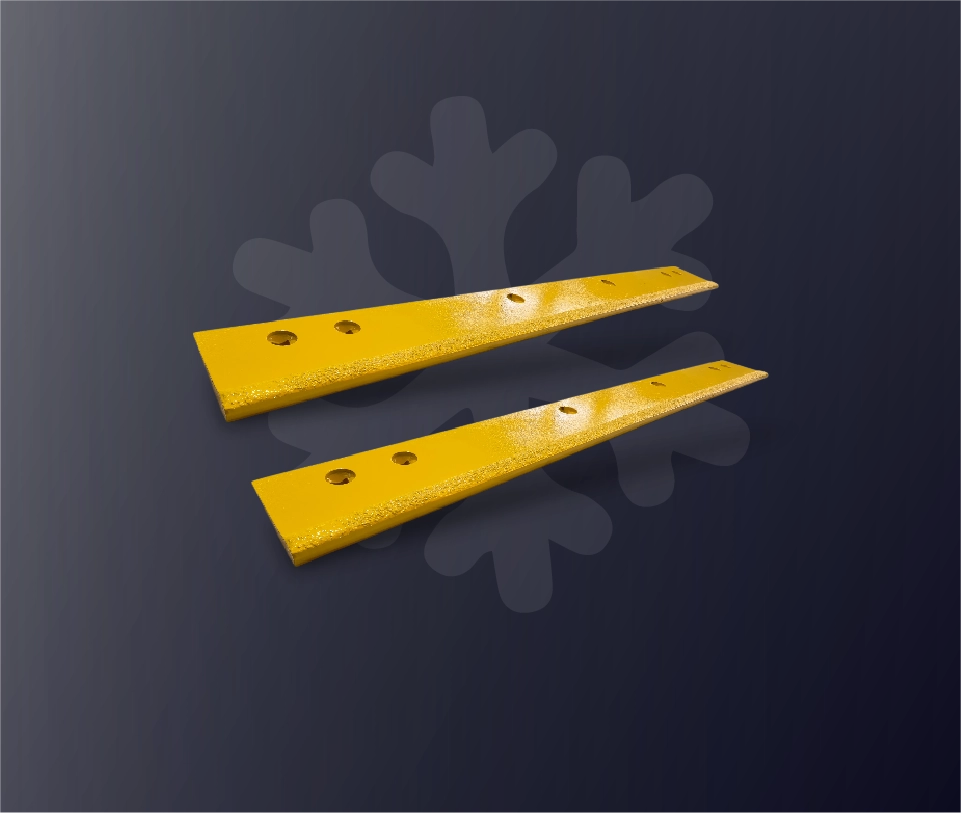
The practical difference between an OEM part and a replacement part is the source of the drawing, not the standard of manufacture. An OEM edge is built to the equipment manufacturer’s drawing and carries a part number; a replacement edge is built to the same pattern or to a specified equivalent, and it fits if the pattern, section, profile, countersink and hole arrangement match. Machine and attachment interface conventions, which define what fits what, are published through SAE.
| Element | OEM part | Documented replacement part |
|---|---|---|
| Drawing source | Equipment manufacturer drawing | Measured pattern or drawing, validated before production |
| Fitment | Defined by the part number | Equivalent when pattern and section are validated |
| Material specification | Named grade and condition | Named grade, condition, hardness band and test method |
| Commercial structure | OEM channel pricing | Quotation against specification and quantity |
| Risk of variation | Low | Depends on the documentation and acceptance check agreed |
Two technical requirements should be written into the specification rather than assumed. Material should be quoted to a named grade with the condition of supply and a hardness band, with the material and test standards published by ASTM behind the method. The fitment requirement should be stated as a pattern validated against the drawing or a physical sample, because a pattern that is close does not fit.
Brand still carries meaning in one respect: an established supplier has a traceable history and a claims process. That is worth paying for, but it is a different thing from assuming that the badge guarantees the specification, which is why the requirement should be written in technical terms and evidenced by documents.
Documentation to Demand Before Award
The documentation set should be requested with the quotation, before the award, because a supplier that cannot produce it before the order will not produce it after. Four items form the set: the specification sheet naming grade, condition of supply, hardness band and test method; the fitment record, being a drawing or measured pattern; the inspection and traceability arrangement, including batch identification; and the commercial annex with the terms agreed for the order.
Two further documents are worth requesting where the buyer is a public body or a distributor. Supplier registration and the identification checks behind it are handled through SAM.gov in the United States, and procurement audit findings published by the US Government Accountability Office show how often avoidable disputes trace back to a specification or a record that was never agreed. Both point the same way: the documents that prevent an argument are cheaper than the argument.
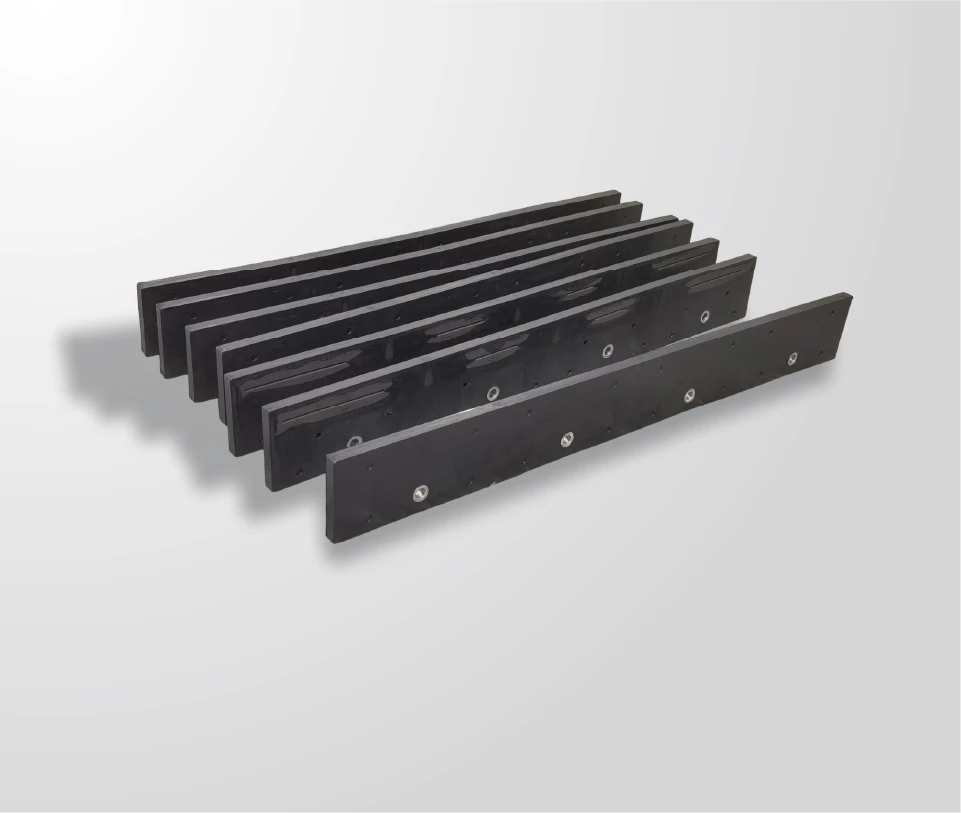
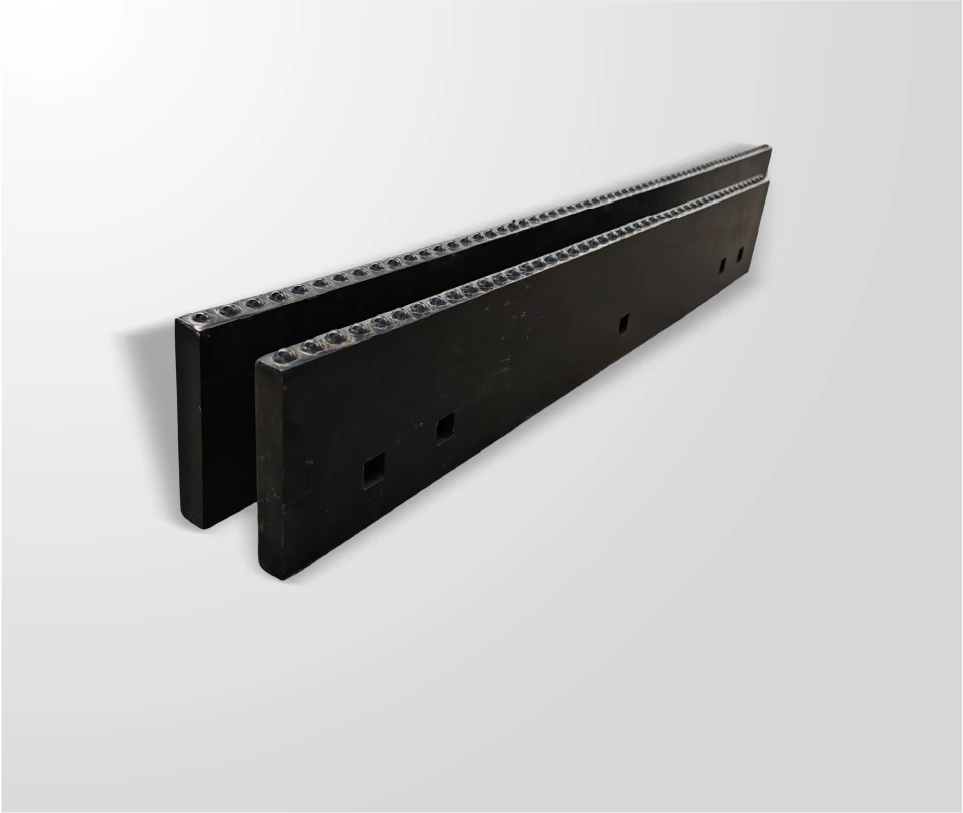
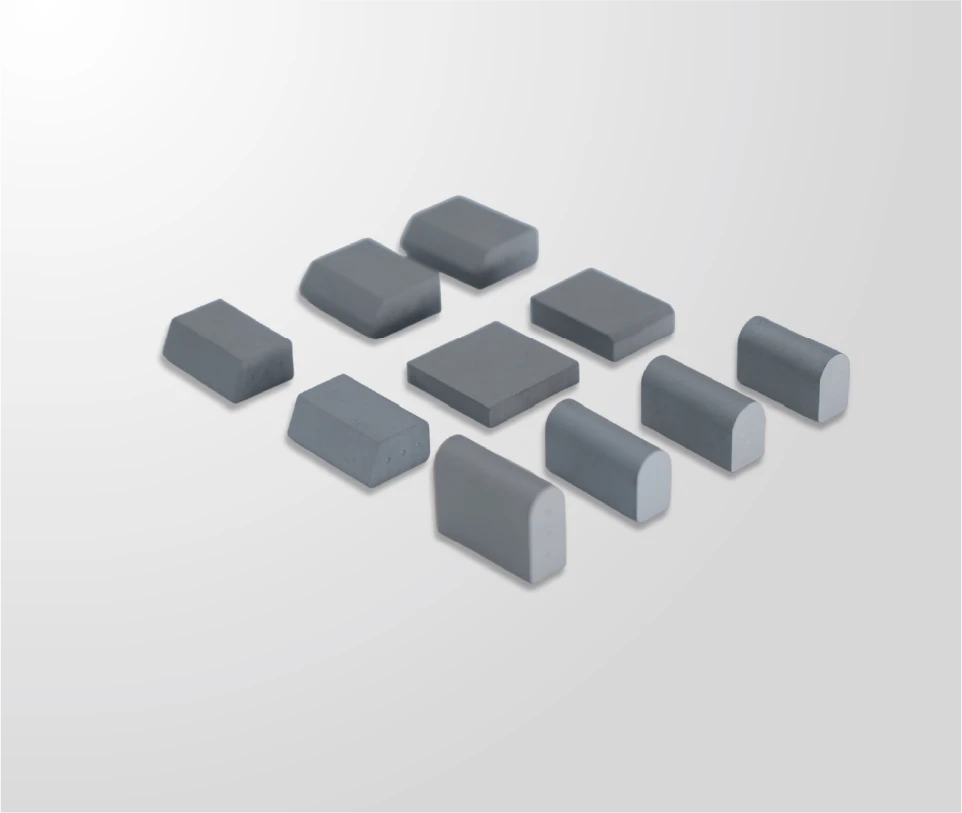
Where carbide-tipped edges are involved, the set gains a technical element, because the assembly has a joint in it. Ask how insert pockets are machined and to what dimensional tolerance, whether the pattern is validated against a drawing or a physical sample, and how the lot is identified so that a failure can be traced. SENTHAI machines insert pockets to a dimensional tolerance of plus or minus 0.02 mm and validates bolt patterns against the drawing or a physical sample, with lot-level traceability so every batch is inspected and archived.
Pricing Structure and What Drives It
Replacement edges are quoted rather than listed, and understanding the structure of the quote prevents most of the surprise on a repeat order. Four elements drive the number: the specification, because section, grade and insert content change the input cost; the quantity, because manufacturing is set up per batch; what the price includes, such as packing, labelling and documentation; and the delivery arrangement, because where the goods change hands changes who carries freight and risk.
Delivery terms deserve their own line, because they are a frequent source of disputes that have nothing to do with product quality. The Incoterms rules that define delivery, risk and cost transfer in international trade are published by the International Chamber of Commerce, and a quotation that names them precisely can be compared with another offer line by line. Import documentation, marking and country-of-origin requirements are enforced by customs authorities such as US Customs and Border Protection, and a distributor who has not confirmed those requirements carries a risk that no unit price reflects.
Two cautions belong here. Price validity should be stated, because a quote held for a season removes recurring negotiation on continuously consumed items, while a quote refreshed every time exposes a fleet to market movement. And a lower unit price is not a saving if it excludes packing, documentation or delivery that the other offer included.
Lead Time, MOQ and Continuity
Continuity is what a fleet actually buys, and it is managed through three arrangements agreed in advance rather than discovered in season: the minimum quantity that makes an order commercially sensible, the lead time for repeat orders against a specification already produced, and the point at which stock is held. A specification that has been produced once can be repeated faster than a new one, which is an argument for holding the specification record rather than the part number.
Neither minimum order quantity nor lead time can be stated as a universal figure, because both depend on the specification, the tooling or pattern record, the quantity and the destination. What can be done is to set the expectation explicitly in the offer and to agree what triggers a change, so that a fleet knows what it is planning around. The applicable minimum order quantity, lead time and delivery terms for a requirement are stated in the written quotation or order documents issued for it.
Where a distributor is involved, the continuity conversation changes shape: the distributor carries stock for a territory and needs a specification that is stable enough to hold against demand, which is why private-label and stocking arrangements are agreed as commercial terms rather than assumed from a catalogue. For the end user, the practical questions are how quickly a replacement can be obtained after a failure and whether a substitute specification has been agreed in advance.
Quality Gates and Acceptance Testing
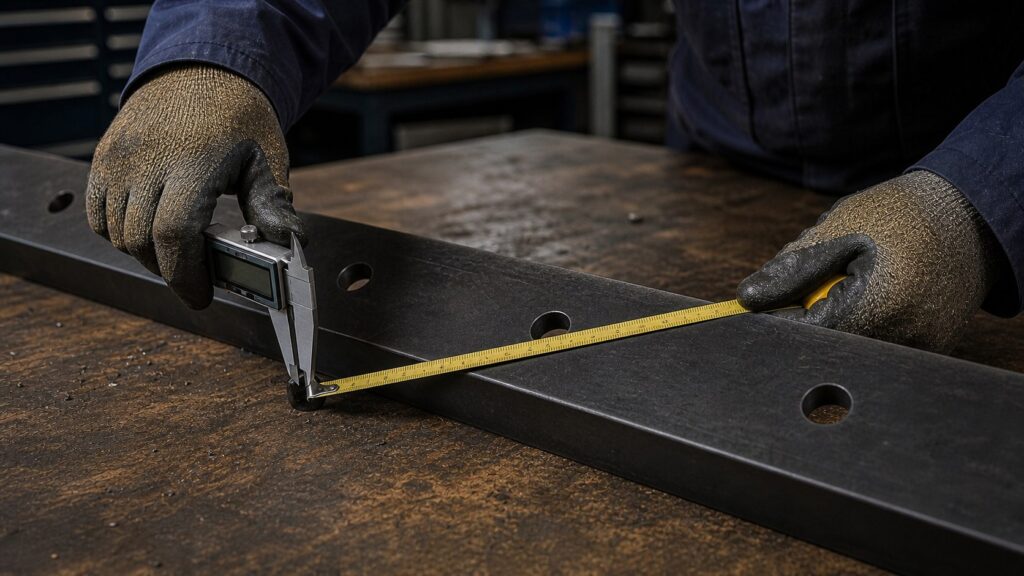
Acceptance is where the specification is enforced, and it only works if the check is defined before the delivery. Four checks cover most replacement edges and can be applied by a store without engineering judgement: the pattern against the agreed drawing or record, the section and profile, the documentation and batch identification, and the visual condition of the part including the seating of inserts where the edge is carbide-tipped.
| Check | How it is applied | Consequence if skipped |
|---|---|---|
| Pattern | Hole count, spacing and edge-to-hole distance against the record | Part cannot be fitted; cost unrecoverable in season |
| Section and profile | Thickness, width and cutting profile by measurement | Wrong cutting behaviour; premature wear or poor surface finish |
| Documentation | Grade, hardness band, test method and batch present | A wear failure cannot be attributed or claimed |
| Insert seating | Visual and tactile check on carbide-tipped assemblies | Insert loss in service, blamed on the wrong cause |
Rejection criteria should be equally explicit. A part that fails a pattern or section check is rejected rather than corrected on site, because field modification removes both the traceability and the basis of any claim. The quality arrangement behind the checks is worth reviewing before an award rather than after a dispute; SENTHAI’s process is described on the quality control page.
Risk, Warranty and Dispute Handling
Disputes are resolved by evidence, so the practical question before an award is whether the supplier’s process will generate it. A complete evidence set for a failure contains the batch identification, the specification the part was bought against, the application and duty, the hours or volume achieved, the failure mode with photographs, and the measurement or inspection record. With that set, a claim becomes a technical question with a diagnosable answer.
The distinctions matter because the resolutions differ. An edge that has worn evenly past its expected life is a specification question about duty or grade. A part that does not fit is a drawing question. An insert that has shed from a sound pocket is a joint or seating question. A part that cracked in its first hours is a material or process question. Separating these before the conversation starts is what keeps a claim from becoming a negotiation about price.
What governs a replacement, a credit or an investigation is not a general policy but the terms agreed for the order, together with the evidence produced under them. The same applies to the risk that sits outside the product: delivery terms, inspection rights and the currency of the order. All belong in the written quotation or order documents rather than in an assumption, and a buyer who requires them at the quotation stage has already removed most of the downside from an aftermarket purchase.

An aftermarket cutting edge is as good as the specification and documentation behind it. The buyer controls the pattern and section requirement, the material specification with its hardness band and test method, the documentation set requested before award, the acceptance check applied at goods-in, and the commercial structure covering quantity, delivery terms and repeat pricing. Brand remains useful evidence of process and continuity, but it cannot substitute for a written requirement, and a claim is only resolvable when the batch record and the agreed specification exist.
Send SENTHAI the current edge part numbers or drawings, the machines they fit and the annual quantities, and the technical team will return a specification and documentation set that can be compared with an OEM offer line by line.
Related reading: the hub article on wear parts beyond plows shows the product range these specifications apply to.
Frequently Asked Questions
Is an aftermarket cutting edge as good as an OEM edge?
It can be, when it is built to the same pattern, section and material specification and is supported by documentation that proves it. The variable is not the badge but the drawing source and the process evidence: whether the pattern was validated against the machine or a physical sample, and whether grade, hardness band, test method and batch identification are recorded. Without those, the comparison cannot be made at all until the part is in service.
Where can I find replacement cutting edges for a bucket or blade?
Work from the pattern rather than from a machine model. Record hole diameter and count, centre-to-centre spacing including end distances, the edge-to-hole distance, section and profile, and the countersink angle, or send a worn edge as a physical sample. Any supplier working from that record, and validating it before production, can quote a replacement that fits. Distributors and manufacturers of ground-engaging parts work to those drawings as a matter of course.
What documentation should be requested before awarding a supply order?
Ask for the specification sheet with grade, condition of supply, hardness band and test method; the fitment drawing or measured pattern record; the inspection and traceability arrangement including batch identification; and the commercial annex covering quantity, delivery and repeat pricing. Where the order is international, add the named delivery terms and the import and marking requirements. A supplier who cannot produce these before award is unlikely to produce them afterwards.
How are prices, minimum quantities and lead times determined for replacement edges?
They are quoted against a specification rather than taken from a list. Section, grade, insert content, quantity, packing, documentation and delivery arrangement all affect the offer, and a specification that has already been produced can generally be repeated more quickly than a new one. The applicable minimum order quantity, lead time, price validity and delivery terms are stated in the written quotation or order documents issued for the requirement.
How should a failure claim be handled on a replacement edge?
With evidence rather than opinion: batch identification, the specification the part was bought against, the application and duty it worked in, hours or volume achieved, the failure mode with photographs, and any measurement record. Those items allow the cause to be classified as wear against duty, a fitment problem, a joint or seating issue, or a material question, each of which is resolved differently. The terms that govern replacement, credit or investigation are stated in the order documents.
{
“@context”: “https://schema.org”,
“@type”: “FAQPage”,
“mainEntity”: [
{
“@type”: “Question”,
“name”: “Is an aftermarket cutting edge as good as an OEM edge?”,
“acceptedAnswer”: {
“@type”: “Answer”,
“text”: “It can be, when it is built to the same pattern, section and material specification and is supported by documentation that proves it. The variable is not the badge but the drawing source and the process evidence: whether the pattern was validated against the machine or a physical sample, and whether grade, hardness band, test method and batch identification are recorded. Without those, the comparison cannot be made at all until the part is in service.”
}
},
{
“@type”: “Question”,
“name”: “Where can I find replacement cutting edges for a bucket or blade?”,
“acceptedAnswer”: {
“@type”: “Answer”,
“text”: “Work from the pattern rather than from a machine model. Record hole diameter and count, centre-to-centre spacing including end distances, the edge-to-hole distance, section and profile, and the countersink angle, or send a worn edge as a physical sample. Any supplier working from that record, and validating it before production, can quote a replacement that fits. Distributors and manufacturers of ground-engaging parts work to those drawings as a matter of course.”
}
},
{
“@type”: “Question”,
“name”: “What documentation should be requested before awarding a supply order?”,
“acceptedAnswer”: {
“@type”: “Answer”,
“text”: “Ask for the specification sheet with grade, condition of supply, hardness band and test method; the fitment drawing or measured pattern record; the inspection and traceability arrangement including batch identification; and the commercial annex covering quantity, delivery and repeat pricing. Where the order is international, add the named delivery terms and the import and marking requirements. A supplier who cannot produce these before award is unlikely to produce them afterwards.”
}
},
{
“@type”: “Question”,
“name”: “How are prices, minimum quantities and lead times determined for replacement edges?”,
“acceptedAnswer”: {
“@type”: “Answer”,
“text”: “They are quoted against a specification rather than taken from a list. Section, grade, insert content, quantity, packing, documentation and delivery arrangement all affect the offer, and a specification that has already been produced can generally be repeated more quickly than a new one. The applicable minimum order quantity, lead time, price validity and delivery terms are stated in the written quotation or order documents issued for the requirement.”
}
},
{
“@type”: “Question”,
“name”: “How should a failure claim be handled on a replacement edge?”,
“acceptedAnswer”: {
“@type”: “Answer”,
“text”: “With evidence rather than opinion: batch identification, the specification the part was bought against, the application and duty it worked in, hours or volume achieved, the failure mode with photographs, and any measurement record. Those items allow the cause to be classified as wear against duty, a fitment problem, a joint or seating issue, or a material question, each of which is resolved differently. The terms that govern replacement, credit or investigation are stated in the order documents.”
}
}
]
}
Related articles
 End Bits and Corner Guards: Protecting the Blade StructureScraper, dozer and earthmoving cutting edges
 Matching Cutting Edges to Material Type and Machine WeightScraper, dozer and earthmoving cutting edges
 Carbide Versus Through-Hardened Edges: Choosing by Abrasion LevelScraper, dozer and earthmoving cutting edges
 Hot-Rolled Versus Quenched-and-Tempered Cutting EdgesScraper, dozer and earthmoving cutting edges