
Carbide Versus Through-Hardened Edges: Choosing by Abrasion Level
Choosing between a carbide vs hardened steel cutting edge is an abrasion decision before it is a price decision, and fleets usually make it the other way round. A through-hardened steel edge is one…
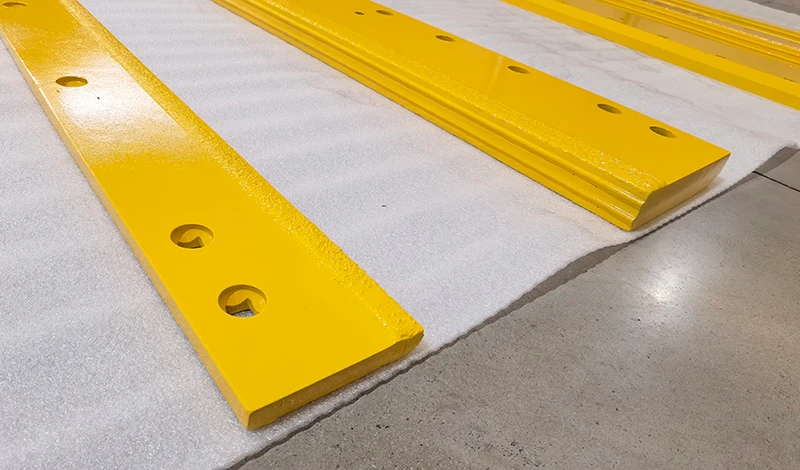
Choosing between a carbide vs hardened steel cutting edge is an abrasion decision before it is a price decision, and fleets usually make it the other way round. A through-hardened steel edge is one material worn across its whole section; a carbide-tipped edge is a steel body carrying much harder inserts in machined pockets, so the limit moves from the steel to the joint and the body. On soft shoulders the difference rarely repays itself. On abrasive gravel or compacted ice, where an edge change stops a machine that is being paid to work, the arithmetic changes quickly, and it changes on abrasion level rather than on budget.
What Each Option Is Designed For
Steel wears, carbide resists abrasion.
A through-hardened steel edge suits moderate abrasion and repairable duty, while a carbide-tipped edge is built for high abrasion where stopping the machine is the dominant cost.
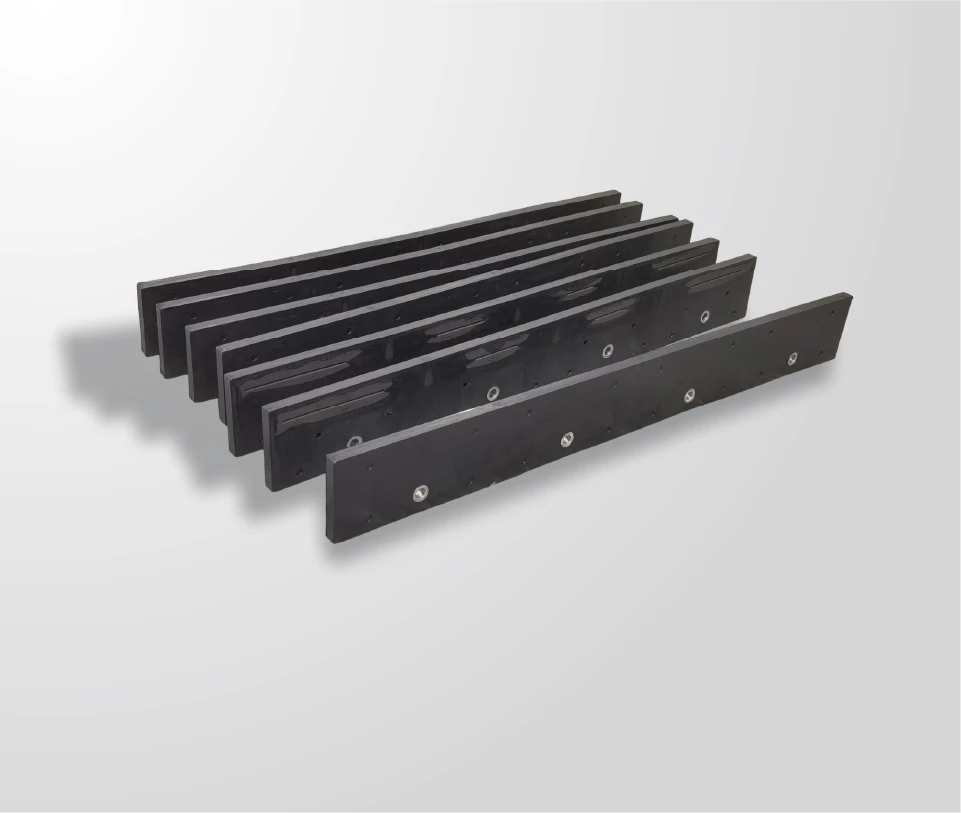
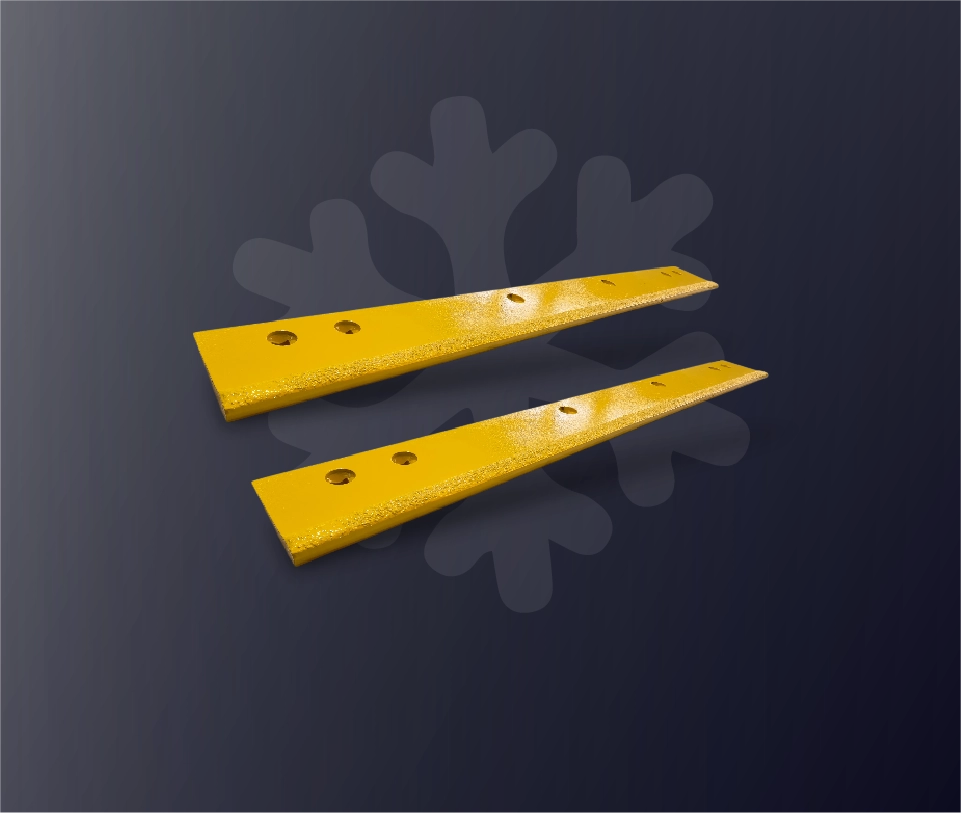
A through-hardened edge is a single-piece consumable. It is quenched and tempered to a controlled hardness band, it can be made in the section and pattern the machine requires, and it wears by losing metal across the whole working face. Its advantages are simplicity, tolerance of impact and repairability; its limitation is that every hour of abrasive work removes steel, and the profile is gone long before the section is.
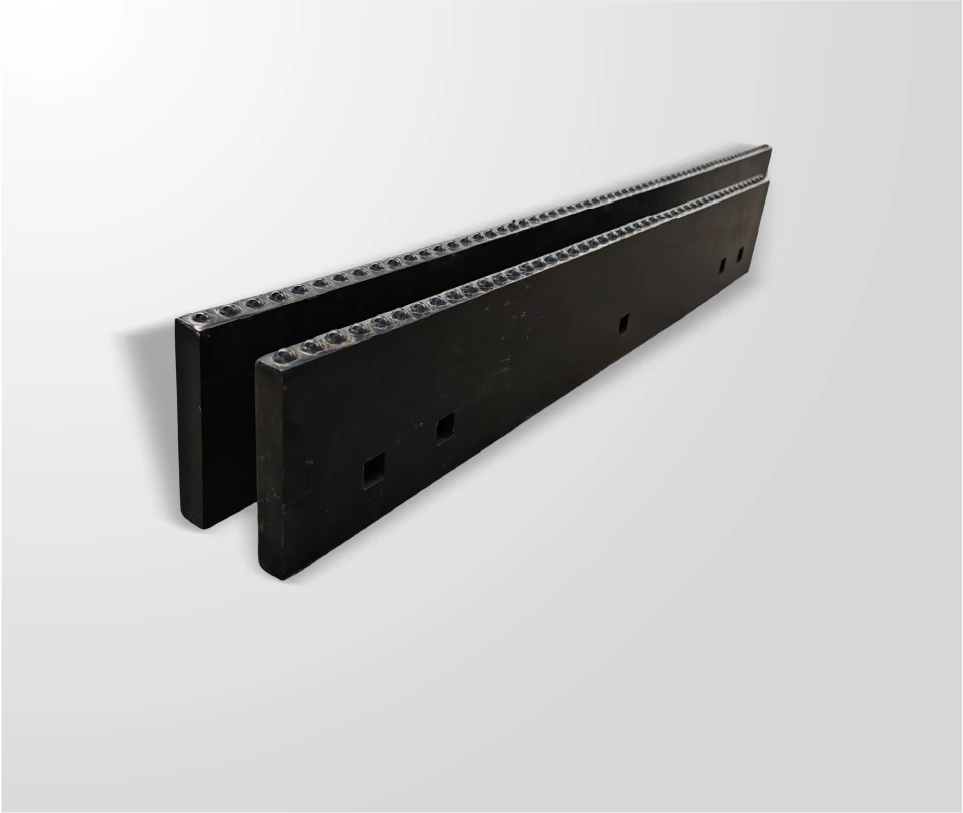
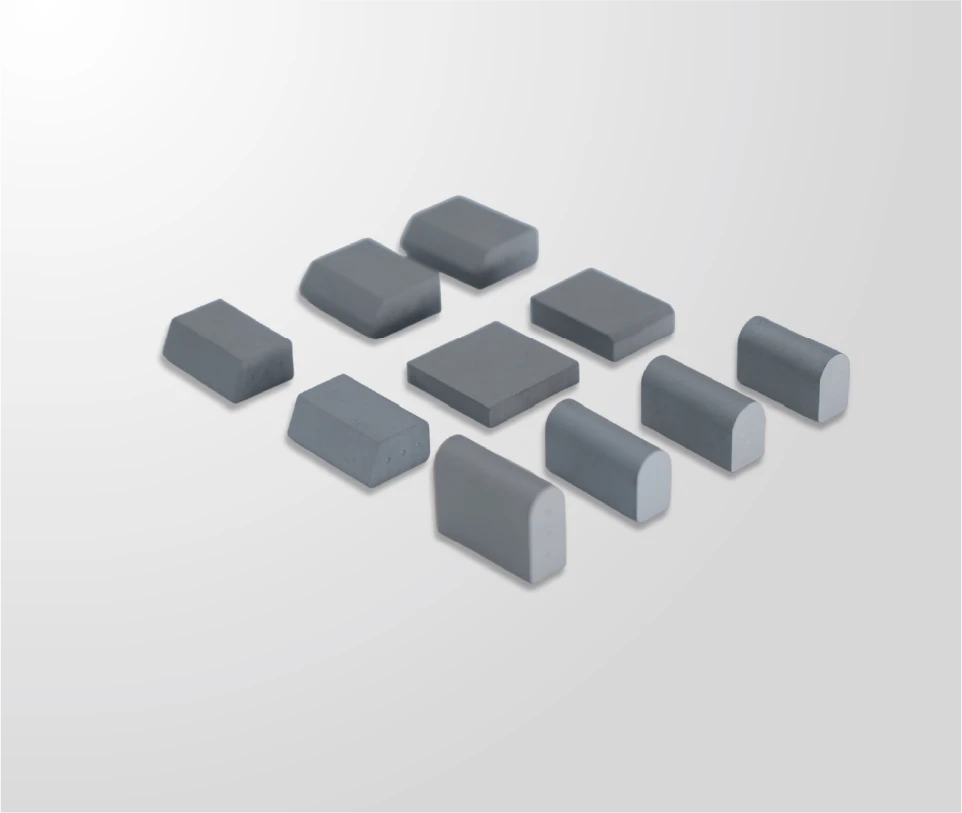
A carbide-tipped edge takes the opposite approach. A steel body is machined with pockets along the cutting edge and tungsten carbide inserts are joined into them, so the material in contact with the ground is a cemented carbide far harder than any steel. The body provides toughness and the mounting interface, and the joint carries the load. That construction is used across mining, drilling and wear applications, as the International Tungsten Industry Association describes.
The consequence for a buyer is that the two products are not versions of each other: one is a wear part, the other an assembly with a joint, so the specification, inspection and failure analysis all differ.
Wear Life Under Abrasion and Impact
Wear life separates the two options more than any other property, and impact reverses part of that separation. Carbide resists abrasive wear far longer because its hardness is at a different order of magnitude, but cemented carbide is brittle, so an insert meeting a rock edge or frozen rut at speed can chip where steel would deform.
| Loading | Through-hardened steel edge | Carbide-tipped edge |
|---|---|---|
| Sliding abrasion | Steady metal loss; profile rounds off | Very slow insert wear; profile holds |
| Impact | Deforms and mushrooms; usable | Insert may chip; grade selection critical |
| Limiting feature | The steel section | The joint and the body around the pockets |
| Wear across the section | Wears back toward the bolt line | Inserts stand proud until consumed, then the body wears |
Grade selection inside the carbide option works on the same hardness and toughness trade as steel, at a different scale. Carbide producers publish grade data in terms of hardness and toughness together, as Hyperion Materials & Technologies does for its cemented carbide range, and the selection question is which balance matches the ground, not which grade is hardest. The steel side of the same comparison is documented by wear-steel producers such as SSAB, and the underlying wear and metallurgy reference for both is published by ASM International.
Wear life is therefore not a single multiplier. A carbide edge can outlast several steel edges on abrasive gravel and be damaged earlier on rock-strewn ground, which is why fleets that record failure mode as well as change interval get more from the choice.
How Surface Condition Changes the Answer
Hard, bonded surfaces favour carbide.
Where the surface has to be cut rather than displaced — packed ice, compacted gravel, bonded material — a blade that holds a sharp profile does measurably less work per lane.
Two surface conditions push toward carbide. The first is any condition where the material is bonded or packed, because a hardened steel edge rounds off and then rides over the surface instead of cutting it, so the machine needs more passes and more down-pressure to remove the same material. The second is heavily abrasive loose material, such as crushed aggregate, angular gravel and silica-bearing sand, where the abrasion rate simply consumes steel faster than any affordable thickness can compensate.
Two conditions push the other way. Soft, sensitive surfaces such as chip seal and finished shoulders can be damaged by a sharp edge, so a slightly worn steel edge is sometimes better regardless of wear life. And ground carrying large loose rock exposes inserts to impact, which is where grade selection for toughness, or a return to steel, is the right answer.
Standardised abrasion and wear test methods are published by ASTM and are useful in a specification because they give a common language for a claim, though they do not replace a duty record: an edge can pass a laboratory abrasion test and be damaged in its first week by a rock no test reproduces.
Machine and Fitment Constraints
Fitment is where the carbide option is often assumed to be harder than it is. A carbide-tipped edge is a steel body with the same pattern as the steel edge it replaces, mounting with the same fasteners on the same moldboard or bucket lip. Machine and attachment interface conventions are published through SAE, and the pattern requirements are identical for both products.
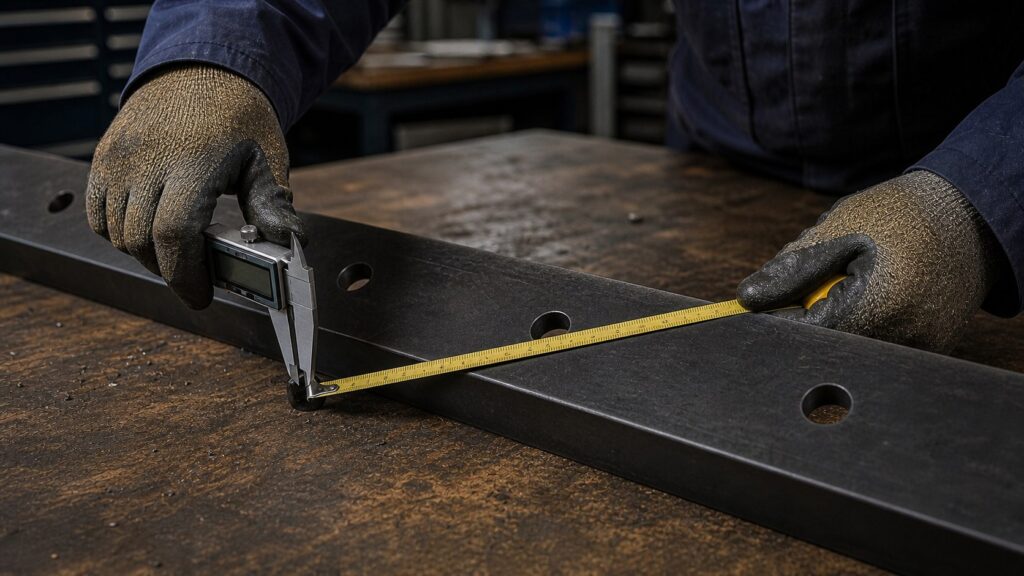
Three differences do matter. The first is tolerance: the insert pockets are machined and held to a dimensional tolerance of plus or minus 0.02 mm, because insert seating depends on it, so pattern validation against a drawing or physical sample matters more than for a plain steel edge.
The second is section and weight. A carbide-tipped edge carries a body, pockets and inserts, so the assembly is heavier and may need a heavier section than the steel edge it replaces; where a machine is already at its limit, that is a real constraint to check before specifying.
The third is what sits alongside the edge. End bits and corner guards have to be part of the same order, because a carbide cutting edge protecting a worn corner guard is an expensive way to preserve a cheap part. The construction detail of these assemblies is set out in the carbide blade construction guide.
Operational Trade-Offs Beyond Wear
Wear life decides the arithmetic; operations decide whether it is realised. The first difference is capital: a carbide-tipped edge costs more per unit, so a fleet carries more value in consumables and often holds fewer spares, which makes a lead time problem more serious than with steel.
The second is failure character. A steel edge degrades predictably and announces itself through lost cutting performance. A carbide edge tends to perform consistently and then change suddenly if inserts are lost or a joint fails, so inspection practice has to change with the specification. Carbide wear parts and tooling of this type are documented by producers such as Kennametal, and the same inspection logic applies across the product family.
The third is handling and repair. Assemblies are heavier to move and fit, and a lost insert is not a field repair, so a machine working far from a workshop carries a different risk with a carbide edge than with steel. That risk is manageable, but it is a reason to hold one spare assembly per critical machine rather than one spare edge for the fleet.
Cost Per Hour and Per Cubic Metre
Cost per hour or per cubic metre of material moved is the only comparison that reflects the real difference between the options, because it includes the change-out labour and the production lost while the machine is stopped. Unit price compares a part with an assembly and ignores both.
| Cost driver | Through-hardened steel | Carbide-tipped |
|---|---|---|
| Cost per unit | Lower | Higher |
| Changes per interval | Several | One, on abrasive ground |
| Labour and downtime | Paid at every change | Paid rarely |
| Production penalty as it wears | Grows as the profile rounds | Small until inserts are consumed |
| Cost of a failure | Low; the edge deforms | Higher; insert loss is an assembly event |
The threshold can be reasoned about without quoting prices. Let the steel edge be changed N times in the interval a carbide assembly covers once, and let the change-out cost per event be C. The carbide option is justified when the difference in delivered cost between the two, plus the cost of any additional risk it carries, is smaller than N times C plus the production lost during the extra changes. A fleet that knows N from its records and C from its workshop can settle the question on its own numbers.
Two cautions follow. If N is close to one, carbide is difficult to justify on cost alone. And if the machine cannot be stopped at all during the season, the relevant comparison is not cost per hour but the cost of the run that does not happen, which is a different calculation and often the real reason a fleet moves to carbide.
Where the Choice Is Genuinely Operational
Carbide pays where stopping costs most.
The decision turns on how often the machine can be taken out of service and what that costs, not only on how abrasive the ground is.
Four situations make the choice operational rather than analytical. High-hour machines on abrasive material with a hard season boundary, where every change-out consumes production time that cannot be recovered. Remote or long-route work, where a change-out means travel time for a fitter and parts. Contract work with liquidated or penalty provisions, where a machine standing still has a cost beyond its own operating rate. And fleet types that concentrate wear into a short season, where the value of not stopping is highest; this is the same logic that applies in mining and quarry operations, whose equipment and operating practice fall under the federal requirements in eCFR Title 30.
Conversely, three situations keep a steel edge in the specification. Low annual hours on soft surfaces, where the wear saving never arrives. Sensitive finished surfaces, where a sharp edge is a liability. And fleets with very tight cash flow in a season, where a lower unit cost per edge matters more to the operating budget than a lower cost per hour. None of those is a mistake; they are different objectives, and the error is choosing one while claiming the other.
Where a fleet runs both, the practical structure is a standard steel specification for most of the machine list and a carbide-tipped assembly for the machines whose downtime costs most. That keeps the programme simple while capturing most of the saving, and the broader product context sits in the hub article on wear parts beyond plows.

The choice between carbide and through-hardened steel is decided by abrasion level, impact exposure and the cost of stopping the machine. Steel is the disciplined answer where abrasion is moderate, surfaces are sensitive or annual hours are low, because it is cheap, tough and repairable. Carbide-tipped assemblies buy wear life and profile retention where the ground is abrasive and bonded, on the condition that grade selection accounts for impact and that fitment, body section and the parts alongside the edge are specified with the same care as the inserts.
Send SENTHAI the material each machine works, annual hours, current edge life and the pattern or a worn sample, and the technical team will review whether a steel edge or a carbide-tipped assembly suits each duty, and at what grade.
Related reading: the carbide blade construction guide explains how the body, pockets and inserts are assembled.
Frequently Asked Questions
Is carbide harder than hardened steel?
Yes, considerably. Cemented tungsten carbide is hard enough that a hardened steel edge and a carbide insert behave as different orders of material in abrasive ground, which is why inserts resist sliding wear far longer than any steel section. Hardness is not the whole comparison: carbide is also brittle, so impact resistance depends on the grade selected, and the joint and body around the inserts become the limiting features of a carbide-tipped edge.
When is a carbide-tipped cutting edge worth the extra cost?
When the number of steel edge changes in the same interval, multiplied by the change-out labour and the production lost, exceeds the additional cost of the carbide assembly. That normally means abrasive or bonded material, high annual hours, and a machine whose downtime is expensive. Where steel would only be changed once in the interval, the wear saving is too small for carbide to repay its higher unit cost on its own.
How can I tell whether an edge is carbide or steel?
A carbide-tipped edge shows a line of inserts seated in machined pockets along the working edge, with the joint visible between insert and body, and the assembly is heavier than a plain steel edge of the same pattern. In the workshop, the practical check is that carbide is hard enough to resist a file, while a steel edge is marked by one. Confirming grade and construction from the supplier’s documentation is more reliable than any field observation.
Can a carbide-tipped edge be repaired if inserts are lost?
Not as a field repair. Replacing an insert requires the pocket to be clean and sound, the insert to be seated to a defined tolerance and the joint to be made under controlled conditions, and by the time inserts are being lost the surrounding pockets are usually worn. The workable routine is to remove an assembly that has passed its measured limit, replace it, and then investigate whether the grade or the body was wrong for the duty.
What are the commercial terms for carbide-tipped edges?
They are quotation-based, because a carbide-tipped edge is specified rather than selected from a list: pattern, body section, insert grade, insert arrangement and quantity all affect the offer. Minimum order quantity, lead time, packing, delivery terms and warranty conditions are stated in the written quotation or order documents issued for that specification, along with any sampling or first-article arrangement.
{
“@context”: “https://schema.org”,
“@type”: “FAQPage”,
“mainEntity”: [
{
“@type”: “Question”,
“name”: “Is carbide harder than hardened steel?”,
“acceptedAnswer”: {
“@type”: “Answer”,
“text”: “Yes, considerably. Cemented tungsten carbide is hard enough that a hardened steel edge and a carbide insert behave as different orders of material in abrasive ground, which is why inserts resist sliding wear far longer than any steel section. Hardness is not the whole comparison: carbide is also brittle, so impact resistance depends on the grade selected, and the joint and body around the inserts become the limiting features of a carbide-tipped edge.”
}
},
{
“@type”: “Question”,
“name”: “When is a carbide-tipped cutting edge worth the extra cost?”,
“acceptedAnswer”: {
“@type”: “Answer”,
“text”: “When the number of steel edge changes in the same interval, multiplied by the change-out labour and the production lost, exceeds the additional cost of the carbide assembly. That normally means abrasive or bonded material, high annual hours, and a machine whose downtime is expensive. Where steel would only be changed once in the interval, the wear saving is too small for carbide to repay its higher unit cost on its own.”
}
},
{
“@type”: “Question”,
“name”: “How can I tell whether an edge is carbide or steel?”,
“acceptedAnswer”: {
“@type”: “Answer”,
“text”: “A carbide-tipped edge shows a line of inserts seated in machined pockets along the working edge, with the joint visible between insert and body, and the assembly is heavier than a plain steel edge of the same pattern. In the workshop, the practical check is that carbide is hard enough to resist a file, while a steel edge is marked by one. Confirming grade and construction from the supplier’s documentation is more reliable than any field observation.”
}
},
{
“@type”: “Question”,
“name”: “Can a carbide-tipped edge be repaired if inserts are lost?”,
“acceptedAnswer”: {
“@type”: “Answer”,
“text”: “Not as a field repair. Replacing an insert requires the pocket to be clean and sound, the insert to be seated to a defined tolerance and the joint to be made under controlled conditions, and by the time inserts are being lost the surrounding pockets are usually worn. The workable routine is to remove an assembly that has passed its measured limit, replace it, and then investigate whether the grade or the body was wrong for the duty.”
}
},
{
“@type”: “Question”,
“name”: “What are the commercial terms for carbide-tipped edges?”,
“acceptedAnswer”: {
“@type”: “Answer”,
“text”: “They are quotation-based, because a carbide-tipped edge is specified rather than selected from a list: pattern, body section, insert grade, insert arrangement and quantity all affect the offer. Minimum order quantity, lead time, packing, delivery terms and warranty conditions are stated in the written quotation or order documents issued for that specification, along with any sampling or first-article arrangement.”
}
}
]
}
Related articles
 Aftermarket Versus OEM Cutting Edges: Fitment and DocumentationScraper, dozer and earthmoving cutting edges
 End Bits and Corner Guards: Protecting the Blade StructureScraper, dozer and earthmoving cutting edges
 Matching Cutting Edges to Material Type and Machine WeightScraper, dozer and earthmoving cutting edges
 Hot-Rolled Versus Quenched-and-Tempered Cutting EdgesScraper, dozer and earthmoving cutting edges