
Mining Wear Parts Programme: Standardising Across a Plant
A mine or quarry that buys wear parts one line at a time ends up with a store full of part numbers, a different documentation standard for every supplier, and no way to say…

A mine or quarry that buys wear parts one line at a time ends up with a store full of part numbers, a different documentation standard for every supplier, and no way to say which consumable is actually costing the site money. Building a mining wear parts programme is not a purchasing exercise for a bigger order. It is a decision to define a small number of specifications, hold one documentation standard across every line, and manage replacement against measured wear rather than against habit.
This page is written for the people who own that decision: plant, maintenance and reliability managers, contractors running a crushing and screening spread, distributors building a range, and OEMs placing production orders. It covers what a plant actually controls, how to standardise across product lines, the documentation set for each line, how programme pricing is built, continuity and site logistics, acceptance and rejection criteria, and how warranty and failure claims are handled once a programme is running.
What a Plant Actually Controls
Specifications, records, spares policy and acceptance.
A plant cannot control a supplier’s internal process, but it can fix the specifications it buys against, the records it demands, the stock it holds and the gates a delivery must pass.
Programmes fail for a predictable reason: they are written as a demand for discount instead of a plan for control. Volume alone buys very little if the site still holds fourteen variations of the same liner and cannot say which one performed. The leverage a plant genuinely has is the ability to describe what it needs precisely, to check that a delivery meets it, and to hand a supplier a forecast it can plan production against.
Four levers do most of the work. The first is the specification: a drawing or controlled sample per wear item, with material data stated as properties rather than trade names. The second is the record: what the supplier measures and keeps, and how a batch is identified so a performance question can be traced. The third is the spares policy: which items are held on site, at what minimum section, and how a reorder is triggered. The fourth is acceptance: the points checked on receipt, by whom, and what happens when one fails.
Those four levers are also what make a programme attractive to a supplier, because they remove variance from the order. A plant that buys against controlled revisions and gives a reasonable forecast is easier to schedule for than one that sends a photograph of a worn plate and asks for the same again.
Standardising Across Product Lines
Standardisation is usually imagined as collapsing part numbers. Its real value is that it concentrates demand onto the few specifications that matter, so every line in the plant can be documented, inspected and reordered the same way.
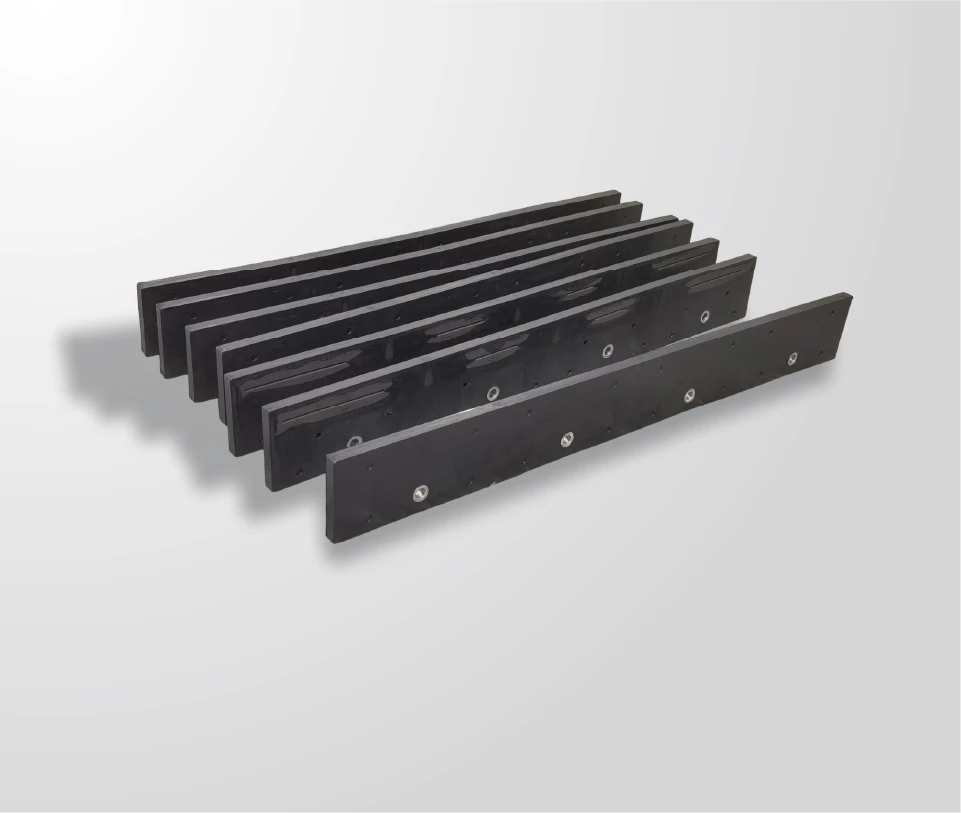
The lines that carry consumables in a typical hard-rock plant are the crusher, the screens, the transfer chutes, the feeders and the loading tools. Each has its own wear mechanism and its own critical dimension, so a programme does not mean using one material everywhere. It means using a small number of material definitions, one interface discipline and one documentation standard, and accepting that a chute floor and a jaw liner will never share a life cycle.
| Line | Consumable set | Critical dimension | What standardising buys |
|---|---|---|---|
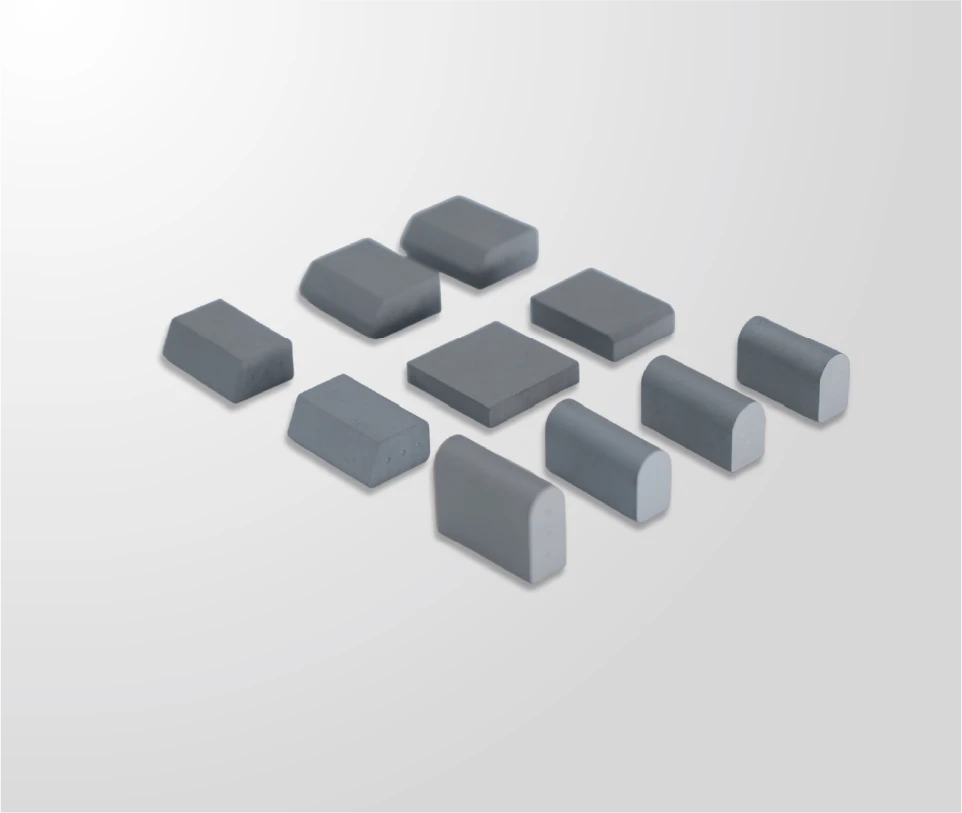
| Crushing chamber | Liners, jaw plates, blow bars, rotor tips and shoes | Mounting pattern and seat tolerance | Fewer profiles, one grade family, readable wear history |
| Screens | Wire cloth, moulded panels, tension rails | Frame height, aperture, retention system | Deck-level records and repeatable panel orders |
| Transfer points | Liner plates, tiles, impact bars, skirt seals | Zone geometry and fixing pattern | Zone drawings instead of ad hoc plate cutting |
| Feeders and chutes | Apron plates, pan liners, dead-bed wear | Plate thickness and fixing | Shared section and fastener standards |
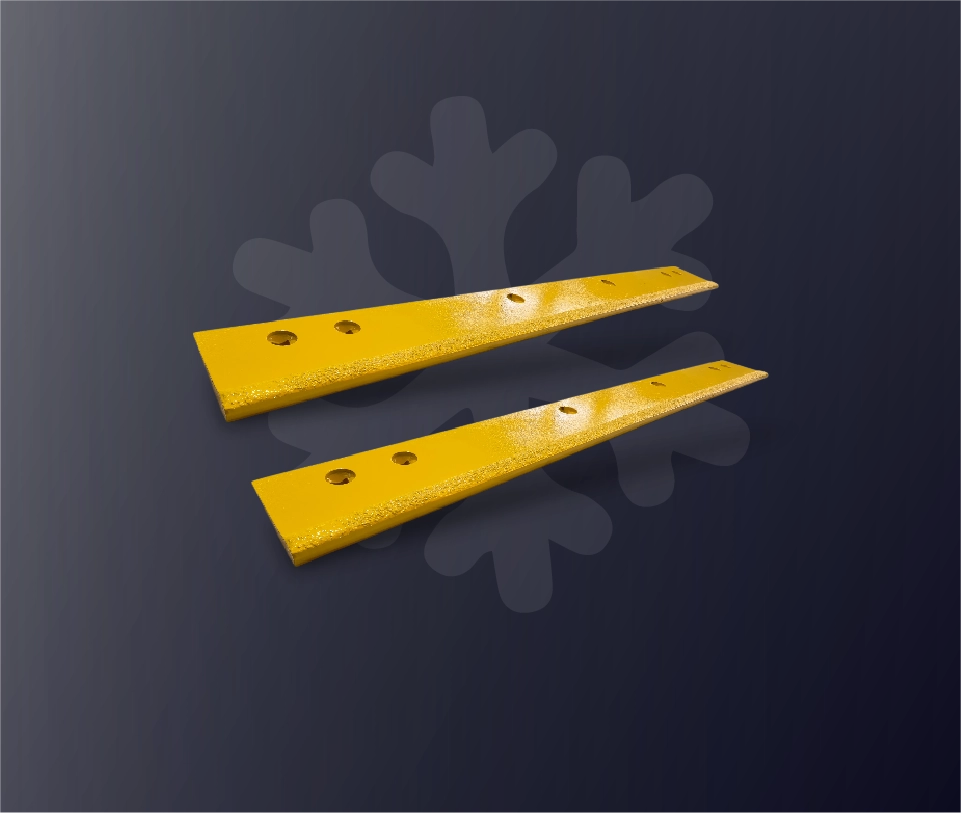
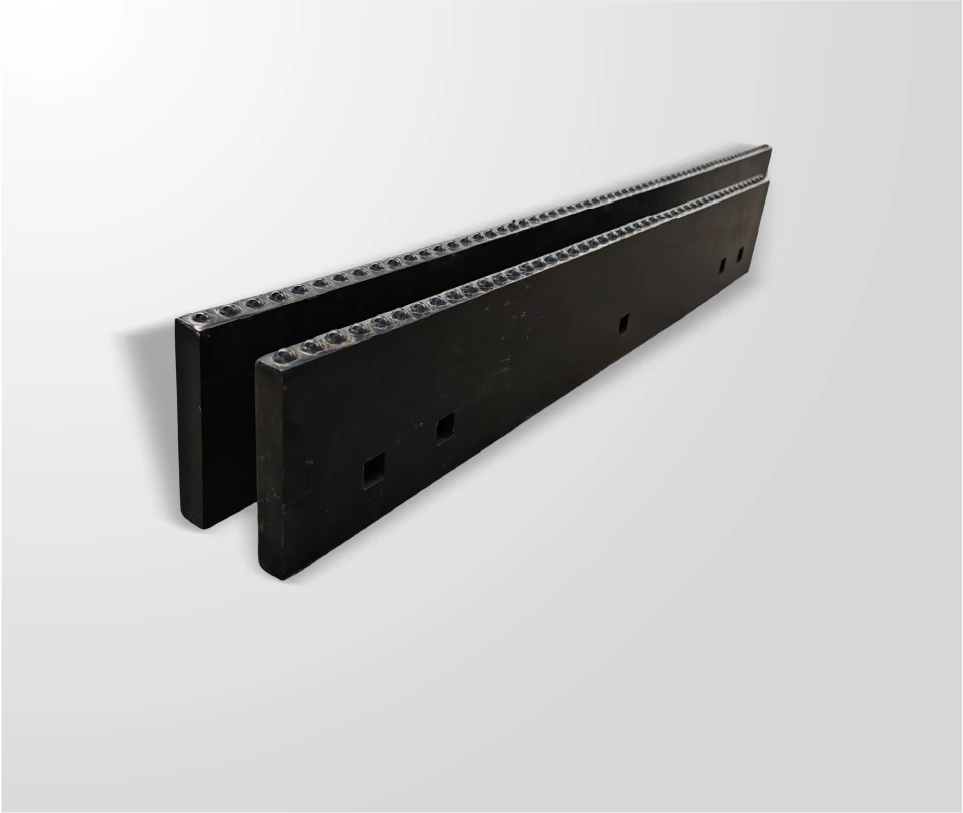
| Loading and haulage tools | Cutting edges, bucket liners, ground-engaging tools | Bolt pattern and section | One acceptance gate across all lines |
Where a plant also sells or redistributes, the same logic applies in a different form: a distributor arrangement works when the range is defined by duty and documented consistently, in the way that a wholesale blade programme for distributors is structured around defined product families rather than a long catalogue.
The Documentation Set for Each Line
One documentation standard, applied to every line, is what makes a programme manageable, and the set itself is short.
- Interface definition. A drawing revision or controlled sample per item: pattern, spacing, section and profile.
- Material data. Grade, hardness and grain size for carbide; grade and hardness for steel and cast items; the joining method where inserts are attached.
- Dimensional records. The measurements taken, the tolerance held on machined features, and who performed the check.
- Batch identification. How the delivery links to the production and inspection records behind it.
- Packing and preservation. How edges, machined faces and coated surfaces are protected, and how the batch is labelled.
Documentation standards for measurable properties are published rather than negotiated. The material and test standards issued by ASTM are the reference for stating hardness and other properties in a comparable way, which matters when one programme covers carbide, wear steel and cast iron from more than one production route.
Price Structures and How They Are Built
Programme pricing is built from inputs, and understanding the structure prevents a false comparison between a consolidated quotation and a set of single-part prices.
The inputs are the wear material and its volume, the machining content, batch quantities across the whole programme, the inspection level agreed, packing, and delivery terms. Consolidating lines changes two of those in the supplier’s favour: material can be planned across lines where grades overlap, and machining setups can be grouped. Inspection level remains a cost line in its own right, because a delivery checked dimensionally and recorded batch by batch is not the same product as one inspected by eye.
Two cautions belong with programme pricing. A single blended figure hides the part of the programme that is difficult to make, so ask for the structure to be visible by line. And delivery terms change the comparison more than they appear to; a quote that names the term, and states where responsibility transfers, is comparable, while one that does not is not yet a price. The applicable terms, including batch quantity, lead time and delivery, are stated in the written quotation or order documents.
Continuity, Lead Time and Site Logistics
For a remote site, continuity is a logistics problem before it is a commercial one, and the programme should be written around how material reaches the plant.
A mine or quarry far from a port or a city carries more stock than it wants to and still stops for a part. Two structural answers exist. The first is a controlled revision per item, so that a repeat order is a repeat rather than a re-engineering exercise, which shortens the interval between order and delivery. The second is a spares policy written against wear rate, so that buffer stock is held at the items and the sections where measurement says consumption is fastest.
Logistics decisions then follow: how a mixed shipment across lines is packed and identified, whether containers or break-bulk suit the site’s receiving capability, how batch labels are designed so that stores can find a specific item without opening every crate, and how documentation travels with the shipment rather than separately. Suppliers used by the industry, such as the equipment manufacturers and distributors represented by the associations AEM and AED, publish material on these supply practices because a substantial part of their business is exactly this kind of programme support.
Acceptance and Rejection Criteria
Acceptance criteria are what turn a programme from an intention into a control, and they should be agreed at award rather than at the first delivery.
A workable gate covers three things. Dimensional verification confirms that the pattern, section and profile match the drawing revision, which is where a fitment failure is caught before a machine is opened. Material verification confirms the grade and hardness claimed, usually from records rather than from destructive testing. Assembly verification applies to carbide-tipped and composite items, confirming that the insert or element sits correctly, that the joint is sound and that the retaining feature works.
The gate also needs a defined failure path: who inspects, what record is kept, what happens to a non-conforming batch, and how a replacement is expedited. Rejection criteria are most useful when they are written before the pressure of a shutdown, because a plant that has to decide in the moment almost always accepts the batch.
Managing Warranty and Failure Claims
A programme changes how claims are handled, because a plant with records can classify a failure instead of arguing about it.
Three cases have to be separated: a part that did not meet the specification, a part that met the specification but was unsuitable for the application, and a part that failed because of fitment or operation. Each has a different answer and a different remedy, and the evidence that decides the case is the same in all three: photographs of the item in position, the zone it came from, the measured wear before removal, hours and tonnage since installation, the condition of the retaining hardware, and the batch identification from the delivery.
The claim window, the remedy and the return or inspection procedure are stated in the written quotation or order documents, which is the reason those documents should be read at award rather than after a failure. Where the plant keeps a wear register, the claim pack is assembled from it in minutes rather than reconstructed from memory, and that is the practical dividend of running a programme rather than buying part by part.
Occupational and site safety requirements belong alongside the programme documents, since handling, isolation and access practice during a liner change is regulated work on a mine site; the mining safety research published by NIOSH Mining and the requirements under 30 CFR are the references to check before writing a change-out procedure.
A wear parts programme is four controls plus a record. Define each item by drawing or controlled sample, hold one documentation standard across every line, set a spares policy from measured wear rate, and put an acceptance gate in front of every delivery. Standardisation then concentrates demand on the specifications that matter instead of collapsing everything to one material, pricing becomes comparable by line once the structure is visible, and continuity becomes a question about controlled revisions and logistics rather than about luck. The programme pays for itself the first time a failure can be classified from records instead of debated from memory.
Send SENTHAI the wear item list for your crushing, screening and transfer lines, with drawings or samples and the wear measurements you hold, and the technical team will prepare a specification and documentation package for a plant-wide review.
Related reading: how these consumable lines fit a wider maintenance picture is set out in wear parts beyond plows.
Frequently Asked Questions
What is a mining wear parts programme?
It is a plant-level arrangement that manages consumables across every line through four controls: a specification per item, one documentation standard, a spares policy driven by measured wear, and an acceptance gate at receipt. It is not simply a larger order. The point of the programme is that crushing, screens, chutes and loading tools are described, inspected and reordered the same way, so performance can be compared and failures can be classified from records.
Should a plant use one wear material across all lines?
No. Each line has its own wear mechanism, and a chute floor, a jaw liner and a rotor tip will never share a life cycle. What a programme standardises is the material definition and the interface discipline, not the material itself. Using a small number of documented grades and one acceptance standard concentrates demand without forcing a compromise on any single item, which is where both price and reliability come from.
What documents should each line carry?
Each item should carry an interface definition as a drawing revision or controlled sample, material data stating grade, hardness and grain size or steel hardness as applicable, the dimensional records with the tolerance held on machined features, the batch identification linking delivery to production, and packing and preservation instructions. Holding this set for crusher, screen, chute and feeder items alike is what allows one acceptance gate and one claims process to cover the whole plant.
How is programme pricing built?
From the wear material and its volume, the machining content, batch quantities across the programme, the agreed inspection level, packing and delivery terms. Consolidating lines can help where grades overlap and setups can be grouped, while inspection level remains a genuine cost line. Ask for the structure to stay visible by line rather than blending into one figure, and confirm batch quantity, lead time and delivery terms, which are stated in the written quotation or order documents.
How are failure claims handled once a programme is running?
By separating a part that did not meet specification, a part that met specification but was unsuitable for the duty, and a part that failed through fitment or operation. The evidence is gathered in the first hours: photographs in position, the zone, measured wear, hours and tonnage, hardware condition and batch identification. A wear register makes that pack a matter of minutes, and the claim window and remedy are stated in the written quotation or order documents.
{
“@context”: “https://schema.org”,
“@type”: “FAQPage”,
“mainEntity”: [
{
“@type”: “Question”,
“name”: “What is a mining wear parts programme?”,
“acceptedAnswer”: {
“@type”: “Answer”,
“text”: “It is a plant-level arrangement that manages consumables across every line through four controls: a specification per item, one documentation standard, a spares policy driven by measured wear, and an acceptance gate at receipt. It is not simply a larger order. The point of the programme is that crushing, screens, chutes and loading tools are described, inspected and reordered the same way, so performance can be compared and failures can be classified from records.”
}
},
{
“@type”: “Question”,
“name”: “Should a plant use one wear material across all lines?”,
“acceptedAnswer”: {
“@type”: “Answer”,
“text”: “No. Each line has its own wear mechanism, and a chute floor, a jaw liner and a rotor tip will never share a life cycle. What a programme standardises is the material definition and the interface discipline, not the material itself. Using a small number of documented grades and one acceptance standard concentrates demand without forcing a compromise on any single item, which is where both price and reliability come from.”
}
},
{
“@type”: “Question”,
“name”: “What documents should each line carry?”,
“acceptedAnswer”: {
“@type”: “Answer”,
“text”: “Each item should carry an interface definition as a drawing revision or controlled sample, material data stating grade, hardness and grain size or steel hardness as applicable, the dimensional records with the tolerance held on machined features, the batch identification linking delivery to production, and packing and preservation instructions. Holding this set for crusher, screen, chute and feeder items alike is what allows one acceptance gate and one claims process to cover the whole plant.”
}
},
{
“@type”: “Question”,
“name”: “How is programme pricing built?”,
“acceptedAnswer”: {
“@type”: “Answer”,
“text”: “From the wear material and its volume, the machining content, batch quantities across the programme, the agreed inspection level, packing and delivery terms. Consolidating lines can help where grades overlap and setups can be grouped, while inspection level remains a genuine cost line. Ask for the structure to stay visible by line rather than blending into one figure, and confirm batch quantity, lead time and delivery terms, which are stated in the written quotation or order documents.”
}
},
{
“@type”: “Question”,
“name”: “How are failure claims handled once a programme is running?”,
“acceptedAnswer”: {
“@type”: “Answer”,
“text”: “By separating a part that did not meet specification, a part that met specification but was unsuitable for the duty, and a part that failed through fitment or operation. The evidence is gathered in the first hours: photographs in position, the zone, measured wear, hours and tonnage, hardware condition and batch identification. A wear register makes that pack a matter of minutes, and the claim window and remedy are stated in the written quotation or order documents.”
}
}
]
}
Related articles
 Chute and Transfer Point Wear Liners for Hard RockMining, aggregate and crusher wear parts
 Screen Media Wear: Wire, Polyurethane and Rubber ComparedMining, aggregate and crusher wear parts
 Crusher Wear Parts Supplier Evaluation: The Documentation SetMining, aggregate and crusher wear parts
 VSI Crusher Wear Parts: Tips, Shoes and Distributor PlatesMining, aggregate and crusher wear parts