




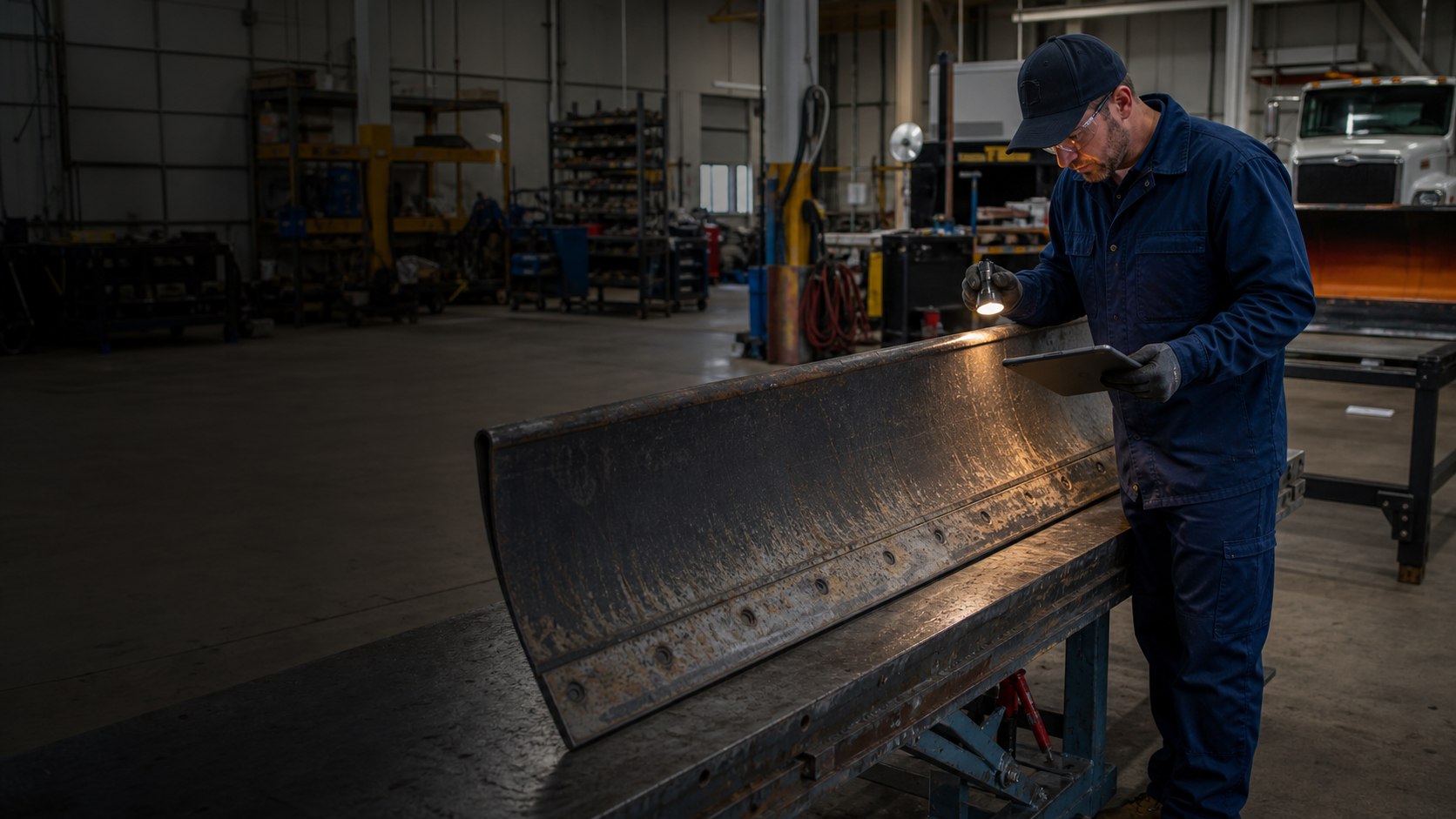
Overall Edge Shape
Multiple Measurements
Segments and Mounting
Change over Time
A wear pattern is an inspection observation, not a diagnosis. Compare it with the blade design, mounting condition, equipment requirements and operating history.
The working edge reduces gradually with a similar profile across most of the blade. Record the remaining profile at repeatable positions and compare it with earlier inspections.
One end or side shows a different remaining profile from the other. Document the orientation, end references and measurements before checking alignment, mounting and operating factors.
The center, ends or selected sections show more wear than neighbouring areas. Map each position and check the surrounding segments, supports and hardware.
A notch, chip, crack, deformation or isolated component finding appears in one area. Record the complete blade first, then add close-ups and service context.
Use the same orientation and reference positions every time so the record can be compared across inspections.
Follow the equipment manufacturer’s inspection procedure. Secure and support the blade before cleaning, touching, measuring or photographing it.
Remove loose snow, ice and debris using an approved method so the visible edge, mounting features and component condition can be recorded.
Record the blade, equipment and installed position. Mark the reference end and keep the same front, back and end orientation in all records.
Capture full-width front and back views before close-ups. Use a straight viewing angle and include both ends so the overall profile remains visible.
Use the same defined positions across the blade. Record each location and value rather than relying on one measurement or an average that hides local variation.
Record visible segment, rubber, steel, carbide, mounting and hardware condition where applicable. Compare the findings with the previous inspection and product requirements.
A single measurement cannot show whether wear is even, tapered or concentrated. Use an inspection map that can be repeated at the next service interval.
✓ Define one reference end
✓ Mark several positions across the blade
✓ Use the same measurement method at each position
✓ Record the full edge before close-ups
✓ Note cracks, chips, deformation or exposed hardware separately
✓ Compare with previous records when available
Do not invent a universal replacement limit. Use the blade, plow and equipment manufacturer’s criteria for the actual configuration.
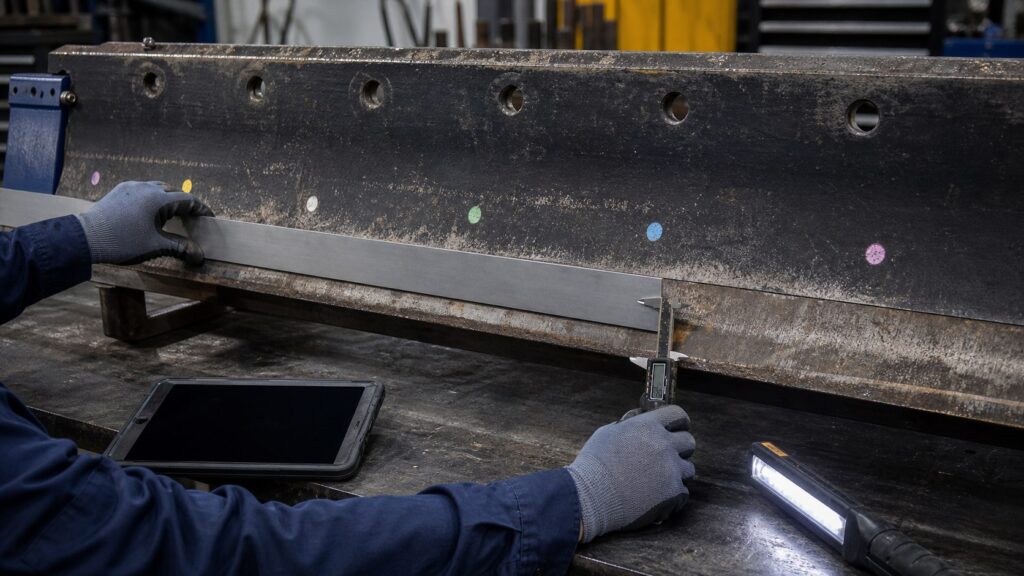
Illustrative multi-position wear inspection; not an actual SENTHAI facility or acceptance standard.
These observations point to areas for inspection. They do not prove one specific root cause.
Check the recorded installation, blade angle, mounting surfaces, plow alignment and operating history under the equipment requirements.
Record each section separately and inspect visible support, spacing, clamping, hardware and road-contact conditions before drawing conclusions.
Photograph the complete blade and affected area, then inspect adjacent components and equipment for related visible condition.
Escalate the finding according to the blade and equipment requirements before allowing continued operation or contact with the road.
A useful record connects the observed pattern with the blade identity, measurement locations and service context.
Blade or drawing reference, equipment information, installed position, inspection date and reference end.
Defined measurement positions, values, method and any area that could not be measured reliably.
Complete front and back views, both ends, mounting areas and focused close-ups of every recorded finding.
Known route, surface, recent impact, setup change, maintenance work and previous inspection records without unsupported assumptions.
The inspection record supports a decision; it does not replace the manufacturer, fleet or equipment acceptance criteria.
Where permitted by the applicable requirements, keep the baseline record and repeat the same measurements to track progression.
Review installation, mounting, hardware, alignment and equipment condition using the relevant maintenance procedure.
Send the wear map, photographs, dimensions and equipment information when replacement feasibility or compatibility needs confirmation.
Use the preseason checklist for the wider plow inspection. If a replacement is being considered, collect the full blade dimensions and mounting pattern separately.
Use the product and equipment requirements for final maintenance and replacement decisions.
No. Uneven wear can be associated with several installation, equipment, operating and road-contact factors. Document the pattern and inspect the wider system before assigning a cause.
Choose defined, repeatable positions from one reference end and use the same method at each point. Keep the location and value together in the record.
For a segmented blade, record each visible section separately as well as the complete cutting edge. Use the actual product, plow and equipment requirements to determine the inspection and replacement criteria.
Usually not by itself. Photographs document the shape and location of a finding, but dimensions, installation, equipment condition and service history are needed for a broader review.
Send the blade identification, equipment information, wear map, complete and detailed photographs, confirmed dimensions, mounting pattern and estimated quantity.
Send the available inspection information when a JOMA-style or carbide blade needs replacement or configuration review.
✓ Blade and equipment identification
✓ Wear measurements at defined positions
✓ Complete and detailed photographs
✓ Mounting pattern or drawing
✓ Required quantity and delivery country
Email: [email protected]