
Stump Grinder Teeth: Carbide Grade and Sharpening Cycles
Stump grinding is billed by the hour, so teeth that have gone blunt are an output problem before they are a maintenance problem. Stump grinder teeth that stop cutting cleanly make the operator sweep…

Stump grinding is billed by the hour, so teeth that have gone blunt are an output problem before they are a maintenance problem. Stump grinder teeth that stop cutting cleanly make the operator sweep longer, load the wheel harder and leave a finer, dustier spoil, and none of that shows up in a maintenance log. The fix is not more sharpening: it is a grade, a sharpening cycle and a rotation rule suited to the ground the machine actually works in.
What This Looks Like in the Field
Worn teeth show up in output before they show on the tooth.
The first sign is usually rising time per stump and a finer, dustier spoil, because a worn tip still spins but stops cutting.
Crews read the spoil before they read the teeth. A sharp face lifts chips; a dulled tip grinds the wood into dust and throws more of it, so the ground around the stump tells you the state of the cutting face before anyone shuts the machine down. Rising time per stump on comparable stock is the second signal, and fuel burned on the same job is the third.
Operator behaviour is the fourth. When the crew starts sweeping the wheel side to side to remove material that should cut, or leans on the wheel to force progress, the teeth have stopped doing their share of the work. A crew compensating for worn teeth is also putting extra load into the wheel, the bearings and the holder seats, which is how a tooth problem becomes a spindle problem.
That is why a check schedule should be built around work done rather than calendar days: the state of the teeth changes with each stump, because grit content changes with the ground. Logging and land clearing groups such as the Forest Resources Association frame machine time as the dominant production cost, which is the right frame for a consumable that decides the pass count.
Failure Modes and What They Signal
Most stump grinder tooth problems fall into four families, and each points at a different cause. Two are wear and two are damage, and they need different responses: damage is not cured by sharpening more often, it is cured by changing grade, restoring the pocket or correcting how the wheel is fed.
| What you see | What it usually indicates | First action |
|---|---|---|
| Even wear land across the cutting face | Normal abrasion; the tip has done its work | Sharpen or replace according to policy |
| Chipping or spalling at the tip | Grade too hard for the impact duty, or stone and grit in the root ball | Review the grade against ground conditions |
| Tip lost with residue on the body | Joining or fitment problem, or heat in service | Check pocket contact and lot documentation |
| Tooth loose, pocket wallowed | Clamp force lost to wear or wrong torque | Measure the pocket; replace the holder if worn |
| Bent or broken shank | Overload from feeding stone or the wrong tooth for the wheel | Check wheel type, technique and seat contact |
Grade is documented rather than asserted. The properties that decide how a tip behaves are hardness and toughness, quoted against test methods published by ASTM, and producers of cemented carbide such as Hyperion Materials & Technologies publish grade data in those terms so a buyer can compare two offerings on the same scale.
Wear is progressive and predictable, so it belongs in a replacement interval. Damage is event-driven: a tooth that chipped on stone is telling you the grade is absorbing more impact than it was chosen for, and a wallowed pocket is telling you the holder has passed the point where a new tooth will seat square. Recording which family each failure belongs to is what makes the next order a specification decision instead of a repeat order.
Inspection Intervals and What to Record
There is no universal interval, because the duty changes with the ground. Set a check at a fixed amount of work — stumps ground or machine hours — for your own programme, then tighten it for stony ground and storm work where the wheel meets more grit. A short check that fits the working day beats a thorough one that never happens.
The record is deliberately small. Date, machine hours, stumps ground since the last check, teeth changed, position on the wheel, the wear mode seen, the grade lot number, and whether a torque check was done. Where a pocket was measured, record the figure. Photographing a set before it goes back in takes seconds and settles most later questions about whether the wear was normal.
Two things come out of that record. The first is a reorder point: teeth per hour on your own machines, which is a better basis for stock than a supplier’s average. The second is evidence. A wear question answered with a dated photograph, a measured pocket and a lot number is a technical conversation, and it replaces the guesswork that usually surrounds a consumable dispute.
Conditions That Change the Wear Rate
Species sets the baseline. Dense hardwood cuts slower and loads the tip harder than softwood, and a dry, seasoned stump is more abrasive than green wood because the wood itself is denser and holds less moisture to lubricate the cut. Rot and voids change the picture again, because the wheel cuts through soft material at full speed and then takes the full load on the sound wood around it.
Grit is the dominant variable. Stumps hold soil in the root flare, and the amount is set by how the tree was felled and where it sat: a stump on a gravel skid trail carries far more abrasive material into the wheel than one on forest floor. Grinding below grade pushes the teeth into soil and stone rather than wood, and that single habit can dominate tooth consumption on a job.
Machine and technique complete the list. Hydraulic flow and wheel speed set how much energy each tooth delivers, the number of pockets on the wheel sets how often each tooth sees a cut, and feed rate decides whether the tip slices or hammers. Two operators on the same machine and the same stumps can produce materially different tooth consumption, which is why the record in the previous section is worth more than any general rule of thumb.
Sharpening, Rotation or Replacement
Three options exist, and they are not interchangeable. A tooth with an even wear land can go back to a grinding wheel and have its face restored; a tooth that can be indexed in its holder can be rotated to a fresh cutting edge and run again; a tooth that has chipped, spalled or lost a segment is usually past saving, because restoring the geometry removes more carbide than the design allows.
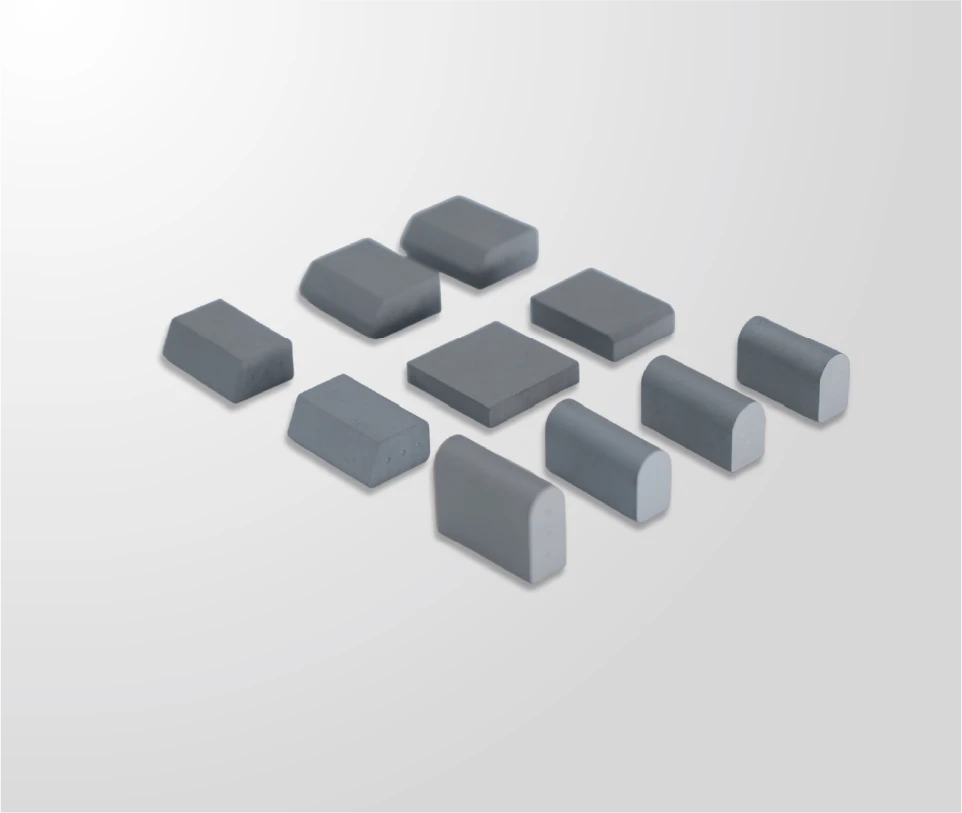
Where re-sharpening is the policy, the face angle is the constraint. Grinding has to restore the original face angle and land width, keep the tip cool, and leave the remaining carbide supported by the body. Removing material until the tip stands proud of its support is how a sharpened tooth breaks on the next stump. The material being ground back into shape is the same micro-grain tungsten carbide described in the carbide insert range, and pressed and sintered tips made under a controlled process, of the kind used across the powder metallurgy industry and represented by MPIF, are the reason grade and grain size are documented per lot rather than assumed.
The decision rule is geometric. If a sharpening cycle can restore the face angle without changing the working profile, sharpen. If it cannot, the tooth is consumed. Compare the cost of another cycle against a new tooth using the crew time as well as the shop time, because the two hours a sharpening session takes are usually the larger of the two numbers.
Tools, Hardware and Safe Handling
The working kit for a tooth change is small and should travel with the machine: the correct socket or spanner, a torque wrench, spare retainers and bolts, a pocket gauge, gloves, eye protection, a brush to clear the seat, and a container for worn teeth so they do not end up in the chip pile. Losing a retainer in the spoil, with no spare on the truck, ends the day early.
The procedure matters more than the kit. Machine off, key out, wheel locked, and never reach into a pocket while the wheel can turn. Clear the seat and clamp before fitting, because grit trapped under a tooth loads the pocket unevenly, and take the torque to the figure in the machine or tooth documentation. Silica-bearing dust thrown up by dry grinding is a known respiratory hazard, documented by NIOSH, and hand and arm load from handling heavy wheels and cutters is covered in guidance from HSE.
Two further habits reduce damage that no grade can prevent. Keep the wheel guard in place and maintained, because a tooth that leaves its pocket at wheel speed is a projectile rather than a wear item. And check the pockets at every change, since a pocket that has opened by a fraction of a millimetre is the beginning of the vibration that finishes the wheel.
Spares Planning Between Jobs
Stock planning starts from the set on the machine. Carry a full replacement set per machine plus one spare set per crew, and keep the fast-moving profile and retainer in that kit rather than in the stores van. Demand spikes with storm and utility work, when several crews grind at once and the last thing anyone wants is a shared shortage of one pocket size.
The order file should be readable without the machine in front of you: grade with its hardness band, tip profile, pocket size and tooth type, retainers and bolts, and the wheel the set is intended for. Where fitment is uncertain, supply a worn tooth or a drawing, and have the pattern validated before the season rather than during it. A supplier who machines its own pockets to a held tolerance can work from a drawing or a physical sample instead of asking you to guess a part number.
Commercial terms belong in writing. Quotation covers the specification above; minimum order quantity and lead time are set per order, and the applicable figures are stated in the written quotation or order documents rather than assumed from a website. Where a program is seasonal, agreeing the delivery pattern in advance is what keeps a spares holding from turning into a cash holding.
Tooth cost is decided by three things the article has separated: the abrasion the ground imposes, the damage the operation inflicts, and the service policy between them. Abrasion is managed with grade and sharpening; damage is managed with pocket condition, torque and technique; and both are measured with a short record of stumps, hours and wear modes. Once that record exists, the inspection interval, the spares holding and the specification in the next quotation all come from the fleet’s own numbers instead of from a general recommendation.
Send SENTHAI the wheel type, a worn tooth or the pocket dimensions, and the species and ground your crews grind, and the technical team will review grade, sharpening policy and fitment against your records.
Related reading: wear parts beyond plows and the carbide insert range.
Frequently Asked Questions
How often should I sharpen stump grinder teeth?
Set the interval from work done rather than the calendar. Check the set at a fixed number of stumps or machine hours for your own programme, and shorten that interval for stony ground where grit in the root flare accelerates wear. On the machine, the practical trigger is the face: when the wear land has widened to the point where the tooth stops lifting chips and the spoil turns to dust, it is due. A written interval you keep beats an ideal one you keep putting off.
What are the different types of stump grinder teeth available?
Teeth differ in three ways that matter to a buyer. The holder interface sets what physically fits the wheel, the tip profile sets how the tooth enters the wood and how much carbide is exposed to shock, and the grade sets whether that tip is tuned for edge retention in abrasive ground or toughness against stone. Some designs can be indexed in the pocket and run again, others are replaced. Match all three to the wheel and the ground.
How do I tell a worn tooth from a damaged one?
Wear is progressive: an even land grows across the cutting face and the tooth dulls predictably. Damage is event-driven and appears as chipping, spalling, a lost tip, a wallowed pocket or a bent shank. The distinction changes the response, because a worn tooth is sharpened or replaced while a damaged one means the grade, the pocket condition or how the wheel is being fed has to be reviewed before more teeth are consumed.
What should a stump grinder tooth quotation cover?
Ask for the grade and its hardness band, the tip profile, the pocket or holder interface, whether retainers and bolts are included, the packing format and the delivery term. Minimum order quantity and lead time are commercial terms, and the applicable figures are stated in the written quotation or order documents for the specification being bought. Where fitment is uncertain, agree a trial quantity and confirm the pattern against a sample before a season order.
How should stump grinder teeth be stored between jobs?
Keep teeth in a closed container rather than loose in the truck bed, where impact between tips chips them before they are ever fitted. Store them by profile and grade, so a mixed bucket does not put a hard, brittle tooth into a wheel that needs a tougher one. Keep the retainer and bolt kit with the teeth, and keep the lot certificate with the container so a future wear question can be answered against the batch that was actually fitted.
{
“@context”: “https://schema.org”,
“@type”: “FAQPage”,
“mainEntity”: [
{
“@type”: “Question”,
“name”: “How often should I sharpen stump grinder teeth?”,
“acceptedAnswer”: {
“@type”: “Answer”,
“text”: “Set the interval from work done rather than the calendar. Check the set at a fixed number of stumps or machine hours for your own programme, and shorten that interval for stony ground where grit in the root flare accelerates wear. On the machine, the practical trigger is the face: when the wear land has widened to the point where the tooth stops lifting chips and the spoil turns to dust, it is due. A written interval you keep beats an ideal one you keep putting off.”
}
},
{
“@type”: “Question”,
“name”: “What are the different types of stump grinder teeth available?”,
“acceptedAnswer”: {
“@type”: “Answer”,
“text”: “Teeth differ in three ways that matter to a buyer. The holder interface sets what physically fits the wheel, the tip profile sets how the tooth enters the wood and how much carbide is exposed to shock, and the grade sets whether that tip is tuned for edge retention in abrasive ground or toughness against stone. Some designs can be indexed in the pocket and run again, others are replaced. Match all three to the wheel and the ground.”
}
},
{
“@type”: “Question”,
“name”: “How do I tell a worn tooth from a damaged one?”,
“acceptedAnswer”: {
“@type”: “Answer”,
“text”: “Wear is progressive: an even land grows across the cutting face and the tooth dulls predictably. Damage is event-driven and appears as chipping, spalling, a lost tip, a wallowed pocket or a bent shank. The distinction changes the response, because a worn tooth is sharpened or replaced while a damaged one means the grade, the pocket condition or how the wheel is being fed has to be reviewed before more teeth are consumed.”
}
},
{
“@type”: “Question”,
“name”: “What should a stump grinder tooth quotation cover?”,
“acceptedAnswer”: {
“@type”: “Answer”,
“text”: “Ask for the grade and its hardness band, the tip profile, the pocket or holder interface, whether retainers and bolts are included, the packing format and the delivery term. Minimum order quantity and lead time are commercial terms, and the applicable figures are stated in the written quotation or order documents for the specification being bought. Where fitment is uncertain, agree a trial quantity and confirm the pattern against a sample before a season order.”
}
},
{
“@type”: “Question”,
“name”: “How should stump grinder teeth be stored between jobs?”,
“acceptedAnswer”: {
“@type”: “Answer”,
“text”: “Keep teeth in a closed container rather than loose in the truck bed, where impact between tips chips them before they are ever fitted. Store them by profile and grade, so a mixed bucket does not put a hard, brittle tooth into a wheel that needs a tougher one. Keep the retainer and bolt kit with the teeth, and keep the lot certificate with the container so a future wear question can be answered against the batch that was actually fitted.”
}
}
]
}
