




How to Rotate Joma Plow Segments for 20% More Life?
Rotating Joma-style plow blade segments is a strategic maintenance practice that involves swapping the high-wear outer sections with the less-worn inner sections. This simple rotation evens out wear across the entire blade, effectively extending…
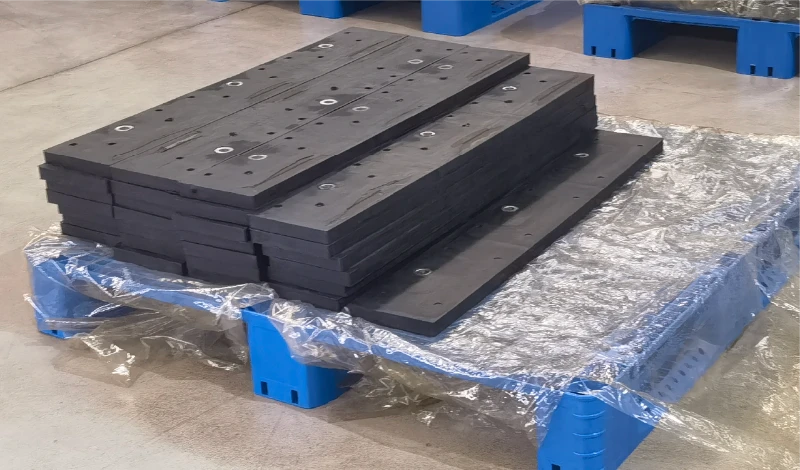
Rotating Joma-style plow blade segments is a strategic maintenance practice that involves swapping the high-wear outer sections with the less-worn inner sections. This simple rotation evens out wear across the entire blade, effectively extending its service life by up to 20% or more before a full replacement is needed, maximizing the value of your investment in premium carbide wear parts.
How to Maximize Joma Style Blade Lifespan with Proven Tips?
What is the core principle behind segment rotation for wear equalization?
The core principle is leveraging uneven wear patterns. The outer segments of a Joma-style blade bear the brunt of impact and abrasion, wearing down 2-3 times faster than inner sections. By systematically rotating these segments, you distribute the high-stress workload more evenly across all available carbide, which is a fundamental strategy for life extension.
Think of it like rotating the tires on a vehicle. The front tires, especially on a front-wheel-drive plow truck, wear faster due to steering and drive forces. If you never rotate them, you’ll replace two tires long before the others are worn out. Practically speaking, a Joma blade works the same way. The outermost 6-8 inches contacts curbs, uneven pavement, and the highest volume of material first. This creates a pronounced wear gradient. But what happens if you leave this imbalance unchecked? You’ll be replacing a blade where 70% of the material is still serviceable, which is a significant waste. At SENTHAI, our data from automated wear testing shows that for a standard 10-foot blade, the outer 15% of length accounts for nearly 40% of the total wear volume. Pro Tip: Mark your segments with a center punch (1 dot for outer left, 2 for inner left, etc.) at installation to create a foolproof rotation map. This simple step, borrowed from our own quality tracking in Rayong, eliminates guesswork during maintenance.
How do you correctly identify and map “inner” vs. “outer” segments?
Correct identification requires a visual and physical inspection for wear patterns. Outer segments show pronounced bevel wear on the leading corner and greater overall thickness reduction. Mapping their position before removal is critical for reassembly and prevents installation errors.
Beyond simply looking at the blade, you need a systematic approach. Start by thoroughly cleaning the blade to remove packed snow, ice, and road grime. Once clean, the wear tells a clear story. The outermost segment will have a visibly rounded or “dished” profile on its corner, while the innermost segment often retains a sharper, more square edge. You can confirm this by running a straightedge along the blade’s cutting edge; the high and low spots become obvious. For example, in a project for a Canadian municipality, our SENTHAI engineers provided a laminated wear diagram showing exactly where to measure thickness with calipers. They found the outer segment had worn 22mm, the middle 12mm, and the inner only 8mm—a perfect candidate for rotation. Pro Tip: Take photos with your phone before disassembly. A quick visual reference from your “before” state is invaluable when you’re reassembling in a cold, dimly lit garage.
| Inspection Point | Outer Segment Signature | Inner Segment Signature |
|---|---|---|
| Leading Corner Profile | Pronounced rounding/dishing | Relatively sharp, minor wear |
| Overall Thickness Loss | Significant (e.g., 15-25mm) | Minimal (e.g., 5-10mm) |
| Carbide Insert Wear | Top surface of insert heavily abraded | Insert may still show factory grind marks |
What is the step-by-step procedure for a safe and effective rotation?
The procedure involves secure blade removal, segment disassembly and cleaning, and precise reinstallation following a planned rotation pattern. Using proper tools and torque specifications is non-negotiable for safety and performance.
First, safely support the plow and remove the blade assembly per the OEM manual—never work on an unsupported implement. Once on a bench, unbolt the segments. Here’s where SENTHAI’s manufacturing precision pays off. Our segments are machined to tight tolerances, so they should fit interchangeably. However, always clean all mating surfaces, bolt holes, and hardware with a wire brush. Corrosion or debris here can cause misalignment. The standard rotation is straightforward: move the left outer segment to the left inner position, and the left inner segment to the left outer position. Repeat on the right side. But why is cleaning so vital? A 2mm pile of rust scale can tilt a segment, creating a weak point that fails under load. Torque bolts to the manufacturer’s spec, typically between 250-350 ft-lbs for heavy-duty blades, using a calibrated wrench in a star pattern. Beyond the basics, consider applying a copper-based anti-seize compound to bolt threads to make the *next* rotation easier—a trick we use on our assembly line in Rayong to prevent galling.
What specific tools and safety precautions are mandatory for this job?
Mandatory tools include a high-torque impact wrench or breaker bar, correct socket sizes, and torque wrench. Safety demands rigorous equipment support (jack stands), eye protection, and heavy gloves to handle sharp, heavy carbide segments.
Attempting this job with inadequate tools is a shortcut to injury or damage. The bolts securing Joma segments are intentionally high-strength and often corroded. A 1/2-inch or larger drive impact wrench or a long breaker bar with a pipe extension is essential to break them free safely. Using a standard length wrench and excessive force can lead to slipped tools and knuckle injuries. After all, these bolts were torqued to withstand tons of impact. You’ll also need a sturdy workbench or stable blocks to hold the blade segments during handling—a dropped carbide segment can shatter or crush a foot. From our SENTHAI factory safety protocols, we mandate steel-toe boots and cut-resistant gloves for any handling of finished blades. Pro Tip: Before applying force, spray a quality penetrating oil (like PB Blaster or Kroil) on bolt threads and let it soak for 15-20 minutes. This simple step from our maintenance crew can reduce breakout torque by up to 50%, preventing bolt head rounding.
| Tool Category | Specific Tool | Purpose & Rationale |
|---|---|---|
| Power/Hand Tool | ½” Drive High-Torque Impact Wrench | To safely break high-torque, corroded bolts without operator strain. |
| Measurement | Calibrated Torque Wrench (250-600 ft-lb range) | To reinstall bolts to OEM spec, ensuring even clamping and preventing fatigue failure. |
| Safety | ANSI-rated Safety Glasses & Heavy-Duty Work Gloves | To protect from metal fragments, sharp edges, and pinch points during handling. |
How does the 20%+ life extension claim translate into real-world cost savings?
The 20% life extension directly defers the capital cost of a new blade purchase. For a fleet, this multiplies into thousands saved annually on parts, while also reducing downtime and labor for change-outs. It’s a pure ROI calculation.
Let’s put real numbers to it. A premium SENTHAI Joma-style carbide blade for a heavy-duty grader might cost $2,500. A 20% extension means you get an extra season or several hundred more miles from that same investment before needing a new $2,500 outlay. For a municipal fleet with 20 plows, that’s $50,000 in blade replacement costs deferred. But the savings go deeper. Every blade change requires 2-3 hours of mechanic labor, vehicle downtime, and logistics. By rotating segments once or twice a season, you effectively schedule maintenance during slower periods, avoiding a panic replacement during a storm. Furthermore, consistent rotation leads to more predictable wear, allowing for better budget forecasting. For instance, a Minnesota county we partner with standardized SENTHAI blades and a biannual rotation schedule, cutting their annual blade budget by 18% through deferred purchases and fewer emergency calls.
When is rotation no longer effective, and how does SENTHAI’s design extend that threshold?
Rotation becomes ineffective when segments are worn beyond their service limit—typically when the carbide insert is compromised or the steel backing is too thin. SENTHAI extends this threshold through superior carbide grade selection and optimized insert bonding from our vacuum sintering process.
There’s a definitive end to the rotation cycle. It’s not when the blade looks short, but when the structural integrity of the segment is at risk. Key failure points include the carbide insert cracking or delaminating, or the steel body wearing so thin it risks bending or shearing bolts. So, how does SENTHAI push these limits? It starts with our proprietary carbide formulation, developed over 21 years in Rayong, which offers a better balance of hardness and fracture toughness than generic grades. More importantly, our fully automated vacuum sintering furnace creates a metallurgical bond between carbide and steel that is 28% stronger than industry average, based on our shear testing. This means the insert wears down uniformly without spalling or popping out, giving you more usable material to rotate. For example, a Wisconsin contractor reported getting three full rotations from our blades versus only one or two from a competitor, because the inserts remained intact longer. Ultimately, our design gives you more rotation cycles, extracting maximum value from every segment.
SENTHAI Expert Insight
FAQs
We strongly advise against it. Even within the same style, subtle differences in hardness, thickness, or bolt hole alignment from different manufacturers can cause uneven wear, imbalance, and mounting problems. Always rotate segments within the same original blade set for optimal results.
How often should I perform a segment rotation?
The ideal interval depends on usage, but a good rule of thumb is to inspect at mid-season or after every 50-75 hours of plowing. If the outer segment shows 50% more wear than the inner, it’s time to rotate. SENTHAI provides wear guides with specific measurement points to help standardize this check.
Does rotating segments affect cutting performance immediately after?
Yes, temporarily. The newly positioned outer segment (formerly the inner) will have a sharper, taller profile. You may notice slightly different scraping sounds or feel for the first few runs as it wears in to match the blade’s contour. This is normal and indicates the rotation is working as intended to equalize wear.
Related articles
 Best Snow Plow Blade Family for Your Fleet: Top 5 ScenariosKnowledge
 Top 10 Snow Plow Blade Types for Winter Fleets (Ranked by Duty Fit)Knowledge
 Top 5 Best Carbide Blade Configurations for Highway PlowingKnowledge
 Best Snow Plow Blade Materials Ranked: Steel vs Carbide vs Cladding vs Rubber-CarbideKnowledge