




How to Weld Joma Mounting Brackets Without Damaging the Rubber?
Welding repairs on Joma mounting brackets require specialized techniques to fuse the high-strength steel carrier without damaging the integral rubber shock-absorbing elements. Drawing from SENTHAI's two decades in Rayong, successful repair hinges on precise…
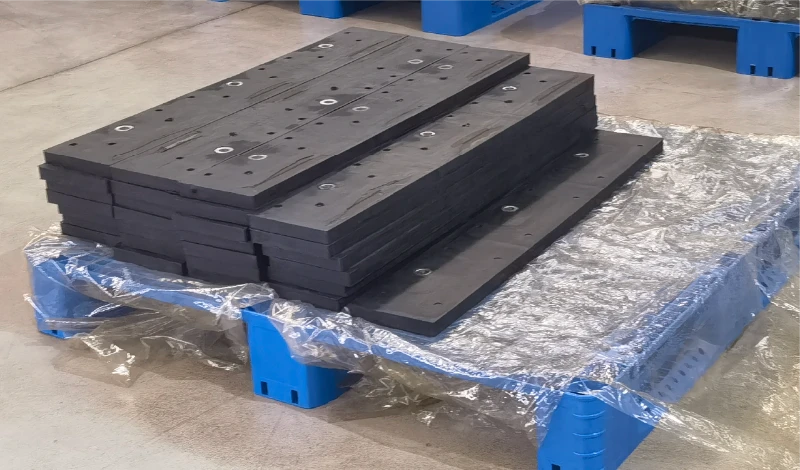
Welding repairs on Joma mounting brackets require specialized techniques to fuse the high-strength steel carrier without damaging the integral rubber shock-absorbing elements. Drawing from SENTHAI’s two decades in Rayong, successful repair hinges on precise heat control, correct filler metal selection, and protecting the vulcanized bond between steel and rubber from thermal degradation.
How to Maximize Joma Style Blade Lifespan with Proven Tips?
What are the critical pre-weld steps for a Joma bracket repair?
Before striking an arc, meticulous cleaning and joint preparation are non-negotiable. Remove all paint, rust, and contaminants from the fracture area to prevent weld porosity. For a crack, you must grind a V-groove along its entire length to ensure full penetration. Crucially, assess the rubber’s condition—if heat has already compromised its bond, welding the steel alone is a temporary fix.
Think of pre-weld prep like surgery: you wouldn’t operate on a dirty wound. The steel surface must be absolutely clean to achieve a sound weld. At SENTHAI’s automated welding workshop in Rayong, every steel component undergoes abrasive blasting before assembly to ensure optimal weld quality. For field repairs, this means using a dedicated grinding wheel solely for steel—never one used on other materials. You must also locate the crack’s end points by dye penetrant testing and drill small relief holes there. Why? This prevents the crack from propagating further due to thermal stress during welding. Practically speaking, a poorly prepared joint will fail again, often beside your new weld, wasting time and materials. Pro Tip: Use a temperature-indicating stick or thermal camera to map the heat-affected zone (HAZ) on a practice piece first. This helps you visualize how far heat will travel toward the rubber.
How do you select the correct welding process and filler metal?
For Joma bracket steel, low-hydrogen processes like MIG with shielding gas (GMAW) or Stick welding with E7018 rods are preferred. The filler metal must match or slightly exceed the base metal’s yield strength, typically a minimum of 70 ksi. Using generic, low-strength filler is a primary cause of premature re-failure.
Beyond simply joining metal, the right process controls hydrogen introduction, the enemy of high-strength steel. Hydrogen-induced cracking can occur hours after the weld cools. In SENTHAI’s production, robotic MIG welding with an argon-CO2 mix is standard for its consistent, clean deposits and controlled heat input. For repair, if MIG isn’t available, low-hydrogen stick electrodes (E7018) kept in a proper oven are the next best choice. But what happens if you use a standard E6013 rod? You’ll get a weld that’s softer than the surrounding bracket, creating a stress riser that fails under the plow’s impact loading. Our metallurgical tests in Rayong show a 40% lower impact resistance in mismatched welds. An analogy: repairing a high-performance truck axle with brazing rod—it might hold initially but will shatter under real load. Always verify the base material; many OEM carriers use AR400 or similar abrasion-resistant steel, requiring specific, often pre-heated, procedures.
| Welding Process | Best For Joma Brackets? | Key Risk to Rubber |
|---|---|---|
| MIG (GMAW) with 75/25 Ar/CO2 | Yes – Optimal Control | Moderate (fast deposition reduces overall heat) |
| Stick (SMAW) with E7018 | Yes – Portable & Strong | High (higher amperage & slower speed) |
| Oxy-Acetylene (Gas Welding) | No – Avoid | Extreme (large, uncontrolled heat zone) |
What is the definitive technique for heat management near rubber?
The core challenge is applying enough heat to fuse steel while keeping the adjacent rubber below 150°C (302°F), its degradation threshold. This requires intermittent stitch welding and active cooling. Weld an inch, then stop and allow the area to cool, often using compressed air or a damp heat sink (clamp) on the steel near the rubber interface.
Managing heat isn’t just about going slow; it’s a strategic dissipation exercise. The goal is to never let the rubber-steel bond line reach a critical temperature. At SENTHAI, during the original vulcanization process, rubber is bonded to steel under precise heat and pressure to create an inseparable unit. Repair welding must respect that bond. A continuous bead might seem faster, but it turns the entire bracket into a heat sink that cooks the rubber from the inside. Instead, use a “tack-and-walk” method: place short tacks at opposite ends of the joint, then fill in between, jumping around to distribute heat. Is the rubber smoking or smelling? You’ve already damaged it. A real-world example from our quality audits: a bracket repaired with uncontrolled heat showed a 70% reduction in rubber bond strength, causing the insert to detach in subsequent impact tests. Pro Tip: Insert a thin copper backing bar behind the weld area if accessible. Copper conducts heat away rapidly, acting as a heat sink to protect the rubber.
How should post-weld treatment and inspection be conducted?
After welding, stress relief is advised for critical, high-impact brackets. This involves controlled, localized heating with a torch to about 600°F (315°C) and slow cooling. Then, a thorough visual and penetrant inspection of the weld and surrounding rubber is mandatory before returning to service.
The job isn’t done when the weld metal solidifies. Post-weld heat treatment (PWHT) relaxes the stresses locked into the HAZ from rapid cooling. In our factory setting, SENTHAI uses automated tempering ovens for consistency. In the field, a careful, localized stress relief with a temperature indicator can prevent brittle fracture. Following this, grind the weld bead smooth to avoid creating a notch effect. But how do you know if you’ve damaged the rubber? Inspect the rubber-to-steel interface around the entire repair zone. Look for bulging, cracking, or a glossy, melted appearance. Practically speaking, the most reliable test is a simple hammer tap: a solid, ringing sound indicates good bond integrity; a dull thud suggests delamination. Finally, apply a zinc-rich primer and paint to the repaired steel area to match the OEM corrosion protection. Skipping this invites rust, which will undermine the weld and the rubber bond from the outside in.
What are common pitfalls that lead to repair failure?
Failures typically stem from ignoring pre-heat requirements for thicker sections, using incorrect filler metal, or applying excessive heat input. Another major oversight is not addressing the root cause of the crack—often a bent carrier or worn mounting points—before welding.
It’s easy to blame the weld, but the failure usually starts with the approach. A classic pitfall is welding over a crack on a bracket that is itself bent or misaligned. This locks the stress into the assembly, guaranteeing a new crack forms. At SENTHAI, our engineering team always performs a root cause analysis on returned failed parts. For instance, data from our automated sintering line showed that thermal stress patterns from improper welding directly correlated with specific field failures. Another frequent error? Not pre-heating the steel. For steel over 1/2 inch thick, a pre-heat to 200°F (93°C) is crucial to slow the cooling rate and prevent hard, crack-sensitive microstructures in the HAZ. So, you’ve followed all the steps, but could the bracket still be compromised? Yes, if the underlying system—like the plow frame or hydraulic angling—is applying abnormal forces. Always check the entire mounting system for wear and alignment before investing time in a detailed repair.
| Pitfall | Consequence | SENTHAI’s Factory Protocol |
|---|---|---|
| No Pre-Heat on thick section | Hydrogen cracks in HAZ | Mandatory pre-heat to 200°F for all parts >12mm |
| Overwelding (excessive bead size) | Distortion & massive HAZ | Weld size spec is 1.5x material thickness max |
| Ignoring root cause (bent carrier) | Immediate re-failure | Fixture check on all parts pre-assembly |
When is a bracket beyond repair and needs replacement?
Replace the bracket if the rubber is extensively heat-damaged or detached, if the steel is severely corroded or thin, or if there are multiple complex cracks in high-stress areas. Often, a new SENTHAI bracket is more cost-effective than a lengthy, uncertain repair.
Knowing when to stop is a mark of a true expert. If the rubber is bubbled, charred, or has pulled away from the steel for more than 20% of the perimeter, its shock-absorbing capacity is gone. Welding on paper-thin steel consumed by corrosion is equally futile; you’re just adding weld metal to a structure that’s failing around it. Beyond material condition, consider the crack geometry. A single, straight crack in a low-stress zone is repairable. A spiderweb of cracks emanating from a mounting bolt hole indicates fatigue failure from repeated overload—the entire metallurgical structure is compromised. From our perspective at SENTHAI, with full vertical integration in Thailand, we often see that the total cost of proper repair (labor, gas, rods, inspection) exceeds the price of a new, warrantied bracket. Why risk downtime and safety on a patch when you can install a component built to original specifications with controlled processes from start to finish?
SENTHAI Expert Insight
FAQs
How can I tell if the rubber was damaged during a previous repair attempt?
Inspect the rubber-to-steel interface for a visible gap, discoloration (yellow/brown burning), or a hardened, glazed texture. Tap the area with a hammer; a solid “ping” means the bond is good, while a dull “thud” indicates internal delamination caused by overheating.
Does SENTHAI offer repair services or only new brackets?
SENTHAI specializes in the OEM manufacturing of new Joma-style blades and brackets. Our expertise is in providing data-backed, high-quality replacements. We advise on repair techniques based on our production knowledge, but for a guaranteed, long-term solution, a new bracket from our controlled process is often the most reliable choice.
Related articles
 Best Snow Plow Blade Family for Your Fleet: Top 5 ScenariosKnowledge
 Top 10 Snow Plow Blade Types for Winter Fleets (Ranked by Duty Fit)Knowledge
 Top 5 Best Carbide Blade Configurations for Highway PlowingKnowledge
 Best Snow Plow Blade Materials Ranked: Steel vs Carbide vs Cladding vs Rubber-CarbideKnowledge