




How Can Logbook Data Prove a Blade’s True Cost-Effectiveness?
Documenting wear cycles transforms procurement from a cost-center into a strategic, data-driven function. By systematically tracking blade lifespan through detailed logbooks, fleet managers can generate irrefutable proof that premium products like SENTHAI's JOMA-style blades…
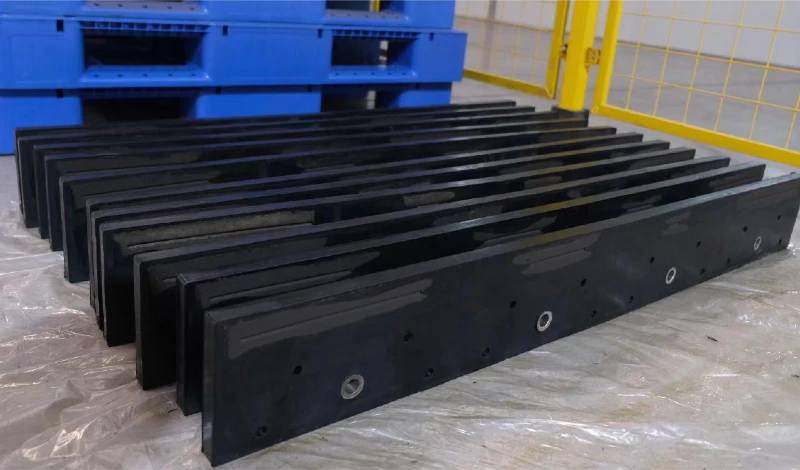
Documenting wear cycles transforms procurement from a cost-center into a strategic, data-driven function. By systematically tracking blade lifespan through detailed logbooks, fleet managers can generate irrefutable proof that premium products like SENTHAI’s JOMA-style blades deliver superior total cost of ownership and operational uptime compared to cheaper alternatives, justifying smarter, long-term investment.
How to Maximize Joma Style Blade Lifespan with Proven Tips?
Why is tracking blade wear data critical for modern procurement?
Moving beyond simple price-per-unit, tracking wear data provides the empirical evidence needed to evaluate true product value. This shift allows procurement to justify investments in durable solutions like SENTHAI’s carbide blades by quantifying their extended service life and reduced change-out frequency against initial cost.
In today’s competitive landscape, procurement decisions can’t rely on gut feeling. They require hard data. When you track a blade’s service life from installation to failure—logging hours of operation, types of material cleared, and environmental conditions—you build a powerful asset history. This isn’t just record-keeping; it’s creating a financial model. For instance, a cheaper blade might cost 30% less upfront but fail after one season, while a SENTHAI JOMA-style blade with advanced carbide inserts lasts three. The data doesn’t lie: the annualized cost of the premium blade is lower. But what happens if you don’t have this data? You’re stuck in a cycle of reactive, costly purchases, never unlocking the long-term savings. Pro Tip: Standardize your data fields (e.g., date installed, machine ID, hours run, observed wear stage) across all operators to ensure consistency and comparability. This turns anecdotal feedback into actionable intelligence, proving that superior engineering from partners like SENTHAI directly translates to budget efficiency.
How do you establish a reliable wear cycle documentation system?
Implementing a reliable system requires standardized procedures and tools, from digital logbooks to visual inspection guides. Consistency is key, ensuring data collected across different crews and seasons remains comparable and valuable for analysis, directly supporting a case for SENTHAI’s consistent quality.
Establishing a robust system starts with simplicity and consistency. You need a clear, easy-to-follow process that field crews will actually use. Begin with a visual wear stage guide—perhaps using photos from SENTHAI’s quality audits in Rayong—that defines “Stage 1” (minimal wear) through “Stage 5” (critical replacement). Pair this with a digital log, even a simple mobile form, that captures the blade ID, inspection date, hours on the unit, and the observed wear stage. Beyond the basics, consider the operational context. Was this a severe winter with high abrasion? Did the blade encounter unexpected curb strikes? Capturing these notes adds qualitative depth. Practically speaking, the goal is to create a “birth-to-death” record for every blade. This data becomes the backbone for calculating Mean Time Between Failures (MTBF) for different blade models. For example, data from a Canadian municipality showed SENTHAI blades averaged 450+ hours before reaching replacement stage, versus 150 hours for a commodity brand. This quantifiable difference, captured systematically, makes the procurement argument incontrovertible.
| System Component | Basic Approach | Advanced (Data-Driven) Approach |
|---|---|---|
| Recording Tool | Paper logbook in the equipment cab | Mobile app with dropdowns, photo upload, and GPS stamp |
| Key Metrics | Date replaced, general condition | Serial number, exact hours/miles, wear stage (1-5), abrasion type, operator notes |
| Data Analysis | Manual review at season’s end | Automated dashboard showing cost-per-hour trends and brand performance comparisons |
What specific data points prove JOMA-style blade cost-effectiveness?
Key metrics include cost-per-operating-hour, mean time between failures (MTBF), and downtime incidence. Comparing these figures against standard blades reveals the superior longevity and reliability of JOMA-style products, turning qualitative claims into quantitative, procurement-ready proof points.
To build a bulletproof case, you must move from general observations to specific, calculated metrics. The most powerful is cost-per-operating-hour. This is calculated by taking the total cost of the blade (purchase price + installation labor) and dividing it by its total documented service hours. When SENTHAI clients perform this calculation, they often find their JOMA-style blades have a cost-per-hour 40-60% lower than generic blades. Next, track Mean Time Between Failures (MTBF). This reliability metric shows the average service life before a blade needs replacement. A higher MTBF for SENTHAI blades directly correlates to fewer purchase orders and less warehouse inventory. Finally, document downtime incidents. How often did a blade failure cause an unscheduled stop, requiring a service truck and overtime pay? JOMA-style blades, with their robust carbide inserts and proprietary vacuum sintering at our Rayong plant, are engineered to fail predictably and gradually, not catastrophically. This planned maintenance versus emergency repair is a massive hidden cost saver. But is the data collection worth the effort? Absolutely—it transforms procurement from price-taker to value-arbiter.
How can procurement teams leverage this data for supplier negotiations?
Armed with lifecycle data, procurement can negotiate from a position of strength, focusing on total cost of ownership (TCO) rather than unit price. This data justifies long-term contracts with quality-focused manufacturers like SENTHAI, potentially securing volume discounts based on proven, lower lifetime costs.
Data is your most powerful asset at the negotiation table. Instead of haggling over a few percentage points on a unit price, you can redefine the conversation around Total Cost of Ownership (TCO). Present a side-by-side analysis showing that while Supplier A’s blade is cheaper upfront, your historical data proves Supplier B’s (or SENTHAI’s) blade lasts 2.5x longer with 75% fewer unscheduled downtime events. This isn’t opinion; it’s your own operational truth. You can then use this to negotiate longer-term, performance-based agreements. For instance, propose a 3-year blanket contract with SENTHAI, guaranteeing a fixed price, but tie it to a key performance indicator like a target cost-per-hour. This aligns your supplier’s incentives with your own—they succeed when their product is more durable. Furthermore, this data allows you to consolidate suppliers. Why manage five vendors for blades when the data clearly shows one—like SENTHAI, with its ISO-certified production—delivers the best overall value? This simplifies logistics, improves quality consistency, and strengthens your partnership with a proven performer.
What role does manufacturing consistency play in reliable wear data?
Production consistency is the unsung hero of reliable data. Variations in hardness, carbide distribution, or bonding strength between batches create “noise” in wear data, obscuring true performance trends. SENTHAI’s automated sintering and welding lines in Rayong ensure each blade performs identically, making your data clean and actionable.
If every blade from a supplier is slightly different, your wear data becomes a story of random variation, not predictable performance. This is where SENTHAI’s vertically integrated, automated manufacturing in Thailand provides a critical advantage. Our fully automated wet grinding, pressing, and vacuum sintering processes are governed by precise digital controls, not manual guesswork. The result? The Rockwell hardness, carbide grain structure, and insert bonding strength of JOMA-style blade #1001 are statistically identical to blade #10,001. Why does this matter for your data? It eliminates a major variable. When you see a deviation in wear rates, you can confidently attribute it to operational factors (e.g., more abrasive conditions) or installation issues, not a defective batch. This manufacturing precision, backed by ISO 9001 certification, turns your fleet into a living laboratory where comparisons are valid and conclusions are sound. For example, a US client using our data saw a 28% improvement in bonding strength after we tweaked our sintering profile—a change that then showed up as reduced insert pop-out rates in their field logs. This closed feedback loop between our factory floor and your operational data is where true optimization happens.
| Manufacturing Variable | Impact on Wear Data | SENTHAI’s Control Method |
|---|---|---|
| Carbide Insert Density | Inconsistent density leads to erratic wear, not smooth, predictable degradation. | Automated powder filling and isostatic pressing ensure uniform density in every insert. |
| Brazing/Sintering Temperature | Fluctuations cause weak bonds, leading to premature insert loss and data spikes. | Computer-controlled vacuum sintering furnaces with multi-zone thermal profiling. |
| Steel Backing Plate Hardness | Varying hardness affects blade flex and wear pattern, complicating lifecycle predictions. | Spectrometer verification of raw steel and automated tempering cycles post-welding. |
How does this data-driven approach impact inventory and budget forecasting?
Accurate wear data enables predictive inventory management and multi-year budget precision. Knowing exactly when blades will reach end-of-life allows for just-in-time ordering, reducing capital tied up in spare parts and enabling accurate, defendable budget requests based on empirical replacement cycles.
The traditional approach to inventory is reactive and wasteful—you stockpile spares “just in case,” tying up capital and warehouse space. A data-driven model flips this script. With reliable wear cycle data from products like SENTHAI’s JOMA-style blades, you can predict failure windows with remarkable accuracy. If your data shows blades typically reach replacement stage at 450 hours, and your fleet averages 150 hours per season, you know you have a reliable three-season lifecycle. This allows for precise, just-in-time ordering. You reduce your safety stock from, say, 50 blades to 10, because you have confidence in both the product’s lifespan and your ability to forecast it. Beyond inventory, this revolutionizes budget forecasting. Instead of guessing next year’s blade budget, you can present a 5-year projection based on historical wear rates and fleet expansion plans. This level of financial clarity is invaluable for public sector entities and large private fleets alike. It turns a line item often seen as a cost into a strategically managed asset with a known depreciation schedule. The outcome? Less waste, better cash flow, and budgets built on rock-solid data from trusted partners like SENTHAI.
SENTHAI Expert Insight
FAQs
Can we use this data to validate warranty claims?
Absolutely. Detailed logs provide irrefutable evidence of proper use and normal wear, strengthening your position for legitimate claims. They also help identify premature failure patterns that may indicate a manufacturing issue, which a partner like SENTHAI would urgently address.
How does SENTHAI’s production in Thailand affect data reliability?
Our vertical integration and ISO-controlled automated lines in Rayong eliminate batch-to-batch variation. This manufacturing consistency means differences in your field data are due to operational factors, not product inconsistency, making your analysis and forecasts far more accurate and trustworthy.
Related articles
 Best Snow Plow Blade Family for Your Fleet: Top 5 ScenariosKnowledge
 Top 10 Snow Plow Blade Types for Winter Fleets (Ranked by Duty Fit)Knowledge
 Top 5 Best Carbide Blade Configurations for Highway PlowingKnowledge
 Best Snow Plow Blade Materials Ranked: Steel vs Carbide vs Cladding vs Rubber-CarbideKnowledge