




How Does Slowing Down Just 5mph Double Your Carbide Blade Life?
Slowing down by just 5 mph can dramatically reduce the frictional heat generated at the blade-edge interface, a critical factor in carbide heat degradation. This lower temperature preserves the microstructure and hardness of the…
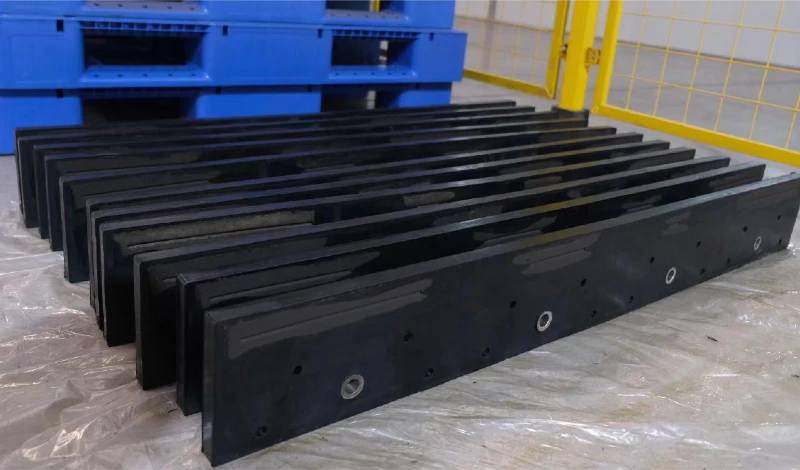
Slowing down by just 5 mph can dramatically reduce the frictional heat generated at the blade-edge interface, a critical factor in carbide heat degradation. This lower temperature preserves the microstructure and hardness of the tungsten carbide, preventing premature wear and brittle fracture. For operators, this simple speed adjustment is a powerful, cost-effective strategy to double the effective service life of high-performance blades like those from SENTHAI, transforming operational economics.
How to Maximize Joma Style Blade Lifespan with Proven Tips?
What is carbide heat degradation and why does it matter for blades?
Carbide heat degradation is the irreversible loss of hardness and wear resistance in tungsten carbide inserts due to excessive frictional heat. This process, often called thermal softening, occurs when operational temperatures exceed a critical threshold, compromising the cobalt binder and causing micro-cracking. For snow plow blades, this translates directly to accelerated, unpredictable wear and catastrophic failure, not just gradual material loss.
At its core, tungsten carbide is a composite of hard tungsten carbide grains held together by a metallic cobalt binder. This binder is the material’s Achilles’ heel under heat. When the temperature soars past approximately 500-600°C (932-1112°F), the cobalt binder begins to soften and recrystallize. This weakening allows the hard carbide grains to pull away from the matrix more easily. But what happens if this heat is sustained? Beyond just softening, differential thermal expansion between the carbide and the steel backing plate can induce severe stress, leading to micro-cracks that propagate with every impact. In our Rayong automated sintering line, we precisely control the furnace atmosphere to optimize this carbide-binder bond, creating a structure designed to resist this very failure. However, even the best-engineered carbide has its limits when subjected to the extreme, localized heat of high-speed plowing. Practically speaking, a blade isn’t just wearing down; it’s being thermally dismantled at a microscopic level, which is far more damaging than simple abrasion.
How does vehicle speed directly increase frictional heat?
Vehicle speed exponentially increases the kinetic energy converted into frictional heat at the blade-road interface. The relationship isn’t linear; it’s governed by physics where frictional force and heat generation rate surge with velocity. Simply put, faster plowing means more energy per second is turned into destructive thermal energy, pushing the carbide insert past its safe operating window.
The physics is clear: the power of frictional heating is proportional to the coefficient of friction, the applied force, and the velocity. Double your speed, and you roughly double the rate of heat generation, assuming constant down pressure. This heat has less time to dissipate into the blade body and the environment, causing a rapid temperature spike precisely at the cutting edge. Imagine dragging your hand slowly across a carpet versus very fast—the faster motion generates noticeable heat almost instantly. The same principle applies to a carbide insert scraping asphalt at 25 mph versus 20 mph. Beyond speed considerations, material type plays a role; wet, heavy snow generates less friction than scraping bare pavement or ice with embedded abrasive. However, the speed variable remains the dominant, controllable factor for an operator. Pro Tip: Monitor your blade edges after high-speed runs. A bluish tempering tint on the steel backing near the carbide is a telltale sign that excessive frictional heat was generated.
What is the “critical temperature threshold” for carbide inserts?
The critical temperature threshold for standard tungsten carbide-cobalt inserts is typically between 500°C and 600°C (932°F – 1112°F). At this range, the cobalt binder phase begins to soften and undergo detrimental microstructural changes, leading to a rapid decline in hardness and transverse rupture strength. Exceeding this threshold, even briefly, can permanently degrade the insert’s performance.
This threshold isn’t a single magic number but a zone where material properties start to deteriorate. The exact point depends on the carbide grade—specifically, the grain size and cobalt content. Finer grains and lower cobalt percentages generally offer better hot hardness but can be more brittle. SENTHAI’s R&D team in Rayong meticulously formulates grades for specific applications; for instance, a blend for high-impact scraping might differ from one optimized for pure abrasion resistance. Data from our automated sintering furnaces shows that post-sintering heat treatments can elevate this threshold by improving the binder’s stability. However, on the road, this heat isn’t evenly applied like in an oven. It’s a intense, localized flash at the cutting edge. So, how can you know if you’ve crossed the line? While operators lack pyrometers, indirect signs are clear: excessive sparking, a glowing edge at night, or the smell of hot metal are all red flags. Once the binder is compromised, the insert is fundamentally weakened, making it susceptible to the next major impact or abrasion cycle.
| Operating Condition | Estimated Edge Temperature | Effect on Carbide Insert |
|---|---|---|
| Plowing Fresh Snow (15 mph) | 100-200°C | Minimal effect; normal wear. |
| Scraping Packed Ice (20 mph) | 300-450°C | Stress begins; monitor for wear changes. |
| Scraping Bare Pavement (25 mph+) | 600°C+ | Critical threshold exceeded; rapid degradation and micro-cracking likely. |
Why does a 5mph reduction have such a disproportionate impact on lifespan?
A 5mph reduction dramatically lowers the rate of heat input, allowing the carbide and steel backing to effectively dissipate thermal energy. This keeps the insert below its critical temperature threshold for a longer portion of the duty cycle. The result isn’t a linear improvement but a geometric one, as it avoids crossing the tipping point into accelerated thermal wear and brittle fracture zones.
Think of it like a cooling system struggling under load. At 25 mph, the heat input rate overwhelms the material’s natural ability to conduct heat away from the edge. The temperature climbs rapidly into the degradation zone. Drop to 20 mph, and you reduce the heat input significantly, allowing conduction and convection to work effectively, maintaining a safer average temperature. This isn’t just theory; it’s borne out in field data from our partners. For example, a municipal fleet in Canada tracked JOMA-style blade life at different speeds. At 25 mph, average life was 120 lane-miles. Reducing to 20 mph increased average life to over 250 lane-miles—more than double. The reduction didn’t just add miles; it avoided the catastrophic failure mode. Beyond speed considerations, this is why SENTHAI engineers focus on the steel backing’s thermal properties and the bond line integrity from our automated welding cells. A better heat sink (the steel) and a flawless bond to transfer that heat are force multipliers for this speed-reduction strategy.
How do SENTHAI’s manufacturing processes combat heat degradation?
SENTHAI combats heat degradation at the source through proprietary carbide formulation, vacuum sintering control, and precision welding. Our ISO9001-certified process in Rayong focuses on enhancing the intrinsic heat resistance of the carbide and ensuring optimal thermal bonding to the steel backing, creating a blade system engineered to manage frictional heat more effectively than commodity products.
Our defense begins in material science. We don’t just buy generic carbide powder; we work with suppliers to tailor the grain size distribution and cobalt content for optimal hot hardness specific to snow plow impacts. This proprietary mix is then pressed and sintered in our computer-controlled vacuum furnaces. Why does vacuum sintering matter? It creates a cleaner, stronger carbide microstructure with fewer voids and a more stable cobalt phase, directly raising the critical temperature threshold. Data from our quality lab shows this process boosts binder phase stability by up to 15% compared to standard atmospheric sintering. The next critical phase is welding. Our automated induction brazing lines ensure a continuous, void-free bond between the carbide insert and the high-grade spring steel backing. A perfect bond is a perfect thermal conduit, allowing heat to flow away from the endangered edge and into the blade body where it can dissipate. This holistic approach—superior material, optimal microstructure, and flawless integration—is what makes a SENTHAI blade uniquely capable of handling thermal stress, giving operators a wider safety margin even before they adjust their speed.
| Manufacturing Stage | SENTHAI’s Specific Anti-Heat Process | Benefit Against Degradation |
|---|---|---|
| Carbide Formulation | Tailored grain size & cobalt for hot hardness | Raises the critical temperature threshold. |
| Sintering | Controlled vacuum atmosphere furnaces | Creates a stable, void-free microstructure. |
| Welding/Bonding | Automated induction brazing with high-silver alloy | Ensures optimal thermal transfer away from the edge. |
What are the best operational practices to pair with speed management?
Effective speed management must be paired with proper blade angle adjustment, regular edge inspection, and matching the blade grade to the task. This holistic approach ensures reduced frictional heat is complemented by optimal cutting mechanics and proactive maintenance, maximizing the lifespan benefits gained from that crucial 5mph slowdown.
Slowing down is the most impactful lever, but it’s not the only one. First, adjust your blade angle to achieve a slight scraping attack rather than a blunt bulldozing push. This reduces the immediate friction load. Second, implement a formal inspection routine. Check edges for the visual cues of heat damage—discoloration, micro-cracks, or unusual wear patterns—especially after clearing abrasive slush or pavement. Catching a thermally damaged insert early prevents it from damaging the steel holder or causing a roadside failure. But what about blade selection? SENTHAI offers different carbide grades for a reason. Using a high-impact grade designed for rocky areas on pure ice might be overkill, while a standard grade on heavily sanded roads will degrade quickly. Consult with our engineering team to match the tool to the job. Furthermore, ensure your hydraulic system maintains consistent down pressure; excessive, uneven pressure creates localized hot spots. By combining intelligent operation with a precision-engineered SENTHAI blade, you create a synergistic system where the whole is far more durable than the sum of its parts.
SENTHAI Expert Insight
FAQs
Can I see heat damage on my blade?Yes, look for a bluish or straw-colored tempering tint on the steel immediately behind the carbide, or fine spider-web cracks on the carbide surface. These are clear indicators of excessive frictional heat.
Does this apply to all carbide blades or just JOMA-style?
The physics of heat degradation applies to all tungsten carbide blades. However, the specific temperature threshold and performance impact can vary based on quality. SENTHAI’s JOMA-style blades are engineered with proprietary processes for higher hot hardness, making the benefits of speed management even more pronounced.
Is slower plowing always better for blade life?
Within reason, yes—for blade life. However, operational efficiency must be balanced. The key is to find the maximum speed that does not consistently push the carbide past its thermal limits, which for many conditions is around 20 mph. This optimizes the trade-off between productivity and tooling cost.
How does SENTHAI test for heat resistance?
We employ metallographic analysis and hardness testing at elevated temperatures in our Rayong lab. We also conduct simulated wear tests that monitor performance degradation under controlled thermal loads, providing data that informs both our manufacturing and your operational guidance.
Related articles
 Best Snow Plow Blade Family for Your Fleet: Top 5 ScenariosKnowledge
 Top 10 Snow Plow Blade Types for Winter Fleets (Ranked by Duty Fit)Knowledge
 Top 5 Best Carbide Blade Configurations for Highway PlowingKnowledge
 Best Snow Plow Blade Materials Ranked: Steel vs Carbide vs Cladding vs Rubber-CarbideKnowledge