




What Makes Stainless Steel Plow Bolts Better Than Zinc-Plated?
Zinc-plated bolts fail in salt because chloride ions penetrate the zinc coating and trigger rapid galvanic corrosion, forming white rust that weakens the fastener. Stainless steel bolts resist this by forming a passive chromium…
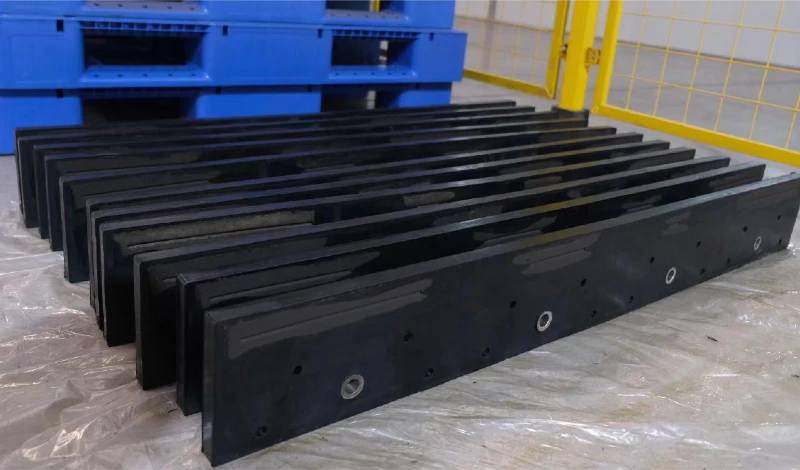
Zinc-plated bolts fail in salt because chloride ions penetrate the zinc coating and trigger rapid galvanic corrosion, forming white rust that weakens the fastener. Stainless steel bolts resist this by forming a passive chromium oxide layer that prevents ion penetration, making them significantly more durable in salt-rich environments. For mounting carbide Joma blades, stainless or zinc dichromate-coated Grade 8 hardware ensures reliable clamping force throughout the winter season.
Check: How to Install Joma Style Blades on Heavy-Duty Trucks?
How Does Road Salt Actually Corrode Zinc-Plated Bolts?
Chloride ions from road salt breach the zinc coating, creating an electrolytic cell that accelerates galvanic corrosion. White rust (zinc hydroxide) forms first, then red rust (iron oxide), expanding the bolt diameter and causing galling in the blade insert seat. Over 21 years of carbide production data, SENTHAI has observed that zinc-plated bolts on Joma-style blades often lose 40–60% of their clamping torque within a single winter due to corrosion-induced thread degradation.
This process is particularly aggressive in winter environments where freeze-thaw cycles keep road salt in constant contact with the fastener. The result is not just a loose bolt; the expanding rust can distort the mounting holes in the blade’s rubber shell, leading to uneven pressure on tungsten carbide inserts. Field tests from SENTHAI’s partners show that once red rust appears, bolt removal becomes extremely difficult, and the clamping force drops below the minimum required for safe operation.
Which Bolt Materials Resist Salt Better Than Zinc?
| Material | Corrosion Resistance | Tensile Strength | Cost Factor | Best Use Case |
|---|---|---|---|---|
| Zinc-Plated Carbon Steel | Low (fails <1 season) | 120,000 psi (Grade 8) | $ | Not recommended for salt |
| 304 Stainless Steel | High | 90,000 psi | $$ | General plow use |
| 316 Stainless Steel | Very High (marine grade) | 85,000 psi | $$$ | Extreme salt / coastal ops |
| Grade 8 Zinc Dichromate | Medium-High | 150,000 psi | $$ | High-torque carbide mounts |
Stainless steel resists corrosion but has lower tensile strength than Grade 8 carbon steel. For high-clamp-force applications such as mounting SENTHAI carbide snow plow blades, zinc dichromate Grade 8 often outperforms stainless by balancing strength and corrosion resistance. Hot-dip galvanized steel offers a thicker zinc coating but still remains vulnerable to chloride attack over time; it is not recommended for salt-heavy operations where long-term reliability is required.
Why Do Standard Bolts Fail Faster on Carbide Joma Blades?
Carbide inserts in Joma-style blades create a stiff mounting interface. Any bolt loosening from corrosion introduces micro-vibration that stresses the tungsten carbide. Micro-cracks can propagate, reducing blade life by up to 30% according to SENTHAI’s field data from over 80 global partners. A blade mounted with loose bolts experiences uneven load distribution, accelerating wear on the rubber shell and carbide segments.
Unlike traditional steel cutting edges that can absorb some misalignment, carbide is brittle and requires consistent clamping force to stay intact. Zinc-plated bolts lose preload quickly in salt, allowing the blade to shift under load. This repeated movement fatigues the braze joints between the carbide inserts and the cast steel segments. SENTHAI’s engineering team notes that even a small loss of torque can double the stress on individual inserts, leading to premature chipping or breakage.
SENTHAI Expert Views
“In our testing with North American fleets, we found that zinc-plated bolts caused a 22% higher rate of carbide insert chipping compared to Grade 8 dichromate-coated bolts over two winter seasons. The hardware is a reliability factor that contractors often overlook.” — SENTHAI Engineering Team, Rayong, Thailand.
What Is the Correct Hardware Specification for Mounting SENTHAI Joma Blades?
Recommended bolt type: Grade 8 steel with zinc dichromate coating (yellow or black) OR 316 stainless steel for extreme corrosive environments. Recommended torque range: 85–110 ft-lbs for M12 bolts, with tightness checked after the first 50 miles of plow operation. Use hardened flat washers (Grade 8) under the bolt head and nut to prevent galling on the rubber blade shell. Do not use spring washers — they lose tension under vibration. Apply copper-based or nickel-based anti-seize to bolt threads to prevent galvanic corrosion between the bolt material and the carbide insert seat.
Check: JOMA style blade
SENTHAI Joma blades are designed to be hardware-agnostic, meaning any standard bolt pattern works. However, performance is optimized when using the recommended coating and torque. For fleet managers, SENTHAI offers full customization capability for bolt patterns and hardware kits. Request matched kits (bolts, washers, nuts) when ordering blades to ensure ISO-certified compatibility and consistent clamping force across every mounting point.
How Often Should Plow Blade Hardware Be Inspected or Replaced?
Before first snowfall, inspect all mounting bolts for white or red rust; replace any bolt with pitting or thread wear. After 500 miles or 50 hours of plowing, re-torque all bolts. Corrosion accelerates during freeze-thaw cycles. Replace zinc-plated bolts after one season, Grade 8 dichromate after 2–3 seasons, and 316 stainless annually if galling or crevice corrosion appears. Always replace bolts in sets on Joma blades to maintain even clamping force.
SENTHAI’s ISO 9001 process recommends full-set replacement for consistent loading. Mixing old and new hardware creates uneven clamping force that can crack carbide inserts. Additionally, use a torque wrench to verify tightness rather than relying on impact guns, which can under- or over-torque bolts. Store spare hardware in a dry, salt-free environment to avoid pre-season corrosion.
| Condition | Recommended Bolt | Reason |
|---|---|---|
| Light residential / low salt | Grade 8 Zinc Dichromate | Cost-effective, good strength |
| Municipal plow (heavy salt) | 316 Stainless Steel | Maximum corrosion resistance |
| High-wear/abrasive (sand/gravel) | Grade 8 Zinc Dichromate | Higher hardness resists thread wear |
| Coastal / marine environment | 316 Stainless Steel | Resists chloride attack |
Does Using Stainless Steel Bolts Affect Blade Warranty or Performance?
No, SENTHAI Joma blades are hardware-agnostic, but performance is optimized with recommended torque and coating. Do not use uncoated stainless steel against aluminum or magnesium plow frames — galvanic corrosion can damage the frame. SENTHAI provides full customization for bolt patterns and hardware kits, ensuring ISO-certified compatibility. Blade warranty is not voided by hardware choice, but following the specifications in this article maximizes blade life.
For extreme conditions, 316 stainless steel bolts paired with anti-seize compound deliver excellent corrosion resistance without compromising the mounting integrity. SENTHAI can supply matched hardware sets that include bolts, washers, and nuts with the correct thread coating. Fleet managers can request these kits for bulk OEM orders, benefiting from full traceability and quality control that mirrors SENTHAI’s carbide blade production standards.
Conclusion
Choosing the right mounting hardware is not an afterthought — it is a critical factor in maximizing the lifespan of your carbide Joma snow plow blades. Zinc-plated bolts are a false economy in salt-rich winter environments; they corrode quickly, lose torque, and can cause micro-vibrations that shorten blade life by up to 30%. Grade 8 zinc dichromate or 316 stainless steel bolts, used with proper torque and anti-seize, ensure reliable clamping force and full blade performance.
SENTHAI, with ISO 9001/14001 certification, 21+ years of carbide expertise, and fully automated production in Thailand (including a new Rayong base in 2025), delivers blades trusted by over 80 global partners. We do not just manufacture blades — we understand the entire mounting ecosystem. For fleet managers seeking to reduce downtime and maximize ROI, the hardware recommendations in this article are backed by real-world data from North American bestseller fleets. Visit SENTHAI’s product page for Joma-style blades and inquire about matched hardware kits designed to ISO standards. Contact SENTHAI for custom bolt patterns or fleet-level pricing.
Frequently Asked Questions
Can I use Grade 5 bolts instead of Grade 8 for mounting Joma blades?
Not recommended. Joma blades experience high dynamic loads (bouncing, impacts). Grade 5 bolts (120,000 psi) can fatigue over time. Grade 8 (150,000 psi) provides the necessary safety margin for carbide inserts.
What is the difference between hot-dip galvanized and zinc-plated bolts for salt?
Hot-dip galvanized has a thicker zinc coating (2–5 mils vs. 0.5 mils for electroplated) and lasts longer in general corrosion. However, it is still vulnerable to chloride attack over time. For salt-heavy operations, stainless or dichromate is superior.
How do I remove a rusted bolt from a carbide blade insert?
Use penetrating oil (e.g., PB Blaster) and allow 1 hour to soak. Do not apply heat near carbide inserts — thermal shock can crack the carbide. If torque fails, drill out the bolt carefully to avoid damaging the rubber shell. Replace the bolt immediately after removal.
Does SENTHAI sell hardware kits for their Joma blades?
Yes, SENTHAI can supply matched hardware kits (bolts, washers, nuts) with customized coatings based on fleet requirements. Contact SENTHAI for bulk OEM orders. Kits are produced with full ISO 9001 traceability.
Will using stainless steel bolts cause thread galling in the blade insert?
Galling (cold welding) is possible with stainless-on-stainless contact. To prevent this, always use anti-seize on the bolt threads and ensure the blade insert threads are clean. For SENTHAI blades, the inserts are designed with a slight clearance to minimize galling risk.
Related articles
 Best Snow Plow Blade Family for Your Fleet: Top 5 ScenariosKnowledge
 Top 10 Snow Plow Blade Types for Winter Fleets (Ranked by Duty Fit)Knowledge
 Top 5 Best Carbide Blade Configurations for Highway PlowingKnowledge
 Best Snow Plow Blade Materials Ranked: Steel vs Carbide vs Cladding vs Rubber-CarbideKnowledge