




What Is the Correct Hydraulic Pressure for Joma Snow Plow Blades?
The correct hydraulic pressure for Joma snow plow blades is between 800 and 1,200 PSI measured at the plow frame. This range allows the rubber‑encased segments to flex and contour to road surfaces without…
The correct hydraulic pressure for Joma snow plow blades is between 800 and 1,200 PSI measured at the plow frame. This range allows the rubber‑encased segments to flex and contour to road surfaces without lifting the blade or damaging the carbide inserts. Pressures above 1,200 PSI can cause insert chipping; below 800 PSI results in poor scraping. Always check your truck’s relief valve setting with a calibrated gauge.
Check: How to Install Joma Style Blades on Heavy-Duty Trucks?
Why Does Hydraulic Pressure Matter for Joma‑Style Flexible Blades?
A flexible Joma blade relies on its rubber compound to bend and absorb impact while maintaining ground contact. Too much downforce stiffens the blade, negating the flex benefit and transferring stress directly to the carbide inserts, which can cause premature failure.
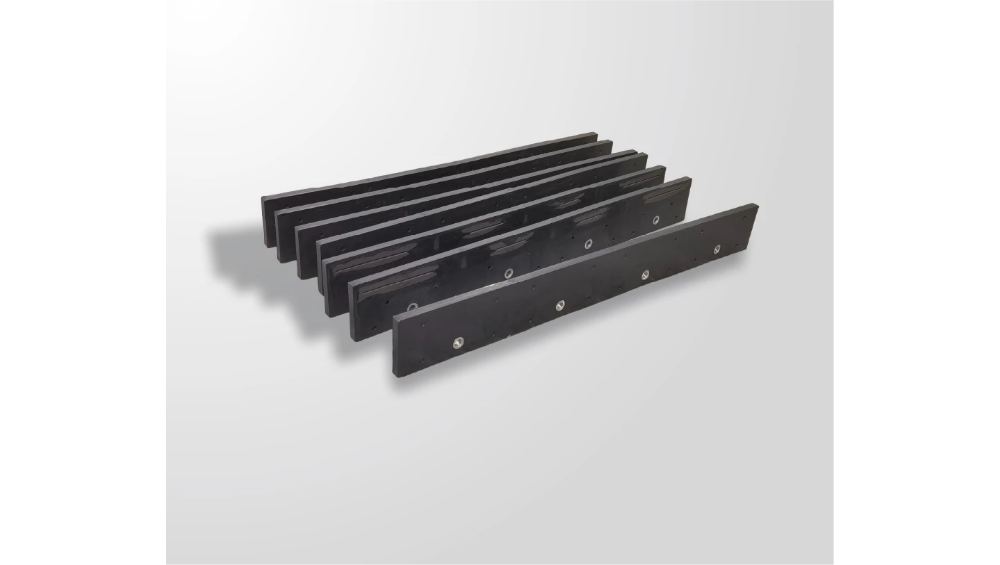
Unlike rigid steel cutting edges, the Joma Style Blade from SENTHAI uses tungsten carbide inserts brazed into cast steel segments (horse shoe design) encased in an ultra‑low‑temperature‑resistant rubber shell. This construction is engineered to flex and conform to road contours, cleaning the surface more effectively while reducing vibration and noise. When hydraulic pressure exceeds 1,200 PSI at the frame, the rubber cannot flex properly, and the blade behaves like a rigid edge, defeating the purpose of the design. Fleet operators who run high pressure to chisel ice often see insert breakage and rubber delamination. SENTHAI’s internal testing over 21 years of carbide production confirms the 800–1,200 PSI sweet spot. The cast steel segment (horse shoe design) measures 11.22″ × 5″ × 3/4″ (285mm × 127mm × 19mm) and weighs 3.5 kg, with each carbide insert sized at 1″ × 0.95″ × 0.32″ (25.9mm × 24.25mm × 8.16mm) weighing 70 g — all precisely engineered to perform within this pressure range.
SENTHAI Expert Views
“Over the past two decades, we’ve analysed hundreds of returned blades. The #1 cause of premature failure in Joma‑style blades is excessive hydraulic downforce. Our engineers match insert bonding strength — tested per ISO 9001 protocols — to the optimal pressure range for North American plow trucks. At SENTHAI, we manage the entire production process from raw material powder to finished blade in our Rayong, Thailand facility, ensuring consistent quality, excellent bonding strength, and superior wear resistance. When operators set their hydraulic system between 800 and 1,200 PSI, they unlock the full performance of our Joma Style Blade: fewer blade changes, reduced downtime, and lower overall maintenance costs.” – SENTHAI Engineering Team
What Is the Optimal PSI Range for Joma Blades?
The optimal hydraulic pressure for Joma flexible blades is 800–1,200 PSI at the plow frame. This range ensures the rubber segments hug pavement irregularities without skipping, while protecting the carbide inserts from impact damage. Pressures above 1,200 PSI increase bond failure risk.
It is important to measure pressure at the plow frame, not at the pump outlet, because line losses and component restrictions can reduce effective downforce. SENTHAI’s bond strength validation — performed in automated welding and vulcanisation workshops — guarantees insert retention up to 1,200 PSI dynamic load. Above that threshold, the risk of bond failure increases exponentially. The table below compares recommended pressures across blade types.
| Blade Type | Optimal PSI at Frame | Key Risk if Over‑Pressured |
|---|---|---|
| Joma flexible (rubber‑encased) | 800–1,200 | Insert chipping, rubber tearing, poor road contouring |
| Rigid steel | 1,500–2,200 | Excessive friction, premature steel wear, road surface damage |
| Carbide‑tipped steel | 1,200–1,800 | Carbide spalling, manhole cover damage |
The 4‑foot snow plow blade (48″ × 6″ × 7/8″ / 1219mm × 152mm × 23mm, 17.5 kg) and 3‑foot snow plow blade (36″ × 6″ × 7/8″ / 914mm × 152mm × 23mm, 13.1 kg) from SENTHAI are both designed to operate optimally at 800–1,200 PSI, ensuring consistent performance across all common plow sizes.
How Do You Adjust Your Truck’s Hydraulic Relief Valve for a Flexible Edge?
Locate the relief valve on the pump or manifold, attach a calibrated pressure gauge at the plow frame port, actuate the down function on a flat surface, and turn the adjustment screw counter‑clockwise to decrease pressure or clockwise to increase until the gauge reads between 800 and 1,200 PSI. Always secure with lock nuts and test on dry pavement to confirm the blade flexes without chattering.
Detailed procedure: First, consult your OEM manual to find the relief valve — typically on the pump or manifold. Second, attach a calibrated hydraulic pressure gauge at the plow frame port. Third, actuate the plow down function while the blade rests on a flat surface and note the reading. Fourth, turn the adjustment screw counter‑clockwise to decrease pressure or clockwise to increase until the gauge reads between 800–1,200 PSI. Fifth, test on dry pavement: the blade should flex but not lift or chatter. Safety warnings: never exceed the pump manufacturer’s rated maximum, and use lock nuts to secure the new setting. If pressure cannot be reduced below 1,500 PSI, check for blocked lines or restrictors; some trucks require a bypass valve adjustment. SENTHAI’s Joma Style Blade — an ideal replacement for Black Cat JOMA® 6000 — is designed to deliver optimal performance when the hydraulic system is correctly tuned.
What Wear Patterns Indicate Incorrect Hydraulic Pressure?
Over‑pressure symptoms include chipped or cracked carbide inserts, lipped rubber where the edge folds over, and uneven insert wear (thick at the heel, thin at the tip). Under‑pressure symptoms include the blade riding on the rubber bumper instead of the inserts, excessive steel wear on the back edge, and poor scraping of packed snow due to bouncing.
When hydraulic pressure is too high, the leading edge corners of the carbide inserts often chip or crack first, and the rubber shell may develop a folded lip. The insert wears unevenly — thick at the heel and thin at the tip — indicating the blade is digging rather than evenly scraping. When pressure is too low, the blade lifts on bumps, and the steel belly or rubber bottom drags, causing the blade to ride on the rubber bumper rather than the carbide inserts. This leads to poor scraping of packed ice and snow. SENTHAI recommends inspecting blades regularly for these signs. The carbide inserts used in SENTHAI blades are manufactured from 100% virgin micro‑grain tungsten carbide using a vacuum sintering furnace with proprietary temperature control, ensuring uniform grain size and maximum wear resistance — but even the best materials cannot compensate for incorrect hydraulic setup.
| Wear Pattern | Likely Cause | Recommended Action |
|---|---|---|
| Chipped or cracked insert leading edges | Over‑pressure (>1,200 PSI) | Reduce relief valve setting to 800–1,200 PSI |
| Rubber folded or lipped | Over‑pressure | Reduce pressure; inspect rubber shell for damage |
| Uneven insert wear (heel thick, tip thin) | Blade digging due to excess downforce | Calibrate pressure; check blade angle |
| Rubber bumper wearing, inserts barely contacting | Under‑pressure (<800 PSI) | Increase pressure; verify gauge accuracy |
| Blade bouncing or chattering on pavement | Under‑pressure | Increase pressure gradually until steady contact achieved |
Can Over‑Pressure Damage Carbide Inserts on Joma Blades?
Yes. Carbide is extremely hard but brittle. Excessive hydraulic force creates point‑loading on individual inserts, especially when hitting expansion joints or manhole covers. Above 1,200 PSI, the braze bond can propagate micro‑cracks, leading to insert chipping or complete loss.
SENTHAI’s ISO 9001‑controlled processes — from powder mixing to final sintering — ensure consistent carbide density and bond strength. The company uses 100% virgin materials and a vacuum sintering furnace with proprietary temperature control to produce micro‑grain tungsten carbide inserts with uniform grain size, ideal for brazing in cold weather. Even with this manufacturing excellence, the hydraulic system must respect engineering limits. The carbide inserts available from SENTHAI come in various trapezoid and bullnose shapes (e.g., trapezoid 25.4 × 16.14 × 9.27 mm at 25° and R1.95, or bullnose 3.175 × 19.05 × 9.22 mm at R4.61), each designed for specific plowing conditions. At the correct pressure, these inserts deliver maximum wear resistance and prolonged service life. A municipal fleet in Ontario reduced insert replacement costs by 40% after lowering pressure from 1,800 to 1,100 PSI and switching to SENTHAI Joma blades.
What Are the Benefits of Correct Downforce for Road Surface Protection?
Correct downforce at 800–1,200 PSI allows the flexible Joma blade to glide over manhole covers and lane markings without gouging, reducing infrastructure damage. It also improves fuel efficiency by lowering engine drag and hydraulic pump load, and extends blade lifespan through even wear across the full segment width.
Check: JOMA style blade
Rigid steel blades can rip up pavement and cost cities thousands in repairs. SENTHAI’s Joma Style Blade flexes to conform to road contour, cleans the road surface more effectively, and may require less salt or sand to be applied. It also reduces damage to highway lane markings. Fleet partners in North America report 5–7% fuel savings from correct pressure combined with the low‑friction rubber compound. The blade maintains structural integrity and performance in extreme cold and low‑temperature environments, thanks to the ultra‑low‑temperature‑resistant rubber shell. By managing the entire production process at the Rayong facility — from R&D and engineering to final assembly — SENTHAI ensures consistent rubber hardness and insert geometry, delivering reliable performance across all operating conditions. The benefits extend beyond the blade: fewer blade changes mean less downtime, reduced maintenance costs, and a lower total cost of ownership for heavy‑duty fleets and municipal plows.
How Does SENTHAI’s Manufacturing Ensure Consistent Performance at Optimal Pressures?
SENTHAI’s 21+ years of carbide expertise, combined with fully automated workshops (wet grinding, pressing, sintering, welding, vulcanisation) and ISO 9001/14001 certification, guarantee that every blade is built to perform at 800–1,200 PSI. Each production stage is precisely controlled for consistent quality, bonding strength, and wear resistance.
SENTHAI Carbide Tool Co., Ltd. is a US‑invested manufacturer based in Rayong, Thailand, trusted by over 80 global partners. The company independently completes all production from raw material powder to finished blade — a level of vertical integration that ensures full quality control, fast response times, and reliable delivery. The new Rayong production base launching in late 2025 will expand capacity while maintaining the same rigorous standards. SENTHAI’s product range includes Joma Style Blades, Carbide Snow Plow Blades, I.C.E. (Packed Ice Carbide Kit) Blades, and Carbide Inserts — all designed to deliver exceptional wear resistance and longevity. For the Packed Ice Carbide Kit (I.C.E. Blade), the isolated carbide inserts prevent lateral cracking, making it ideal for high‑speed plowing over roads with excessive joints, cracks, or uneven surfaces. It lasts up to 3× longer than standard carbide‑edged styles in impact conditions. Every product benefits from the same manufacturing discipline: consistent factory quality, rigorous inspection at the end of each production stage, and the availability of samples and factory quality inspection reports for first‑time customers.
When Should You Re‑check Your Hydraulic Pressure Settings?
Always verify pressure at the start of winter after any truck maintenance or hydraulic fluid change. Re‑check immediately when switching from a rigid steel blade to a Joma flexible blade. If you notice chipping, uneven wear, or poor scraping after a few routes, suspect pressure drift and inspect with a gauge. For heavy‑duty fleets, incorporate pressure verification into monthly inspections and log PSI readings alongside blade hours for predictive maintenance.
Seasonal baseline checks are critical because hydraulic fluid viscosity changes with temperature, which can affect system pressure. After blade replacement — especially when moving from a rigid steel edge to a SENTHAI Joma Style Blade — pressure must be adjusted immediately to the 800–1,200 PSI range. Following abnormal wear, such as chipping of the carbide inserts or uneven steel wear, check the gauge again because pressure can drift due to component wear or fluid contamination. SENTHAI recommends a simple logging system: record the PSI reading, blade hours, and observed wear pattern during each inspection. This data helps fleet managers predict when pressure adjustments or blade replacements are needed, reducing unplanned downtime. Customization options — including blade design, sizes, neutral packaging, fumigation‑free wooden crates, and pallet packaging — allow fleets to tailor their SENTHAI blades to specific operational needs while maintaining consistent hydraulic settings.
Conclusion
The Joma blade’s performance is only as good as the hydraulic system that controls it. Running at 800–1,200 PSI unlocks the full benefits of SENTHAI’s engineering — longer carbide life, better road contact, and reduced infrastructure damage. Higher pressure is not better; it is destructive. SENTHAI designs and manufactures every component (carbide inserts, rubber encasing, steel backing) in‑house under ISO 9001/14001 standards. This vertical integration — from powder to tested blade — means each blade is built to perform at the precise pressure range that extends its life. Trusted by over 80 global partners and best‑selling in North America, SENTHAI is the partner who understands the whole system. Explore the full Joma Style Blade line at https://senthaitool.com and find the customization options that fit your fleet’s hydraulic setup. For technical support on pressure calibration, contact SENTHAI’s engineering team — your success is our reputation.
Frequently Asked Questions
What happens if I run my Joma blade at 1,800 PSI?
Inserts will chip rapidly, rubber may tear from the steel backing, and the blade will not contour to the road. You may see wear in as little as 50 miles. Immediate reduction to 1,200 PSI is recommended to preserve the blade and maintain effective scraping.
How do I know if my hydraulic pressure is too low?
The blade will lift or bounce on bumps, leaving uneven scraping. You’ll notice the rubber bumper wearing rather than the carbide inserts. Check the gauge — if the reading is below 800 PSI, increase gradually until the blade maintains steady road contact without chattering.
Can I use the same pressure setting for carbide blades and Joma flexible blades?
No. Rigid carbide‑tipped blades often require 1,200–1,800 PSI to maintain cutting contact, while Joma flexible blades need 800–1,200 PSI. Always adjust the hydraulic pressure setting based on the specific blade type to ensure optimal performance and longevity.
Does the hydraulic pressure affect only the carbide inserts or the rubber too?
Both. Over‑pressure stresses the rubber‑to‑steel bond (vulcanisation joint) and can cause delamination. SENTHAI’s rubber compound is optimised for flex at the correct PSI — going higher works against the design and can damage both the rubber shell and the steel segments.
Are SENTHAI Joma blades guaranteed to work at the recommended pressure?
Yes. SENTHAI stands behind every blade with 21+ years of production data. If properly installed and set to 800–1,200 PSI, the blades deliver class‑leading wear resistance. Customization options — including insert shape and rubber hardness — are available for fleets with unique requirements.
Related articles
 Best Snow Plow Blade Family for Your Fleet: Top 5 ScenariosKnowledge
 Top 10 Snow Plow Blade Types for Winter Fleets (Ranked by Duty Fit)Knowledge
 Top 5 Best Carbide Blade Configurations for Highway PlowingKnowledge
 Best Snow Plow Blade Materials Ranked: Steel vs Carbide vs Cladding vs Rubber-CarbideKnowledge