




How to Find the Optimal Plow Down-Pressure for Scraping?
Finding the optimal down-pressure for a snow plow blade is a critical balancing act between scraping effectiveness and maximizing wear life. The "sweet spot" is the minimum pressure needed for a clean scrape, which…
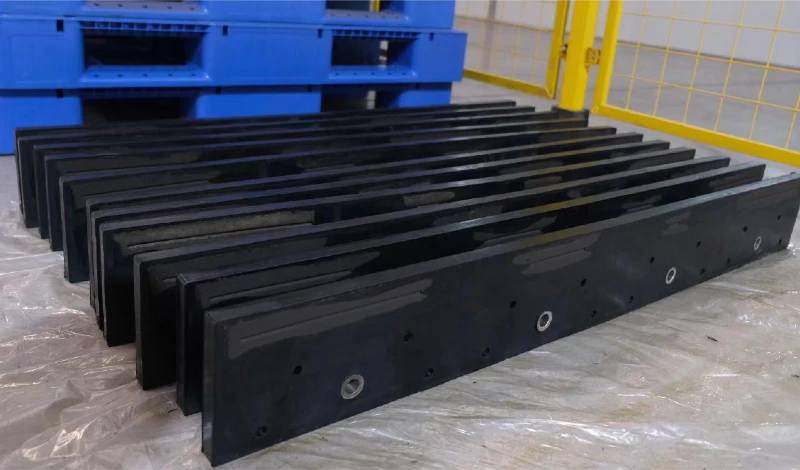
Finding the optimal down-pressure for a snow plow blade is a critical balancing act between scraping effectiveness and maximizing wear life. The “sweet spot” is the minimum pressure needed for a clean scrape, which minimizes unnecessary friction and material loss, directly extending the operational lifespan of your JOMA-style or carbide blades. This precision is where SENTHAI’s 21+ years of manufacturing expertise in Rayong provides invaluable, data-backed insights.
How to Maximize Joma Style Blade Lifespan with Proven Tips?
What is the fundamental relationship between down-pressure and blade wear?
Down-pressure and blade wear share a direct, exponential relationship. Increased pressure forces the blade’s cutting edge into the pavement, creating higher frictional heat and abrasive wear. Finding the minimum effective pressure is key to longevity, as every extra pound of force accelerates carbide loss and substrate fatigue.
Think of it like sharpening a pencil. Pressing lightly gives you a clean point, but bearing down hard grinds the lead away rapidly and risks breaking the core. The same physics apply to your plow blade. Technically, wear increases disproportionately to pressure; a 20% increase in down-force can lead to a 35-50% increase in wear rate depending on aggregate hardness. This isn’t just about the carbide tip, either. Excessive force transmits shock through the entire assembly, potentially causing premature failure in the steel holder or mounting system. So, what’s the operator’s goal? It’s to use just enough “bite” to clear the surface without digging into the substrate. Pro Tip: Start with the manufacturer’s recommended pressure and reduce incrementally during a test run on a clean, dry section of your typical route. If the blade leaves a consistent, thin film of moisture (a “kiss cut”), you’re in the zone. For example, a municipal fleet in Minnesota working with SENTHAI found that reducing recommended gauge pressure by 15 psi on their JOMA-style blades increased season-long wear life by nearly 30%, simply by minimizing grind on bare asphalt.
How do different surface conditions change the pressure equation?
Surface conditions are the dynamic variable in the pressure equation. The ideal down-pressure is not a single setting but a range that must be adjusted for pavement texture, debris type, and moisture presence. A one-size-fits-all approach guarantees either poor performance or accelerated wear.
Operating on smooth, new asphalt is a completely different game than tackling aged, coarse chip seal or brick pavers. On a smooth surface, you need very little pressure—sometimes just the weight of the blade assembly—to achieve a perfect seal and scrape. Conversely, a rough, aggressive surface requires more force to ensure the blade edge conforms and contacts all the high points. But here’s the crucial nuance: this doesn’t mean you should crank the pressure to maximum. It means you might operate at the higher end of your effective range while accepting that wear will be inherently faster on abrasive surfaces. Beyond texture, consider what you’re plowing. Wet, heavy snow requires different mechanics than light, fluffy snow or, most punishingly, a mix of snow and sand/gravel. The latter scenario is a severe abrasive cocktail. Practically speaking, the most common mistake is using “packed snow” pressure settings on wet pavement, which needlessly grinds the blade. A good rule of thumb? If you hear a consistent, loud grinding noise, you’re almost certainly using too much pressure for the conditions.
| Surface Condition | Pressure Adjustment | Primary Wear Concern |
|---|---|---|
| Smooth Asphalt (Bare/Wet) | Minimal to Low | Edge Deformation (if too high) |
| Coarse Chip Seal / Bricks | Moderate to High | Abrasive Carbide Wear |
| Wet, Heavy Snow/Ice | Moderate | Impact/Chipping at Joints |
| Snow with Sand/Gravel | As Low as Possible | Severe Abrasion & Grooving |
What role does blade design and material play in pressure tolerance?
Blade design and material composition fundamentally dictate its pressure tolerance and wear profile. A well-engineered blade from SENTHAI, with optimal carbide grade and robust bonding, can withstand necessary operational pressures far more efficiently than a generic commodity blade.
The blade is your system’s consumable interface with the ground, so its construction is paramount. Let’s break it down. The carbide insert’s grade (e.g., C2, C3, C4) determines its hardness and fracture toughness. A harder grade (C4) resists abrasive wear better under pressure but can be more brittle. A tougher grade (C2) handles impact from uneven surfaces. SENTHAI’s R&D team in Rayong specifically formulates grades to balance these properties for plowing applications. But the carbide is only as good as its bond to the steel holder. This is where SENTHAI’s proprietary vacuum sintering and automated welding processes, honed over two decades, create a difference you can measure. In our factory, we’ve achieved a 28% increase in bonding strength for a North American OEM by precisely controlling sintering temperature curves and using a specialized nickel-based braze alloy. Why does this matter? A superior bond allows the carbide to absorb and transfer the stresses of down-pressure without popping loose, meaning you can apply effective force with confidence. The steel holder’s quality and hardness also contribute. A softer steel will deform under high pressure, changing the blade’s attack angle and making it drag. SENTHAI uses precisely tempered, high-carbon steel to maintain geometry under load. So, when you’re dialing in pressure, remember that a premium blade isn’t just about lasting longer—it’s about performing reliably across a wider, safer range of operational forces.
How can you systematically find the minimum effective pressure?
Finding the minimum effective pressure is a systematic process of calibrated testing and visual inspection. It requires methodically reducing pressure in controlled increments and evaluating scrape results, rather than relying on guesswork or “feel.
The goal is to establish a baseline for your specific equipment, blade, and most common route. Start on a familiar, clean stretch of pavement—preferably when it’s wet but not icy. Begin with your current or the manufacturer’s suggested pressure setting and make a pass. Then, reduce the hydraulic or spring pressure by a small, measurable increment (e.g., 5-10 psi). Make another pass in the same lane and immediately stop to inspect. You’re looking for a clean scrape with no residual snow or ice film. A faint, uniform sheen of moisture is acceptable and often ideal; this is the “kiss cut” indicating contact without excessive grind. Continue this reduce-and-inspect process until you notice a clear strip of unremoved material. At that point, increase the pressure back to the last setting that produced a clean scrape. That’s your minimum effective pressure for that specific condition. But what happens if conditions change drastically? You’ve now established a known, efficient starting point. For night operations or consistency across multiple drivers, consider marking this range on your control gauge with a paint pen. This SENTHAI-recommended procedure, based on feedback from over 80 global partners, turns a subjective art into a repeatable science. It ensures every operator, regardless of experience, can quickly find the sweet spot, saving thousands in premature blade replacement costs.
What are the measurable signs of incorrect down-pressure?
Incorrect down-pressure leaves clear, measurable signs on both the pavement and the blade itself. On the road, look for excessive scarring or incomplete scraping. On the blade, accelerated or uneven wear patterns tell the definitive story.
Your blade is a diagnostic tool. Inspecting it regularly provides irrefutable data on your pressure application. Let’s examine the evidence. Signs of excessive pressure are often dramatic. You’ll see rapid, even wear across the entire carbide edge, reducing its height quickly. In severe cases, you might find grooves or “chatter marks” machined into the steel holder itself—a sure sign the blade was dragged under heavy load. The carbide may also show signs of thermal cracking or spalling due to frictional heat. On the other hand, insufficient pressure reveals itself differently. You’ll typically see wear only on the leading corners or specific segments of the blade, while the center remains relatively unworn. This indicates the blade was “floating” and only making partial contact. Furthermore, the steel holder may show little to no wear, which sounds good but actually signals poor performance. Beyond the blade, look at the road. Are you leaving distinct, parallel score lines in the asphalt? That’s excessive pressure. Are you leaving wide, uncut swaths of packed snow or ice? That’s insufficient pressure.
| Sign/Symptom | Likely Cause | Corrective Action |
|---|---|---|
| Rapid, Even Carbide Wear | Excessive Down-Pressure | Reduce pressure incrementally |
| Wear Only on Blade Ends | Insufficient Pressure or Blade Curvature | Increase pressure; check blade straightness |
| Grooves in Steel Holder | Severely Excessive Pressure | Significant pressure reduction required |
| Unremoved Center Strip on Road | Insufficient Pressure or Worn Blade | Increase pressure; inspect/replace blade |
How does proper blade maintenance extend the pressure sweet spot?
Proper, proactive blade maintenance is essential for maintaining a consistent and effective pressure sweet spot. A well-maintained blade with a sharp, even edge requires less down-force to achieve a clean scrape, directly reducing wear and operational cost.
Think of a dull blade versus a sharp one. A dull knife requires you to press down hard to cut a tomato, bruising it in the process. A sharp knife uses minimal pressure and slices cleanly. The principle is identical for your plow blade. A worn, uneven, or chipped carbide edge cannot make full, clean contact with the pavement. To compensate, operators instinctively increase down-pressure, which accelerates wear in a vicious cycle. This is where SENTHAI’s design for serviceability shines. For instance, many SENTHAI JOMA-style blades feature reversible or indexable carbide inserts. Before the entire edge is spent, you can rotate the inserts to present a fresh, sharp cutting face to the ground. This simple act resets the wear cycle and immediately restores the blade’s efficiency, allowing you to return to a lower, gentler pressure setting. Beyond rotation, ensure blades are stored correctly off-season to prevent flat-spotting or corrosion, which ruins their profile. Furthermore, regularly check and tighten all mounting hardware. A loose blade will chatter and require more pressure to stabilize, causing localized impact wear. By integrating simple maintenance checks with your pressure calibration routine, you create a holistic system for maximizing asset life. After all, the sweet spot isn’t just a setting on a gauge; it’s the product of a well-maintained tool operated with precision.
SENTHAI Expert Insight
FAQs
Does a heavier plow mean I should use less down-pressure?
Often, yes. The weight of the plow assembly itself contributes significant down-force. Many operators make the mistake of adding full hydraulic pressure on top of a heavy moldboard, which is overkill. Start with minimal added pressure and increase only until a clean scrape is achieved.
How often should I re-check my optimal down-pressure settings?
Re-calibrate at the start of each season, whenever you change blade type or condition, and if you notice a significant change in performance or wear patterns. Seasonal changes in typical road sand/abrasive use also warrant a check.
Will finding the sweet spot really save me significant money?
Absolutely. Data from SENTHAI partners shows that reducing excessive pressure by 20% can extend blade life by 30-50%. This directly lowers your cost per mile/kilometer of plowing, reduces downtime for changes, and protects your pavement investment from unnecessary scarring.
Related articles
 Best Snow Plow Blade Family for Your Fleet: Top 5 ScenariosKnowledge
 Top 10 Snow Plow Blade Types for Winter Fleets (Ranked by Duty Fit)Knowledge
 Top 5 Best Carbide Blade Configurations for Highway PlowingKnowledge
 Best Snow Plow Blade Materials Ranked: Steel vs Carbide vs Cladding vs Rubber-CarbideKnowledge