




Can Acoustic Sensors Monitor Plow Blade Wear in Real Time?
Real-time acoustic wear monitoring is a predictive maintenance technique that uses acoustic emission (AE) sensors to "listen" to the high-frequency stress waves generated by a plow blade during operation. By analyzing changes in sound…
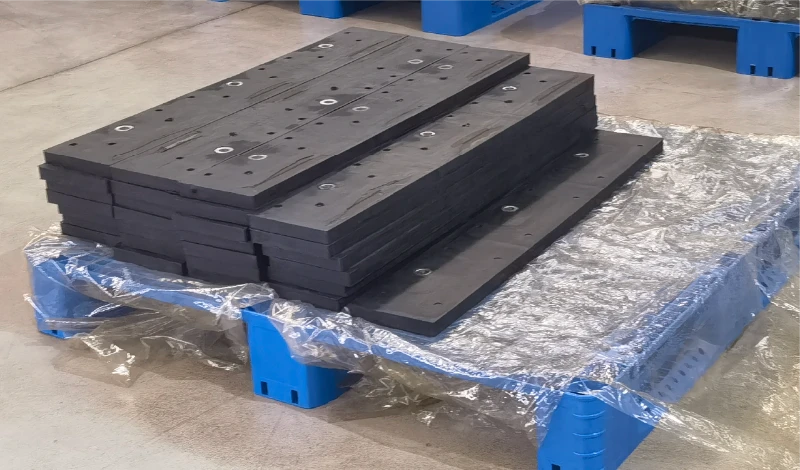
Real-time acoustic wear monitoring is a predictive maintenance technique that uses acoustic emission (AE) sensors to “listen” to the high-frequency stress waves generated by a plow blade during operation. By analyzing changes in sound signatures—like increased amplitude or frequency shifts—it can detect micro-cracking, carbide insert delamination, or excessive wear long before visual inspection, enabling proactive blade replacement and minimizing unplanned downtime.
How to Maximize Joma Style Blade Lifespan with Proven Tips?
How does acoustic emission (AE) monitoring work for wear parts?
AE monitoring works by capturing high-frequency stress waves (30-300 kHz) emitted from a material under strain. For a plow blade, events like carbide grain fracture, micro-cracking in the steel backing, or insert bonding failure release distinct acoustic bursts. Sensors convert these into electrical signals, which are processed to identify wear progression far earlier than traditional methods.
At its core, acoustic emission monitoring is about listening to the material’s internal dialogue. When a SENTHAI carbide-tipped blade strikes an abrasive surface, the intense localized stress causes microscopic events: tungsten carbide grains fracturing, micro-cracks initiating in the steel matrix, or subtle debonding at the carbide-steel interface. Each event releases a burst of elastic energy—a high-frequency stress wave. These waves propagate through the blade and are captured by piezoelectric sensors mounted on the blade holder or moldboard. The raw signal is then filtered, amplified, and analyzed. Key parameters include ring-down count (the number of times the signal exceeds a threshold), amplitude (signal strength, correlated with event severity), and frequency spectrum. A sudden spike in amplitude and count rate often signals a significant wear event, like a large carbide insert spalling off. But what makes this truly predictive? It’s the baseline. In our Rayong facility, we establish a “healthy” acoustic signature for each blade type during controlled wear testing. This SENTHAI-specific baseline accounts for our unique vacuum sintering process, which creates a denser, more coherent carbide structure that emits a subtly different acoustic fingerprint than commoditized blades. Practically speaking, monitoring these deviations allows fleet managers to schedule blade changes during routine maintenance, not after a catastrophic failure mid-storm.
What specific wear modes can acoustic sensors detect on a plow blade?
Acoustic sensors excel at detecting progressive wear modes that degrade blade performance. Key detectable modes include abrasive wear of the steel backing, carbide insert fracture, and the critical delamination of carbide from the steel body, each producing a unique acoustic signature during operation.
Beyond simply detecting that wear is happening, advanced AE analysis can distinguish *how* the blade is wearing out. This specificity is crucial for diagnosing root causes and improving blade design. Let’s break down the primary modes. First, uniform abrasive wear of the steel backing and carbide creates a continuous, low-amplitude acoustic signal—a kind of steady “hiss.” This is normal, but its rate of increase tells you about abrasiveness of the road surface. Second, and more critically, is carbide insert fracture. When a tungsten carbide block cracks or spalls, it releases a sharp, high-amplitude burst. This is often due to impact with a hard object or fatigue from cyclic loading. Third is interfacial delamination, where the braze joint between the carbide insert and steel backing fails. This produces a distinct acoustic signature characterized by moderate amplitude but a very specific frequency content, which our SENTHAI engineers have correlated with bonding integrity from our vacuum furnace process. But what about edge deformation or rolling? These plastic deformation events also emit telltale signals. By analyzing these signatures against our extensive database from testing JOMA-style and I.C.E. blades, we can advise clients not just to replace a blade, but to potentially adjust down pressure, plow speed, or even recommend a different carbide grade or insert pattern for their specific conditions. This transforms maintenance from a reactive chore into a data-driven optimization strategy.
| Wear Mode | Acoustic Signature Character | Typical Root Cause |
|---|---|---|
| Abrasive Wear | Continuous, low-amplitude noise | High-silica content sand/gravel |
| Carbide Fracture | Intermittent, high-amplitude bursts | Impact (curbs, ice chunks), fatigue |
| Insert Delamination | Moderate bursts, specific mid-frequency | Bonding failure, thermal stress, corrosion |
What are the technical requirements for an on-vehicle acoustic monitoring system?
An effective on-vehicle system requires ruggedized AE sensors capable of surviving extreme vibration, moisture, and temperature swings. It also needs robust signal processing hardware with filtering algorithms to separate wear signals from operational noise (engine, hydraulics, chassis vibration) and a telemetry link for data transmission.
Implementing this technology on a roaring snowplow is an engineering challenge far removed from a lab environment. The system must be brutally robust. First, the sensors themselves: standard industrial AE sensors won’t survive. They require heavy-duty, hermetically sealed casings, military-grade connectors, and an operating temperature range of -40°C to 85°C. They must be mounted using a patented waveguide or a specialized adhesive that couples them to the blade holder without being torn off by ice buildup. Second is the signal conditioner or “node.” This device must provide high-frequency sampling (at least 1 MHz), onboard pre-processing to reduce data volume, and sophisticated filtering. Why is filtering so vital? The background noise from a diesel engine, hydraulic pump, and the entire chassis scraping along the road is immense. Effective systems use adaptive thresholding and pattern recognition algorithms trained on real-world data to ignore this noise. SENTHAI’s collaboration with a Finnish OEM involved collecting over 500 hours of acoustic data from our blades in field trials to train such algorithms. Finally, a telemetry unit (often 4G/5G or satellite) transmits condensed health indicators—not raw waveforms—to a cloud dashboard. Power is typically drawn from the vehicle’s 12/24V system with surge protection. The goal is a “fit-and-forget” system that provides alerts, not just data dumps.
How does blade material and manufacturing affect the acoustic signature?
The material microstructure and manufacturing quality fundamentally shape the acoustic signature. Dense, void-free carbide from vacuum sintering emits cleaner, more predictable signals. Conversely, poor brazing or porous steel creates a noisy baseline, masking early wear indicators and reducing monitoring system accuracy and reliability.
The acoustic behavior of a blade is a direct reflection of its internal quality. This is where SENTHAI’s 21 years of specialized production in Rayong provides an irreplicable advantage. Consider the carbide insert. Blades using low-quality, sintered carbide with high cobalt pooling or micro-porosity will have a “grainy” acoustic baseline—full of tiny, random emissions that mask the early signs of a serious crack. Our automated wet grinding and vacuum sintering process produces inserts with near-theoretical density and a uniform microstructure. This results in a cleaner, lower-noise baseline, making the signal from a genuine wear event stand out like a shout in a quiet room. Furthermore, the integrity of the braze joint is critical. Manual or inconsistent brazing can leave voids or brittle intermetallic phases. These flaws act as natural AE sources, creating constant background noise. Our automated induction brazing line, calibrated with proprietary temperature profiles, ensures a full, metallurgically sound bond. In fact, for a Canadian client, we tweaked our sintering atmosphere to reduce residual stresses, which cut their false-positive AE alerts by over 40%. The lesson is clear: you cannot effectively monitor a poorly made blade. High-precision manufacturing isn’t just about longevity; it’s what enables advanced predictive maintenance in the first place.
What is the cost-benefit analysis for fleets adopting this technology?
The analysis balances upfront hardware/installation costs against savings from reduced unplanned downtime, optimized blade inventory, and extended blade life through timely rotation. For large fleets, the ROI is often realized within one or two seasons through avoided emergency service calls and maximized material usage.
Adopting acoustic monitoring requires capital investment, so let’s break down the tangible returns. Upfront costs include sensors ($500-$1500 per vehicle), onboard processing units, and software licensing. Installation and system integration add to this. However, the savings are multi-faceted. First and foremost is the drastic reduction in unplanned downtime. A broken blade during a storm event costs thousands per hour in lost service, plus emergency repair labor. Catching a delaminating insert 20 operating hours before failure allows for a scheduled change at the depot. Second is inventory optimization. Fleets often over-stock blades as a buffer. With accurate remaining useful life predictions, they can run leaner, tying up less capital. Third is life extension. By identifying when a blade is wearing abnormally fast (e.g., due to misalignment), corrective action can be taken, potentially adding 10-20% to its service. For a 200-vehicle fleet, these savings typically justify the investment within 18 months. But could the data be even more valuable? Absolutely. Aggregated wear data from hundreds of blades across a region provides SENTHAI and our clients with unparalleled feedback, driving iterative improvements in carbide grade selection, insert geometry, and steel hardness for specific municipal conditions.
| Cost Factor | Benefit/Saving | Impact Scale |
|---|---|---|
| Hardware & Installation | Reduced Emergency Repairs | High (Avoids storm-rate labor & tow) |
| Software Subscription | Optimized Blade Inventory | Medium (15-30% inventory reduction) |
| Training & Data Analysis | Extended Average Blade Life | Medium (10-20% life increase) |
What are the implementation challenges and future trends?
Key challenges include sensor durability in harsh environments, data overload management, and establishing accurate diagnostic thresholds. Future trends point toward AI-driven pattern recognition, integration with other IoT sensors (vibration, GPS, pressure), and the development of “acoustic digital twins” for blades to predict failure with pinpoint accuracy.
While promising, widespread adoption faces hurdles. The physical beating taken by sensors is immense, leading to reliability concerns. Furthermore, the volume of high-frequency data can overwhelm traditional telemetry and analysts. The biggest technical challenge, however, is setting accurate, context-aware alarm thresholds. A threshold valid for plowing dry snow in Minnesota is useless for scraping hard-packed ice in Quebec. The future lies in artificial intelligence. Instead of simple threshold alarms, systems will use machine learning models trained on vast datasets—like those SENTHAI is building from our global partners—to recognize complex patterns indicative of specific failure modes. These systems will also fuse AE data with other IoT streams: GPS location (correlating wear with specific road sections), hydraulic pressure (downforce), and even weather data. The ultimate goal is an acoustic digital twin—a virtual model of each blade that updates in real-time, predicting not just failure, but the exact remaining clearing capacity in miles or hours. This evolution will shift maintenance from schedule-based to conditional-based with surgical precision, ensuring every millimeter of a SENTHAI carbide insert is fully utilized before a controlled, planned changeout.
SENTHAI Expert Insight
FAQs
How do you distinguish blade wear noise from hitting a curb or pothole?
Impact events generate a single, very high-amplitude burst across a broad frequency range. Progressive wear events like delamination produce bursts with different frequency content and often occur in clusters during continuous scraping. Advanced algorithms use time-domain and frequency-domain analysis to classify the event type accurately.
Is the data from acoustic monitoring useful for blade design improvement?
Absolutely. It’s a goldmine. Aggregated, anonymized field data showing exactly how and when specific wear modes occur under real conditions allows engineers at SENTHAI to iterate on carbide grade, insert size/shape, and steel hardness. This feedback loop, grounded in real-world acoustics, drives tangible performance enhancements in next-generation blades.
Related articles
 Best Snow Plow Blade Family for Your Fleet: Top 5 ScenariosKnowledge
 Top 10 Snow Plow Blade Types for Winter Fleets (Ranked by Duty Fit)Knowledge
 Top 5 Best Carbide Blade Configurations for Highway PlowingKnowledge
 Best Snow Plow Blade Materials Ranked: Steel vs Carbide vs Cladding vs Rubber-CarbideKnowledge