




How to Match Blade Grade to Your Region’s Road Abrasiveness?
Matching blade grade to geographic abrasiveness is a critical engineering decision for snow plow and road maintenance longevity. Selecting the optimal carbide hardness and steel backing for your specific region's aggregate prevents premature wear…
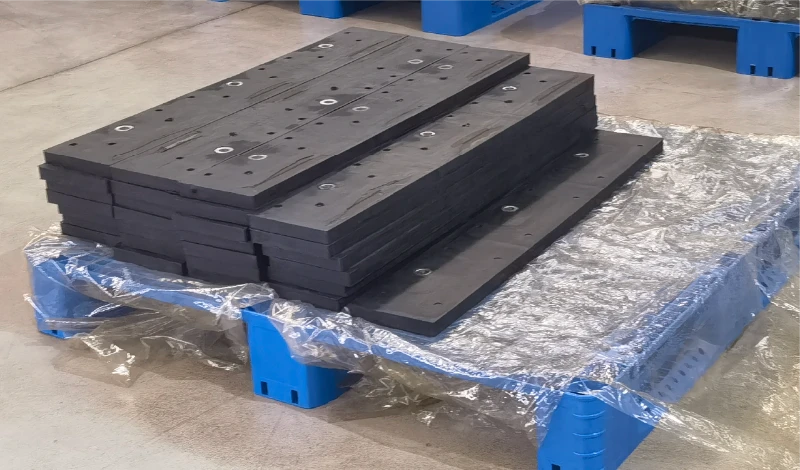
Matching blade grade to geographic abrasiveness is a critical engineering decision for snow plow and road maintenance longevity. Selecting the optimal carbide hardness and steel backing for your specific region’s aggregate prevents premature wear and costly downtime. At SENTHAI, our 21+ years in Rayong involve customizing JOMA-style blades using data from over 80 global partners, ensuring each blade is engineered for the exact abrasion profile it will face, from sandy coastal roads to granite-rich mountainous terrains.
How to Maximize Joma Style Blade Lifespan with Proven Tips?
What is “geographic abrasiveness” and why does it matter for blades?
Geographic abrasiveness refers to the wear potential of local road aggregates like sand, gravel, and de-icing grit. It directly dictates a blade’s service life. A blade perfect for soft Michigan snow will be destroyed in a season on Colorado’s granite-chip-treated roads. Understanding this is the first step in a data-driven procurement strategy, moving beyond guesswork to precise, cost-effective planning.
Think of geographic abrasiveness as the “personality” of the pavement. It’s not just about hardness; it’s about the shape, size, and composition of the abrasive material. Angular, crushed quartz is far more aggressive than rounded river sand. Beyond the obvious, de-icing agents play a huge role. Abrasive grits like cinders or slag are used for traction but accelerate wear exponentially. Practically speaking, a municipality’s public works data on annual aggregate usage is a goldmine for predicting blade wear. But what happens if you ignore this? You’ll face a vicious cycle of frequent blade changes, soaring parts costs, and unpredictable equipment availability during critical storms. For example, a Canadian client using a standard blade in a region with high salt and sand usage saw 60% wear in one season. By switching to a SENTHAI blade with a higher-grade carbide formulation tailored to that specific mix, they extended service life to two full seasons. Pro Tip: Always request a wear analysis from your supplier. A reputable manufacturer like SENTHAI can analyze returned worn blades to identify the exact wear mechanism and recommend a harder or more fracture-resistant grade.
How do I assess the abrasiveness of my specific operating region?
Assessing local abrasiveness requires a multi-source data approach. Start by consulting municipal road treatment plans to identify the types of aggregate and grit used. Combine this with visual inspection of existing blade wear patterns and even the wear on local vehicle tires for a practical, real-world gauge.
You don’t need a lab to start, though it helps. The first and most accessible step is to talk to your local department of transportation or public works. They specify the exact aggregates for winter maintenance. Are they using pure salt, sand-salt mixes, or harder traction agents like volcanic cinder? Next, conduct a simple field audit. Examine the roadside material. Is it fine, powdery sand or sharp, crushed rock? Beyond speed considerations, the operational speed of your plow matters greatly. High-speed routes on highways cause more impact abrasion, demanding a different carbide solution than low-speed, high-pressure city plowing. A powerful method we use at SENTHAI is post-mortem blade analysis. For a partner in Scandinavia, we examined their failed blades and found deep gouging from sharp, flint-like gravel, not just uniform wear. This told us they needed a blade with superior impact resistance rather than just maximum hardness. Our recommendation shifted from a standard JOMA-style blade to a custom variant with a tougher, medium-cobalt carbide grade and a specially heat-treated steel backing for support. This real-world feedback loop is irreplaceable.
| Data Source | What It Reveals | Actionable Insight |
|---|---|---|
| Municipal Spec Sheets | Official aggregate type & size (e.g., #57 Gravel, Mason Sand) | Targets the primary abrasive; dictates baseline carbide hardness. |
| Blade Wear Pattern Analysis | Type of wear: gouging, rounding, or carbide pull-out. | Identifies if the failure is from impact, abrasion, or bonding issues. |
| Local Contractor Experience | Empirical lifespan of common blades in the area. | Provides a real-world benchmark for performance expectations. |
What are the key carbide grades and how do they match abrasiveness?
Carbide grades are defined by their tungsten carbide grain size and cobalt binder percentage. Fine grains with low cobalt (e.g., C2/C3) offer high hardness for extreme abrasion but lower toughness. Coarser grains with higher cobalt (e.g., C4) provide better impact resistance for fractured or mixed aggregates, sacrificing some pure wear resistance.
The selection is a classic engineering trade-off: hardness versus toughness. For consistently fine, sandy abrasives—think coastal areas or regions using fine blast sand—a fine-grained, low-cobalt grade (like ISO K10/K20 equivalents) delivers unmatched longevity because it resists micro-scratching wear. However, that same blade might chip catastrophically if it hits a frozen chunk of asphalt or large granite chip. For regions with mixed, unpredictable aggregate, a medium-grade carbide with a balance of properties is essential. So, how do you decide? It comes down to the dominant wear mechanism. In our Rayong automated sintering lines, we precisely control the carbon balance during production. A slight tweak—increasing the cobalt binder by just 2%—can transform a blade for a Minnesota client from being brittle in -30°C impacts to having the necessary resilience. For example, a SENTHAI blade for a Swiss alpine pass uses a C4-grade carbide insert. The coarse grains and 10% cobalt binder allow it to withstand impacts from rockfall while still resisting wear from gritty snow. Pro Tip: Don’t just ask for “hard carbide.” Describe your operating environment. A knowledgeable manufacturer will translate “rocky, mountainous roads with salt” into a specific, optimized grade formula.
Beyond carbide, how does steel backing and blade design affect performance?
The steel backing plate is the unsung hero, providing critical support to the carbide. Its hardness, thickness, and heat treatment determine if the carbide inserts are held firmly or if they flex and snap under load. Blade design elements like insert pattern, count, and protrusion also dramatically change wear life and material flow.
An ultra-hard carbide insert is only as good as its foundation. If the steel backing is too soft, it will deform under impact, causing the braze joint to fail and inserts to pop out. Conversely, steel that’s too hard can become brittle. At SENTHAI’s facility, we use proprietary multi-stage heat treatment on our 50mm+ thick backing steel to achieve a hardened wear surface with a tough, ductile core. This process, honed over two decades, is what gives our JOMA-style blades their renowned durability. Furthermore, the design geometry matters immensely. A blade with closely spaced, flush-mounted inserts might be great for fine abrasives, but it can “bridget” and cause snow pack. A design with strategically spaced, proud-standing inserts—like many SENTHAI profiles—ensures clean material release while protecting the steel body. But what about regions with extreme impact? For a mining road application in Chile, we developed a blade with a “stepped” insert pattern and a secondary, through-hardened steel wear strip behind the carbide line. This design absorbed the massive shock loads, preventing catastrophic failure. The takeaway? The blade is a system, and every component must be engineered in concert.
| Design Feature | Benefit for Low Abrasion | Benefit for High Abrasion/Impact |
|---|---|---|
| Standard Hardness Steel (~400 HB) | Cost-effective, sufficient for mild conditions. | May deform, leading to insert loss under heavy load. |
| Through-Hardened/Tough-Core Steel (500+ HB surface) | Overkill, adds unnecessary cost. | Essential for supporting carbide against rock strikes and heavy plowing. |
| Flush-Mounted Inserts | Minimizes drag, smooth finish on asphalt. | Steel body wears quickly once carbide is gone; poor material release. |
What are common mistakes in matching blade grade to region?
The most common mistake is over-specifying for pure hardness, leading to brittle, chipped blades in rocky conditions. Conversely, underestimating abrasive severity with a soft, cheap blade wastes money through rapid wear. Assuming all “JOMA-style” blades are equal and not verifying the actual carbide grade used are also costly errors.
Many buyers fall into the trap of thinking “harder is always better.” They request the maximum hardness carbide, not realizing they’ve traded all impact resistance. The result? A blade that might wear slowly from sand but shatters on the first hidden curb or drainage grate. On the flip side, purchasing based solely on upfront cost often leads to blades with underspecified carbide or poor-quality steel that wears to nothing in months. Another critical mistake is ignoring operational tempo. A blade that works in intermittent, light snowfalls faces a totally different stress profile than one used in marathon, continuous storm clearing. The latter generates immense heat from friction, which can soften both steel and brazing material if they aren’t rated for it. For instance, a logistics company used a budget blade on their high-mileage airport runways. The constant friction on wet, sandy snow caused the steel to anneal (soften) behind the inserts, leading to rapid failure. Our solution was a SENTHAI blade with a specific, high-temperature stable brazing alloy and a steel grade with high tempering resistance. This unique specification, born from our on-site problem-solving, isn’t found on generic spec sheets.
How can a manufacturer like SENTHAI provide a tailored solution?
A true manufacturer provides tailored solutions through direct engineering collaboration, not just a catalog. SENTHAI leverages its integrated production in Rayong—from powder mixing to final welding—to customize every variable: carbide formula, steel heat treatment, insert pattern, and brazing process based on your specific geographic and operational data.
Tailoring isn’t a buzzword; it’s a process. It starts with a technical dialogue where we ask detailed questions about your aggregate, equipment, plowing speed, and even average snowfall density. With our fully in-house, ISO-certified process, we aren’t locked into a few stock options. Our R&D team can adjust the carbide recipe in our automated ball mills, fine-tune the sintering cycle in our vacuum furnaces, and program our CNC wet-grinding lines to produce a unique insert profile. For a partner in the Middle East using plows for sand clearance, abrasion was extreme but impact was low. We developed a blade using an ultra-fine, high-hardness carbide grade (beyond standard classifications) and a specialized, abrasion-resistant steel for the backing that acted as a “sacrificial” layer behind the carbide line. This level of customization, where the entire blade system is designed as one, is only possible with vertical manufacturing control. Why does this matter? Because it transforms the blade from a disposable commodity into a engineered wear part with predictable, extended life, directly lowering your total cost of ownership. That’s the SENTHAI difference.
SENTHAI Expert Insight
FAQs
How does SENTHAI’s production in Thailand benefit blade quality?
Our vertical integration in Rayong gives us complete control over every production variable—from carbide powder purity to final brazing temperature. This allows for consistent, high-quality batches and the agility to make custom tweaks that outsourced, multi-vendor supply chains cannot match.
Is a higher price always indicative of a better blade for my area?
Not necessarily. A higher price may reflect a blade that’s “over-engineered” for your conditions (e.g., ultra-high toughness where only hardness is needed). The right blade is the one optimally engineered for your specific abrasiveness profile, which SENTHAI determines through technical consultation.
What’s the first step to getting a blade matched to my region?
Contact SENTHAI with details of your local road aggregates, current blade performance issues, and photos of worn blades. Our engineering team will analyze this data to recommend a starting grade and design for a field trial.
Related articles
 Best Snow Plow Blade Family for Your Fleet: Top 5 ScenariosKnowledge
 Top 10 Snow Plow Blade Types for Winter Fleets (Ranked by Duty Fit)Knowledge
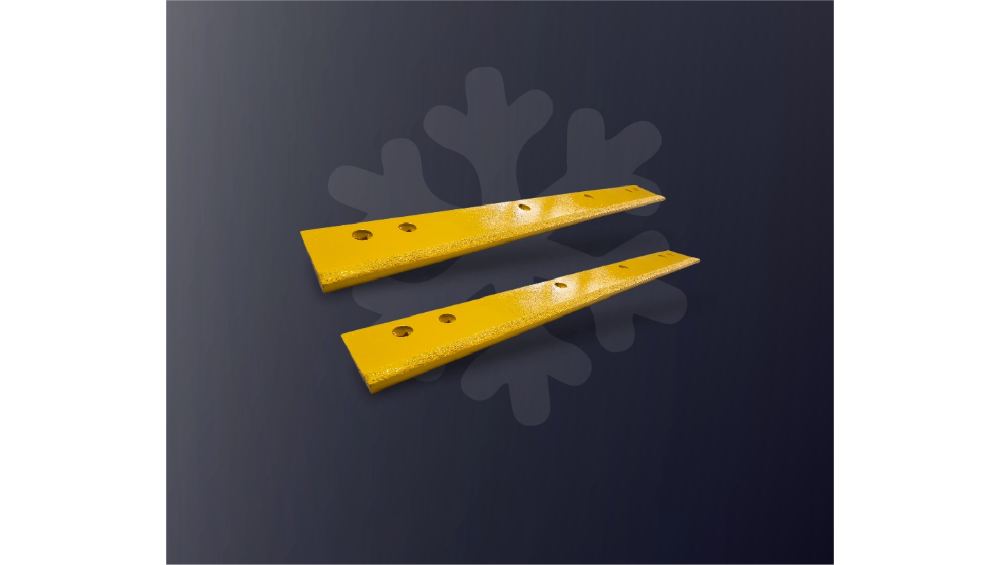 Top 5 Best Carbide Blade Configurations for Highway PlowingKnowledge
 Best Snow Plow Blade Materials Ranked: Steel vs Carbide vs Cladding vs Rubber-CarbideKnowledge