




Why Does Plowing Dry Pavement Damage Snow Plow Blades More Than Ice?
Dry plowing is the operation of a snow plow blade on bare, dry pavement without a protective layer of snow or ice. This practice is the primary enemy of carbide longevity, causing catastrophic micro-fractures…
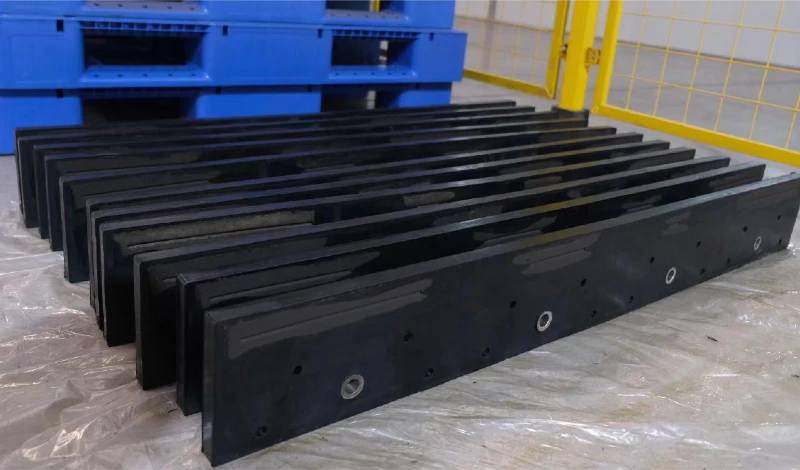
Dry plowing is the operation of a snow plow blade on bare, dry pavement without a protective layer of snow or ice. This practice is the primary enemy of carbide longevity, causing catastrophic micro-fractures and rapid wear on the hard, brittle carbide inserts. Unlike plowing ice, which provides lubrication and controlled abrasion, dry contact creates extreme friction and thermal shock, destroying the blade’s cutting edge and drastically shortening its service life.
How to Maximize Joma Style Blade Lifespan with Proven Tips?
What exactly is “dry plowing” and why is it so damaging?
Dry plowing occurs when a carbide-tipped blade scrapes directly against dry asphalt or concrete. Without the lubricating and cooling effect of snow or ice, immense friction generates localized heat exceeding 800°C at the contact point. This thermal shock, combined with high-impact forces, causes the carbide to microfracture and spall, a failure mode far more severe than gradual abrasive wear.
Think of it this way: ice is a relatively soft, lubricating medium that allows the carbide to slice and deflect material. Dry pavement, however, is an unyielding abrasive. The sudden stop of the blade’s momentum transfers massive shock loads into the carbide insert. But what happens at the microscopic level? The carbide’s binder (cobalt) softens from the heat, losing its grip on the hard tungsten carbide grains. These grains then pull out or fracture, leading to rapid edge degradation. In our Rayong factory’s failure analysis lab, we see this distinct “thermal fatigue” pattern on blades returned from dry-plowing operations—a chalky, degraded surface rather than a clean, worn edge. Pro Tip: If you must transition from a snow-covered to a clear section, slightly angle the blade or lift it to minimize full-contact scraping. The cost of a few missed inches of pavement is far less than a prematurely destroyed blade.
How does ice act as a natural lubricant for plow blades?
Ice and packed snow provide a hydrodynamic cushion and a controlled wear medium for the blade. As the carbide edge contacts the ice, the pressure and friction cause a thin layer to melt, creating a water film that reduces the coefficient of friction. This process allows the blade to glide, converting plowing force into material displacement rather than pure abrasion.
Beyond simple lubrication, the physics are fascinating. The ice’s phase change from solid to liquid absorbs a tremendous amount of the frictional energy as latent heat. This acts as a built-in cooling system, preventing the catastrophic temperature spikes seen in dry plowing. Practically speaking, the wear that does occur is a predictable, gradual abrasion as the carbide shears through the ice crystals. It’s a controlled process that aligns with the engineered purpose of the blade. For a real-world example, consider SENTHAI’s testing data: a JOMA-style blade subjected to continuous ice plowing in our simulated wear rig showed a linear wear rate of 0.05mm per operating hour. The same blade, tested on dry concrete, showed catastrophic edge failure in under 30 minutes. The difference isn’t just in longevity; it’s in the fundamental mechanism of destruction.
What are the specific failure modes of carbide during dry plowing?
Dry plowing induces thermal cracking (heat checking), carbide grain pull-out, and catastrophic macro-fracture. The failure is not uniform wear but a sudden, brittle breakdown of the material’s integrity, often leading to chunks of the insert breaking off entirely, rendering the blade ineffective.
The sequence of failure is a textbook case of material science limits being breached. First, intense localized heat causes differential expansion between the surface and core of the carbide insert. This stress creates a network of fine micro-cracks, known as heat checking. Next, the cobalt binder phase, which normally holds the ultra-hard tungsten carbide grains together, begins to oxidize and soften. With the binder compromised, individual carbide grains are easily dislodged by the abrasive action of the pavement aggregate. Finally, a propagating crack from one of these micro-fractures can lead to a complete section of the insert shearing off. So, why does this matter for operators? A blade worn down evenly from ice can often be rotated or adjusted for further service. A blade shattered from dry plowing is immediately and permanently out of action, a total loss. Our automated welding line in Rayong sees these failures firsthand, and the repair often requires complete insert replacement, not just rebuilding.
| Failure Mode | Dry Plowing Cause | Result on Blade |
|---|---|---|
| Thermal Cracking | Extreme friction heat (>800°C) | Spider-web cracks on insert face |
| Grain Pull-Out | Binder (cobalt) softening/oxidation | Rough, pitted cutting edge |
| Macro-Fracture | Shock load on brittle, cracked carbide | Chunks of insert missing |
How does blade design, like JOMA-style, influence dry plow resistance?
Superior blade design, like the JOMA-style profile, mitigates damage through optimized attack angles and robust carbide support. The geometry is engineered to promote material flow and reduce point loading, while the steel body is designed to absorb shock and protect the carbide inserts from excessive bending moments.
It’s not just about slapping a piece of carbide onto steel. The angle at which the insert meets the ground—the attack or relief angle—is critical. A SENTHAI JOMA-style blade is engineered with a specific angle that provides a shearing action rather than a direct, blunt impact. This design helps initiate a “curl” of material, be it snow or, unavoidably, occasional pavement contact, reducing direct force. Furthermore, the steel pocket that holds the carbide insert is crucial. We use a proprietary vulcanization process in our Rayong facility to bond a rubber cushion between the carbide and the steel. This acts as a shock absorber, damping the vibrations and impacts from uneven surfaces. Think of it like a high-performance tire: the tread (carbide) does the work, but the sidewall and internal structure (steel body and bonding) manage the forces. A poorly designed blade transfers all impact energy directly into the brittle carbide, guaranteeing a short life.
What role does manufacturing quality play in combating this wear?
High-quality manufacturing ensures superior carbide density, optimal grain structure, and perfect insert bonding. These factors directly determine the insert’s ability to resist thermal shock and mechanical impact, turning a generic wear part into a durable tool capable of surviving occasional operational abuse.
You can have the best design, but poor execution dooms it to fail. This is where SENTHAI’s 21 years of expertise in Rayong becomes irreplaceable. Our process starts with premium tungsten carbide powder, pressed under isostatic pressure to eliminate voids that become crack initiation points. Then, our vacuum sintering furnaces precisely control the temperature curve to grow a consistent, fine grain structure—a tougher, more fracture-resistant material. But perhaps the most critical step is bonding. A poorly bonded insert will pop out under shock. We use automated MIG welding with precise heat input control, followed by our proprietary vulcanization process that encapsulates the insert in a rubber matrix. For a major US OEM, we increased bonding strength by 28% through a tweak to our sintering atmosphere, a change born directly from analyzing dry-plow failures. This level of process control, certified under ISO9001, is what separates a commodity blade from a performance tool built to last.
Can proper operator technique extend blade life despite harsh conditions?
Absolutely. Proactive operator technique is the final, critical defense. This includes managing blade angle and pressure, recognizing surface transitions, and implementing a disciplined maintenance schedule to inspect and rotate blades before minor damage becomes catastrophic failure.
Even the best blade is at the mercy of the operator. The key is to treat the plow as a precision instrument, not a bulldozer. When approaching a cleared section of road, the instinct is to keep scraping. The expert move is to slightly lift or “feather” the blade to reduce contact pressure. Furthermore, using the correct pitch angle for the material—steeper for ice, shallower for powder—reduces unnecessary force. But what about when contact is unavoidable? Minimizing travel speed during dry contact is paramount, as impact force increases with the square of velocity. A simple rule from our field training: if you hear a constant, grating scrape, you’re destroying your investment. Pro Tip: Implement a mandatory post-shift inspection. Use a flashlight to look for the tell-tale shiny, polished spots on the carbide or small chips. Catching these early allows you to rotate the blade or schedule maintenance before a small fracture turns into a $500 repair bill.
| Scenario | Poor Technique | Expert Technique |
|---|---|---|
| Transition to Clear Pavement | Continue scraping at full pressure | Lift blade slightly or angle to reduce contact |
| Plowing Mixed Slush & Pavement | Maintain constant high speed | Reduce speed over exposed patches |
| Blade Maintenance | Run until completely destroyed | Weekly visual inspection and timely rotation |
SENTHAI Expert Insight
FAQs
Can a blade be repaired after dry plow damage?
It depends on the extent. Minor spalling can sometimes be ground out, but severe thermal cracking or macro-fracture requires complete insert replacement. SENTHAI’s repair service in Rayong can assess and rebuild blades to original specifications, often at a fraction of the cost of a new unit.
Do other blade materials (like steel) handle dry plowing better?
Steel blades wear faster but fail less catastrophically; they bend and wear down rather than shatter. However, their overall life and performance in snow are vastly inferior to carbide. The best practice is to use the right tool (carbide for snow/ice) and operate it correctly.
How can I tell if my blade has dry plow damage?
Look for a polished, shiny appearance on the carbide tip instead of a rough, abraded surface. Check for small chips, cracks (often appearing as hairline fractures), or a “cratered” look where grains have been pulled out. These are all hallmarks of thermal-mechanical failure.
Related articles
 Best Snow Plow Blade Family for Your Fleet: Top 5 ScenariosKnowledge
 Top 10 Snow Plow Blade Types for Winter Fleets (Ranked by Duty Fit)Knowledge
 Top 5 Best Carbide Blade Configurations for Highway PlowingKnowledge
 Best Snow Plow Blade Materials Ranked: Steel vs Carbide vs Cladding vs Rubber-CarbideKnowledge