Snow Plow Blade Vibration and Equipment Wear: How Rubber-Flex Edges Protect Trucks and Operators
Vibration from a rigid plow edge is not just uncomfortable — it is expensive. Every shock that a steel edge transmits travels through the cutting edge hardware, the plow frame, the mounts, and into…
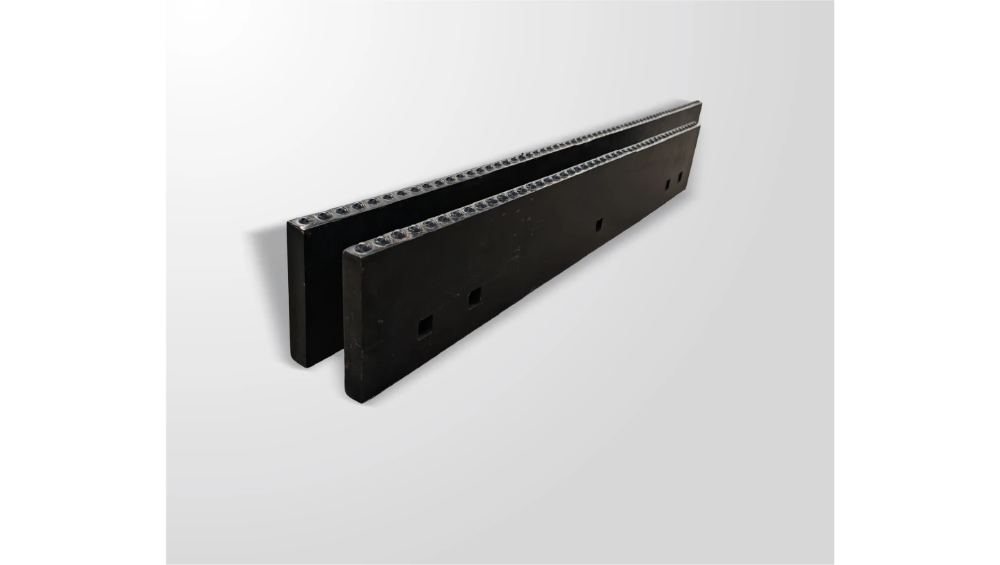
Vibration from a rigid plow edge is not just uncomfortable — it is expensive. Every shock that a steel edge transmits travels through the cutting edge hardware, the plow frame, the mounts, and into the truck chassis. It also travels into the cab, where it fatigues the operator over long shifts. Rubber-flex JOMA style blades dampen that vibration at the source, protecting both the equipment and the crew. For sizes and specifications, see the JOMA style blade construction details.
Vibration: The Hidden Cost of Rigid Edges
A rigid cutting edge transfers impact energy directly into the plow and vehicle. Over a season, that constant hammering accelerates wear on cutting edge hardware, wear shoes, mount brackets, and even hydraulic components. Because the damage is gradual, it rarely gets traced back to the blade — but the maintenance hours and part replacements show up anyway.
The rubber shell in a JOMA style blade changes the physics of that contact. Instead of a steel-to-pavement impact, the rubber compresses and rebounds, absorbing a large share of the shock before it reaches the frame. Less transmitted energy means less wear on every component downstream of the edge.
What Vibration Does to Plows and Trucks
The failure points are predictable: loose and cracked mounting hardware, worn pins and bushings, fatigued welds, and faster wear on any component connected to the plow. Fleets that track downtime often find that “unexplained” hydraulic and mount repairs drop after switching to a blade that absorbs shock instead of transmitting it. The economics are simple: a vibration-damping edge protects a vehicle that costs many times more than the blade itself.
Operator Fatigue and Retention
Plow operators spend long shifts in a cab that vibrates and hums with every pass. Persistent vibration and noise increase fatigue, reduce alertness, and make the job harder to staff. Occupational safety agencies treat noise as a real workplace hazard: the National Institute for Occupational Safety and Health sets a recommended exposure limit of 85 A-weighted decibels averaged over an eight-hour shift, and the Occupational Safety and Health Administration requires hearing conservation programs at that threshold. Every source of noise and vibration that can be engineered out of the cab is worth removing.
A blade that noticeably reduces cab vibration and noise is a retention tool as much as a maintenance tool — operators notice the difference, and they tell their supervisors.
Noise Reduction in the Cab
The rubber shell in a JOMA style blade reduces the metal-to-surface contact that creates plow noise. Because the rubber flexes over the road instead of chattering against it, cab noise drops along with vibration. Quieter operation is not only more comfortable — it also improves communication between the operator and the crew during loading and maneuvering, and it lowers the cumulative noise exposure that contributes to long-term hearing risk.
References: NIOSH, “Noise-Induced Hearing Loss” (recommended exposure limit, 85 dBA, 8-hour TWA); OSHA, Occupational Noise Exposure Standard, 29 CFR 1910.95.
How to Measure the Improvement
- Log maintenance before and after. Track mount and hardware repairs per plow per season.
- Ask operators. A simple feedback score on cab noise and vibration after the first storm is fast and reliable.
- Use a vibration meter. If you have access to one, measure at the cab mount or plow frame with a rigid edge vs a rubber-flex edge.
- Compare on the same route. Same truck, same route, different blades — that is the cleanest test.
Building a Before/After Maintenance Baseline
Vibration savings are measurable if you log them. Before switching, record per-truck maintenance on mounts, pins, bushings, and hydraulic components for one season. After switching, keep the same log. If hardware repairs and “unexplained” mount work drop, the blade is paying for itself in the shop, not just in the cab.
Add an operator survey after the first storm: rate cab noise, vibration, and fatigue on a simple scale. Same trucks, same routes, different blades — that before/after comparison is the cleanest evidence you can produce, and it is the kind of field data that convinces both maintenance crews and budget committees.
Frequently Asked Questions
Do rubber-flex blades really reduce vibration?
Yes. The rubber shell absorbs and distributes impact shock instead of transmitting it into the plow frame and cab — that is the core function of the design.
Will reduced vibration affect cutting performance?
No. The carbide inserts still maintain downward pressure through the internal steel structure, so the blade cuts ice while the rubber handles the shock absorption.
Is the noise difference noticeable?
Most operators report a clear difference in cab noise, especially on uneven roads and over markings, because the rubber glides over irregularities instead of chattering.
Do JOMA style blades fit my existing plow hardware?
Yes — standard AASHTO bolt patterns (typically 8-inch or 12-inch on-center) work with your existing clamping bars and Grade 8 hardware.
Quieter cab, longer-lasting hardware. See how the SENTHAI JOMA style blade collection page is built on the collection page, and contact SENTHAI to arrange an operator-tested trial on your fleet.