



Plow Blade Inventory Planning for the Season
Plow blade inventory planning: how to set a holding from measured consumption, cost the coverage it buys and time reorders before the peak weeks.
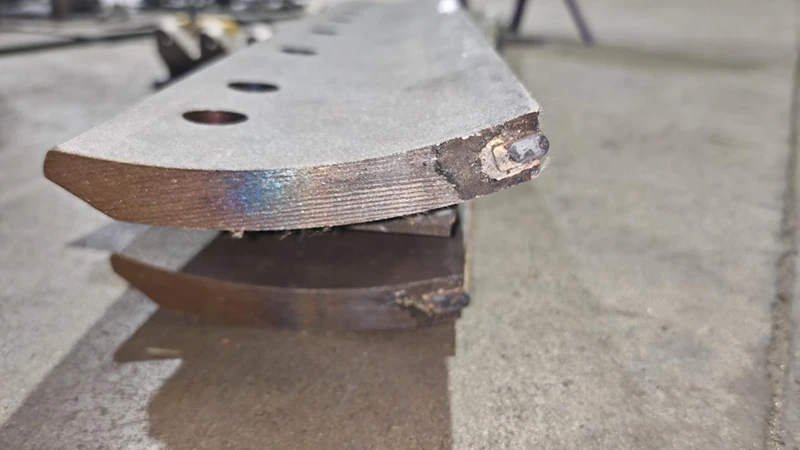
Winter edge inventory sits between two costs: the capital tied up in edges that may not be used, and the service failure that follows a shortage in the week the fleet needs everything. Neither is visible on a purchase order, and both are decided by how the holding is set. The number that avoids them is a calculation from measured consumption rather than a percentage of the fleet.
What Plow Blade Inventory Planning Has to Deliver
It has to cover consumption plus disruption.
A holding should cover the edges a fleet expects to consume across the season, plus a margin for the weeks when replacements cluster and for the lead time between ordering and delivery.
Those two components behave differently. Planned consumption comes from the measured interval and the number of units per group. Disruption cover is smaller and driven by how quickly an edge can reach its limit and how long a replacement takes to arrive. Where the interval is not recorded, the second component absorbs the uncertainty and the holding grows year by year without anyone deciding it should.
A second function of the holding is to keep records coherent. Where edges of several specification revisions sit in one rack, a replacement cannot be attributed to the specification it belongs to, and the fleet’s wear record stops being comparable. Separating stock by revision, and labelling it, is an inventory decision as much as a storage one.
How Holding Strategies Differ in Coverage and Cost
Holding more reduces idle risk and ties up capital.
Holding less shifts the same risk to the supply chain, which is acceptable only where lead time is short and reliable. Neither strategy is wrong; the question is which risk the fleet prefers to carry.
The trade-off should be made per truck group. A group covering essential routes cannot wait for a delivery during a storm, so it justifies a larger margin. A group whose routes can be re-sequenced can tolerate a thinner holding. Setting one quantity for the whole fleet applies the worst-case margin everywhere or the thinnest margin to the group that needs it most.
Obsolescence is the other cost. Where a specification revision changes mid-season, the held stock belongs to the previous revision, and the fleet faces a choice between using it and writing it off. That cost is lower where holdings are modest and reorders frequent, and higher where a fleet bought a full season’s requirement in a single order. Purchase timing is therefore part of the inventory decision rather than a separate commercial matter.
Specification Inputs You Need Before Setting a Seasonal Edge Inventory Holding
Five inputs set the quantity. The edges consumed per truck group over a season, taken from maintenance records. The number of units in each group. The measured interval at which edges are replaced for wear rather than for damage. The confirmed supplier lead time. And the cost of the vehicle being unavailable, which need not be precise but should be stated explicitly rather than assumed to be zero.
Three further inputs improve the result. The pattern of consumption across the season, since replacements cluster in the hardest weeks rather than spreading evenly. The number of edges removed for damage rather than wear, because those drive the disruption margin. And the number of specifications in service, since each one requires its own stock, its own hardware and its own identification.
Where records do not exist, the first season should be treated as the measurement phase: hold generously for one winter, log consumption by group and by cause, and set the following season’s holding from data. One season of records is enough to convert the holding from a judgment into a calculation, and it is the same record the cost model needs.
A simple way to start is to log every edge issued from stores with four fields: date, truck group, specification revision and reason. Reason is the field that makes the record useful, because a replacement for wear and a replacement after damage are different events with different implications. Within a season the pattern becomes clear, and the holding can be built on the actual mix rather than on an average that conceals it.
Fitment, Hardware and Storage Consequences for Seasonal Edge Inventory
Inventory planning has fitment consequences that are easy to overlook. Where a fleet holds edges for several patterns, the stock is only useful if the vehicles it fits are still in service and their mounting faces are in a condition to accept it. A rack of edges for a retired truck is not a holding; it is a write-off that has not been recognised.
Hardware belongs in the plan. Where specifications differ in fastener requirement, the holding should include the fasteners and washers for each revision, or the edge stock will be unusable at the moment it is needed. SENTHAI validates fitment against AASHTO and DIN bolt patterns before release and works to plus or minus 0.02 mm dimensional tolerances on carbide components, with AASHTO published standards as the agency reference and DIN covering European and export conventions.
Storage conditions determine whether the holding retains its value. Edges stored on damp ground or stacked on their cutting edges arrive at the season in worse condition than they left it, and a holding that has to be inspected in full before issue is not really a holding. Support under the body, labelling and a dry location are the practices that make the quantity usable. Handling guidance for heavy assemblies is published by the UK Health and Safety Executive, and general workshop requirements for hand and power tool use are set out in the OSHA occupational safety and health standards.
Plow Blade Inventory Planning: What to Hold
The holding should reflect the events that consume edges rather than an average rate alone. Building it from four components produces a quantity that can be explained and reviewed.
| Component | Basis | Purpose |
|---|---|---|
| Planned consumption | Measured replacements for wear per group | Covers the work the fleet expects to do |
| Damage cover | Recorded damage and loss events per group | Covers events that do not follow the interval |
| Peak margin | Consumption pattern rather than weekly average | Covers the weeks when replacements cluster |
| Lead time buffer | Confirmed supplier lead time | Covers the gap between reorder and delivery |
| Hardware per revision | Hardware list per specification | Ensures held edges can actually be fitted |
Two cautions belong with the table. Damage cover should be reviewed rather than accumulated, because a high rate of damage points to a retention or fitment problem rather than to a need for more stock. And the peak margin should not be used to compensate for a long lead time, since that produces a large holding exposed to obsolescence if the specification changes. The wider cost framework for the decision is set out on the cost per mile page.

Documentation and Traceability for Held Stock
Held stock should carry the same documentation as the original delivery, because an edge fitted in February may be the subject of a question in April. Keep the batch reference, grade data and inspection results with the stock, and record which batch was issued to which vehicle. SENTHAI inspects and archives every batch, and the quality control and traceability page describes what that record contains.
Grade verification for held stock can be referenced to test methods published by ASTM. Where the fleet is publicly funded, supplier registration for federal awards is handled through SAM.gov, and general procurement guidance is published by GSA. Keeping technical and commercial records together allows the holding to be reviewed by someone who did not set it.
Reorder Timing Through the Season
Reorders should be triggered by consumption rather than by a calendar review. Once the interval and the units per group are known, the reorder point becomes a quantity: the level at which remaining stock covers lead time plus the peak margin. That approach keeps capital out of the rack while ensuring the busiest weeks are covered.
Continuity depends on the reorder reproducing the specification in force. Attach the revision to the order, require written confirmation that it will be produced to that revision, and compare the documentation that arrives against the original. Where a change is proposed, evaluate it against the stated properties and treat acceptance as a new revision with its own records.
Where a fleet operates across several depots, the holding question becomes a distribution question as well. Stock spread thinly across sites ties up more total capital than the same quantity concentrated, because each location needs its own margin. Concentrating the holding where the workshop and the lifting equipment are available, and moving edges as required, usually produces a smaller total holding for the same coverage.
Finally, review the holding at the same point each season. Compare the quantity against actual consumption, note where the estimate was wrong and why, and adjust for the following year. A holding that is never reviewed becomes a fixed number that outlives the conditions that produced it, and the fleet ends up storing stock for a specification it no longer runs.
Plow blade inventory planning is a calculation from measured consumption plus a margin for damage, peaks and lead time, reviewed once a season. A percentage of fleet size is not a plan; it is a number that happens to appear in a procedure.
Separate the holding by specification revision and hardware set, label it, and record which batch is issued where. Done that way, the edge is available when it is needed, traceable when it is questioned and the quantity is defensible when the budget is reviewed.
Send SENTHAI your consumption records, truck groups and lead time requirements, and the technical team will review the holding, the hardware list and the reorder point for each group.
Frequently Asked Questions
How many spare plow edges should a fleet hold?
Set the quantity from measured consumption plus a margin for damage, peak weeks and lead time, calculated per truck group. A percentage of fleet size ignores both the interval and the consumption pattern, which is why it tends to be too low for the hardest-working group and too high for the rest. One season of records replaces the estimate with data.
What should be recorded when an edge is issued from stock?
The specification revision, the batch reference and the vehicle it was fitted to, together with the date and the reason for the replacement. That record keeps the wear data attributable to one specification, and it is what allows a question about a specific edge to be traced back to its production batch.
How should stock be organised in stores?
Separate edges by specification revision and pattern, and keep the hardware set for each revision with its stock. Label everything with the revision, the pattern and the batch. Where a rack contains a mixture, issuing an edge depends on identifying it by sight, which is where wrong-part fittings begin under pressure.
When should the holding be reviewed?
At the same point each season, against actual consumption rather than at a convenient moment. Note where the estimate was wrong and why, and adjust the quantity for the following year. Reviews conducted at different points in different seasons compare different amounts of work and produce conclusions that measure the calendar instead of the fleet.
Related articles
 Plow Blade Failure Modes: What Each One Tells YouSnow plow blade programme & selectionPlow Edge Rotation Programme: Running It on EvidenceSnow plow blade programme & selection
 Plow Blade Length and Thickness by Truck ClassSnow plow blade programme & selection
 Snow Plow Blade Bolt Pattern: Verifying It Before You OrderSnow plow blade programme & selection