



Underbody Plow Blade Specification: How Mounting Position Changes It
How an underbody plow blade specification differs from front and wing positions: load, edge angle, thickness and the fitment checks each one needs.
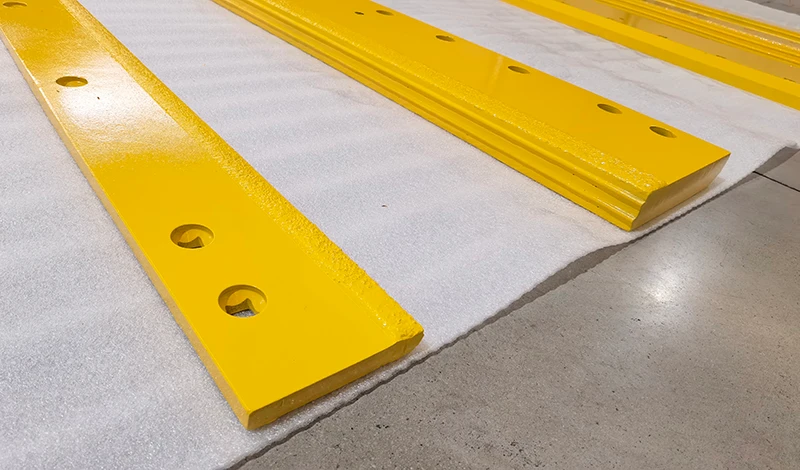
The same blade profile specified for a front plow and an underbody position will not perform the same way, and the difference is mechanical rather than cosmetic. Mounting position changes how load is applied, how much down-pressure is available, how the edge meets the surface and what the mounting interface has to carry. Position belongs in the specification alongside geometry and material.
Which Underbody Plow Blade Specification Points Change by Position
Load path, down-pressure and access change by position.
A front plow applies load through a controllable lift and trip mechanism, an underbody blade works where geometry is fixed, and a wing blade applies load along a different axis.
Those differences change what a specification should state. Available down-pressure determines how much contact an edge can establish, so an angle and thickness combination that works on a heavy front plow may not work under a vehicle with different weight distribution. Load direction determines how the mounting interface is loaded, which affects hardware and inspection intervals. And access determines how the edge is inspected and replaced, which affects the practical service interval and the labour involved.
The existing comparison of front, wing and underbody positions is set out in the material on mounting carbide blades in front, underbody and wing positions, and the general specification method is covered in the guide to specifying a carbide snow plow blade.
The practical consequence is that a vehicle carrying all three positions should be treated as three requirements. Each has its own pattern, its own hardware set and its own interval, and a specification that treats them as one will either over-specify two positions or under-specify the third. Where a fleet cannot measure every position immediately, the one that consumes the most edges is the place to start, because it is where a specification error costs the most.
How Mounting Position Changes the Specification Variables
Each position applies load differently.
A front plow gives the operator control over how hard the edge presses; an underbody blade works at a fixed geometry set by the vehicle; and a wing blade combines continuous contact with shock loads from the side of the carriageway.
Front plows allow the specification to rely on down-pressure being applied when needed, which permits a sharper edge angle and lets the operator manage contact on changing surfaces. Underbody blades invert that relationship: contact is determined by vehicle geometry and weight distribution rather than operator input, so the edge angle and thickness must work within the down-pressure the vehicle naturally applies, and the mounting interface has to accept a load the operator cannot moderate.
Wing blades load the edge in a different direction again and often work at speed on highway routes. The edge meets an abrasive surface continuously and is exposed to shock from obstacles at the side of the carriageway, so grade selection and retention quality become more important than the operator’s ability to compensate. Each position therefore shifts the emphasis of the specification rather than changing the whole of it.
Grade, Geometry and Material Choices by Mounting Position
Grade and geometry are chosen against the load the position applies. SENTHAI engineers the hardness and toughness balance against stated service conditions using hardness on the HRA scale together with carbide grain size, and supplies micro grain inserts in trapezoid and bullnose shapes, which allows the material and the shape to be matched to the position rather than chosen independently of it.
For an underbody position, the practical constraints are fixed contact and limited access. Where the edge cannot be adjusted to suit a changing surface, a grade that tolerates mixed conditions is more useful than one optimised for a single failure mode, because the fleet cannot manage the contact in the way a front plow operator can. For a wing position, continuous contact at speed makes retention quality the priority, since a lost insert on a wing blade is both a performance failure and a road hazard.
Thickness follows from wearable access as well as from wear rate. Where an underbody edge is awkward to reach, the cost of the change is higher and the interval matters more, which can justify additional reserve. Production control supports that: SENTHAI manufactures in Rayong, Thailand, in a US-invested plant using non-China raw materials, with the full chain in-house from wet grinding and robotic pressing at up to 500 tons through vacuum and low-pressure sintering, automated high-temperature induction brazing and finishing.
Fitment and Tolerance Requirements for Each Position
Fitment requirements differ in what they have to carry rather than in what they have to measure. SENTHAI validates fitment against AASHTO and DIN bolt patterns before release and works to plus or minus 0.02 mm dimensional tolerances on carbide components, with AASHTO published standards as the reference for agency specifications and DIN covering European and export conventions.
Three checks belong for each position. Confirm the measured pattern from the blade in service, since a front and an underbody position on the same vehicle can use different patterns. Confirm the seated height the position requires, because underbody geometry is fixed and there is less opportunity to compensate. And confirm the hardware set and torque value, since load direction and magnitude differ between positions and the fastener requirement follows.
Where an OEM mounting interface is involved, the equipment documentation is the authority, and SAE standards for mobile machinery describe the interfaces those designs were built around. For a mixed fleet, listing each position by vehicle group and requiring confirmation for each is what keeps the specification enforceable.
Evidence to Request With a Mounting Position Quote
Documentation requirements do not change by position, but the specification should require them per group. Ask for dimensional inspection results at the mounting holes and cutting edge, grade data referenced to a test method such as those published by ASTM, written fitment confirmation against the pattern supplied and the hardware set required including bolt length and torque value. SENTHAI inspects and archives every batch, and the quality control and traceability page describes that record.
Where inserts are supplied fitted, add the joining process and how bond integrity is controlled. That matters most for wing and underbody positions, where the edge is loaded in directions that a front plow specification may not anticipate. Two administrative items apply to public programmes: supplier registration for federal awards is handled through SAM.gov, and general procurement guidance is published by GSA.
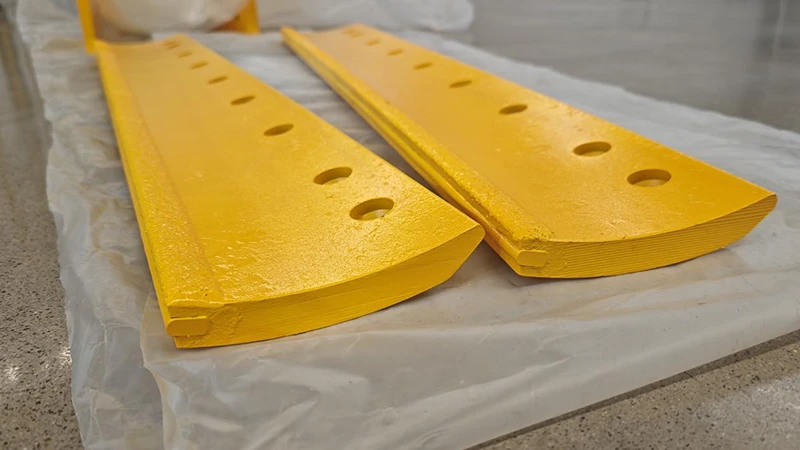
Common Specification Errors Across Mounting Positions
The most common error is applying one specification across all three positions on a vehicle. It works until the underbody edge reaches its limit earlier than expected, because the down-pressure available in that position is different from the front. The second is assuming the pattern is common across positions, which produces a fitment problem that is discovered at fitting rather than at ordering.
The third is neglecting inspection access. Where an underbody edge is difficult to reach, the inspection interval has to reflect that, or the interval is quietly extended by circumstance rather than by decision. The fourth is ignoring load direction in the hardware specification, which produces loosening in positions that apply load at an angle the fastener set was not chosen for.
The costs appear as shortened intervals on one position, unplanned hardware work and wear records that cannot be compared because two positions are being treated as one. Specifying each position as its own group, with its own pattern, hardware and interval, removes all four and produces records that can be evaluated per position after a season.
A fifth error is more subtle: assuming that a change made for one position applies to the others. Where a fleet moves to a heavier edge on the front plow to extend its interval, the same change under the vehicle may reduce contact rather than extend life, because the available down-pressure is different. Changes should be made and evaluated per position, with one variable altered at a time.
A sixth error concerns records rather than specification. Where wear is recorded by vehicle rather than by position, the fleet cannot tell which edge consumed the material, and the following season’s decision is made on a total that describes three different operating conditions. Splitting the record by position costs nothing at the point of measurement and is what makes the comparison possible later.
Writing Position Requirements Into a Tender
A tender should list positions by vehicle group rather than treating the fleet as one requirement. For each, state the measured pattern, the edge dimensions and angle with tolerances, the grade requirement with its properties, the hardware set and the documentation package required. Where a fleet runs several vehicles with all three positions, the tender will contain more lines than a single-position tender, and each line is a requirement a bidder can be held to.
Where the programme references published patterns, citing the relevant AASHTO standards and requiring a declaration of conformity keeps offers comparable. Two clauses are worth adding: require the bidder to confirm fitment for each position separately, and require them to state any position for which the offered specification is not recommended. Winter operating context published by the Federal Highway Administration is useful supporting material where the tender has to state the service conditions each position will work under.
Front, underbody and wing positions load a cutting edge differently, so the specification has to differ too. Available down-pressure, load direction and inspection access are the variables that change, and each has a consequence for angle, thickness, hardware and interval.
Specify each position as its own group with its own measured pattern and hardware set, and record wear per position through the season. Reviewed that way, the fleet learns which position drives consumption on each vehicle and can change that specification deliberately.
Send SENTHAI your vehicle list with front, underbody and wing positions, measured patterns and route groups, and the technical team will review the specification for each position.
Frequently Asked Questions
Why does an underbody position need a different specification from a front plow?
Because the load path and available down-pressure differ. A front plow gives the operator control over how hard the edge presses, while an underbody blade works at a fixed geometry determined by the vehicle. That means the edge angle and grade have to suit the contact the vehicle naturally applies, rather than relying on operator adjustment.
Do front, underbody and wing positions use the same bolt pattern?
Not necessarily, even on the same vehicle. Each position has its own mounting interface, and the pattern should be measured from the blade in service rather than assumed from the vehicle. Where a fleet runs all three positions, each should be recorded as a separate group with its own fitment confirmation.
What matters most for a wing blade specification?
Retention quality and grade, because wing blades work continuously at speed and are exposed to shock from obstacles at the side of the carriageway. A lost insert is both a performance failure and a road hazard, so the joint and the grade’s toughness deserve more emphasis than the operator’s ability to manage contact.
How should wear be recorded across positions?
Per position and per vehicle, so that a difference in interval can be attributed to the mounting rather than to the material. Where the three positions are recorded as one group, the fleet cannot see which one is driving consumption, and the specification decision at the end of the season has no evidence behind it.
Related articles
 Plow Blade Supplier Comparison: The Documentation That Decides ItSnow plow blade programme & selection
 Municipal Plow Blade Bid Specification: Writing the Technical SectionSnow plow blade programme & selection
 Plow Blade Cost Per Mile: The Inputs That Decide the AnswerSnow plow blade programme & selection
 Plow Blade Wear Measurement: When to Replace and When to RotateSnow plow blade programme & selection