




Plow Edge Rotation Programme: Running It on Evidence
How to run a plow edge rotation programme: the records it needs, the rules that make it repeatable and the cost logic that shows whether it pays.
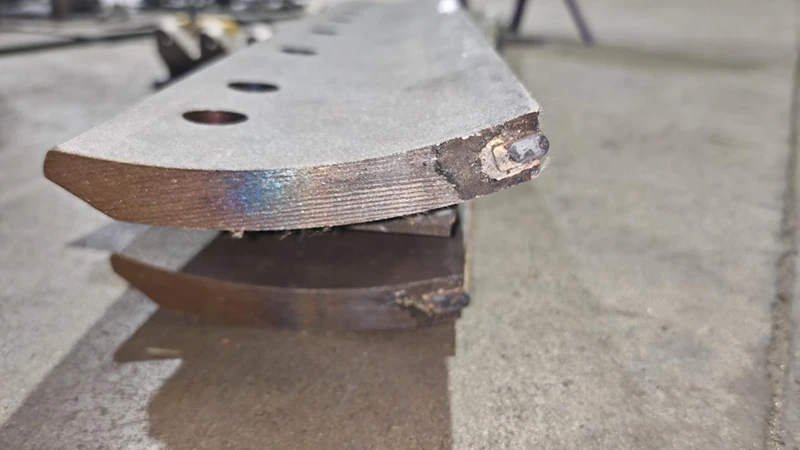
Rotation is the cheapest way to use the material a fleet has already paid for, and it fails for one reason: it is usually applied to assumptions rather than to records. Moving an edge from a demanding position to an easier one only helps if the fleet knows which positions are demanding and which edge has material left. Without that, rotation relocates the problem and adds handling work.
What a Plow Edge Rotation Programme Has to Deliver
It has to use remaining material without moving the problem.
The programme succeeds when edges with material remaining are moved to positions where they will last, based on recorded wear by position rather than on appearance, and when the resulting interval is longer than it would have been without rotation.
Those two conditions define the discipline. The first requires measurement at fixed points, so that remaining material is known. The second requires a position record, so that the fleet knows which slot consumed the material and can avoid returning an edge to the position that damaged it. A rotation programme without both is a handling exercise.
The measurement method is set out in the guide to measuring a blade for replacement, and the wider strategies available to a fleet are covered in the material on blade rotation strategies. What follows is the operating side: what records the programme needs and what rules make it repeatable.
How Rotation and Non-Rotation Fleets Differ in Service
A fleet that rotates effectively carries a smaller holding.
It extracts more of the material it has already bought, and it develops comparable records because measuring at each rotation produces readings at regular intervals rather than in response to a failure.
A fleet that does not rotate buys more edges and replaces them earlier, not because the material is inferior but because the worst position on each blade determines the assembly’s life. Where one end of a blade consistently reaches its limit first, the remaining material on the rest of the edge is retired with it. On a fleet of any size, that is the largest avoidable material cost in the edge budget.
A second difference is what the fleet learns. Rotation produces readings at regular intervals from the same edges, which is the data a specification decision needs. A non-rotating fleet usually measures when something has already gone wrong, so its records describe failures rather than performance, and the following season’s specification starts from a weaker base.
The operational difference appears in the workshop as well. A rotation programme changes edges on a schedule derived from measurements, while a non-rotating fleet changes them when clearing deteriorates or when an edge fails. The first spreads the work predictably; the second concentrates it in the weeks when conditions are hardest, which is when the fleet can least afford it.
Specification Inputs You Need Before Starting Plow Edge Rotation
Five inputs are needed before a rotation programme can run. The positions defined on each blade type, so that a slot can be named consistently. The measured wear at fixed points on each edge, taken at the same reference positions every time. The route and surface each truck works, so that wear can be attributed. The replacement threshold and the rotation threshold, written down before the season. And the hardware and torque requirements for each position, since an edge removed and refitted needs to be re-tensioned correctly.
Two further inputs improve the programme. The reason each edge was removed, separating wear from damage, because rotating a damaged edge achieves nothing. And the number of edges held per group, since rotation changes how many are needed and the holding should follow the interval rather than precede it.
Where a fleet has no position records, the first season should be run as a measurement exercise: record at fixed points at every change, note the position, and defer rotation until a pattern is visible. Introducing rotation and measurement at the same time makes it impossible to tell whether the interval changed because of the rotation or because the fleet started measuring.
Fitment, Hardware and Installation Consequences for Plow Edge Rotation
Rotation increases the number of times each edge is fitted and removed, so it multiplies the importance of hardware discipline. SENTHAI validates fitment against AASHTO and DIN bolt patterns before release and works to plus or minus 0.02 mm dimensional tolerances on carbide components, with AASHTO published standards as the reference for agency specifications and DIN covering European and export conventions.
Three consequences follow. First, fasteners are handled more often and should be inspected or replaced rather than reused indefinitely. Second, the mounting face is worked more frequently, so its condition should be checked at each rotation and recorded against the vehicle. Third, seated height should be confirmed after each refit, because an edge that sits differently after rotation will perform differently, and the change will be attributed to the rotation rather than to the fitting.
Where an OEM mounting interface is involved, the equipment documentation is the authority, and SAE standards for mobile machinery describe the interfaces those designs were built around. The practical rule for a rotating fleet is that every refit is treated as a fresh installation, with seating and torque confirmed rather than assumed.
Fastener condition deserves its own check within the programme. Where the same fasteners are removed and refitted several times, thread condition, washer deformation and the condition of the mounting holes all change. Inspecting them at each rotation, and replacing rather than reusing where condition requires it, prevents the loosening problems that appear on rotating fleets and are otherwise attributed to the edge.
Cost Per Metre and Replacement Logic Under Rotation
Rotation changes the cost model by extending the interval for the assembly rather than for the edge. The model structure is set out on the cost per mile page; under rotation the inputs shift as follows.
| Input | Without rotation | With rotation |
|---|---|---|
| Material retired per replacement | Worst position determines assembly life | Remaining material used across positions |
| Number of edges held | Higher, sized on worst-case consumption | Lower, sized on measured consumption |
| Workshop touches per edge | Fitted once | Fitted more than once, with inspection each time |
| Hardware consumption | Per replacement | Per refit, with inspection |
| Record quality | Often only on failure | Regular readings at fixed points |
| Change timing | Concentrated in hard weeks | Spread across the season by schedule |
Two cautions belong with the table. Rotation adds handling and hardware cost, so it only pays where wear is genuinely uneven; on a route with even wear, the programme adds work without changing the interval. And the labour must be counted at its true frequency, since a programme that requires refitting every few weeks may consume more workshop time than the material it saves.

Documentation and Traceability for Rotation
The rotating fleet needs one record per edge per fitting: date, truck, position, measured heights at the fixed points, hardware condition, seated height after fitting and the reason for the move. That record is what shows whether the programme is working, and it is also what a supplier needs if a wear question arises. SENTHAI inspects and archives every batch, and the quality control and traceability page describes the production record behind a delivery.
Grade and dimensional questions can be resolved against published methods and standards rather than impressions: test methods from ASTM for material properties, and pattern references published through AASHTO and DIN for fitment. Keeping those references with the rotation record makes the seasonal review a comparison of measurements rather than a discussion of opinions.
Running the Programme Through a Season
The programme should have three fixed points in the season. A pre-season check records starting measurements and confirms the mounting face and hardware are ready. Checks during the season are triggered by the rotation threshold rather than the calendar. And a season-end review calculates the interval, compares it with the previous season and adjusts the thresholds if the records justify it.
Two rules keep the programme honest. Rotate only on measured evidence, never on appearance, because a partly worn edge looks similar to a fully worn one in poor light. And record every move, including moves made for operational reasons, since an unrecorded rotation breaks the chain that makes the wear record interpretable. Where a fleet operates several groups, the rules should be identical across them so that results are comparable.
A third rule concerns stopping. Where the records show that wear is even across the blade and the interval is unchanged by rotation, the programme should be reduced to measurement plus replacement on condition, and the handling saved. A programme that continues because it was introduced is a cost with no benefit, and the records that justify it are the same records that justify ending it.
Winter operating context published by the Federal Highway Administration and the pooled maintenance research published by Clear Roads are useful references at the season-end review, because they give the fleet a basis for discussing conditions that is external to the internal argument about the programme.
A plow edge rotation programme uses remaining material by moving edges on measured evidence. It requires fixed measurement points, a position record and written thresholds; without those it is handling work that relocates problems.
Treat every refit as a fresh installation, count the labour honestly and review the interval at season end. Where the records show uneven wear, rotation pays; where they show even wear, the programme should be simplified rather than continued out of habit.
Send SENTHAI your position records, thresholds and workshop hours by task, and the technical team will review the rotation programme, the intervals and the holding it requires.
Frequently Asked Questions
What records does a rotation programme need?
One record per edge per fitting: date, truck, position, measured heights at fixed points, hardware condition, seated height after fitting and the reason for the move. The position record is what makes rotation useful, because a reading without a position describes an edge but not the work that consumed it.
How do I know whether rotation is worth the labour?
Compare the interval achieved under rotation with the interval before it, and count the workshop hours spent refitting. Rotation pays where wear is genuinely uneven and the worst position would otherwise determine the assembly’s life. Where wear is even across the blade, the programme adds handling without changing the interval, and it should be simplified.
Should edges be rotated on appearance or on measurement?
On measurement. A partly worn edge and a fully worn one look similar in poor light, particularly on a dirty blade at the end of a shift. Measuring at fixed points takes minutes and produces the record the schedule depends on. Rotating on appearance is how a fleet ends up moving a nearly spent edge into its most demanding position.
Does rotation change the hardware requirement?
It increases hardware handling rather than changing the specification. Each refit requires fresh torque, and fasteners should be inspected or replaced rather than reused indefinitely. Check the mounting face at each rotation as well, because it is worked more often under a rotation programme and will reach the end of its life sooner.
Related articles
 Plow Blade Length and Thickness by Truck ClassSnow plow blade programme & selection
 Snow Plow Blade Bolt Pattern: Verifying It Before You OrderSnow plow blade programme & selection
 Underbody Plow Blade Specification: How Mounting Position Changes ItSnow plow blade programme & selection
 Plow Blade Supplier Comparison: The Documentation That Decides ItSnow plow blade programme & selection