Plow Blade Wear Measurement: When to Replace and When to Rotate
Plow blade wear measurement explained: what to measure, how to read wear patterns, the intervals to record and the rule for rotating or replacing an edge.
The decision that costs fleets the most is not which edge to buy but when to take it off. An edge changed too early wastes remaining material; an edge left on too long stops clearing and loads the machine. Measurement turns that decision from a judgement made in the yard into a comparison against a previous reading, and it is the single practice that makes a rotation programme possible.
Plow Blade Wear Measurement: What It Looks Like in the Yard
It means measuring the same points every time.
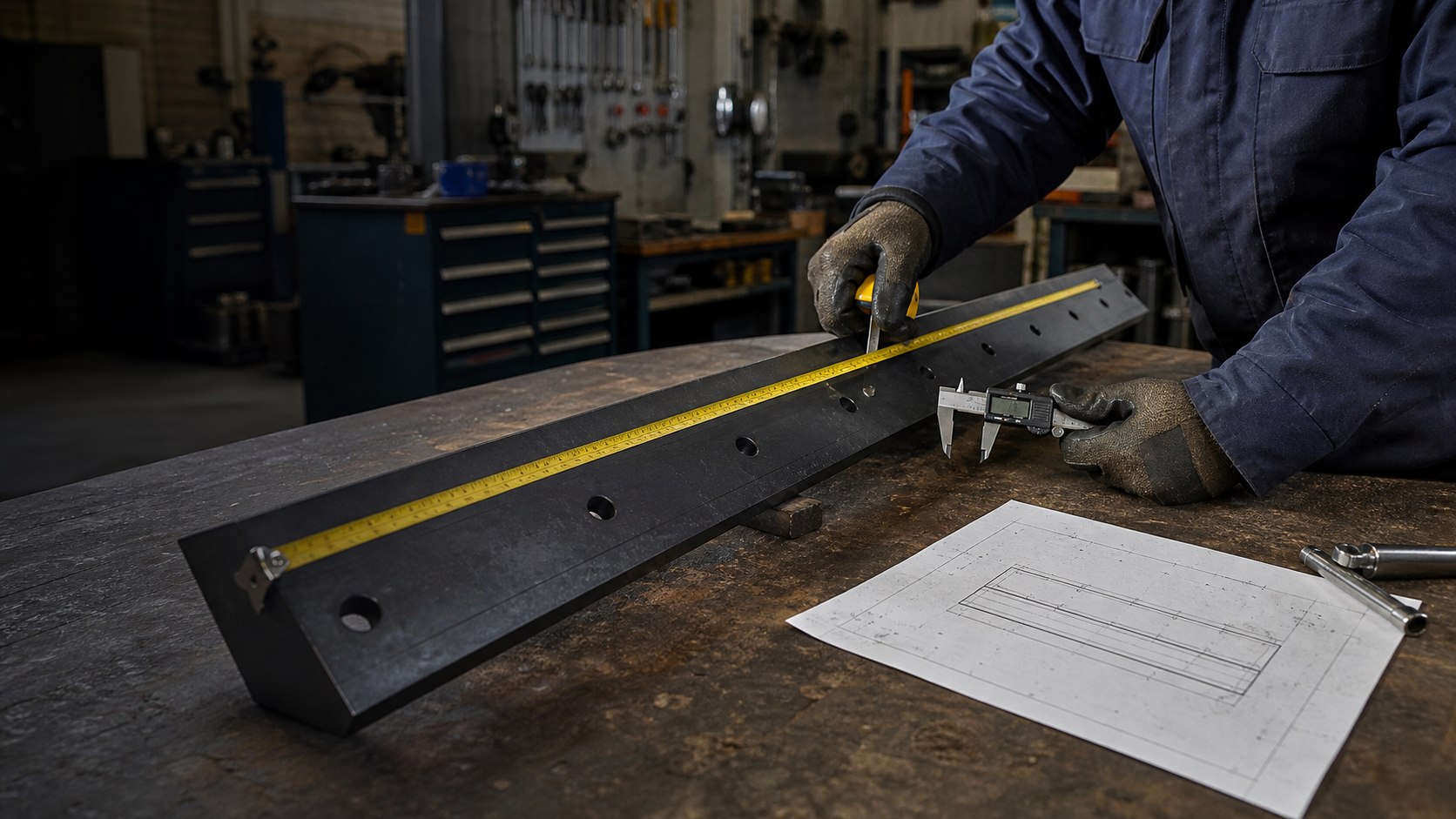
Wear measurement is a set of height readings taken at fixed reference positions along the cutting edge, recorded with the blade position, the truck and the route, so each reading can be compared with the last one taken from the same point.
The method matters more than the instrument. Any straight edge and a consistent reference surface will do, provided the same reference is used each time. What makes the reading useful is repetition: five or seven points spaced along the working width, measured in the same order, from the same datum. A single measurement at the deepest point of wear tells the fleet very little; a series of readings from fixed points tells it how fast material is being consumed and where.
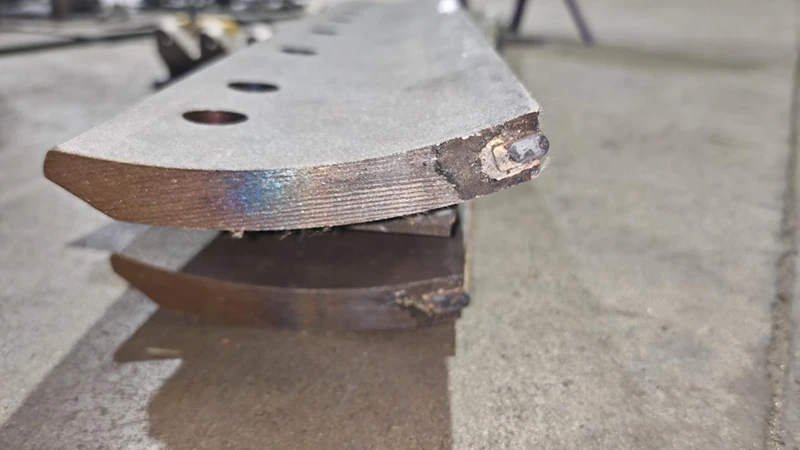
Photos taken from the same position complete the record, because they capture information the height readings miss: gap formation at the mounting line, discolouration, localised chipping and the general shape of the wear line. Two minutes with a phone at each rotation produces a visual history that survives staff turnover, and that history is what allows a supplier to be given useful evidence rather than a description.
A final element is the decision threshold itself. Write down, before the season, the remaining height at which an edge is rotated and the height at which it is retired. Without a written threshold, the decision defaults to whoever is standing in the yard, and the same reading produces different outcomes in different weeks.
Reading Wear Patterns and What They Signal
Even wear and localised wear have different causes.
Even loss across the working width points to abrasion from the material being pushed. Localised loss, scalloping or chipping at specific positions points to contact problems, shock loads or a fitment issue rather than to the material.
The distinction decides the response. An evenly worn edge has done its job and is due for replacement on the measured interval. An edge with loss concentrated at the ends usually indicates alignment or carrier issues, so replacing it without addressing the cause simply restarts the same wear pattern on a new edge. Loss concentrated at the centre of the working width more often points to moldboard condition or to contact geometry that has changed with wear.
Chipping is a third signature. Where inserts or carbide sections have fractured rather than worn, the wear mechanism is shock rather than abrasion, and the answer lies in grade and route conditions rather than in thickness or interval. Reading the pattern before ordering anything is what prevents a fleet from buying material to solve a mechanical problem. The wider set of decisions around when inserts are due for replacement is covered in the material on carbide insert wear.
Inspection Intervals and the Measurements to Record
The interval should follow the season rather than the calendar. A reasonable pattern is a check at the start of the season, a mid-season check, a check after any sustained period of severe conditions, and a season-end check that feeds the following year’s planning. Where a fleet runs packed ice or works unsealed surfaces, the mid-season check is usually the one that produces a decision.
Five items belong in every record: measured height at each fixed point, the position of any localised loss, hardware condition including torque checks and hole condition, the route class the blade ran, and the hours or events it covered. Without the route and hours, the readings cannot be normalised, and two trucks with the same measured wear will look equivalent when they are not.
Keeping the record in the same place as the truck history matters as much as keeping it. A measurement written on a worksheet and never entered anywhere cannot be compared, and the measurement discipline collapses within a season. A simple spreadsheet with one row per blade per check is sufficient, provided it is completed at the point of inspection rather than reconstructed afterwards.
Conditions That Change the Wear Rate
Abrasion and impact drive wear rate in different ways, and the mix of the two varies with the route. Abrasive, wind-packed snow over an unsealed surface removes material steadily and produces even loss. Routes with embedded debris, rail crossings and broken pavement produce shock loads that damage edges locally and load the trip mechanism. The same truck can experience both in a single week.
Surface hardness adds a third factor. Refrozen, hard-packed surfaces reduce contact, which encourages operators to add down-pressure and increase speed, and both accelerate wear once the edge does engage. Where a route holds refrozen snow consistently, the wear rate recorded against it will be higher than a comparable route with the same mileage, and the record should distinguish the two.
Treatment practice belongs in the same note. Where abrasives are spread, the material itself contributes to wear; where liquid de-icing is used, the surface state changes and so does the load on the edge. The regulatory context that many agencies plan material use against is set out in the EPA’s municipal stormwater guidance, and pooled research on winter maintenance practice is published by Clear Roads.
Replace or Rotate: The Decision Rule
The rule should be written before the season and applied to the measurement rather than to appearance. Set a minimum remaining height at which the edge stops presenting a working profile, and a minimum at which it can still be rotated to a less demanding position. When a reading crosses the rotation threshold, move the edge; when it crosses the replacement threshold, retire it.
Rotation is worth using where wear is uneven and the joints and mountings are sound, because it spreads exposure across positions and uses remaining material. It only works if the position record is kept, since rotating without knowing which position produced the wear simply moves the problem. Rotation also requires the fleet to have positions with genuinely different demands; on a uniform route, rotation changes nothing.
Replacement is the right decision when the measurement reaches the threshold, when the edge no longer seats correctly, when hardware condition has deteriorated beyond safe service, or when a localised failure has made the profile inconsistent. Attempting to use an edge past its threshold costs more than replacing it: clearing performance falls, passes increase and the load transferred to the machine rises. The rotation strategy itself is covered in more detail in the material on blade rotation strategies.
Tools, Documentation and Safe Handling
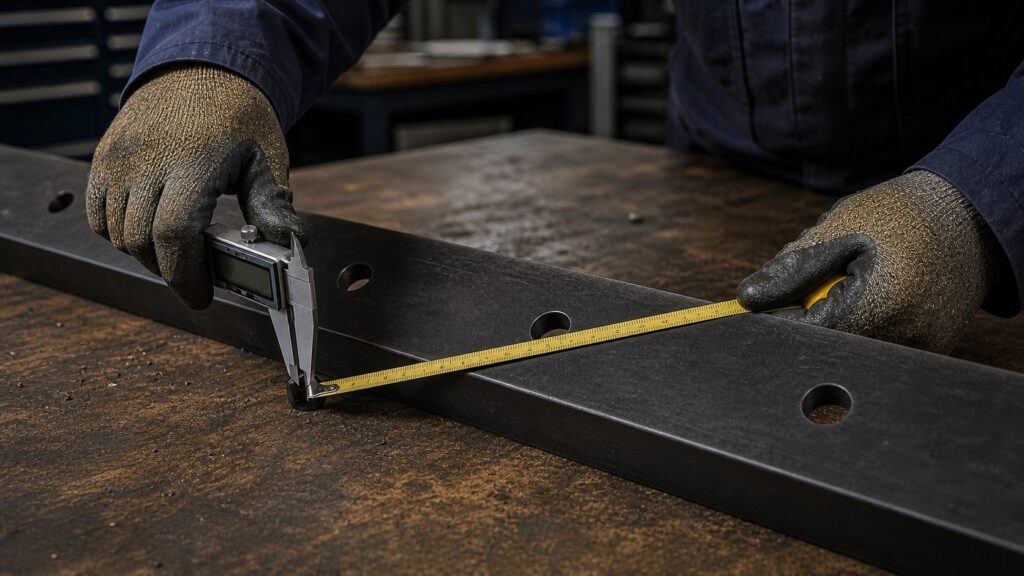
The tool kit is short: a straight edge, a tape or rule for positional checks, a light for inspecting the mounting line, a torque wrench for hardware, and hand protection. What matters is availability at the point of work. An inspection that requires a trip to the stores is deferred in exactly the weeks when conditions are hardest on edges.
Handling is the greater risk. Edge assemblies are heavy, awkward and often sharp, and most injuries during edge work come from manual handling rather than from tools. Assessment principles for load handling are published by the UK Health and Safety Executive, and general workshop requirements for hand and power tool use are set out in the OSHA occupational safety and health standards.
Documentation should be tied to the measurement rather than to the change. Where a measurement shows material loss at an unexpected rate, the batch record behind the edge and the grade it was produced to are the first things a supplier will ask for. SENTHAI inspects and archives every batch and works to plus or minus 0.02 mm dimensional tolerances on carbide components, validated against AASHTO and DIN bolt patterns through AASHTO published standards and DIN, so the comparison against a drawing is possible rather than assumed. Property test methods published by ASTM allow a grade claim to be checked independently.
Season-End Records and Storage
The season-end check is the one that pays for itself, because it is the only point at which a full season of wear can be attributed to the routes it ran on. Measure every edge, record the totals beside the route classes, and note which edges were rotated, replaced or retired. That record is the input for the following season’s specification and inventory decisions.
Storage practice protects the accuracy of the record as well as the material. Clean edges before storage, remove abrasive residue from the mounting line, protect exposed joint faces and store blades flat and supported off damp ground. Stacking on the cutting edge concentrates load on the very feature the measurements are tracking, and storing on wet ground introduces corrosion that will be recorded as wear next season.
Label each stored edge with its measured height and history. An unlabelled rack of similar blades cannot be rotated on evidence, and the fleet ends up re-measuring everything before it can make a decision.
Wear measurement is valuable because it converts a judgement into a comparison. Measure the same points, record the route and hours alongside the reading, and photograph the edge from the same position each time.
With that record, the replace or rotate decision follows a written threshold instead of an impression, and the season-end review has the data to change a specification deliberately. Without it, the fleet keeps buying edges to solve problems that the measurements would have identified earlier.
Send SENTHAI your wear readings, route classes and photographs of returned edges, and the technical team will review the wear mechanism, the specification and the rotation logic for each truck group.
Frequently Asked Questions
Where should the measurement points be taken on a plow blade?
Choose a small set of evenly spaced positions along the working width and keep them identical for every blade in the fleet. Measuring at the point of deepest wear produces a dramatic number but no comparison. A consistent set of points shows how fast material is being lost and where, which is what supports a rotation or replacement decision.
How often should wear be measured during a season?
A practical pattern is a check at the start of the season, a mid-season check, an additional check after any sustained period of severe conditions, and a season-end check to close the record. Where a fleet works packed ice or unsealed surfaces, the added check after severe weather is usually the one that produces an actionable result.
What does uneven wear across the blade indicate?
Uneven loss usually indicates that the edge is not meeting the surface consistently. Loss concentrated at the ends can point to alignment or carrier issues; loss at the centre often relates to moldboard condition or contact geometry. Replacing the edge without addressing the cause restarts the same pattern, so it is worth checking fitment and hardware before ordering a replacement.
Can an edge be used until it is fully worn out?
Running an edge past its working threshold costs more than replacing it. Clearing performance falls, which pushes operators toward additional passes and more down-pressure, and the extra load reaches the trip mechanism and mountings. Setting a minimum remaining height before the season and retiring the edge at that point is cheaper than running to the end of the material.