
Total Cost of Ownership for Fleet Wear Parts
A fleet that buys cutting edges on unit price and then changes them twice a route in February has already discovered that fleet wear parts TCO is not a purchasing metric. It is an…
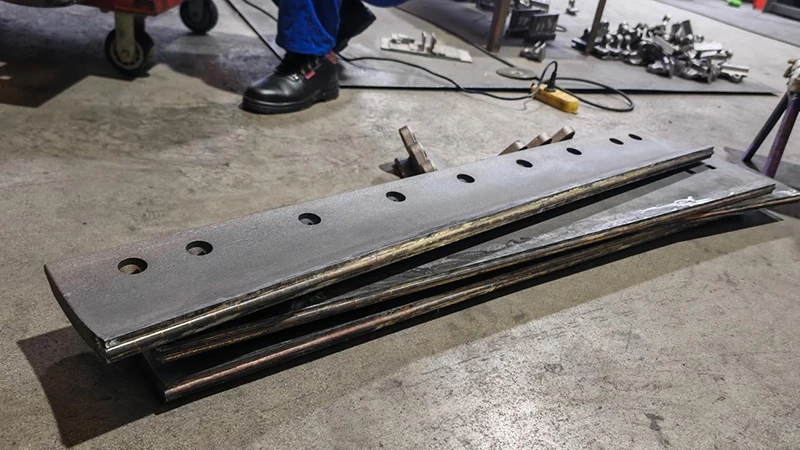
A fleet that buys cutting edges on unit price and then changes them twice a route in February has already discovered that fleet wear parts TCO is not a purchasing metric. It is an operating metric, and the parts are only one of the lines inside it.
This page builds the total cost of ownership view for wear parts in a working fleet: what the published record actually supports, which cost lines most buyers leave out of the comparison, what the framework means for buyers and for suppliers, how regions differ, and what to watch over the next twelve months.
What the Data Shows
The citable data is about operating cost, not part price.
Industry research on fleet operating cost covers fuel, labour, tyres and downtime rather than consumable edges, so the method has to be borrowed and the numbers built internally.
The most useful published frame comes from fleet cost research. Work published by ATRI on the operating cost of heavy vehicles shows how a cost per mile is constructed from several lines rather than read off an invoice, and the same construction works for a plough truck or a loader. Association material from the American Trucking Associations covers the operational side of running fleets, which is where consumable life and schedule reliability interact.
On the materials side, the mechanism behind the cost line is well documented. Wear and abrasion guidance from ASM International explains why two carbide grades of nominally similar hardness behave differently in service, and brazing technology material such as the technical explainer published by TWI covers the joint that decides whether an insert stays in place. Welding and joining practice for the same operations is covered by the American Welding Society.
What no external source provides is a wear parts cost per mile for a specific fleet. That number depends on route surface, duty cycle, attachment geometry and operating practice, which is why the honest answer to the question is a model rather than a benchmark. Public procurement guidance from GSA is a reasonable model for how to document that internal method so it survives an audit.
The Cost Lines Most Buyers Miss
Most comparisons stop at the invoice, which is the smallest part of the picture. The lines that decide total cost are the ones that appear on a different budget code: labour, downtime, fitment failure, inventory and administration.
Labour is usually the largest hidden line. Two edges at the same price are not equal if one can be changed by one operator in half the time, or if one requires the machine to be lifted and blocked. Every extra hour of change-out time is an hour of route coverage that the fleet does not get, and in winter operations that hour is also a service risk.
Downtime is the second line and the hardest to cost, because what is lost is not the machine hour but the work the machine would have done. A fleet that cannot produce edges that survive a storm has to plan around failure, and planning around failure means keeping spare machines, spare crews or spare contractor capacity, all of which are real costs that never appear on the parts invoice.
Fitment failure is the third. A part that does not match the moldboard or the hole pattern is written off, and the cost includes the emergency re-order, the express freight and the delay. Inventory is the fourth: holding a second set of edges to cover a failure has a carrying cost, and a longer-wearing specified part reduces how much cover the fleet needs to hold.
| Cost line | Where it appears | What controls it |
|---|---|---|
| Part purchase | Consumables budget | Grade, profile, insert count, tolerance class |
| Change-out labour | Operations or overtime | Edge design, fastener access, number of parts per machine |
| Downtime | Service risk and spare capacity | Wear rate on the actual surface and duty cycle |
| Fitment failure | Emergency purchasing | Validation against drawing or physical sample before order |
| Inventory carrying | Working capital | Predictability of life, which decides the spares position |
| Inspection and administration | Overhead | Whether the evidence package is standard or negotiated each time |
Read together, the table explains why a decision that looks like purchasing is really an operations decision. The line a buyer can influence most is not the one on the invoice.
What It Means for Buyers
Compare on cost per unit of work, not per part.
The workable denominator is lane miles, tonnes moved or machine hours, because those are the units the operation is already measured in.
Start by choosing the denominator that the fleet already reports. A snow fleet can use lane miles by route class; an aggregate plant can use tonnes moved; a construction fleet can use machine hours. The choice matters less than consistency, because the model only has to be comparable with itself across seasons and suppliers.
Then write the specification in the terms the model needs. If the model shows that change-out labour dominates, the requirement should describe the edge in terms of change-out time and fastener access as well as wear life. If downtime dominates, the requirement should describe the surface and duty in enough detail that a supplier can recommend a grade rather than a thickness. SENTHAI has spent more than twenty years in tungsten carbide wear parts, and in that time the fleets that moved from steel to a specified carbide edge did so because the arithmetic included labour, not because a grade looked attractive on paper.
Third, treat fitment as a cost line in its own right. Validating the bolt pattern and insert pocket tolerance against a drawing or a physical sample before the order removes the most expensive failure mode available to a fleet: the part that arrives and does not fit. The cost per mile breakdown sets out that arithmetic in a form a budget owner can reuse.
Finally, keep the comparison honest. Two suppliers can both be cheap if one of them is not being measured on the same thing, so the model has to be applied to both in the same way, with the same denominator and the same treatment of labour and downtime.
What It Means for Suppliers
A supplier who lowers total cost wins the second order.
Understanding the buyer’s cost lines is what turns a price conversation into a specification conversation, and it is also what makes a recommendation defensible.
The commercial case that works is not “our edge lasts longer”. It is a specific answer to a measured problem: on this surface, with this attachment, at this duty cycle, this grade and profile reduces change-outs, and here is what it does to the labour line. That answer requires data from the buyer, which is why a supplier who arrives with a questionnaire is more useful than one who arrives with a catalogue.
The second supplier-side advantage is process control. A manufacturer that owns powder preparation, pressing, sintering, brazing with annealing, vulcanization and finishing can promise consistency across a season, and consistency is what makes a wear life predictable enough for the buyer to model. The snow plow product range is built around that: documented grades and profiles rather than a single default part.
The third is evidence. A supplier who can attach a grade record, a hardness and grain size result and a dimensional report to a delivery is directly reducing the buyer’s administration and dispute line, which is a real cost the buyer has usually not quantified. That is a competitive advantage available without touching price.

Regional Differences
Regional differences in total cost of ownership are mostly differences in what labour and downtime cost, and in how much documentation a buyer is expected to produce. The physical wear mechanism does not change between regions; the arithmetic around it does.
In North America, labour rates and the cost of a missed service window are high, so the case for a longer-wearing specified part is usually made on change-out frequency and route coverage. Public agencies also carry an audit obligation, which makes the documentation line more visible than a private operator would treat it. In Europe, municipal and national authorities work to a standards-led technical file, which tends to reduce the administration cost of a well-documented supplier and raise it for one who cannot supply records.
In the Middle East and parts of Asia, mixed equipment fleets make fitment validation and the ability to supply edges, inserts and fasteners in a single delivery more significant than a long life claim, because an unmatched part costs more than a short-lived one. Across all regions, freight and duty treatment sit inside the landed cost line, and two identical parts quoted at the same unit price can produce different total costs depending on the delivery term stated in the documents.
What to Watch Over the Next 12 Months
Watch labour cost and evidence requirements, not part prices.
The variables most likely to move a wear parts total cost of ownership are the cost of an hour of machine time and the documentation a buyer must produce.
Watch the labour line. Where operator availability falls, the effective cost of a change-out rises because the machine waits longer, and that shift alone can justify a more expensive specified edge on arithmetic rather than on preference. Watch it in the fleet’s own records rather than in national wage statistics, because the relevant number is what an hour of the fleet’s own capacity is worth.
Watch evidence requirements. Buyers are being asked to demonstrate that a product met a specification, and suppliers are being asked to evidence it at delivery. That trend raises the administration cost of a supplier who has no standard package and lowers it for one who does.
Watch grade and profile availability too, because a change in supply conditions shows up as a longer re-order interval before it shows up as a price. For a fleet, the mitigation is a second qualified source with a validated fitment, which is a continuity decision and not a price decision.
How to Act on This
Build the model once, then specify against it.
Six inputs are enough to make a wear parts total cost of ownership model that a fleet can defend, and every one of them comes from internal records.
- Choose the denominator: lane miles, tonnes moved or machine hours.
- Record consumable life by route class or application, not as a fleet average.
- Time a change-out properly, including two operators where the job needs them.
- Value downtime at the cost of the work the machine would have completed.
- Add fitment failures and emergency orders as their own line, then remove them by validating fitment before the order.
- Re-run the model when the specification changes, so the effect of a grade or profile decision is visible.
Volume bands, sampling arrangements, packaging and delivery windows are agreed per order and stated in the written quotation or order documents, which is where any commercial assumption in the model should be traceable to.
Wear parts total cost of ownership is an operating model with a purchasing component, not the other way round. The lines that decide the answer are change-out labour, downtime, fitment failure, inventory and administration, and each one is controllable: labour through edge design, downtime through grade and profile matched to the surface, fitment failure through validation before the order, and administration through a standard evidence package. Published research is useful for method only. The numbers have to come from the fleet.
Send SENTHAI your changing out records, route classes and current edge specification, and the technical team will review where a grade or profile change would move the model.
Frequently Asked Questions
What does TCO stand for in fleet maintenance?
Total cost of ownership: every cost a component creates over its service life, not only what it cost to buy. For wear parts that means purchase, change-out labour, the downtime while the machine is off the route, fitment failures and emergency orders, inventory cover and the administration of inspection and evidence. In supply chain terms the same idea applies to sourcing decisions, where the purchase price is usually the smallest variable.
What does a five year TCO comparison add for consumables?
It exposes the compounding lines. Over several seasons, small differences in change-out frequency and fitment failure accumulate, and the effect on labour and route coverage becomes visible in a way that a single-season comparison hides. Build the comparison on the fleet’s own denominators, lane miles, tonnes moved or machine hours, and keep the method unchanged so seasons remain comparable.
How do we value downtime in the model?
Value it as the work the machine would have completed, not as an hourly rental figure. For a snow route that is the lane miles not treated; for a plant it is the tonnes not moved. If the fleet cannot value the work precisely, use a range and test whether the conclusion changes. Where the conclusion is sensitive to that assumption, the decision is not a parts decision yet.
What commercial terms should we record alongside the model?
Only the terms stated in the written quotation or order documents, such as volume bands, sampling, packaging and delivery windows, plus the delivery term that fixes where freight and risk transfer. Recording them next to the model is what keeps the commercial assumption auditable when the specification or the supplier changes.
Related articles
 A Supplier Scorecard for Wear Parts: Metrics That Change BehaviourMarket intelligence, TCO and procurement
 Pricing Snow Removal Contracts: Where the Wear-Part Input BelongsMarket intelligence, TCO and procurement
 Wear Parts Cost Per Mile and Cost Per Lane Mile: Building the ModelMarket intelligence, TCO and procurement
 Snow Removal Industry Statistics and What They Mean for Fleet BudgetsMarket intelligence, TCO and procurement