Writing a Procurement Specification for Wear Parts
A wear parts specification usually fails in the same place: it describes a part well enough to order one and badly enough that nobody can prove later whether the delivered item matched. The clauses…

A wear parts specification usually fails in the same place: it describes a part well enough to order one and badly enough that nobody can prove later whether the delivered item matched. The clauses that fix that are short, and they are written before the tender closes.
This guide sets out how to write a wear parts procurement specification: what the buyer actually controls, how to separate specification from brand, the documentation to demand before award, what drives the pricing structure, how lead time and continuity should be handled, and how acceptance and disputes work in practice.
What the Buyer Actually Controls
You control the drawing, the tolerances and the evidence.
A specification is a set of verifiable statements; anything the buyer cannot verify by inspection or by document does not belong in it.
Four things are fully within the buyer’s control: the geometric requirement, the material requirement, the evidence requirement and the acceptance method. Everything else – supplier selection, price, delivery – follows from how those four are written. A specification that names a part number in place of a geometric requirement has handed control of the first one to whoever designed the part.
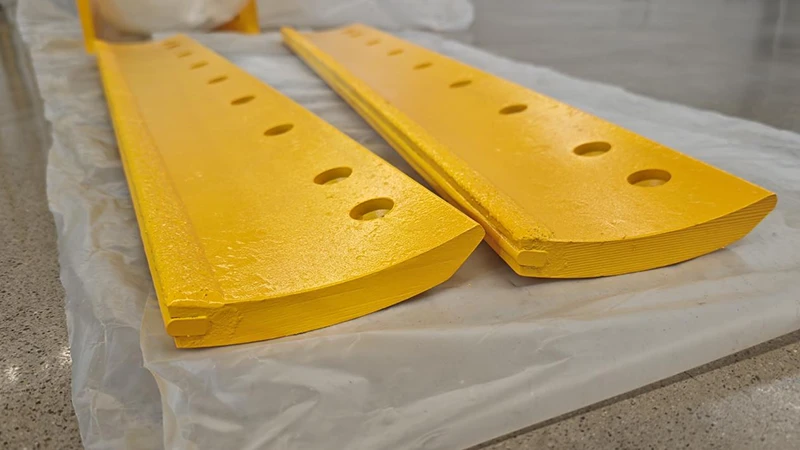
The geometric requirement is where most of the value sits for wear parts. Dimensions, insert pocket positions, hole spacing and bolt pattern should be given against a drawing or a measured physical sample, with the tolerance the fleet will accept stated numerically. This matters because the interface is the failure mode that costs the most: a part that does not fit is written off immediately, and the emergency re-order behind it costs more than the difference in unit price that won the award.
The material requirement should name the grade family and the performance it must demonstrate, with the test method attached. Public procurement guidance such as that published by the US General Services Administration is a reasonable model for phrasing a requirement that is precise without naming a brand, because a brand name in a public specification narrows competition and transfers the risk of a bad requirement back to the buyer.
Specification Versus Brand
The practical difference between a brand specification and a performance specification is who carries the risk when the part fails. With a brand the buyer effectively certified the design; with a performance requirement the supplier owns the outcome, which is the arrangement the buyer wants.
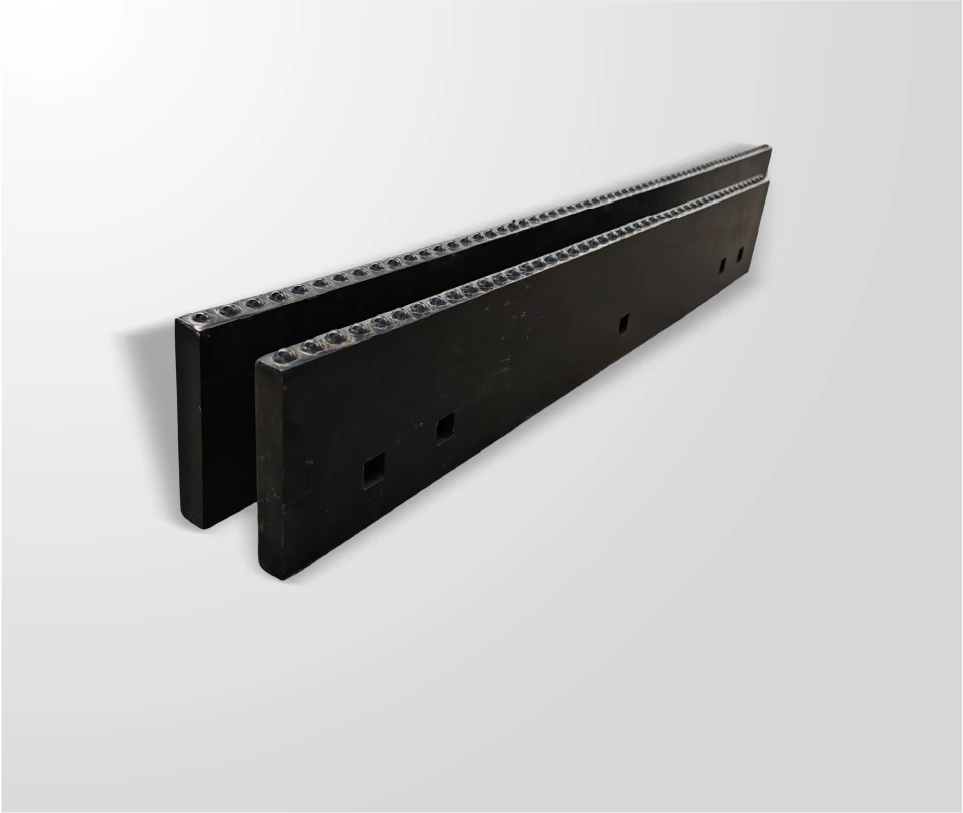
A workable performance specification for a wear part names the grade family with a hardness range and a grain size range, the test method used to demonstrate them, the edge profile and insert geometry, the body material and thickness, the dimensional tolerance on the critical features, the fitment validation route against the drawing or physical sample, and the marking that identifies the lot. Each of those can be checked. None of them requires a brand name.
Two standards families do most of the work here. Material and hardness claims are demonstrated to published methods such as the material and test standards maintained by ASTM, and highway edge and material specifications adopted through the standards route, such as those published by the AASHTO publications store, describe the interfaces many agencies already work to. Referencing the applicable standard is stronger than describing a competitor’s part from memory.
Where the equipment interface is a machine or attachment convention rather than a highway standard, the relevant conventions are documented by bodies such as SAE, and European requirements are indexed through DIN. A specification that cites the applicable interface standard, rather than a photograph of an old blade, is a specification a new supplier can actually meet.
Documentation to Demand Before Award
Documentation requested before award tells the buyer whether a supplier can answer a technical question at all. Requested afterwards, it becomes a favour that may never arrive.
Ask for six items and ask every bidder for the same six. First, the grade designation with hardness and grain size ranges and the test method behind them. Second, a dimensional report against the drawing, including the tolerance held on insert pockets. Third, the fitment validation route for the specific attachment, whether that is a drawing comparison, a physical sample or a first-article check. Fourth, the marking or traceability reference that identifies the lot after delivery. Fifth, the packing and preservation method, because an edge that arrives with a damaged cutting edge has failed before use.
The sixth item is measurement practice: how the supplier verifies the critical dimensions, and with what. Reference material on measurement and traceability published by NIST explains why that question matters, because a dimensional claim is only as good as the instrument and the method behind it. A supplier who can answer it is a supplier who inspects rather than assumes.
One further clause is worth adding for a programme rather than a single order: confirmation that the same evidence package will accompany each delivery, and the name of the person who answers a technical query during the contract period. That clause costs nothing at bid stage and removes most of the friction from a mid-contract problem.
Pricing Structure and What Drives It
Price in a wear parts specification is an output, not an input. The structure of the requirement decides it: grade family, insert geometry, body thickness, tolerance class and the fitment validation work the supplier must perform.
That is useful at specification stage, because it means the buyer can see the cost consequence of a clause before the bids arrive. A tighter pocket tolerance costs money to hold; a harder grade can cost toughness if the application involves impact; a wider insert array costs more than a narrower one and may last longer on one surface and less on another. Writing those trade-offs into the requirement explicitly is better than discovering them in the bid evaluation.
The pricing structure should also match how the parts will be bought. Planned seasonal volume, emergency re-orders and one-off trials carry different risk and will be priced differently, so the specification should say which of those the contract covers. Where a supplier offers alternative structures, requiring them to be stated explicitly keeps the comparison honest.
Commercial terms are not a market signal. Volume bands, minimum quantities, sampling allowances, packaging standards and delivery windows are agreed per order and stated in the written quotation or order documents, and the specification should require the bidder to state where its terms are recorded rather than to promise figures in a proposal that will not be administered.

Lead Time, MOQ and Continuity
Continuity is a specification subject, not an administrative one. If the specification cannot be re-supplied during the contract period, the fleet is exposed whatever the price was.
Three questions belong in the document. Does the supplier manufacture the part or resell it, which decides how much control they have over a delivery date? Does the supplier hold stock for the programme or produce to order? And what happens if the fleet changes an attachment, or if demand doubles in a severe season? A supplier who can answer all three is a supplier who can be written into a programme.
Rather than asking bidders to state lead times in the proposal, require them to state where those terms will be recorded, and keep the applicable terms in the written quotation or order documents. The same applies to minimum order quantities and sampling arrangements: they are commercial terms, they are agreed per order, and a specification should make their location traceable rather than assume a value.
A fitment validation requirement does double duty here. If the first article is checked against the drawing before volume production, the programme never depends on an unverified interface, and the risk of a mid-season emergency order falls sharply. For a fleet running mixed attachments, that check is the difference between one specification and several.
Quality Gates and Acceptance Testing
Acceptance testing should be proportional, repeatable and recorded. The purpose is not to test the supplier; it is to create a document that settles a disagreement in ten minutes instead of ten weeks.
Three gates are usually enough. Incoming inspection verifies what the contract promised: dimensions against the drawing, hole spacing and bolt pattern, insert position, and any visible defect in the brazed joint or the body. First-article fitment confirms the part on a machine that will run it, before volume is accepted. In-service review ties change-out frequency back to the specification by route class, which is the only evidence that shows whether the grade and profile were right.
Keep each gate to a written checklist with a named person and a retained record. A gate without a record is not a gate; it is an argument waiting for an audience. The guidance on specifying a carbide blade shows how the technical clauses read when they are written for inspection rather than for description.
For background on what profile and grade suit which surface, the blade selection guide is a reasonable internal reference for writing the requirement without naming a product.
Risk, Warranty and Dispute Handling
Risk in a wear parts contract sits in conformity, continuity and evidence. A specification can allocate all three, and the clause that does most of the work is the one requiring a traceability reference with every delivery.
Write the dispute process as a sequence rather than a right: what happens when a part fails inspection, what evidence the supplier must provide, who inspects a returned part, what timeline applies, and what remedies exist. Where an investigation leads to a claim, the remedy follows the terms stated in the written quotation or order documents, which is the only place those terms can be checked against what was specified.
Then audit the specification against its own wording. If a clause cannot be verified by inspection or by a document, it will be resolved by negotiation, and negotiation after delivery is expensive for both sides. Procurement review bodies such as the US Government Accountability Office see this pattern constantly: the most common successful challenges turn on how a requirement was written, not on the price that was offered.
The final risk to check is internal. Buyers who specify a grade and profile but allow substitution at the supplier’s discretion have written a preference rather than a requirement, and a preference will not survive the first cost pressure of a season.
A procurement specification for wear parts works when every clause can be verified by inspection or by a document. Name the geometry against a drawing, the grade against a test method, the interface against the applicable standard, and the evidence package that must be attached to each delivery. Keep brand names out, keep commercial terms in the written quotation or order documents, and write the dispute process as a sequence. The three gates – incoming inspection, first-article fitment and in-service review – are what make the specification enforceable rather than hoped for.
Send SENTHAI your drawing, the attachment details and the draft clauses, and the technical team will review the specification for verifiability and fitment before the tender closes.
Frequently Asked Questions
What does parts procurement mean for wear components?
It means buying against a verifiable requirement rather than a familiar part number: geometry from a drawing with stated tolerances, grade with a test method, interface standard and fitment validation route, plus the evidence that must accompany each delivery. Wear components are specified by the work they must survive, so the requirement has to describe duty and surface as well as dimensions.
What are the most useful clauses to insist on?
Four do most of the work: a geometric requirement against a drawing with numerical tolerances, a material requirement naming grade family with hardness and grain size ranges and the test method, a fitment validation route for the fleet’s attachments, and a traceability reference with each delivery. Each one can be verified by inspection or by a document, which is the test every clause should pass.
How do we extend the life of wear parts without changing the specification?
Check the interface and the fitment first, then the operating practice: correct edge angle, contact pressure and the surface actually being treated all change how quickly a part wears. If the specification is right and the parts still fail early, the failure mode should be documented and taken to the manufacturer, because it is usually a grade or profile question rather than a purchasing one.
What should the tender say about lead time and minimum order quantity?
It should require each bidder to state where its commercial terms are recorded, and leave the applicable terms to the written quotation or order documents. Asking for a promise in a proposal produces a figure the contracts team cannot administer. What the specification can require is continuity information: whether the supplier manufactures the part, whether stock is held, and how an in-season increase is handled.
{
“@context”: “https://schema.org”,
“@type”: “FAQPage”,
“mainEntity”: [
{
“@type”: “Question”,
“name”: “What does parts procurement mean for wear components?”,
“acceptedAnswer”: {
“@type”: “Answer”,
“text”: “It means buying against a verifiable requirement rather than a familiar part number: geometry from a drawing with stated tolerances, grade with a test method, interface standard and fitment validation route, plus the evidence that must accompany each delivery. Wear components are specified by the work they must survive, so the requirement has to describe duty and surface as well as dimensions.”
}
},
{
“@type”: “Question”,
“name”: “What are the most useful clauses to insist on?”,
“acceptedAnswer”: {
“@type”: “Answer”,
“text”: “Four do most of the work: a geometric requirement against a drawing with numerical tolerances, a material requirement naming grade family with hardness and grain size ranges and the test method, a fitment validation route for the fleet’s attachments, and a traceability reference with each delivery. Each one can be verified by inspection or by a document, which is the test every clause should pass.”
}
},
{
“@type”: “Question”,
“name”: “How do we extend the life of wear parts without changing the specification?”,
“acceptedAnswer”: {
“@type”: “Answer”,
“text”: “Check the interface and the fitment first, then the operating practice: correct edge angle, contact pressure and the surface actually being treated all change how quickly a part wears. If the specification is right and the parts still fail early, the failure mode should be documented and taken to the manufacturer, because it is usually a grade or profile question rather than a purchasing one.”
}
},
{
“@type”: “Question”,
“name”: “What should the tender say about lead time and minimum order quantity?”,
“acceptedAnswer”: {
“@type”: “Answer”,
“text”: “It should require each bidder to state where its commercial terms are recorded, and leave the applicable terms to the written quotation or order documents. Asking for a promise in a proposal produces a figure the contracts team cannot administer. What the specification can require is continuity information: whether the supplier manufactures the part, whether stock is held, and how an in-season increase is handled.”
}
}
]
}