
Agricultural Wear Parts: Sweeps, Points and Closing Wheels
Agricultural wear parts are the soil-contacting tools on tillage and seeding equipment: sweeps, points, discs, openers, gauge wheels, press wheels and closing wheels. They wear by abrasion from sand and silt, by impact on…

Agricultural wear parts are the soil-contacting tools on tillage and seeding equipment: sweeps, points, discs, openers, gauge wheels, press wheels and closing wheels. They wear by abrasion from sand and silt, by impact on stones, and by corrosion in wet or fertilised ground. Matching the tool to the soil and the seedbed job it performs is what decides how many hectares the set covers.
The same toolbar may work sand one season and clay loam the next, so a reorder is a technical decision rather than a repeat of last year.
Where Field Tools Actually Wear
Wear lands on the cutting tip and the leading face.
Sweeps, points and openers wear at the tip and along the leading edge first, while closing wheels and gauge wheels wear at the rim and hub; abrasion rises with sand content and speed.
The pattern is consistent across tool types. A sweep loses its wings from the outside inwards, and once the wings shorten the tool stops lifting and mixing soil and starts dragging. A point or share wears back at the nose, so depth control needs more downforce and the shank starts to take the load. An opener disc loses its diameter and its edge, which changes where the seed is placed; a seed boot or spout wears on the face that soil passes over; a closing wheel loses its rim profile and stops pressing the furrow shut cleanly.
Two secondary wear points are easy to miss. Bushes, bearings and hubs fail faster than the discs they carry once grit gets past the seals, so a reorder that covers only the visible tool understates what the field is consuming. And clamps, stems and mounting bolts wear and deform with the rest of the assembly, which is why a tool that will not sit tight at depth is often a clamp problem rather than a tool problem.
Agricultural soils also vary far more than a road programme does. Sand and silt are abrasive and cut steel continuously; clay abrades less but loads the tool harder and holds moisture against it; stones and shale bring impact into a duty that would otherwise be pure wear. The US agricultural research service, USDA ARS, publishes work on soil and tillage interaction that explains why the same implement behaves so differently across farms a few miles apart.
Seedbed Settings and Wear Rate
Settings decide wear as much as soil does. Operating depth is the obvious variable, because a tool held deeper stays in the abrasive layer longer per hectare, but downforce and speed matter just as much: more downforce means more normal load against the soil, and higher speed means more particles passing the face per hour at a higher contact pressure.
Then comes residue. Heavy trash and standing stubble make a tool cut rather than slide, which concentrates load on a smaller part of the edge, and a tool that is set too shallow to cut cleanly will ride on trash and hammer instead of slicing. Seedbed preparation programmes that aim at a fine, level finish usually run tools closer to their depth limit and consume edges faster than a rough, mulched finish would.
| Tool | Primary wear location | What the wear changes |
|---|---|---|
| Cultivator sweep | Wing tips, then the leading face | Loses lift and mixing; becomes harder to pull at depth |
| Point or share | Nose and underside | Needs more downforce to hold depth; shank load rises |
| Opener disc | Rim diameter and edge bevel | Changes trench shape and seed placement |
| Seed boot or spout | Rear face where soil passes | Alters seed and fertiliser placement, then fails at the tip |
| Closing wheel | Rim profile, then the hub | Leaves the furrow open or presses unevenly |
| Gauge wheel | Rim and tyre edge | Changes depth control and machine ride |
The practical point is that a setting change is also a specification change. A fleet that moves from a shallow, low-disturbance regime to deeper primary tillage will see consumption rise before any part is at fault, and the fix belongs in the replacement interval rather than in a stronger claim against the supplier.
Material and Geometry Choices
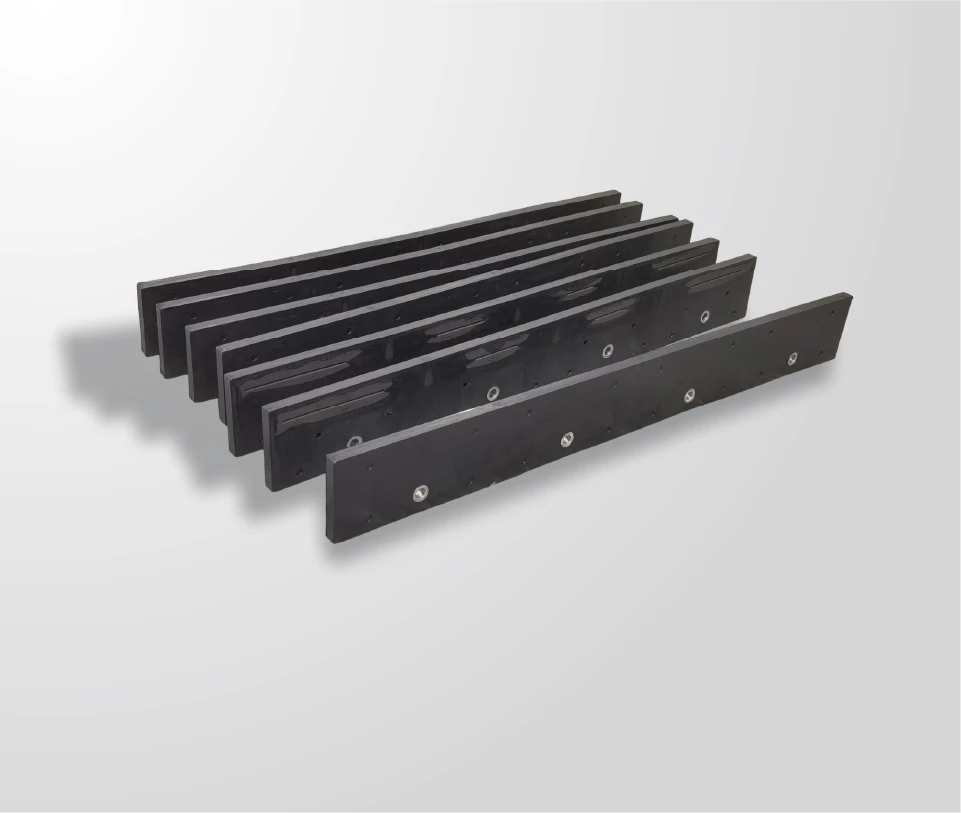
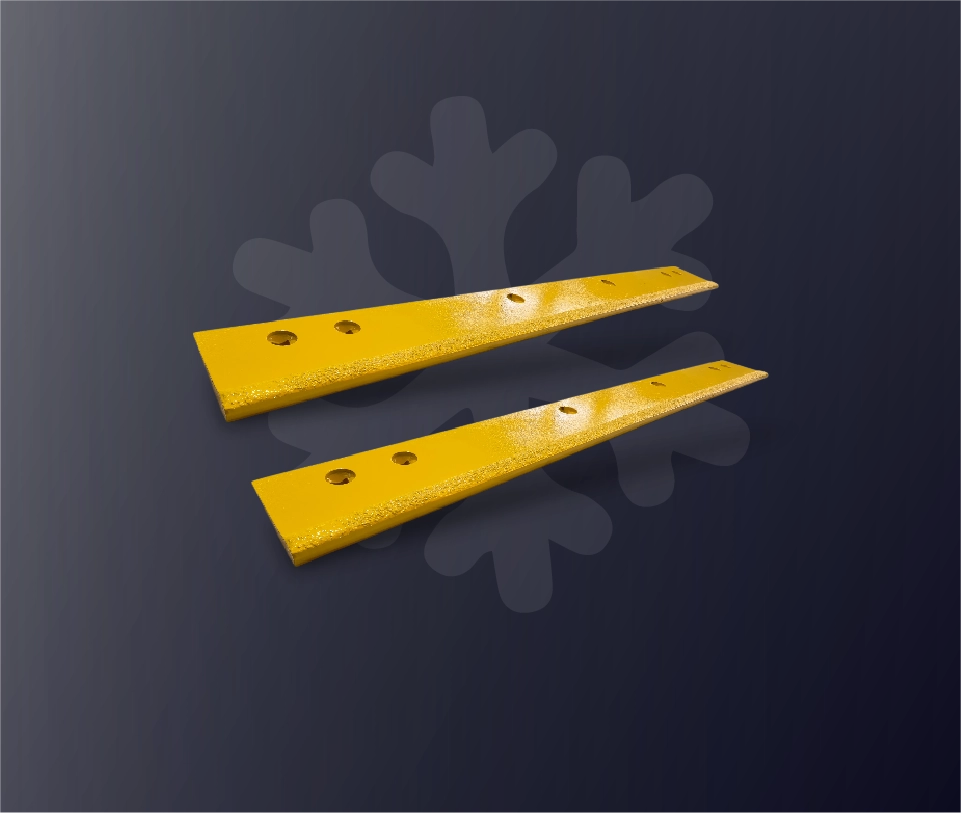
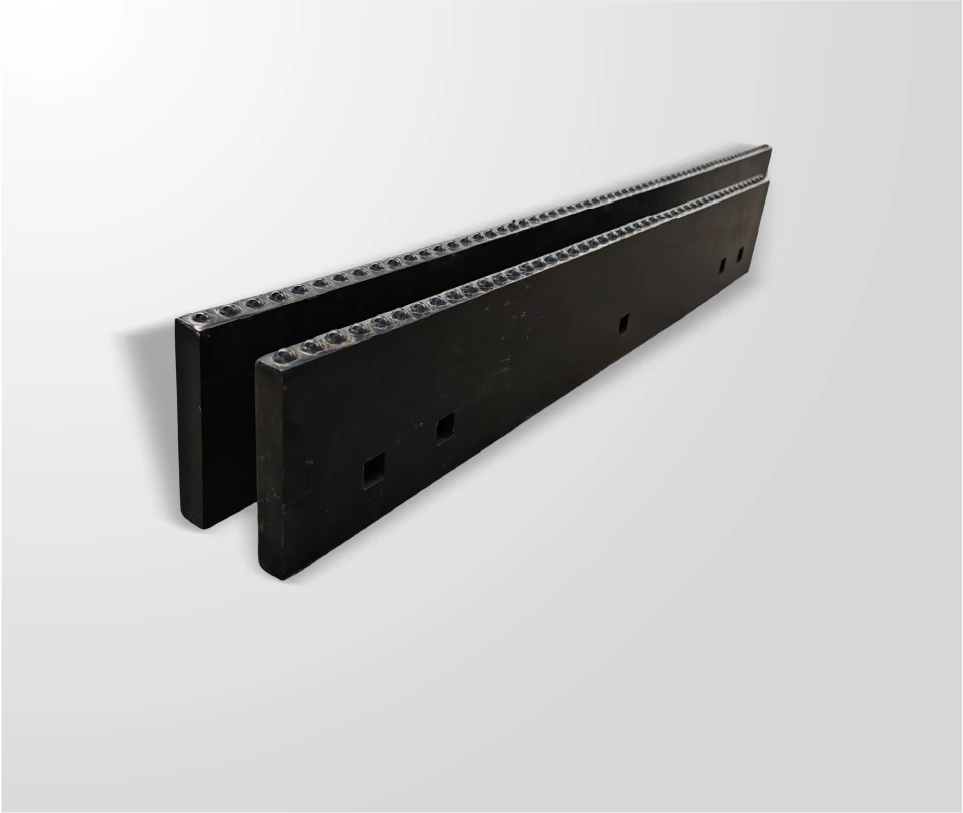
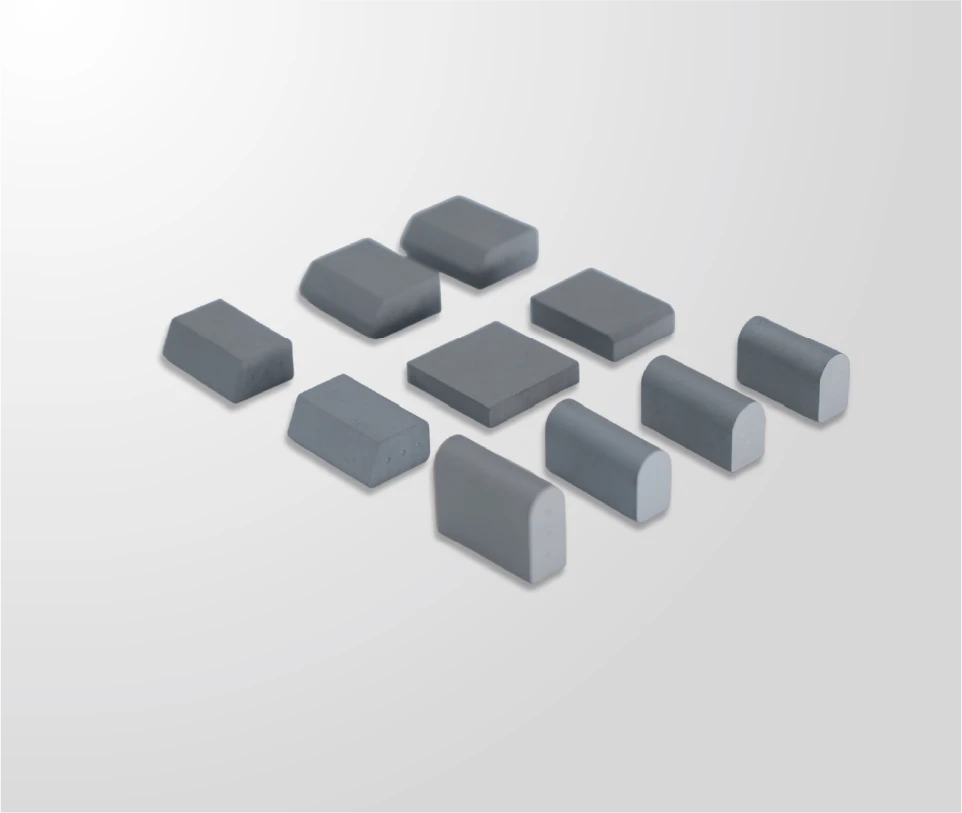
Three routes cover most agricultural wear parts. Plain carbon steel is the baseline for tools that are expected to be replaced cheaply and often. Heat-treated or boron steel, supplied to a controlled hardness band, is the mainstream choice for sweeps, points and shares because it holds a working profile through a working season. A steel body with a tungsten carbide working edge is the route for tools that run in highly abrasive ground and are expensive to change, such as drill openers and points in sandy soils. The wider family of machine contact parts is covered in wear parts beyond plows.
Geometry decides how the material is used. Tip angle and land width control how a tool enters soil and how much of it is supported behind the cutting edge; thickness sets how much material there is to consume and how much load the stem can take. Wing shape on a sweep changes soil movement and residue flow, and the bevel on an opener disc changes how cleanly the trench is cut. None of those choices can be judged without the soil and depth they will run in.
Where the tool carries a carbide tip, the tip is pressed and sintered from tungsten carbide powder, and the industry reference material for that route is published by MPIF. Hardness and wear test methods for the metals involved come from ASTM, and comparative behaviour of wear-resistant materials is documented at materials level by ASM International.
Fitment Across Common Toolbars
Fitment on agricultural equipment is a matter of stems, clamps and hole patterns. A sweep or point is held by a stem or a clamp on a shank, and the interface that matters is the seat, the locating feature and the fastener: get those right and the tool sits square, holds depth and wears evenly; get them approximate and the tool rocks, wears on one side and leaves the soil profile uneven.
Three measurements decide most of it. The mounting interface itself, meaning the stem section or clamp width, the hole diameter and the spacing between holes. The working geometry, meaning tool width, length and the angle at which the cutting edge sits relative to the shank. And the machine setting range, meaning whether the depth the tool is expected to work at is inside the adjustment the shank offers. Interface conventions across manufacturers are represented by associations such as the Association of Equipment Manufacturers, which is why a tool specified against the interface serves more machines than one specified against a badge.
Where a toolbar has been modified in the field, or where equipment was built in small series, a drawing may not exist. A worn tool or a clamp on its own is then the most useful description available, and it should travel with the enquiry. Supplying a sample and asking for the pattern to be confirmed before production is faster than resolving a fitment argument after delivery.
Quality Evidence to Request With the Quote
Documentation turns a purchase into a specification. For a heat-treated steel tool, ask for the material grade, the hardness band and the test method the figure was measured against, plus the section thickness at the working edge. For a carbide-tipped tool, add the grade with its hardness and grain size, the tip profile and the tolerance that locates the tip in its pocket.
Lot evidence is the second half. A manufacturer producing inside its own chain — powder preparation by wet grinding, robotic pressing, sintering, controlled joining and finishing — can trace a delivery back through those steps and hold the inspection record for the batch. For an agricultural programme, where a reorder may arrive months after the first delivery and be fitted to different machines, that traceability is what lets a wear question be answered with a measurement instead of an opinion.
Two commitments belong in the enquiry rather than in the conversation: that fitment is validated against a drawing or a physical sample, and that mounting features and insert pockets are held to a stated tolerance, with machine pockets machined to plus or minus 0.02 mm as the kind of figure that should appear in writing. Where a supplier cannot name a tolerance, ask what the inspection step actually checks.
Season Timing and Spares Holding
Agricultural wear parts are consumed in a short window. Tools wear fastest during primary tillage and drilling, and the replacement decision usually has to be made while the weather is open, which is why holding stock matters more here than in a year-round programme. The holding level should come from hectares per set measured on your own ground, not from a supplier average.
Two categories are worth separating. Predictable consumables, such as sweeps, points and closing wheel rims, are stocked against measured consumption per hectare and topped up between passes. Damage-prone parts, such as openers in stony ground, are held as spares against the worst field on the farm rather than as a general stock line. Where the fleet is mixed, standardising on the interfaces that fit the most machines keeps the spares board short.
Timing the reorder is part of the same discipline. Because lead time and minimum order quantity are commercial terms, and the applicable figures are stated in the written quotation or order documents, the useful move is to agree the delivery pattern for the season in advance rather than to discover the position when a sweep breaks mid-pass. Changing points and wheels is physical work, and the manual handling guidance published by HSE is a reasonable benchmark for the practice around it.
Specifying by Crop and Soil Type
The specification should be written per crop and per soil, because those two variables decide which regime the tool lives in. Row crop work on sandy ground asks for abrasion resistance first. Cereal establishment on clay loam asks for a tool that holds shape under load and resists corrosion between passes. Stone-heavy ground asks for toughness and for a section that can absorb a hit without cracking at the mounting holes.
Write each line of the order with the four things a supplier needs: the tool type and size, the material route or grade, the interface it has to fit, and the soil and crop duty it will run in. That is enough to quote against, and it is also enough to review at the end of a season, because consumption per hectare can be compared for a specific tool on a specific field rather than in general.
Finally, treat the toolbar as a package. Discs, boots, closing wheels, gauge wheels and their bearings wear together, so specifying them together keeps the machine working at the depth and finish the season plan assumes. A specification that covers only the visible wear item will be revisited in the middle of the busiest fortnight of the year.

The article separates the three variables that decide an agricultural wear parts order. The tool type fixes where the wear lands and what the wear changes; the soil and crop duty decide whether the specification should reach for abrasion resistance, load capacity or toughness; and the interface decides whether the tool can be fitted and held at depth. Documentation and a measured consumption per hectare then make the next season’s order predictable.
Send SENTHAI the toolbar and tool list, the interfaces or worn samples, and the soils and crops the equipment works, and the technical team will review material route, geometry and fitment and quote each line against the season plan.
Frequently Asked Questions
How long do cultivator sweeps and points last?
Life is measured in hectares rather than weeks, and the number belongs to your soil and depth. Sandy ground with high speed consumes a sweep far faster than clay loam worked shallow, and a season of primary tillage can consume more than a year of light secondary work. Record hectares per set for two or three fields and you will have a replacement interval that predicts the next season, which is also the basis for a sensible spares holding.
Can I put carbide-tipped tools on an existing toolbar?
Yes, wherever the interface and the support match. A carbide-tipped sweep or point is a steel body with a machined pocket, so it mounts through the same stem or clamp as the steel tool it replaces and needs the same seat contact. The conditions to check are that the shank can carry the extra working load, that the seat will hold the body square at depth, and that the pocket tolerance is stated so the tip is not relying on the clamp to stay put.
What should I record so the next reorder is accurate?
Haectares or acres worked, tool type and position on the toolbar, the soil and crop for that block, the depth and speed settings, the failure mode and the grade or lot supplied. Photograph a worn tool before it is scrapped. That set of records is enough to see whether consumption is rising because of a setting change, a different field, or a part that is genuinely under-specified for the duty.
Do closing wheels and gauge wheels need to be ordered with the discs?
They wear on the same duty and should be planned together. Discs set the trench and the closing wheel presses it shut, so a worn rim on either changes the finish, and bearings and hubs behind them fail faster once grit gets past the seals. Specifying the assembly as one line keeps depth control and seed placement stable, and it avoids a mid-season change-out that lands in the busiest fortnight of the year.
How are agricultural wear parts quoted and supplied?
Quotations are written by tool line and name the material route or grade, the interface, the documentation supplied and the delivery term. Minimum order quantity and lead time are commercial terms, and the applicable figures are stated in the written quotation or order documents for the specification being bought. For a seasonal programme, agree the delivery pattern for the season in advance rather than discovering the position when a point breaks mid-pass.
{
“@context”: “https://schema.org”,
“@type”: “FAQPage”,
“mainEntity”: [
{
“@type”: “Question”,
“name”: “How long do cultivator sweeps and points last?”,
“acceptedAnswer”: {
“@type”: “Answer”,
“text”: “Life is measured in hectares rather than weeks, and the number belongs to your soil and depth. Sandy ground with high speed consumes a sweep far faster than clay loam worked shallow, and a season of primary tillage can consume more than a year of light secondary work. Record hectares per set for two or three fields and you will have a replacement interval that predicts the next season, which is also the basis for a sensible spares holding.”
}
},
{
“@type”: “Question”,
“name”: “Can I put carbide-tipped tools on an existing toolbar?”,
“acceptedAnswer”: {
“@type”: “Answer”,
“text”: “Yes, wherever the interface and the support match. A carbide-tipped sweep or point is a steel body with a machined pocket, so it mounts through the same stem or clamp as the steel tool it replaces and needs the same seat contact. The conditions to check are that the shank can carry the extra working load, that the seat will hold the body square at depth, and that the pocket tolerance is stated so the tip is not relying on the clamp to stay put.”
}
},
{
“@type”: “Question”,
“name”: “What should I record so the next reorder is accurate?”,
“acceptedAnswer”: {
“@type”: “Answer”,
“text”: “Hectares or acres worked, tool type and position on the toolbar, the soil and crop for that block, the depth and speed settings, the failure mode and the grade or lot supplied. Photograph a worn tool before it is scrapped. That set of records is enough to see whether consumption is rising because of a setting change, a different field, or a part that is genuinely under-specified for the duty.”
}
},
{
“@type”: “Question”,
“name”: “Do closing wheels and gauge wheels need to be ordered with the discs?”,
“acceptedAnswer”: {
“@type”: “Answer”,
“text”: “They wear on the same duty and should be planned together. Discs set the trench and the closing wheel presses it shut, so a worn rim on either changes the finish, and bearings and hubs behind them fail faster once grit gets past the seals. Specifying the assembly as one line keeps depth control and seed placement stable, and it avoids a mid-season change-out that lands in the busiest fortnight of the year.”
}
},
{
“@type”: “Question”,
“name”: “How are agricultural wear parts quoted and supplied?”,
“acceptedAnswer”: {
“@type”: “Answer”,
“text”: “Quotations are written by tool line and name the material route or grade, the interface, the documentation supplied and the delivery term. Minimum order quantity and lead time are commercial terms, and the applicable figures are stated in the written quotation or order documents for the specification being bought. For a seasonal programme, agree the delivery pattern for the season in advance rather than discovering the position when a point breaks mid-pass.”
}
}
]
}

