



Snow Plow Blade Bolt Pattern: Verifying It Before You Order
How to verify a snow plow blade bolt pattern before ordering: the four dimensions to measure, the tolerance to state and the checks that prevent returns.
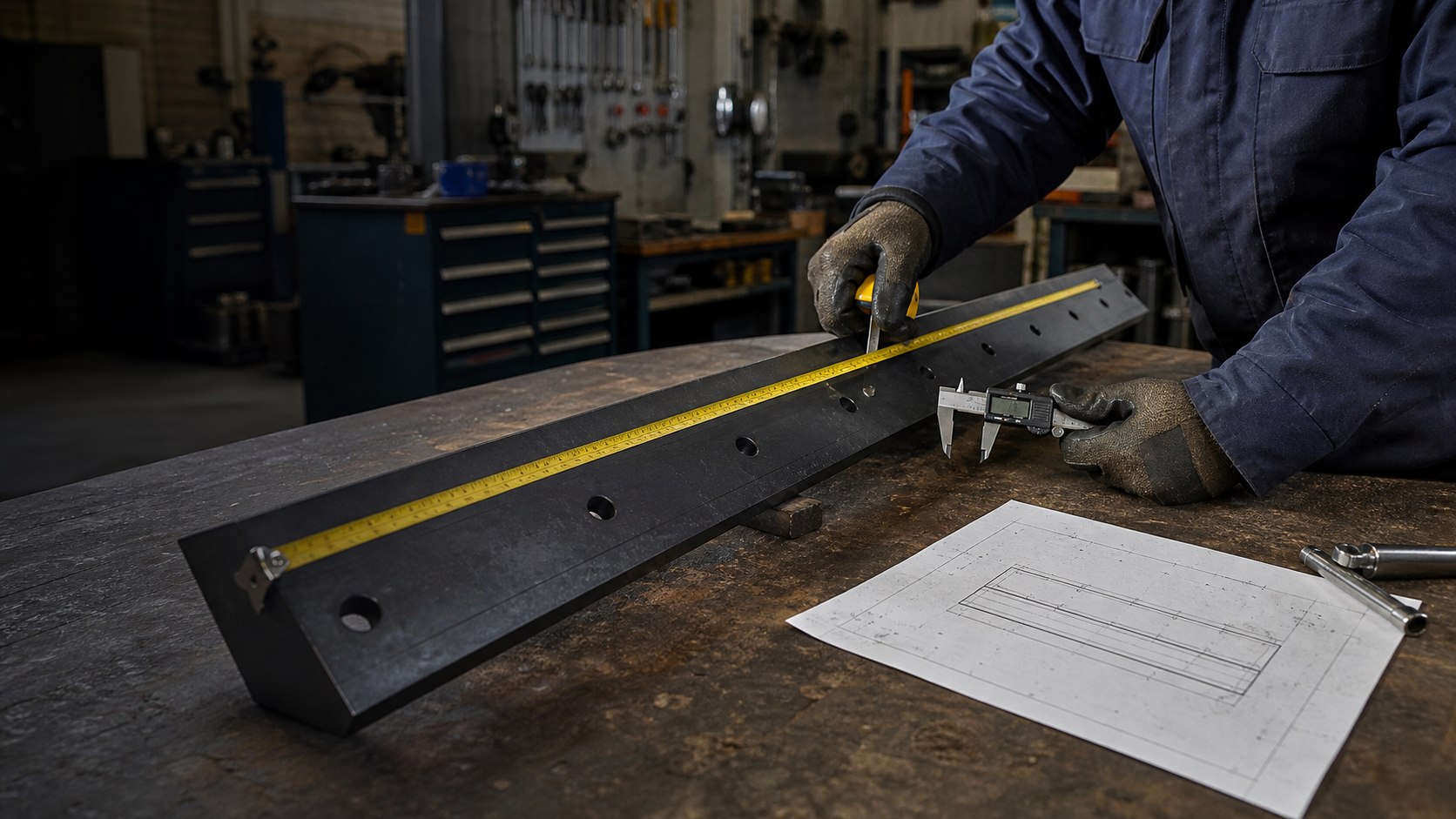
A bolt pattern is the one part of an edge specification that cannot be corrected after delivery. Everything else can be measured, debated or adjusted; a pattern that does not match means the edge will not mount, or will mount badly and fail through the mounting interface. Verification takes minutes and is the cheapest step in the whole procurement process.
Which Snow Plow Blade Bolt Pattern Points Decide Fitment
Four dimensions define a bolt pattern.
Hole diameter, centre-to-centre spacing between holes in a row, the number of rows and the distance from the top edge of the blade to the first row. A pattern is defined by all four; a name alone describes an assumption.
Fleets often order by reference to a make and model, which is a starting point rather than a verification. A machine may have been through previous replacements, a moldboard may have been repaired, and aftermarket equipment may not follow the original drawing. Measuring the blade in service is what converts a reference into a requirement, and the procedure is set out in the guide to measuring a blade for replacement.
SENTHAI validates fitment against AASHTO and DIN bolt patterns before release and works to plus or minus 0.02 mm dimensional tolerances on carbide components, with AASHTO published standards as the reference for agency specifications and DIN covering European and export conventions. That validation is only meaningful if the fleet supplies measured dimensions rather than a pattern name.
How Hole Diameter, Spacing and Row Position Interact
Each dimension produces a different failure.
A hole that is too small prevents the fastener from seating and leads the workshop to dress the hole, which reduces the clamping area. A hole that is too large allows movement under load, loosening the edge and accelerating wear at the positions where it moves.
Spacing errors are the ones that mount and still fail. Where centre-to-centre distance is slightly wrong, the fasteners pull the edge into line, which builds stress into the blade and into the mounting face. The edge then operates in a condition it was not designed for, and the resulting wear or loosening is attributed to the product rather than to the pattern.
Row position determines seated height, and seated height determines contact. An edge with correct spacing but a different first-row distance will mount and sit differently, changing the angle at which the working face meets the surface. On a specification chosen for a particular surface condition, that difference is enough to change the result, and the fleet will look for the cause in the wrong place.
Grade, Geometry and Material Choices Around the Mounting Interface
Pattern and material requirements are connected through load. A pattern with fewer fixing positions concentrates load at each fastener, which raises the demand on the blade structure and on the hardware set. A pattern with more positions distributes load but increases the number of points that must be torqued correctly and re-checked during the season.
Grade selection follows the route, but the mounting interface determines whether the grade is ever tested as intended. SENTHAI engineers the hardness and toughness balance against stated service conditions using hardness on the HRA scale together with carbide grain size, and supplies micro grain inserts in trapezoid and bullnose shapes. Where an edge is not seated correctly, the load path through the carbide changes, and a grade that performs as specified in a correctly mounted assembly may not do so in one that is distorted.
Production control is what makes a pattern reproducible across orders. SENTHAI manufactures in Rayong, Thailand, in a US-invested plant using non-China raw materials, with the full chain in-house from wet grinding and robotic pressing at up to 500 tons through vacuum and low-pressure sintering, automated high-temperature induction brazing and finishing. Where the pattern is produced in the same facility as the drawing, a repeat order reproduces the fitment rather than approximating it.
Fitment and Tolerance Requirements Before Ordering
Three checks belong before an order is placed. Measure the pattern from the blade in service and record the four dimensions with the date. Confirm the mounting face is flat along its length and its holes are within tolerance, because a worn face will not hold even a correctly made edge. And confirm the hardware set and torque value for the assembly being ordered, since a change of thickness or profile changes the fastener requirement.
Where an OEM mounting interface is involved, the equipment documentation is the authority, and SAE standards for mobile machinery describe the interfaces those designs were built around. Where a fleet runs several makes, each should be recorded as a separate group and confirmed separately rather than being covered by one pattern statement.
The verification record should live with the vehicle rather than with the purchase. Where a blade is replaced or a moldboard repaired, the pattern may change, and a record kept with the truck is what shows when that has happened. Without it, the fleet relies on the assumption that a pattern measured once remains valid indefinitely, which is rarely true over several seasons.
Evidence to Request With the Bolt Pattern Verification Quote
Ask for written confirmation that the edge matches the four measured dimensions, dimensional inspection results at the mounting holes and cutting edge, and the hardware set required including bolt length and torque value. SENTHAI inspects and archives every batch, and the quality control and traceability page describes what a batch record contains.
Two further items complete the package. Grade data referenced to a test method such as those published by ASTM, and a statement of the pattern standard the edge is produced to. Where the order feeds a public programme, supplier registration for federal awards is handled through SAM.gov, and general procurement guidance is published by GSA.
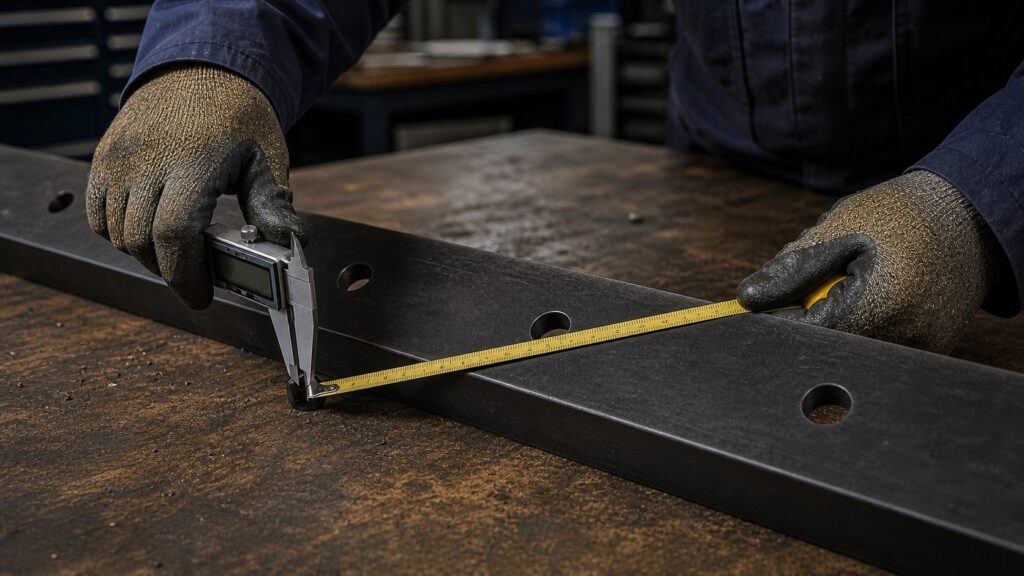
A cross-fleet treatment of the same subject is set out in the guide to verifying plow blade bolt hole patterns, which covers standardising patterns across mixed equipment.
Common Bolt Pattern Errors and Their Cost on Bolt Pattern Verification
The most common error is ordering from a reference rather than a measurement. It works until a model-year change, a repair or an aftermarket moldboard makes one truck an exception. The second is measuring only the hole diameter, which leaves spacing and row position to the supplier’s interpretation and produces an edge that mounts without seating correctly.
The third is neglecting the mounting face. An edge produced to a perfect pattern will still fail on a face that is distorted or on holes that have elongated, and the fleet will then replace the edge rather than address the cause. The fourth is assuming that hardware transfers, which produces loosening where the fastener length or washer type no longer suits the assembly.
The costs arrive at the worst possible moment. A pattern error is discovered during fitting, when the vehicle is needed and the workshop has no option except to force the part into place or to put the blade back on. A verification exercise covering every truck, completed once, removes that risk and produces a pattern record the fleet will use for every subsequent order.
A fifth error is failing to record what was done when a fitment issue was resolved. Where a hole has been dressed or a shim fitted to make an edge seat, the machine no longer matches the pattern the fleet recorded, and the next order is placed against a specification that is no longer accurate. Writing the workaround into the vehicle record, with the reason, keeps the documentation usable.
A sixth error is ordering hardware separately from the edge without checking compatibility. Where fasteners are bought from a general supplier against a nominal size, the washer type and material may differ from what the edge was specified with, and the resulting preload behaviour is not what the torque figure assumes. Ordering the hardware set with the edge keeps the two consistent.
Writing the Pattern Requirement Into a Purchase Order
A purchase order should carry the pattern as a requirement rather than a reference. State the hole diameter, spacing, row count and first-row distance, plus the tolerance accepted and the hardware set required with its torque value. Add the documentation package, including fitment confirmation against the measured dimensions.
Where the fleet covers several makes, list each group separately on the order, so the supplier is confirming against a set of measured requirements rather than a general description. Where the programme references published patterns, citing the relevant AASHTO standards keeps offers comparable and gives the receiving inspection a basis for acceptance rather than a visual judgement.
Two clauses are worth adding to repeat orders. Require the supplier to produce to the same pattern dimensions as the previous delivery, not simply to the same part number, since part numbers can be reused across revisions. And require them to notify the fleet before changing any dimension that affects fitment, so a change is handled as a decision rather than discovered at fitting.
A final practical habit is to keep the measured pattern with the vehicle rather than with the purchasing file. When a blade is replaced or a repair is carried out, the pattern may change, and a record held with the truck is what makes that visible. The same record tells a new workshop technician what the vehicle actually carries, rather than what the fleet list assumes.
Verifying a snow plow blade bolt pattern comes down to four measurements, one mounting face check and a written confirmation. It is the cheapest step in the purchasing process and the one that prevents the most disruptive failures.
Measure the blade in service, keep the record with the vehicle, order against the measured dimensions and check the mounting face at the same time. Done once per truck, that work removes the single most common reason an edge cannot be fitted.
Send SENTHAI your measured patterns, vehicle groups and hardware requirements, and the technical team will confirm fitment, tolerance and the hardware set for each group.
Frequently Asked Questions
What are the four dimensions of a bolt pattern?
Hole diameter, centre-to-centre spacing between holes in a row, the number of rows and the distance from the top edge of the blade to the first row. A pattern name is a shorthand that may cover variations, so the four measured dimensions are what a supplier can be held to when an order is placed.
Why does an edge with the right pattern still not seat properly?
The most common reason is that the mounting face is not flat or its holes have elongated, so the fasteners cannot hold the edge as designed. A second possibility is a spacing dimension that is slightly outside tolerance, which forces the fasteners to pull the edge into line. Check the face before concluding that the edge is at fault.
How often should the pattern be re-measured?
Re-measure after a blade replacement, a moldboard repair or any incident that could have distorted the mounting interface. Keeping the record with the vehicle makes those updates straightforward and shows when a pattern has changed, which is otherwise only discovered when a new edge does not fit.
Does the pattern affect the hardware specification?
It does. The number of fixing positions and the section thickness determine the load each fastener carries and the length required to achieve the correct clamping condition. Confirm bolt length, washer type and torque value with the order, because reusing hardware from a different edge specification is a common cause of loosening in the first weeks of service.
Related articles
 Underbody Plow Blade Specification: How Mounting Position Changes ItSnow plow blade programme & selection
 Plow Blade Supplier Comparison: The Documentation That Decides ItSnow plow blade programme & selection
 Municipal Plow Blade Bid Specification: Writing the Technical SectionSnow plow blade programme & selection
 Plow Blade Cost Per Mile: The Inputs That Decide the AnswerSnow plow blade programme & selection