Mounting Carbide Blades: Front, Underbody, and Wing Positions
Carbide snow plow blades can be mounted on the front, underbody, or wing of a plow, depending on the application — and each position places different demands on the edge. Choosing the right configuration…

Carbide snow plow blades can be mounted on the front, underbody, or wing of a plow, depending on the application — and each position places different demands on the edge. Choosing the right configuration for the mounting position is what turns a good blade into a long-lasting one. The carbide blade construction details covers configurations for all three positions.
Plow Mounting Types
The three common mounting positions are front (the main pushing edge), underbody (truck-mounted scraping), and wing (side extension for wide roads). Each has its own cutting angle, load pattern, and wear profile — and its own edge configuration.
Front-Mounted Blades
Front blades carry the main clearing load and wear fastest. Carbide front edges deliver long wear life and consistent scrapes on highways and arterials, which is why they are the standard upgrade for front plows.
Underbody Blades
Underbody blades mount beneath trucks to scrape hard-packed snow and ice close to the pavement. They need a strong edge with controlled geometry, since they operate at speed with minimal clearance. Carbide underbody edges reduce changeouts on high-mileage trucks.
Wing Plow Blades
Wing edges run at sharp angles and often contact gravel shoulders, which is extremely abrasive. Carbide wing edges extend service life where steel fails quickly, and proper profile selection protects both the edge and the shoulder.
Installation Guide
Installation follows the same pattern for all positions: match the AASHTO bolt pattern, mount with Grade 8 hardware and existing clamping bars, and torque to spec. Verify fitment before installation — a blade that does not fit cannot be field-modified without weakening it.
Edge Requirements per Mounting Position
Front edges need wear life and a clean scrape; underbody edges need controlled geometry and impact strength; wing edges need abrasion resistance against shoulders. One specification does not fit all positions — configure each edge for its position. Agency programs like Clear Roads evaluate blade performance across these real-world mounting duties so fleets can match edges to positions with data.
Carbide Configurations for Each Position
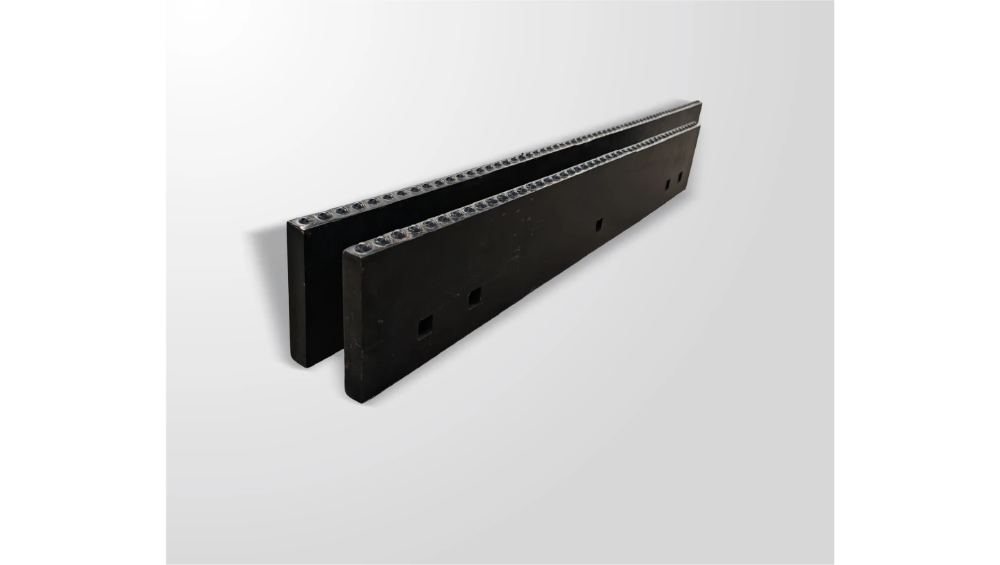
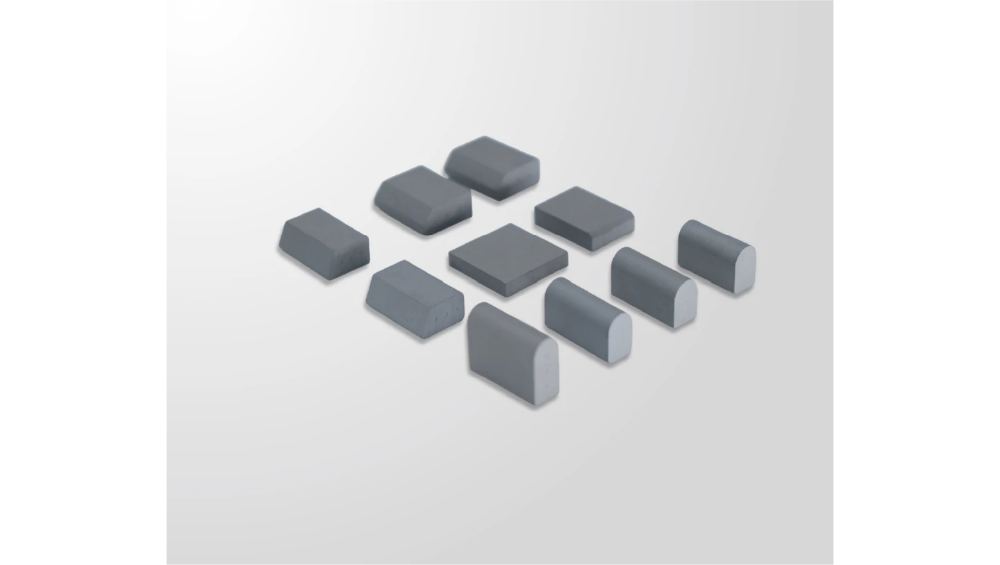
SENTHAI configures carbide blades for front, underbody, and wing mounting, with inserts brazed into milled grooves or overlaid on the surface. Configurations are engineered for the position’s load and wear pattern, not copied from one mold.
Reverse Operation and Tungsten Cladding
For operators requiring specialized maneuvers, SENTHAI blades can be configured for forward and reverse operation, with advanced tungsten carbide particle cladding to extend wear life. Reverse capability matters for positioning and tight plow work.
Fit and Tolerance for Drop-In Mounting
Precision manufacturing holds dimensional tolerances as tight as ±0.02mm, with bolt holes per AASHTO or DIN standards. That precision means rapid drop-in replacement without manual adjustment — cutting labor and getting the fleet back on the road faster.
Choosing a Mount by Application
Match the position to the job: front blades for main clearing, underbody for truck scraping, wing for wide-road coverage. The edge configuration follows the position, and the material follows the route’s abrasiveness.
Frequently Asked Questions
Can the same carbide blade be used in all mounting positions?
Fitment may match, but edge configuration should be selected per position — front, underbody, and wing edges face different loads and wear patterns.
Do underbody blades need special carbide?
They need controlled geometry and impact strength for close-to-pavement scraping at speed. Carbide underbody edges are configured for that duty.
Are wing blades available in carbide?
Yes. Carbide wing edges resist shoulder abrasion and extend service life on wide-road clearing.
Is mounting a direct fit?
With standard AASHTO bolt patterns and precision tolerances, carbide blades drop into existing clamping systems without modification.
Configure the edge for the mount. See front, underbody, and wing options on the SENTHAI carbide cutting edge systems and confirm fitment for your plow types.