How Carbide Snow Plow Blades Are Made: From Powder to Finished Edge
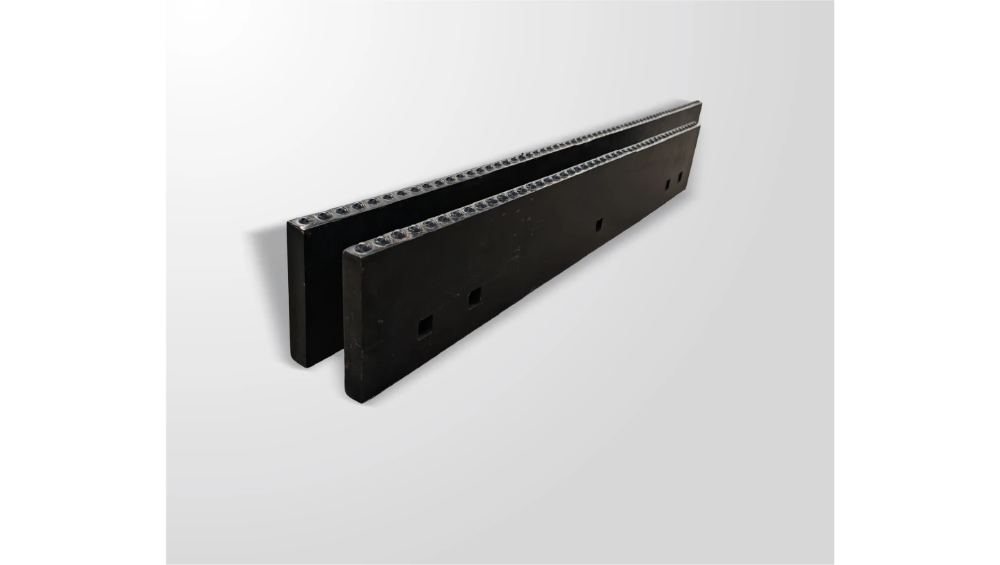
A carbide snow plow blade starts as tungsten powder and ends as a precision cutting edge with inserts brazed into a steel body. Every step in between — mixing, pressing, vacuum sintering, brazing, and…

A carbide snow plow blade starts as tungsten powder and ends as a precision cutting edge with inserts brazed into a steel body. Every step in between — mixing, pressing, vacuum sintering, brazing, and quality control — determines how long the blade lasts in winter service. Understanding the process is how buyers separate engineered blades from assembled ones. The SENTHAI carbide snow plow blade page shows the finished product and specifications.
How Carbide Blades Are Made
The process chain is: tungsten powder mixed with cobalt binder, pressed into shape, vacuum sintered into solid carbide, then brazed into a steel carrier. A manufacturer that controls this full chain in-house can document every step; an assembler cannot.
Tungsten Carbide Properties
Tungsten carbide is among the hardest engineered materials used in wear parts, typically in the HRA 86-93 range. That hardness is why carbide edges cut ice and resist abrasion far longer than steel. But hardness must be balanced with toughness — brittle carbide cracks under impact, which is where material engineering matters.
Manufacturing Steps
- Blending tungsten carbide powder with cobalt binder and grain-control additives.
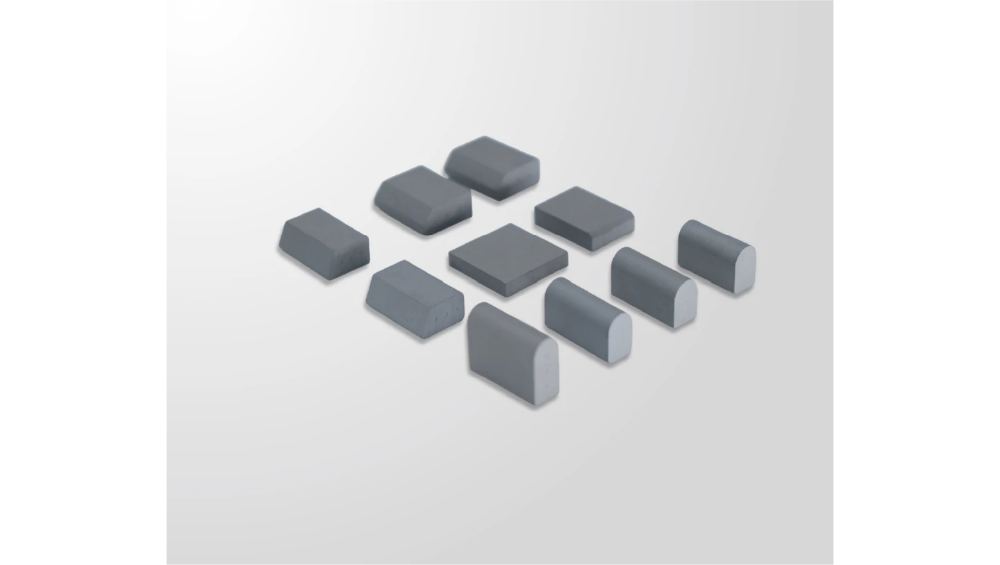
- Compression molding the insert shape under controlled pressure.
- Vacuum sintering at high temperature to fuse the carbide into a dense solid.
- Surface conditioning the insert for brazing.
- Brazing inserts into the steel blade body.
- Final machining, inspection, and tolerancing.
Quality Control in Production
QC measures density, hardness (HRA), grain structure, and dimensional tolerance at each stage. Batch-to-batch consistency is the goal: every blade in a shipment should match the approved sample. Transportation research — including NCHRP Project 06-19 on snowplow cutting edges — recommends measurable quality controls for exactly this reason.
Why Manufacturing Matters
Two blades can look identical and perform completely differently. The difference lives in sintering quality, brazing integrity, and stress relief. Manufacturing is not a background detail — it is the product.
Vacuum Sintering and Compression Molding
Compression molding shapes the insert with uniform density, and vacuum sintering removes porosity while controlling grain growth. SENTHAI uses advanced vacuum sintering furnaces with proprietary temperature control to achieve consistent grain size and wear resistance across every batch.
Brazing Inserts into C45 Steel
SENTHAI brazes micro-grain carbide inserts into premium C45 steel bodies. The brazing creates a metallurgical bond that holds inserts under impact — the same bond that prevents pop-out when a plow hits a manhole at speed. Bond quality, not just carbide grade, decides insert retention.
Surface Conditioning for Bond Strength
Before brazing, inserts are surface-conditioned — including precision sandblasting — to remove mold-release residue and expose a clean, cobalt-rich surface. This improves wetting of the brazing alloy and creates a stronger bond, preventing “cold joints” that fail in service.
Stress Relief and Patented Process
Impact failure is often caused by residual internal stress. SENTHAI’s continuous R&D in raw materials and process optimization produced patented stress-relief technologies that reduce the risk of carbide fracturing, even in extreme sub-zero temperatures. Stress relief is the invisible step that makes high-speed impacts survivable.
Tolerances and Inspection Records
SENTHAI holds dimensional tolerances as tight as ±0.02mm, with bolt holes compliant to AASHTO (North America) or DIN (Europe) standards. Each lot is traceable to its raw materials and process settings, and inspection records accompany shipments — the documentation serious buyers should demand.
Frequently Asked Questions
What is a carbide snow plow blade made of?
A steel blade body (typically C45) with tungsten carbide inserts brazed into milled grooves or overlaid on the cutting face.
Why does manufacturing quality matter for blades?
Sintering, brazing, and stress relief determine wear life and insert retention. Two visually identical blades can perform completely differently based on process quality.
What is vacuum sintering?
A high-temperature process that fuses pressed carbide powder into a dense, pore-free solid, controlling grain size and hardness.
What tolerances should I expect?
A qualified manufacturer holds dimensional tolerances around ±0.02mm with bolt holes per AASHTO or DIN standards.
See the finished product. Review specifications on the SENTHAI carbide blade specifications and request QC documentation with your next quote.