Snow Plow Blade Wear Indicators: How to Read Them and Time Replacement
Replacing a cutting edge at the right time saves money; replacing it too late costs more. JOMA style blades include integrated wear indicators so operators can monitor blade condition and schedule maintenance before wear…

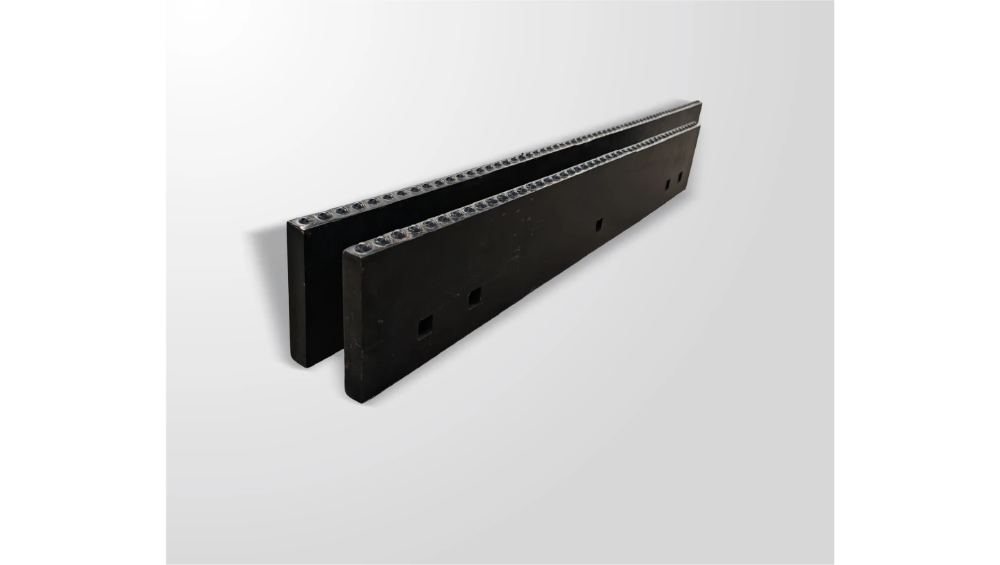
Replacing a cutting edge at the right time saves money; replacing it too late costs more. JOMA style blades include integrated wear indicators so operators can monitor blade condition and schedule maintenance before wear reaches the plow’s mounting hardware. The rule is simple: when the indicator tells you the section is at its wear limit, change it — do not wait for the mounting hardware to take the damage. See the SENTHAI rubber-carbide JOMA blade line for the sections available for your plow.
Why Wear Indicators Exist
Cutting edges wear at different rates depending on route abrasiveness, plow speed, and ice conditions. Guessing when to replace leads to two expensive outcomes: replacing too early wastes usable blade life, and replacing too late lets a worn section damage the clamping bar, mounting hardware, and even the plow frame. Wear indicators remove the guesswork by giving operators a visual check point at the section’s wear limit.
Measuring blade wear is a recognized problem in the industry. Transportation research programs — including Clear Roads, which funds practical winter maintenance research for state DOTs — have studied how to measure cutting edge wear consistently, because agencies need objective data to compare blade life and cost. An integrated wear indicator gives a fleet the same objectivity at the truck level: the section itself tells you when it is done.
How Integrated Wear Indicators Work
An integrated wear indicator is built into the section at a depth that corresponds to the point where the blade should be retired. As the cutting edge wears down, the indicator becomes visible — that is the signal to schedule a change. Because the indicator is part of the section itself, it cannot be lost or forgotten like a separate gauge, and it reflects the actual wear of that specific section.
Reading the Wear: A Simple Routine
- Check after every major storm event or at least weekly during active season.
- Look for the indicator on each section while the plow is lifted and the edge is visible.
- Compare sections — uneven wear across the plow points to a fitment or pressure issue, not just normal wear.
- Record the condition in a simple log (date, truck, section, indicator status) so trends are visible.
Replacing Before Hardware Damage
The cost of a cutting edge section is small compared with the cost of replacing clamping bars, hardware, or a damaged plow frame. A blade run past its wear limit stops protecting the mounting system, and the steel backing starts contacting the road. That contact accelerates hardware wear and can bend or score components that are much more expensive than the blade. The wear indicator exists to prevent exactly this failure.
The cost logic is the same one agencies use in blade trials: field studies such as the Maine DOT work presented at the Transportation Research Board showed that longer blade life and fewer changeouts produced real dollar savings per blade — savings that disappear if blades are replaced too late and damage hardware, or too early and waste life.
Seasonal Maintenance Calendar
| When | Action |
|---|---|
| Pre-season | Inspect all sections, confirm indicators are intact, replace worn sections before the first storm |
| During season | Check indicators weekly and after major storms; log wear per truck |
| Mid-season | Rotate or replace sections showing the wear indicator; inspect mounting hardware |
| Post-season | Remove, clean, and store sections; record end-of-season condition for next year’s budget |
Tracking Wear Data Across Your Fleet
A simple log turns wear indicators into fleet intelligence. Record date, truck, section, and indicator status at each check. After a season, the log shows which routes are hardest on edges, which trucks wear unevenly, and how many sections the fleet really needs in stock. That data directly feeds next season’s budget and spare inventory.
Agencies use exactly this logic at scale: Clear Roads developed standardized blade evaluation so states can compare life and cost across suppliers, and the Maine DOT TRB study quantified per-blade savings from measured wear. Your per-truck log is the same methodology applied at fleet level — and it makes the case for rubber-carbide edges with your own numbers instead of a vendor’s.
Frequently Asked Questions
How do I know when to replace a JOMA style blade?
Use the integrated wear indicator: when it becomes visible, the section has reached its wear limit and should be replaced before the mounting hardware is damaged.
What happens if I run the blade past the indicator?
The steel backing contacts the road and the clamping system takes the wear — hardware and frame damage cost far more than a section replacement.
Do all sections wear evenly?
Not always. Uneven wear across sections usually indicates a fitment or pressure problem that should be checked, not ignored.
Can JOMA style blades be used with my existing mounting hardware?
Yes — standard AASHTO bolt patterns work with your existing clamping bars and Grade 8 hardware; the sections are what get replaced.
Never guess a blade change again. See the integrated wear indicators on the JOMA style blade ordering page and contact SENTHAI for sections matched to your plow’s bolt pattern.