




JOMA Blade Wear Indicators: Reading Them in the Yard
JOMA blade wear indicators explained: what to read on a flexible segmented blade, how to measure it and how to keep records comparable across a fleet.
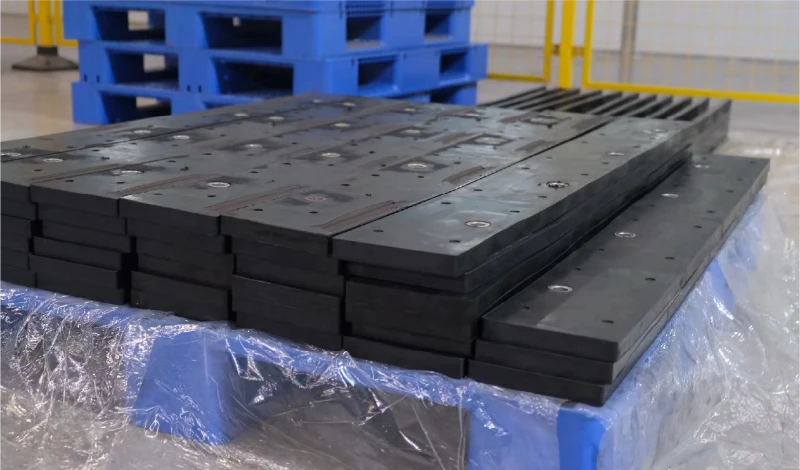
A flexible blade gives fewer visual clues about wear than a rigid edge. Because each segment deflects under load, appearance in the yard says less about remaining service, and the difference between a segment that is nearly new and one at the end of its life is a measurement rather than an obvious shape. Reading the indicators correctly is what makes replacement and rotation decisions possible.
What JOMA Blade Wear Indicators Have to Establish
Indicators have to establish material and behaviour.
Two things decide whether a flexible segment is still serviceable: how much working material remains at fixed points, and whether the segment still deflects and returns as designed. Material alone describes wear; behaviour describes whether the design is still functioning.
That second check is specific to flexible blades and is the one fleets most often skip. A segment that has taken a set, or that is seated unevenly, will deflect differently from its neighbours and will not present the same working face to the surface. The visible symptom is uneven clearing rather than obvious damage, which is why it is often attributed to the route before it is attributed to the blade.
The mounting discipline that keeps deflection behaviour consistent is covered in the JOMA style compatibility guide, and the blade range itself is described on the JOMA style blade page.
Indicators to Read and What Each One Means
Five indicators cover most of what matters. Material height at fixed points across each segment shows reserve and wear distribution. The condition of the working face shows whether the shape is still consistent along the blade. The seated height at each joint shows whether neighbouring segments are carrying load evenly. The presence of deformation shows whether a segment has taken a set. And the condition of the fasteners and mounting face shows whether the assembly is still held as designed.
Reading them together produces a diagnosis rather than a description. Even material loss with sound joints and consistent seated height is normal wear and calls for a replacement decision on the measured interval. Uneven material loss with consistent seated height points to the route or the position. Uneven material loss with inconsistent seated height points to fitment, and correcting the specification will not address it.
Deformation is the indicator that most often gets missed because it is felt rather than seen. Loading a segment by hand and checking that it returns to its working position takes seconds and reveals a segment that will otherwise remain in service, deflecting differently from its neighbours for the rest of the season.
A sixth indicator is worth adding for fleets that run several trucks on comparable work: the difference between trucks. Where one machine’s segments consistently reach the threshold faster than others on the same routes, the blade is not the variable. Mounting face condition, shoe settings, plow level and operator technique are the candidates, and each of them is cheaper to correct than to compensate for with additional segments. The fleet-level comparison is what makes that difference visible.
Reading the indicators in a fixed order also matters for practical reasons. Check fasteners and seated height first, because a segment that is not held correctly will show measurements that describe the mounting rather than the material. Then check deflection, then measure material, then photograph. Following the same order each time is what makes one inspector’s record comparable with another’s.
Measuring and Recording Wear on Segmented Blades
Measurement on a segmented blade has to be consistent at two levels: the same points on each segment, and the same position for each segment on the blade. Without the position record, a reading describes a segment but not the work it did, and the pattern that rotation depends on cannot be identified.
The practical record has one row per segment per check: date, truck, route class, segment position, measured heights at the fixed points, seated height at each end, deflection check result and any action taken. Photographs from a fixed position, with the segment joints visible, capture what the numbers cannot and take seconds.
For fleets that track equipment data, there is a further option: the material on telematics and JOMA blade wear life covers how operating data can be used to anticipate intervals. Telematics is useful for planning, and it does not replace physical measurement, because the readings it produces describe usage rather than condition.
Conditions That Change How Quickly Wear Develops
Surface type is the strongest influence. Unsealed routes maintain contact continuously through deflection, so abrasive load is applied for more of the time than on pavement, and material loss is correspondingly faster. Routes with embedded debris damage segments and joints through shock, ending life before the material limit is reached.
Route geometry and operating pattern matter too. Frequent blade raising exercises the deflection and re-establishes contact many times per shift, while long continuous runs produce steadier contact. Turns, kerb contact and changes of surface concentrate load at particular positions, which is what produces the position-specific wear patterns that rotation is designed to address.
Weather changes the surface itself. Where an unsealed route freezes after a thaw, the blade can no longer deflect into it in the same way, and the operating behaviour approaches that of a rigid edge on hard ground. Maintenance practice on ice-affected networks is covered in the pooled research published by Clear Roads, and seasonal guidance from the National Weather Service is useful when comparing one winter’s readings with another.
Acting on the Indicators
The decision should follow written thresholds. Where material remains above the replacement threshold, deflection behaviour is sound and seated height is consistent, the segment continues in service with the next check scheduled. Where material has reached the threshold, the segment is replaced and the interval recorded. Where deflection has changed or seated height is inconsistent, the cause is investigated before any part is ordered.
Rotation applies where the readings show a consistent pattern by position, because moving a segment to a less demanding slot spreads the load and uses the remaining material. Rotation does not apply where the indicator is deformation or fitment, since moving the problem does not resolve it. Replacement of individual segments is described in the JOMA style replacement blade range.
Two records make the decisions defensible. The interval, calculated from segments retired for even wear rather than from all segments removed. And the position pattern, which shows whether wear follows the slot or the route. Together they turn a set of measurements into a maintenance plan, and they allow the specification to be judged on evidence rather than on impression.

Tools and Safe Handling During Wear Indicator Checks
The tool kit is short: a straight edge or gauge for height measurement, a light for inspecting the joints and working face, a torque wrench for fasteners and hand protection for load testing. Torque wrenches should be checked periodically, because an out-of-calibration instrument produces readings that look precise and are wrong.
Handling is the physical risk and the main source of deformation. Segments should be moved by the body and set down on a support rather than the ground or the working face. Assessment principles for load handling are published by the UK Health and Safety Executive, and general workshop requirements for hand and power tool use are set out in the OSHA occupational safety and health standards.
Where a measurement raises a material or dimensional question, test methods published by ASTM and the pattern standards published through AASHTO provide references for resolving it rather than relying on judgement. Keeping those references with the inspection record makes the eventual conversation with a supplier a technical one.
Reviewing Wear Records Across the Fleet
Records become useful when they are compared. Sorting the season’s readings by segment position shows whether wear concentrates in particular slots; sorting by truck shows whether one machine wears blades faster than others on comparable work; sorting by route class shows whether the surface is the variable. Each of those views points to a different remedy, and none of them is visible from a single inspection.
The review should also revisit the thresholds themselves. Where segments are consistently replaced with substantial material remaining, the threshold is too conservative or the retirement is being driven by something other than wear. Where segments routinely pass the threshold before the scheduled check, the interval is too long. Adjusting both at the end of a season is what keeps the routine aligned with the fleet’s actual experience.
One further output of the review is a specification decision. Where the readings show that a group’s segments wear evenly and reach their limit at a predictable point, the specification is matched to the route and can be extended to comparable groups. Where wear is consistently uneven, the evidence points to fitment or route allocation rather than to material, and the next season’s change should address that instead of the blade.
Keeping the review to a fixed date each year makes the comparison reliable. A review conducted at different points in different seasons compares different amounts of work, and the resulting conclusion measures the calendar rather than the fleet.
JOMA blade wear indicators come in two kinds: how much material remains, and whether the segment still behaves as designed. A flexible blade rewards attention to the second, because deflection is what makes the design work and what a visual check cannot assess.
Measure at fixed points, record position and deflection, photograph the joints and compare the records across the fleet at season end. That discipline is what allows rotation and individual replacement to be used deliberately rather than by guesswork.
Send SENTHAI your segment measurements, position records and photographs of blades in service, and the technical team will review the indicators, thresholds and replacement logic for each group.
Frequently Asked Questions
Why do flexible blade segments need a deflection check as well as a wear measurement?
Because the design works by deflecting over variation and returning to position. A segment that has taken a set will still show measurable material but will not present the same working face as its neighbours, which shows up as uneven clearing rather than visible damage. Loading a segment by hand and checking that it returns takes seconds and catches the condition that measurement alone misses.
What is the best way to measure wear on a segmented blade?
Choose a small set of fixed points on each segment and use the same points, the same datum and the same method at every check. Record each reading against the segment position on the blade, not just the segment itself. Consistency is what makes readings comparable between checks and between trucks.
Can telematics replace physical inspection?
No. Telematics describes usage, which is useful for planning intervals and identifying routes that work edges hardest. Physical measurement describes condition, and it is the only way to establish how much material remains or whether a segment still deflects correctly. Use the two together rather than substituting one for the other.
How should wear records be organised across a fleet?
One row per segment per check, containing the date, truck, route class, segment position, measured heights, seated height, deflection check and action taken. Sorting those rows by position, by truck and by route at the end of the season shows whether wear follows the slot, the machine or the surface, and each of those points to a different remedy.
Related articles
 Flex Blade for Lots, Car Parks and Airports ComparedJOMA style flex blades
 JOMA Segment Storage and Transport: Protecting Flexible BladesJOMA style flex blades
 JOMA Blade Compatibility Across Plow BrandsJOMA style flex bladesJOMA Blade Bid Specification: Writing Requirements for Segmented BladesJOMA style flex blades