




Flex Blade for Lots, Car Parks and Airports Compared
Flex blade for lots, car parks and airports compared: how surfaces, equipment class and clearance requirements change the specification chosen.

Parking lots, car parks and apron areas present a different problem from road ploughing. Surfaces are interrupted by kerbs, islands, drains and bollards, the equipment is often small, and the cost of a damaged fixture is higher than the cost of the blade. A flexible blade suits those conditions for the same reason it suits unsealed roads: it follows a surface rather than transferring every variation into the machine.
What Each Application Requires From a Flex Blade
Each application has a different limiting factor.
Lots and car parks are limited by obstacles and tight geometry, aprons by surface area and clearance standards, and both by the equipment available. The specification follows the limiting factor rather than the surface type alone.
In a lot, the blade meets kerbs, island edges, drain covers and bollard bases within short distances, so the ability to deflect and return reduces the shock transferred into the plow and the risk of catching. Clearance matters as much as cutting: a blade that digs in when it meets an island edge damages the fixture and the machine. On an apron, the priority shifts toward consistent coverage of a large, mostly even area, with operational requirements that come from the airport rather than from the road.
The comparison between flexible and rigid edge types is covered in the blade selection guide, and the mounting checks that support either choice are explained in the JOMA style compatibility guide.
Flex Blade for Lots and Aprons: How Performance Differs
In a lot, the working pattern is short passes and frequent turns.
Deflection helps at every obstacle, and the wear pattern that develops is uneven because the same sections meet the kerbs and islands repeatedly. That is a case where rotation between positions produces a measurable benefit.
On a car park deck, the surface may be ramped or sloped, and drainage falls and joints in the deck present regular interruptions. Coverage matters more than cutting depth, and a flexible blade maintains contact across the slope as the plow moves, which is difficult for a rigid edge on a surface that changes angle.
On an apron, area coverage and clearance standards drive the specification. The equipment is often specialised, the operating window is constrained by aircraft movements, and the requirement is usually expressed as a cleared surface within a defined time rather than as an edge specification. A flexible blade contributes by maintaining contact across a large surface with fewer passes, but the operational requirements come from the airport operator and have to be confirmed with them rather than assumed.
The three applications also differ in how quickly a specification can be evaluated. A lot or car park can be trialled on one truck and one site, with results visible within a season. An apron specification usually has to be agreed with an operator and fitted to equipment that is not easily changed, so the evidence has to be assembled before the decision rather than after it. That makes the measurement discipline more important, not less.
A fourth application worth grouping with these is the municipal sidewalk or multi-use path, where equipment is small, surfaces are narrow and obstacles such as sign posts, hydrants and steps appear frequently. The limiting factor there is usually manoeuvrability rather than coverage, and the specification follows the machine more than the surface.
Surface Differences Between Lots, Car Parks and Airports
Lot surfaces are the most interrupted. Kerbs, islands, speed tables, drains and manhole covers appear at short intervals, and the blade meets a different condition every few metres. Abrasive content is usually low, but obstacle density means shock loading rather than wear is the dominant mechanism. Because the same blade sections meet the same fixtures repeatedly, the wear record on these surfaces describes the layout of the site as much as the material.
Car park decks add slope and structural joints. Water and melt run across the surface and refreeze in shaded corners, so ice control is often a treatment question as much as a ploughing one. The regulatory context for material use that many operators now plan against is set out in the EPA’s municipal stormwater guidance, and seasonal weather guidance is published by the National Weather Service.
Aprons are large, mostly consistent and heavily regulated. Surface condition requirements are set by the operator, treatment materials are controlled because of their effect on aircraft and ground equipment, and the work has to fit around movements. Maintenance practice in specialised environments of this kind is discussed in the pooled research published by Clear Roads, which is useful context when a fleet is comparing specifications for a non-road surface.
Operational Trade-Offs Beyond Wear With Lot, Car Park and Apron Applications
The first trade-off is equipment class. Lot and car park work is often done with smaller carriers, and a heavier assembly changes how those machines behave, because the available down-pressure is lower than on a road plow. That makes the selection of segment size and arrangement more consequential than the material choice on these applications.
The second is handling. Small operations often have limited lifting equipment and fewer staff, so a specification that divides into more, lighter segments can be easier to work with than one using fewer, heavier ones. In an apron operation, by contrast, the equipment is often larger and the handling consideration may be reversed.
The third is damage consequence. In a lot, hitting a bollard or a kerb damages the fixture and may damage the machine; a flexible blade reduces the peak load transferred but does not eliminate contact. Operationally, that argues for a specification that maintains contact while absorbing shock, and for an operating practice that accepts a slower pass near obstacles rather than forcing the blade through.
Fitment and Equipment Compatibility for Lot, Car Park and Apron Applications
Compatibility is established the same way on these surfaces as on any other: from the measured blade in service. SENTHAI validates fitment against AASHTO and DIN bolt patterns before release and works to plus or minus 0.02 mm dimensional tolerances on carbide components, with AASHTO published standards as the agency reference and DIN covering European and export conventions. Where an OEM mounting interface is involved, SAE standards for mobile machinery describe the interfaces those designs were built around.
Three checks are worth completing for lot and car park equipment specifically. The installed blade length, because compact equipment often uses shorter blades where the difference between segment sizes matters proportionally more. The seating height, because a change there affects clearance on surfaces with kerbs and islands. And the hardware set, because a heavier assembly may exceed what a small plow was designed to carry.
For apron equipment, the machine is usually specified by the operator, so the fitment question is answered by the interface drawing rather than by comparison with an existing edge. Confirming that drawing against the measured pattern, and having the supplier confirm fitment in writing, is what prevents a delivery that cannot be fitted inside a narrow operating window.
Cost Per Square Metre Cleared
Cost per area is the right denominator for these applications, because distance is a less meaningful measure than the surface covered. The inputs are otherwise the same, and the general framework is set out on the cost per mile page.
| Input | Lots and car parks | Apron areas |
|---|---|---|
| Dominant mechanism | Obstacle contact and frequent turning | Consistent coverage over large areas |
| Wear distribution | Uneven, following kerbs and islands | More even across the working width |
| Rotation benefit | High, because positions consume material differently | Lower, because wear is more even |
| Handling constraint | Often smaller carriers and limited equipment | Larger equipment, wider operating windows |
| Penalty for failure | Damage to fixtures and to the machine | Disruption to a regulated operating area |
| Main measure | Cost per area cleared with minimal fixture damage | Cost per area cleared within the operating window |
Two cautions belong with the table. Comparing a lot specification with an apron specification on unit price compares two different operating problems, and the conclusion will not transfer. And the cost of fixture damage, which does not appear in a parts line at all, should be represented explicitly where a fleet has a history of kerb or island strikes.
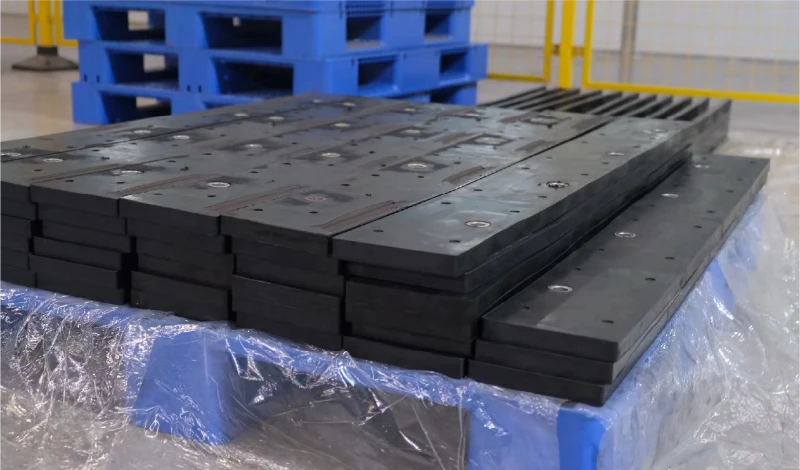
Choosing the Specification by Application
For lots and car parks, the specification should follow the obstacle density and the equipment class. More, lighter segments suit smaller carriers and tight geometry; rotation between positions is worth building into the routine because wear is uneven by nature. Confirm seated height, because clearance matters where kerbs and islands line the working area.
For car park decks, add slope and drainage to the assessment. Coverage across a changing surface is the requirement, and treatment practice may matter as much as the blade because melt refreezes in shaded areas. The regulatory context for material use is worth reviewing before a treatment plan is changed.
For apron areas, start from the operator’s requirements rather than the blade. Confirm the interface drawing, the equipment class and the operating window, then specify the arrangement that maintains coverage with the least handling complexity. Where the requirement is expressed as a cleared area within a defined time, the measurable inputs are passes and time, not wear alone.
Lots, car park decks and aprons all suit a flexible blade, for different reasons: obstacle tolerance in the first two, consistent coverage in the third. The specification should follow the limiting factor rather than the surface description.
Measure the blade in service, confirm seating height and hardware, and record passes and coverage alongside wear. Reviewed by application, those readings show whether the specification is doing the job, and they give the following season’s decision a basis that unit prices cannot provide.
Send SENTHAI your equipment list, surface types and measured blade patterns, and the technical team will review the segment arrangement, fitment and hardware for each application.
Frequently Asked Questions
Are flexible blades suitable for parking lots and car parks?
They suit those surfaces well, because the blade deflects over kerbs, islands and drain covers instead of transferring the full shock into the plow. The main considerations are the equipment class and seated height, since compact carriers have less down-pressure and clearance matters where fixtures line the working area. Confirm both before specifying.
How does apron work differ from road ploughing?
The surface is usually larger and more consistent, the equipment is often specialised and the operating window is set by the airport rather than by traffic. Requirements are generally expressed as a cleared area within a defined time, and treatment materials may be restricted. Start from the operator’s requirements and the equipment interface drawing rather than from a road specification.
Should rotation be part of a lot maintenance routine?
It is worth building in, because the sections that meet kerbs, islands and drains repeatedly consume material faster than the rest of the blade. Recording wear by position is what makes rotation possible. On apron areas, where wear is more even across the working width, the benefit of rotation is smaller and the routine can be simpler.
How should these applications be costed?
Use cost per area cleared rather than per distance, and represent fixture damage where the fleet has a history of kerb or island strikes, because that cost does not appear in a parts line. Compare specifications within an application rather than across applications, since the operating problems differ enough that conclusions do not transfer.
Related articles
 JOMA Segment Storage and Transport: Protecting Flexible BladesJOMA style flex bladesJOMA Blade Wear Indicators: Reading Them in the YardJOMA style flex blades
 JOMA Blade Compatibility Across Plow BrandsJOMA style flex bladesJOMA Blade Bid Specification: Writing Requirements for Segmented BladesJOMA style flex blades