




JOMA Segment Replacement and Rotation Timing
JOMA segment replacement and rotation timing: how to set intervals from measured position data, and when to replace a segment rather than the blade.
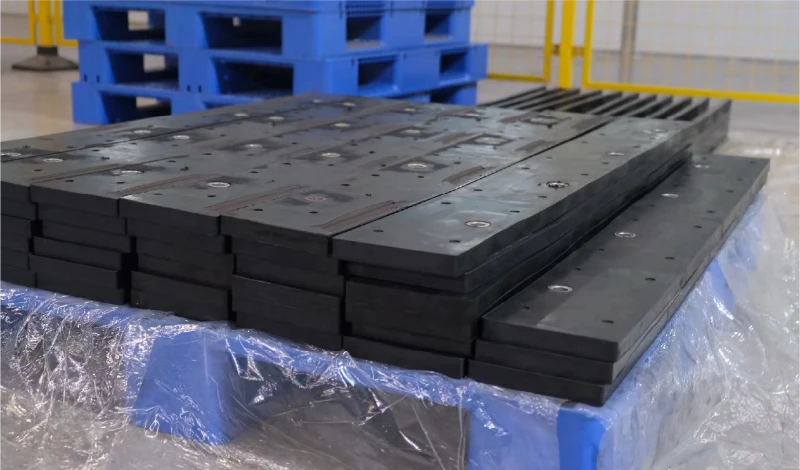
Segmented blades offer a maintenance advantage that fleets frequently fail to use: the ability to rotate and replace individual sections. Using it requires one input that continuous edges do not need, which is a record of which position each segment has worked. Without that record, rotation is guesswork and replacement is done on appearance.
What JOMA Segment Replacement Timing Has to Establish
Timing needs a position record, not just a wear figure.
Setting an interval for a segmented blade means knowing how much material remains on each segment and which position produced the wear, so that rotation can be planned and replacement applied to the section that needs it.
The distinction matters because segments on the same blade do not wear equally on most routes. The sections that meet unsealed shoulders, pavement breaks or the edges of shaded sections accumulate more load, while the centre of the blade may be well within its limit. A single interval for the whole assembly therefore either replaces material that has service left or runs the worst section past its threshold.
The measurement method behind the position record is set out in the guide to measuring a blade for replacement, and the arrangement options for the blade itself are described in the JOMA style compatibility guide. Timing is a records problem before it is a technical one.
Rotation Patterns and What Each One Tells You
Wear distribution across a blade describes the route as much as the material. Where the outer segments wear faster than the centre, the route presents its harshest surface at the blade edges, which is common on unsealed shoulders and on streets with damaged kerb lines. Where the ends wear more slowly, the route is likely to be a consistent surface with localised damage in the middle.
A repeating pattern across successive checks is what makes rotation effective. Where a particular position is consistently the first to reach the threshold, moving that segment to a less demanding position spreads the load, and the assembly then reaches its limit more evenly. Where wear is random across positions, the cause is more likely to be debris encountered at unpredictable points than the route itself, and rotation provides less benefit.
The third pattern is uneven wear between neighbouring segments, which usually points to seated height rather than to material. Where two adjacent segments are not sitting at the same height, one takes more of the load and the joint between them carries movement. Rotating in that case moves the symptom, so the seating and mounting face should be checked before any rotation plan is applied.
Reading the pattern across a fleet rather than across a single blade adds information. Where the same position fails first on several trucks working the same route, the route is the cause and the rotation plan can be built around it. Where one truck consistently wears its segments faster than others on comparable work, the equipment is worth examining: a mounting face that is not flat, shoes set differently or a plow that is not running level will all produce that result, and each is cheaper to correct than to compensate for with more segments.
Measurements and Records That Set the Timing
Four records set the timing. Material height at fixed reference points on each segment. The position of every segment on the blade. The route class and surface type the blade worked. And the reason each segment was removed, separating wear from damage and from alignment problems.
The measurement should use the same points, the same method and the same reference surface at every check, so that readings are comparable between segments and between trucks. The position record is what connects a reading to the work: a segment that reached its threshold at position three has a different history from one that reached it at position one, and only the record distinguishes them.
Recording the reason for removal is what keeps the interval calculation honest. A segment retired for even wear belongs in the interval. One retired after joint damage or after deformation from handling belongs in a different analysis, because it reflects a process problem rather than a material limit. Combining the two produces an interval shorter than the fleet’s actual capability and leads to early replacement across the group.
Conditions That Shorten or Extend Segment Life
Surface type is the strongest influence. Unsealed routes maintain contact continuously through the deflection of the blade, so abrasive load is applied for more of the time and material loss is faster than on pavement. Routes with embedded debris damage segments and joints through shock rather than through abrasion, ending life before the material limit is reached.
Route geometry matters as well. Routes with frequent changes of surface, tight turns or repeated kerb contact distribute load unevenly and accelerate wear at the positions that meet the transitions. Where a fleet runs the same truck across several route types, recording which segments worked which route is the only way to separate those effects, and it is what allows route assignments to be reviewed rather than assumed.
Conditions that extend life are the mirror image: consistent surfaces, even load distribution across the blade and seating that holds. Those are worth recording deliberately, because an interval improvement that follows a change in routing or operating practice should be documented and repeated rather than treated as a favourable season.
Weather is the fourth condition and the one most easily overlooked. Where a season produces long periods of dry, wind-packed snow, abrasive load is steady and the interval follows the distance covered. Where it produces repeated thaw and refreeze, the surface state changes several times across the same route, and segments meet conditions they were not specified for on part of the fleet. Recording those periods with the readings keeps the interval interpretable when the following season behaves differently.
Replacing a Segment Versus the Assembly
Replacing an individual segment makes sense where its wear or damage is isolated and the surrounding sections are sound. The replacement is described in the JOMA style replacement blade range, and it requires that the replacement matches the specification of the assembly it joins, including grade and arrangement, because a segment that differs will deflect and wear differently from its neighbours.
Replacing the assembly makes sense where several segments reach their limit together, where the mounting face requires attention, or where the segment histories have become unclear and the record can no longer support rotation. It restores a consistent working face, which matters on routes where the whole blade is deflecting continuously.
Either decision should be recorded with its reason. A fleet that records only that a segment was replaced has a consumption figure; a fleet that records why has an interval by cause, which is the input for the next season’s specification and holding decisions. Material verification, where a grade question arises, can be referenced to test methods published by ASTM, and the standard patterns are published through AASHTO and DIN.

Tools, Hardware and Safe Handling for Segment Rotation and Replacement
The tools needed are the inspection kit used elsewhere: a straight edge or gauge, a torque wrench, a light and hand protection. On a segmented blade the light matters, because joint condition and seated height are easier to assess with the assembly well lit than by feel, and the joints are where alignment problems first appear.
Handling is the physical risk and the main source of avoidable damage. Segments are heavy and flexible, and lifting by the flex element will deform them. Assessment principles for load handling are published by the UK Health and Safety Executive, and general workshop requirements for hand and power tool use are set out in the OSHA occupational safety and health standards.
Hardware should be replaced with the specified set when fasteners are discarded. A mixed box of fasteners under one nominal torque value produces inconsistent preload across the blade, which is invisible at fitting and obvious at the first re-check, when some positions have lost torque and others have not.
Reviewing Rotation at Season End
The season-end review should be arithmetic. For each group, calculate the interval from the position records, note how many segments reached the material limit and how many were removed for other reasons, and compare the result with the rotation plan in force. Where the plan worked, the segments in a group should reach their limits within a similar period rather than one position consistently failing first.
Two adjustments follow. Where a position consistently reaches its limit first, change the rotation pattern so that position spends less time in the demanding slot. Where the whole group reaches its limit earlier than expected, the interval or the grade is the variable to examine, and the recorded route data will show whether the change came from the work rather than from the product.
A third adjustment concerns the spares holding. Once the rotation pattern is understood, the number of segments a fleet needs in stock becomes a calculation rather than a proportion of the blade count: consumption per group across the season, adjusted for the weeks when replacements cluster. Holding to that pattern keeps capital out of the rack and ensures the busiest weeks are covered, and it is the same logic that applies to any consumable on a seasonal programme.
JOMA segment replacement and rotation timing comes down to one capability that a continuous edge does not have and one record that makes it usable: segments can be moved and replaced individually, provided the fleet knows which position worked and how much material each one has left.
Measure at fixed points, record position and cause, and rotate on the pattern rather than on appearance. Reviewed at season end, those records turn segmented construction into a measurable maintenance advantage instead of an inventory complication.
Send SENTHAI your segment records, route groups and blade arrangement, and the technical team will review the rotation pattern, intervals and replacement logic for each group.
Frequently Asked Questions
How often should segments be rotated?
Rotate on recorded wear rather than on a fixed date. Where the position record shows a particular slot consistently reaching its threshold first, rotate so that position spends less time carrying the most demanding work. Where wear is even across the blade, rotation provides little benefit and the interval can be managed by replacement alone.
What has to be recorded for rotation to work?
Material height at fixed points on each segment, the position each segment occupies, the route class the blade worked and the reason each segment was removed. The position record is what connects a reading to the work; without it, a segment’s history is unknown and rotating simply moves the unknown to another slot on another truck.
Can a single replacement segment differ in grade from the others?
It should not, because a segment that differs in grade or arrangement will deflect and wear differently from its neighbours, and the joint between them will carry the mismatch. Order replacements to the same specification revision as the assembly they join, and confirm grade and dimensions with the supplier when the order is placed.
When is it better to replace the whole blade than individual segments?
Where several segments reach their limit together, where the mounting face needs attention, or where segment histories have become unclear and the record can no longer support rotation. Replacing the assembly restores a consistent working face and a clean record, which is often worth more than the material left on the individual sections.

