




Heavy Duty Carbide Blade Profiles: How They Compare With Standard Edges
Heavy duty carbide blade profiles compared with standard edges on wear reserve, scraping behaviour, machine load and cost per metre of cutting edge.
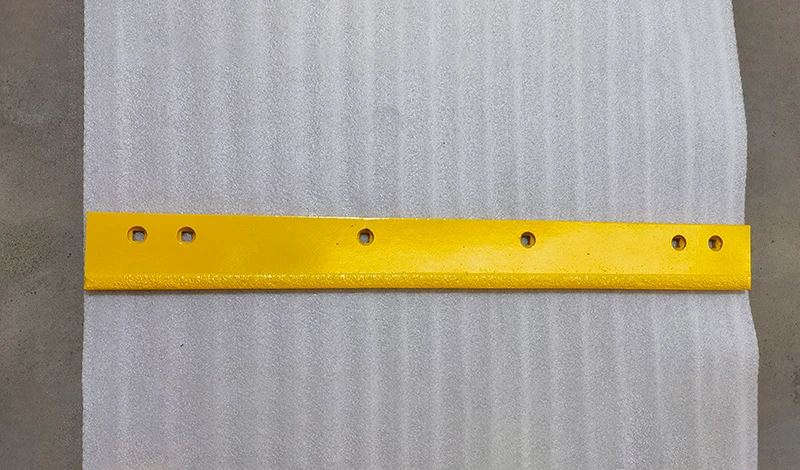
Heavy duty is a description rather than a specification, and it is applied to everything from a thicker section to a completely different wear-part design. Two blades described that way can differ in edge thickness, insert count, grade and mounting interface, and a fleet that buys on the label rather than the drawing often finds that the additional material has changed how the blade behaves without improving the outcome on its routes.
Heavy Duty Carbide Blade Profiles: What They Are Designed For
They are designed for sustained abrasive load.
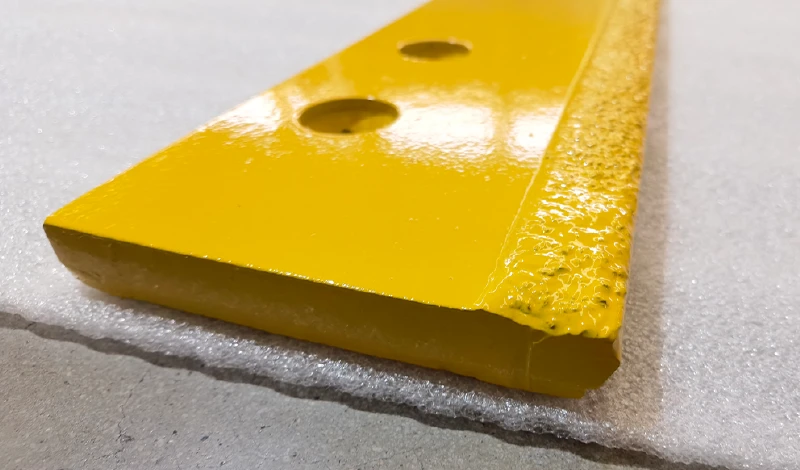
A heavy duty profile carries more wear reserve at the cutting edge and, in most designs, more carbide across the working width. Its purpose is to hold a working edge through a long interval on abrasive surfaces where a standard profile would be consumed before the season ends.
The design intent assumes a carrier that can use it. Additional material adds mass at the leading edge and spreads the available down-pressure over a larger contact area, so the profile performs as intended on equipment with weight and down-pressure to spare. On a lighter carrier, the same profile can reduce scraping contact and push operators toward compensating behaviour, which is where the description and the outcome diverge.
A useful way to read the term is to ask what has actually changed. A heavier profile may add thickness at the cutting edge, add inserts across the working width, change the grade, or change the mounting interface, and each of those changes has a different consequence. The industrial and heavy duty edge material covers the applications these profiles are built around, while this article covers the comparison against a standard edge.
How the Two Profiles Differ in Service Life
They differ in reserve, not in wear rate.
Wear rate is set by surface, grade and contact pressure. What a heavier profile changes is how much material is available before the edge reaches its working limit, and how the contact pressure is distributed across the working width.
That distinction explains why a heavier profile does not automatically deliver a longer interval. Where the route is abrasive and the carrier has down-pressure available, the additional reserve is used up at a similar rate and the interval extends. Where contact pressure falls because the same weight is spread over more material, the edge may clear less effectively and the operator compensates with speed or repeated passes, both of which increase wear.
Failure modes differ as well. A standard edge usually retires through even abrasive loss. A heavier profile working with embedded debris can fail through chipping or through joint damage, because the additional mass transfers more load into the carbide and the bond when the edge meets an obstruction. Where a fleet moves to a heavier profile, the inspection routine should be adjusted to look at the bond line as well as the wear line.
There is a practical test for which mechanism is dominant. Where returned edges show material lost evenly across the working width, additional reserve addresses the cause. Where they show chipping, missing inserts or joint separation at specific positions, the reserve is not the limiting factor, and the specification should move toward grade and retention rather than thickness.
Surface and Condition Differences Between Profiles
Surface type decides whether the heavier profile earns its place. Long routes with abrasive, wind-packed snow and few obstructions are the clearest case: the edge is consumed steadily and additional reserve converts directly into a longer interval. Routes with frequent embedded debris are the least clear case, because the failure mode is shock rather than gradual loss and a heavier section transfers more of that shock into the machine.
Unsealed surfaces sit between the two. Abrasive content is high, which favours reserve, but the surface also varies, which favours contact flexibility. Where a fleet runs unsealed shoulders on the same truck that runs paved routes, the profile choice becomes a compromise that is better resolved by rotation than by specification.
Refrozen conditions add a case where neither profile is the answer, because the limiting factor is contact rather than wear. Where a route holds packed ice, the appropriate response is a specification built for that condition; a heavier standard profile simply spreads the same weight over more material. Maintenance practice across ice-affected networks is covered in the pooled research published by Clear Roads.
Operational Trade-Offs Beyond Wear With Heavy Duty and Standard Carbide Profiles
Handling and installation are the first practical differences. A heavier profile is more awkward to lift and position, and it may require longer fasteners or a different hardware set to seat correctly. That adds workshop time at every change, which is a real cost in a season with several changes and a minor one in a season with two.
Machine load is the second. Additional mass at the leading edge changes the load path into the trip mechanism and the mounting interface, and routes with obstructions convert that into hardware maintenance. Where a fleet records workshop interventions by task, the effect is visible within a season; where it does not, the cost appears as an unexplained increase in downtime.
The third trade-off is inspection effort. A heavier profile takes longer to measure because there is more material to assess and more positions to check, and the wear line develops differently from a standard edge. Fleets adopting heavier profiles should expect to adjust the inspection routine at the same time, rather than assuming the existing method transfers without change.
Spares and storage belong in the same category. A heavier edge is harder to rack and to move, and a fleet holding both profiles for different truck groups doubles the identification work. Labelling each edge with its profile and measured height is what keeps a mixed stores rack usable, and it is a small discipline that prevents a truck from receiving the wrong profile in a busy week.
Fitment and Equipment Compatibility for Heavy Duty and Standard Carbide Profiles
Fitment is where the comparison becomes a hard constraint rather than a preference. SENTHAI validates fitment against AASHTO and DIN bolt patterns before release and works to plus or minus 0.02 mm dimensional tolerances on carbide components, with AASHTO published standards as the reference for agency specifications and DIN covering European and export conventions.
Three checks belong before a heavier profile is specified for an existing machine. Confirm the mounting pattern against the drawing, since additional thickness can change the hardware requirement even where the pattern is unchanged. Confirm the seated height of the edge, because a heavier section can alter how the blade meets the surface. And confirm that the trip mechanism and moldboard are suited to the load the profile will apply, referencing the equipment documentation where an OEM interface is involved; SAE standards for mobile machinery describe those interfaces.
Cost Per Metre of Edge Compared Across Heavy Duty and Standard Carbide Profiles
Cost per metre is the comparison that settles the question. The model structure is set out on the cost per mile page; between standard and heavy duty profiles the inputs move as follows.
| Input | Standard carbide profile | Heavy duty profile |
|---|---|---|
| Purchase price per edge | Lower, reflecting less material | Higher, reflecting additional carbide and section |
| Wear reserve | Adequate for moderate abrasive load | Greater, which converts into a longer interval where contact is maintained |
| Contact pressure | Concentrated on a smaller contact area | Spread over more material, so weight and down-pressure matter more |
| Impact behaviour | Absorbs shock with less load transfer | Transfers more shock into carbide and joint |
| Handling and installation | Easier to position, standard hardware | Heavier, may need a different hardware set |
| Inspection effort | Shorter routine | More positions and more material to assess |
Two cautions belong with the table. The interval advantage depends on the carrier being able to maintain contact pressure, so the comparison should be run per truck group rather than as a fleet average. And the price difference should be recovered within the interval, which means a heavier profile on a route that does not consume a standard edge is added cost without added value.
Choosing Between Profiles for a Mixed Fleet
Allocation follows the same logic as any other specification decision. Groups with long routes, abrasive surfaces and carriers able to apply down-pressure take the heavier profile, because the reserve converts into interval. Groups with shorter routes, lighter carriers or frequent obstructions take the standard profile, because the extra material adds handling cost without changing the outcome.
Where a fleet is uncertain, the cheapest way to resolve it is a controlled comparison rather than an argument. Fit the heavier profile to a defined group, record measured wear at fixed points, workshop hours and hardware interventions, and compare with a comparable group running the standard profile after one season. Material context for the carbide side of the comparison is available from the International Tungsten Industry Association, and property test methods from ASTM allow a grade claim to be reviewed independently.
Two records make the comparison defensible: measured wear at fixed points, and workshop hours recorded by task rather than in total. Together they show whether the heavier profile extended the interval and whether the additional handling and hardware work offset the gain. Without the second record, the fleet sees the interval improvement and misses the cost that accompanied it.
A heavy duty carbide profile is a reserve decision, not a performance guarantee. It adds material at the cutting edge, which extends the interval where contact pressure and route conditions allow and adds handling cost where they do not.
Decide it per truck group, confirm the pattern, hardware and seating before ordering, and compare the profiles on measured interval and workshop hours rather than on the description. That turns a marketing term into a specification a fleet can evaluate.
Send SENTHAI your truck groups, route classes and current edge specification, and the technical team will review whether a heavy duty profile suits each group and what hardware the change requires.
Frequently Asked Questions
Does a heavy duty carbide blade always last longer than a standard edge?
It carries more reserve, but the interval only extends where the carrier can maintain contact pressure and the route consumes material steadily. On light trucks the extra material can spread pressure thin and reduce clearing, which leads to compensating behaviour that wears the edge faster. Match the profile to the truck group and compare the results on measured wear.
What should I check before fitting a heavier profile to existing equipment?
Check the mounting pattern against the drawing, the seated height of the edge once fitted, and whether the existing hardware set is suitable for the additional mass. A heavier section can change the hardware requirement even where the pattern is unchanged. Where an OEM mounting interface is involved, refer to the equipment documentation and ask the supplier for written fitment confirmation.
Will a heavier profile protect the edge from impact damage?
It adds material, but it also adds mass at the leading edge and transfers more shock load into the carbide and the joint when the edge meets an obstruction. Where the dominant failure is chipping or joint damage rather than gradual wear, the answer usually lies in grade and fitment rather than in thickness. Inspect returned edges to establish which failure mode is actually occurring first.
How can a fleet tell whether the extra cost was worth it?
Compare measured wear at fixed reference points, the number of replacement events and workshop hours for a group running the heavier profile against a comparable group running the standard one. Run the comparison over a full season, because the interval advantage often appears in the second half. Where the heavier profile shows no interval gain, the additional material is not being used by that route.
Related articles
Carbide Edge Failure Analysis: Reading the EvidenceCarbide snow plow blades Carbide Edge Tender: Writing Specifications That HoldCarbide snow plow blades
 Carbide Edge Inspection: Setting Intervals That Catch Wear in TimeCarbide snow plow blades
 Carbide Edge Installation: Torque, Sequence and SeatingCarbide snow plow blades