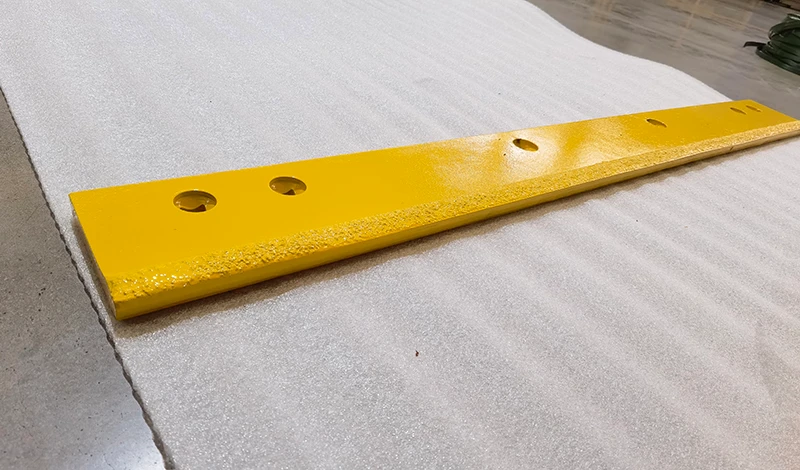
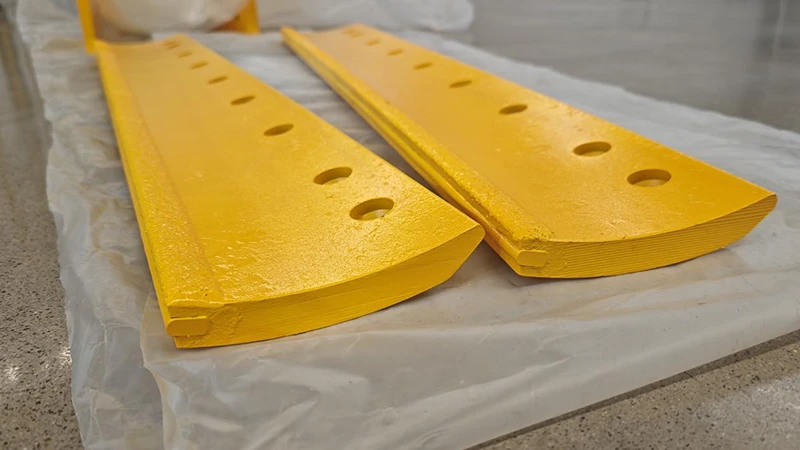
Choosing a Carbide Blade Profile for Your Fleet
How to choose a carbide blade profile: edge geometry, thickness, insert grade, AASHTO or DIN bolt patterns and the fitment evidence to request with a quote.
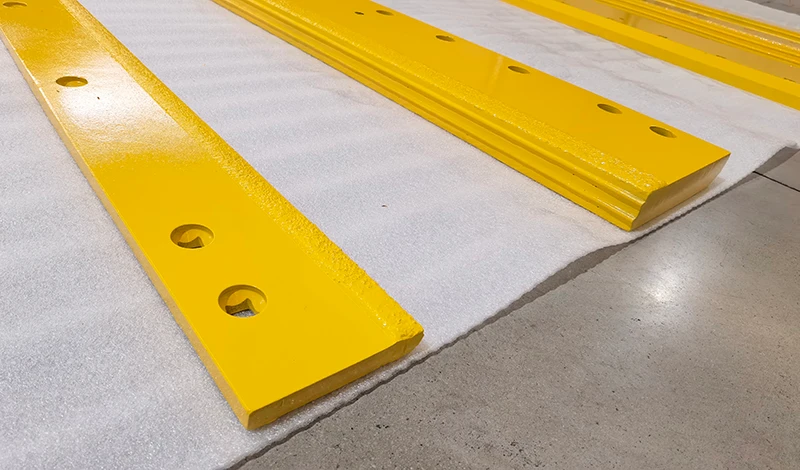
Halfway through a season, a fleet manager is usually holding two quotes for cutting edges that look identical on paper: same length, similar price, both described as carbide. The difference sits in the profile, and it only becomes visible on the first hard-packed residential street, when one truck is still scraping clean and another is riding on its shoes. Profile selection is a specification decision, and it is cheaper to make it before the order than after the first return.
Which Carbide Blade Profile Specifications Actually Decide Performance
Five specification points decide blade profile performance.
Edge thickness, edge angle, insert geometry and spacing, carbide grade, and the bolt pattern to your moldboard carry most of the difference; two of the five are fitment constraints.
Start with the carrier. Plow class, moldboard width, down-pressure and the mounting hardware set the envelope a profile has to fit inside, so profile selection starts with the equipment rather than the catalogue. This is the sequence the specification walkthrough follows, and it explains why two fleets on similar roads can justify different profiles: one runs a light-duty front plow, the other an underbody blade carrying far more down-pressure.
The second question is what the profile has to survive. Abrasive, dry, wind-packed snow behaves differently from wet snow over an unsealed surface, and both differ from the polished, refrozen surface a packed-ice programme targets. A profile chosen for one is not automatically right for the others. The evidence to base the choice on is the fleet’s own record: road class, average plow speed, and how often operators raise the blade on the same route. Where a fleet runs a genuine mix of surfaces, the profile comparison in the blade selection guide is a faster route to a shortlist than a single universal answer.
How Profile Variables Interact in Service
Edge angle sets the trade between wear life and bite.
A steeper angle protects the carbide but scrapes less aggressively; a thinner profile bites harder and wears faster, so surface type and down-pressure set the balance.
These variables do not move independently. Increasing edge thickness without revisiting the angle tends to lift the effective contact point, which reduces scraping contact and encourages the operator to add down-pressure to compensate. That extra down-pressure accelerates wear on the trip mechanism and moldboard shoes. On a grader or underbody blade, that compensation is not available, so the profile has to be right the first time.
Insert spacing is the third interacting variable. Closer spacing concentrates carbide where the edge meets the road and can extend the interval between rotations, but it raises the cost per metre of edge and adds mass at the leading edge. The practical way to compare options is to hold carrier and surface mix constant and vary one variable at a time.
| Variable | What it changes on the road | Where it suits |
|---|---|---|
| Edge thickness | Wear reserve and blade mass; heavier profiles resist loss but spread down-pressure over more area | Long routes on abrasive, wind-packed snow where the edge must hold a line for a full season |
| Edge angle | How aggressively the edge bites against how well it shields the carbide behind it | Steeper angles on highways and refrozen surfaces; sharper angles on unsealed, irregular residential streets |
| Insert geometry | Contact footprint and the shape of the wear pattern that develops | Trapezoid inserts for directional scraping on hard-packed surfaces; bullnose inserts where the edge works across irregular ground |
| Grade and grain size | Hardness-to-toughness balance, which sets how the material answers shock and embedded debris | Fine micro-grain grades for impact-heavy routes; harder grades for abrasive surfaces |
| Bolt pattern | Whether the profile can be mounted at all, and how load is distributed through the edge | AASHTO or DIN patterns matched to the moldboard and the fleet’s existing hardware |
A supplier that quotes a profile without asking about road class, carrier and average speed is quoting a product, not a specification.
Grade, Geometry and Material Choices Behind Each Profile
Once the profile family is fixed, the remaining choices are metallurgical. Cemented tungsten carbide is a composite of hard carbide particles held in a metal binder, and the ratio between the two sets the hardness and toughness balance the finished edge will show in service. SENTHAI engineers that balance for specific conditions using hardness on the HRA scale together with carbide grain size, and produces that material in-house rather than buying finished inserts in. The practical consequence for a buyer is that grade can be matched to a route, and the match is documented rather than implied.
The production route behind a profile matters more than most specifications admit. SENTHAI manufactures in Rayong, Thailand, in a US-invested plant using non-China raw materials, with the full chain under one roof: wet grinding, robotic pressing at up to 500 tons, vacuum and low-pressure sintering, automated high-temperature induction brazing, vulcanization and finishing. Keeping brazing in-house allows the bond between carbide and steel body to be controlled and inspected as a process step rather than accepted as a supplier input, and 21+ years of tungsten carbide wear parts production sit behind that sequence.
For a procurement decision, the useful question is not which grade sounds hardest but which grade has been matched to the conditions the fleet actually runs. A route with embedded debris, manhole edges and rail crossings punishes excessive hardness differently from a long, smooth highway route, and the wear pattern that develops shows which way the grade should move. SENTHAI’s carbide snow plow blade range is organised so profile and grade are reviewed together against a route description.
Fitment and Tolerance Requirements for a Carbide Blade Profile
No profile performs well if the bolt pattern is wrong. Fitment is specified in two parts: the pattern and the dimensional tolerance held at the mounting holes and cutting edge. AASHTO and DIN patterns are the common conventions for cutting edges, and AASHTO published standards remain the reference point for agencies writing around them, while DIN serves the same purpose in European and export specifications.
Tolerances decide whether an edge sits flat against the moldboard or is pulled into position by the bolts. SENTHAI works to plus or minus 0.02 mm dimensional tolerances on carbide components and validates fitment against AASHTO and DIN bolt patterns before a profile is released. For a fleet, the test is practical: an edge that needs impact tools or a pry bar to seat, or that leaves a visible gap at the centre of the moldboard, was not made to the tolerance the drawing called for.
Before ordering, measure the edge being replaced rather than the equipment manual. Mounting hole diameter, centre-to-centre spacing, the distance from the top edge to the first hole row, and the overall installed length all need recording. Where an OEM mounting interface is involved, SAE standards for mobile machinery document the interface the equipment was designed around.
Quality Evidence to Request With a Carbide Blade Quote
A profile specification is only as strong as the documentation attached to it. Ask for evidence at quote stage rather than at claim stage, because a supplier that cannot produce records before the order rarely produces them afterwards:
- Lot-level traceability linking the consignment to its production batch, including carbide grade and raw material source.
- Batch inspection results at the mounting holes and cutting edge, rather than a general pass statement.
- A description of the brazing process and how bond integrity is checked, since brazing is the joint that holds inserts under shock loading.
- Hardness and grain-size data for the grade offered, referenced to a recognised method such as those published by ASTM.
- Fitment verification against the pattern you supplied, stated back to you in writing.
SENTHAI inspects and archives every batch, which makes this request routine rather than a special project; the quality control and traceability page sets out what a batch record contains. The International Tungsten Industry Association also publishes background on tungsten and cemented carbide applications that helps a non-specialist read a grade sheet critically.
Common Carbide Blade Profile Specification Errors and Their Cost
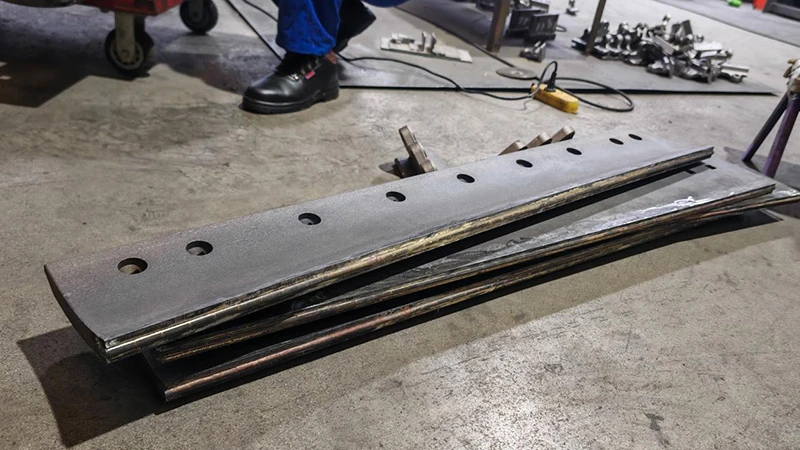
Most profile mistakes are specification mistakes rather than manufacturing faults, and they surface in the same three places: premature wear, hardware damage, or a return. Specifying by catalogue name alone is the most common. A profile described only as heavy-duty, or by an internal part number, carries no information about edge angle, insert spacing or grade, so the next order can legitimately arrive different from the last and nobody can prove it was wrong.
Copying another fleet’s specification has a similar cost. A profile that works on a long highway route with heavy carriers can be a poor match for a residential fleet running lighter trucks and raising the blade frequently. Pasting a competitor’s part number into a tender is worse: the number references someone else’s drawing, so the specification no longer states what the fleet needs.
Two further errors carry direct repair costs. Ignoring carrier class means the profile may be too light for the down-pressure applied, which shows up as rapid loss at the leading edge and, in some cases, damage to the mounting hardware. Ignoring surface mix means the grade is matched to the wrong wear mechanism: a grade selected for abrasive dry snow behaves differently on the polished, refrozen surfaces a packed-ice programme targets. Each error is paid for in mid-season replacements and mismatched edges across trucks.
Writing the Profile Requirement Into a Tender
A tender should describe the profile by measurable attributes so comparable offers can be compared on the same basis. State the profile family and its application, then the dimensional envelope: overall length and width, thickness at the cutting edge, and edge angle. Add insert type and spacing, the carbide grade requirement or the basis for accepting an equivalent grade, and the mounting pattern with its reference standard.
Fitment belongs alongside tolerance. Give hole diameter, centre spacing and the tolerance you will accept at the mounting holes and edge, and require the supplier to confirm the pattern in writing before production. Where a fleet operates across several plow makes, list them with the pattern each one uses so the tender is priced against the real requirement rather than one reference blade.
Finally, specify the documentation that must accompany delivery: batch traceability, dimensional inspection results, grade data and the fitment confirmation. Agencies procuring under a published specification can reference the relevant AASHTO standards and require a declaration of conformity, and where the programme runs on public roads in winter conditions, the operating context published by the Federal Highway Administration is useful background for a performance clause. A tender written this way does not favour one supplier; it makes every offer comparable on the same five points.
Profile selection reduces to five levers: edge thickness, edge angle, insert geometry and spacing, carbide grade, and bolt pattern. Fitment fixes the outer boundary of what you can buy; the other three are where a fleet buys performance or buys a repeat visit.
The decision holds up over a season when the specification states measurable attributes, the grade is matched to a described route rather than a preference, and the supplier documents fitment and batch inspection before shipment. Send the route description and the measured mounting pattern together and ask for a recommendation against both.
Send SENTHAI the road class, carrier and measured bolt pattern for the edge you are replacing, and the technical team will review profile, grade and fitment against your route.
Frequently Asked Questions
Can one carbide blade profile cover a mixed fleet?
Often it can, provided the profile is specified against the most demanding combination in the fleet rather than the most common one. Where trucks differ in class, moldboard width or mounting pattern, a single profile usually means compromising on at least one vehicle. A practical approach is to group trucks by pattern and down-pressure, specify one profile per group, and require written fitment confirmation for each group before production begins.
What information does a supplier need before recommending a carbide blade profile?
Five inputs are enough to start: the plow make and model, the measured bolt pattern including hole diameter and centre spacing, the road classes the fleet runs, the surface mix from bare asphalt to unsealed gravel, and the average plowing speed. Photographs of the current edge and its wear pattern help as well. With those details a supplier can propose a profile and grade against your operating conditions instead of a catalogue default.
How long should a carbide blade profile last compared with a steel edge?
Service life depends on the wear mechanism the edge meets, so a figure quoted without a route description is not comparable. Abrasive dry snow, wet snow over unsealed surfaces and polished ice remove material at different rates, and operator technique changes the outcome again. Ask prospective suppliers for wear data tied to comparable road classes and surface mixes rather than one headline number, then track your own replacement intervals once a profile is in service.
Does a different profile require different mounting hardware?
Usually yes, or at least a check. Profiles differ in thickness and in the position of the mounting holes, so bolt length, washer type and torque values can change even where the pattern itself is identical. Confirm the hardware set and the torque specification with the supplier at order stage. Reusing hardware from a thinner edge is a common cause of loosening in the first weeks of a season.