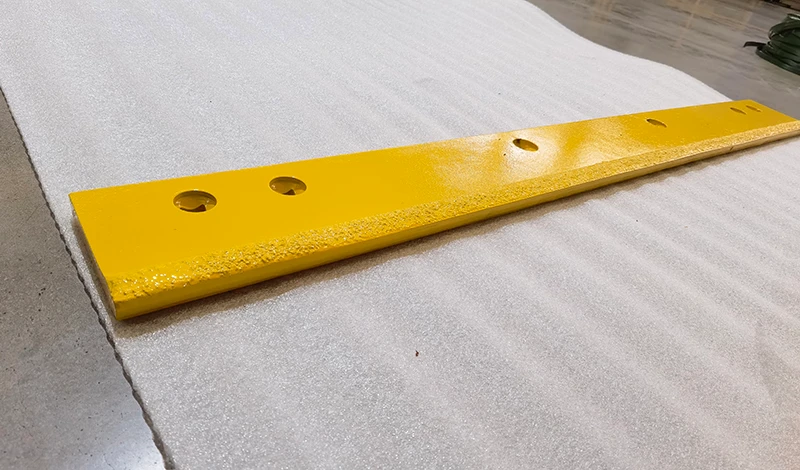
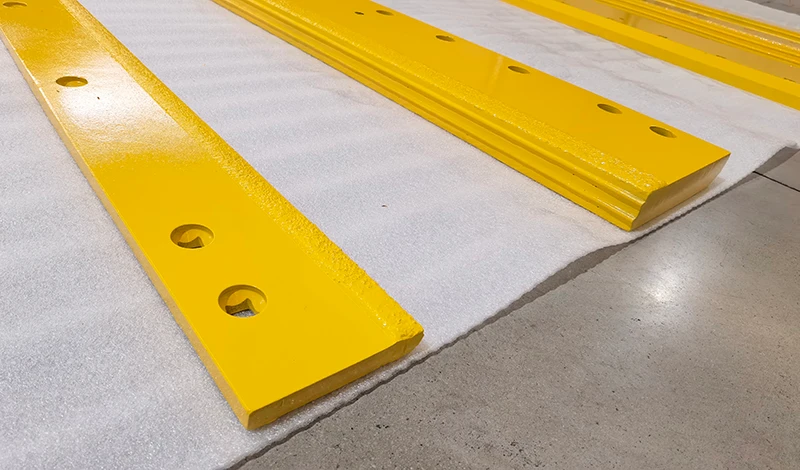
Carbide Blade Thickness and Wear Life
How carbide blade thickness sets wear reserve, why thicker edges change scraping behaviour, and the fitment and documentation checks to run before ordering.
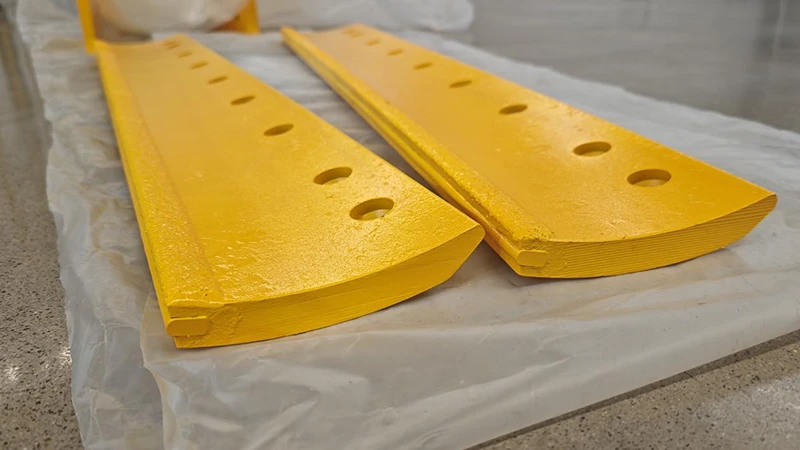
When edges come back to the shop at the first rotation check, the useful measurement is not how much the blade has worn but how much material is left. Carbide blade thickness is the reserve a fleet buys against an unpredictable winter, and it is the one dimension that decides how many rotations an edge can absorb before it has to come off. Buying more reserve than the route needs ties up budget in steel and carbide; buying too little puts a replacement in the middle of a storm cycle.
Which Carbide Blade Thickness Specifications Decide Wear Life
Thickness sets wear reserve; edge angle sets contact.
The thickness dimension on the drawing fixes how much carbide-backed material is available before the edge reaches its wear limit, while the edge angle and carbide grade decide how quickly that material is consumed in service.
A thickness figure on its own says very little, because wear life is a ratio between available material and the rate at which the road removes it. Two edges of the same thickness running different routes will not retire at the same time. Abrasive dry snow on a long highway route removes material at a different rate from wet snow pushed over unsealed gravel, and the same edge used by two operators on the same route can differ again depending on how often the blade is raised and how much down-pressure is applied.
That is why the specification matters more than the number. What a buyer should pin down is the thickness at the cutting edge as drawn, the tolerance held on that dimension, the edge angle it is paired with, and the grade of carbide behind it. Those four values together describe the wear reserve the fleet is buying. The specification walkthrough covers how they are recorded in practice, and SENTHAI’s carbide snow plow blade range is quoted against all four rather than by a single dimensional figure.
How Carbide Blade Thickness Interacts With Service Conditions
Thicker edges need more down-pressure to scrape.
A thicker edge spreads the same down-pressure over a larger contact area, which can reduce scraping contact and push operators to compensate with extra weight or speed, accelerating wear on the edge and on the trip mechanism.
The interaction is mechanical rather than theoretical. Contact pressure is a function of the load applied and the area carrying it, so adding thickness without adjusting the edge angle changes where the blade actually meets the road. On a front plow with limited available weight, the operator notices the change immediately as reduced clearing on hard-packed surfaces. On an underbody blade or grader, the carrier usually has more mass to work with, which is one reason heavier profiles appear more often in those applications.
Surface type changes the rate at which the reserve is consumed. Abrasive, wind-packed snow removes material steadily; wet snow over unsealed surfaces can do so faster, and embedded debris such as rail crossings, manhole covers and broken pavement produces shock loads that damage a thin edge disproportionately. Where a fleet rotates edges between trucks, those differences travel with the blade, which is why the wear pattern on a returned edge is more informative than the calendar.
| Operating condition | What it demands | Consequence of getting it wrong |
|---|---|---|
| Long highway routes, dry abrasive snow | Enough reserve to hold a clean wear line across a full rotation cycle | Edge retires between rotation checks and is replaced mid-season at short notice |
| Residential streets, frequent blade raising | Thickness matched to lighter carriers so contact pressure is preserved | Reduced clearing on hard-packed surfaces and a tendency to add compensating down-pressure |
| Unsealed surfaces and gravel shoulders | More reserve plus a grade that tolerates impact | Chipping and uneven loss at the leading edge rather than even wear |
| Routes with embedded debris | Thickness paired with a toughness-oriented grade | Shock damage that cannot be rotated out of service |
| Packed, refrozen ice programmes | Weight at the leading edge as part of a deliberate profile choice | A standard edge that rides over the surface instead of cutting into it |
Grade, Geometry and Material Choices at the Cutting Edge
Thickness is only useful if the material behind it survives the same conditions. Cemented tungsten carbide combines hard carbide particles with a metal binder, and the ratio between them sets how the material behaves under shock and abrasion. SENTHAI engineers that balance against specific service conditions using hardness on the HRA scale together with carbide grain size, so an edge specified for a long abrasive route and one specified for impact-heavy work are not the same material simply cut to different dimensions.
The reason the production route matters is that thickness and bond quality interact at the joint. A thicker section carries more load into the braze line, so the bond between carbide and steel body has to be controlled as a process rather than inspected as an outcome. SENTHAI brazes with automated high-temperature induction equipment in Rayong, Thailand, in a US-invested plant using non-China raw materials, with the full chain in-house from wet grinding and robotic pressing at up to 500 tons through vacuum and low-pressure sintering to vulcanization and finishing.
For a buyer, the practical question is whether the thickness quoted has been matched to the route or simply selected from what is in stock. A blade that is thicker than the application requires costs more per metre of edge and can reduce scraping contact; one that is thinner than the application requires returns early. Either way, the failure is a specification failure, and it is visible in the wear pattern rather than in the invoice.
A related question is how wear life can be anticipated rather than discovered. The material on telematics and blade wear life covers how operating data can be used to plan a replacement interval, which complements the physical measurements described here rather than replacing them.
Fitment and Tolerance Requirements for Thicker Edges
A thicker edge puts new demands on the mounting interface. Bolt length, washer type and the condition of the moldboard holes all need checking when moving to a heavier profile, because longer bolts under the same torque have a different stretch characteristic and worn holes lose preload faster on a heavier section. The pattern itself does not change: AASHTO and DIN conventions still apply, and AASHTO published standards remain the reference for agencies writing around them, with DIN covering the equivalent European and export specifications.
Tolerance is where thickness changes become visible before the season starts. SENTHAI works to plus or minus 0.02 mm dimensional tolerances on carbide components and validates fitment against AASHTO and DIN bolt patterns before release, which is the difference between an edge that seats against the moldboard and one that is drawn into position by the fasteners. An edge that will not seat flat concentrates load at a few holes and loosens earlier, regardless of how much material it carries.
Check the interface before ordering: hole diameter, pattern spacing, the flatness of the moldboard’s mounting face, and whether the current hardware set is rated for the additional mass. Where an OEM mounting interface is involved, the equipment documentation is the authority, and SAE standards for mobile machinery describe the interfaces those designs were built around.
Quality Evidence That Supports a Thickness Claim
Thickness is easy to claim and easy to verify, which makes it a useful test of a supplier’s documentation. Ask for the dimensional inspection results for the shipment, recorded at the cutting edge and at the mounting holes, rather than a general statement of conformity. SENTHAI inspects and archives every batch, so this is a routine request; the quality control and traceability page describes what a batch record contains.
Three further items belong with it. Lot-level traceability should link the delivered edge to its production batch, including the carbide grade used. Grade data should state hardness and grain size with reference to a recognised test method such as those published by ASTM. And the brazing process should be described well enough that a buyer can see how bond integrity is controlled, since brazing is the joint that carries load from a thicker section into the blade body. Background on how tungsten and cemented carbide are applied to wear parts is available from the International Tungsten Industry Association.
Common Blade Thickness Errors and What They Cost
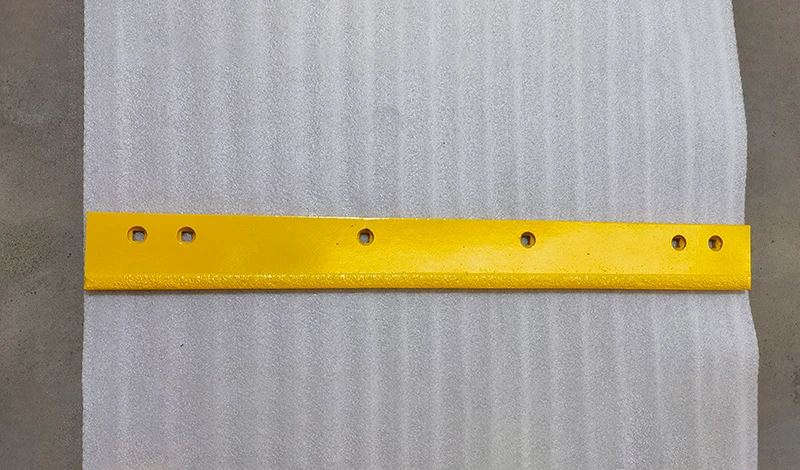
The most frequent mistake is specifying thickness without specifying the pair it belongs to. Thickness and edge angle work together, so an order that states one and leaves the other to the supplier’s discretion will produce an edge that behaves differently from the last one even when the thickness matches. Fleets notice this as inconsistent clearing between trucks rather than as an obvious fault.
The second mistake is buying reserve for the worst case across the whole fleet. A single heavy profile applied to light carriers spreads down-pressure too thinly and can reduce clearing performance on the surfaces those trucks work, which pushes operators toward compensating behaviour that damages the equipment. Grouping trucks by carrier class and specifying thickness per group usually costs less and performs better than one profile for everything.
The third is treating thickness as a wear-rate guarantee. It is a reserve, not a rate. A fleet that doubles reserve without changing grade or edge angle may find the edge lasts longer but clears less well at the end of the interval, when the effective leading edge has changed shape. The last common error is skipping the hardware check: moving to a thicker edge with the existing bolts and the existing torque value is a reliable way to produce loosening in the first weeks of a season, along with the workshop time to re-torque the fleet.
Writing Blade Thickness Into a Tender Document
A tender should state thickness as a controlled dimension with its tolerance, not as a descriptive word. Give the thickness at the cutting edge, the tolerance you will accept, the edge angle it is paired with, and the material or grade requirement with the basis for accepting an equivalent. Add the mounting pattern and its reference standard, the hole diameter and centre spacing, and the documentation that must accompany delivery.
Where the fleet runs mixed equipment, list the truck groups and the thickness specified for each, so suppliers price the requirement rather than a reference blade. Where an agency procures under a published standard, referencing the relevant AASHTO standards and requiring a declaration of conformity keeps offers comparable on the same dimension. For programmes operating on public roads in winter conditions, the operating context published by the Federal Highway Administration is useful background for a performance clause tied to road class.
Leave one clause for the interface: require the supplier to confirm in writing that the specified thickness is compatible with the mounting pattern and that the hardware set supplied is rated for the additional mass. That single line removes the most common cause of returns on a heavier edge.
Carbide blade thickness is a reserve, and its value depends entirely on the angle, grade and route it is paired with. Specified alone, it predicts very little; specified with its tolerance, its edge angle and its mounting pattern, it becomes a dimension a fleet can hold a supplier to.
The checks that make it work are practical: match thickness to carrier class rather than to the worst case in the fleet, verify the mounting interface and hardware before ordering, and require dimensional inspection results with each shipment. Rotating edges on the fleet’s own wear data, rather than on a calendar, is what converts the reserve into a full season of service.
Send SENTHAI your carrier classes, road surfaces and current edge dimensions, and the technical team will review the thickness, angle and fitment combination for each truck group.
Frequently Asked Questions
Does a thicker carbide edge always last longer?
Not automatically. Thickness adds reserve, but wear rate is set by the surface, the grading of the carbide and the way the edge is run. An edge that is too thick for a light carrier can also reduce scraping contact, so operators compensate with extra down-pressure, which removes material faster and stresses the trip mechanism. Match thickness to carrier class and route, then judge the result from the wear pattern on returned edges.
How do I measure remaining blade thickness in the yard?
Measure at fixed reference points along the cutting edge rather than at the point of deepest wear, and record the same points each time so the readings are comparable. Note the position as well as the depth: loss concentrated at the ends indicates a carrier or alignment issue, while even loss across the full width points to abrasion. Keeping the readings with the blade’s rotation history is what turns a measurement into a replacement decision.
Can a thicker edge be fitted to the same moldboard and hardware?
The bolt pattern can usually stay the same, but the hardware often has to change. A thicker section needs longer bolts, and under the same torque value a longer bolt has a different stretch characteristic, so preload holds differently. Check bolt length, washer type, the torque specification and the condition of the holes in the moldboard. Confirm compatibility in writing with the supplier before the order is placed.
Is thickness or carbide grade the bigger factor in wear life?
They answer different failure modes. Thickness buys time against gradual abrasion; grade decides how the material responds to shock, chipping and embedded debris. A route that destroys edges through impact will not be fixed by adding reserve, and a route that wears edges evenly will not be fixed by a tougher grade alone. Specify both against a described route, and treat the returned edge’s wear pattern as the deciding evidence.