




Wear concentrated at one end, in the middle, or on the leading face means three different things — and only one of them is solved by a new blade.
One end wearing faster usually means the blade is not sitting level, the carrier is distorted, or the machine applies more pressure on one side. Replacing the edge without correcting it reproduces the same pattern in the same number of hours.
Face wear means the blade is running at too shallow an angle and dragging rather than cutting, or that abrasives are being carried under the edge. Both change the specification rather than the maintenance schedule.
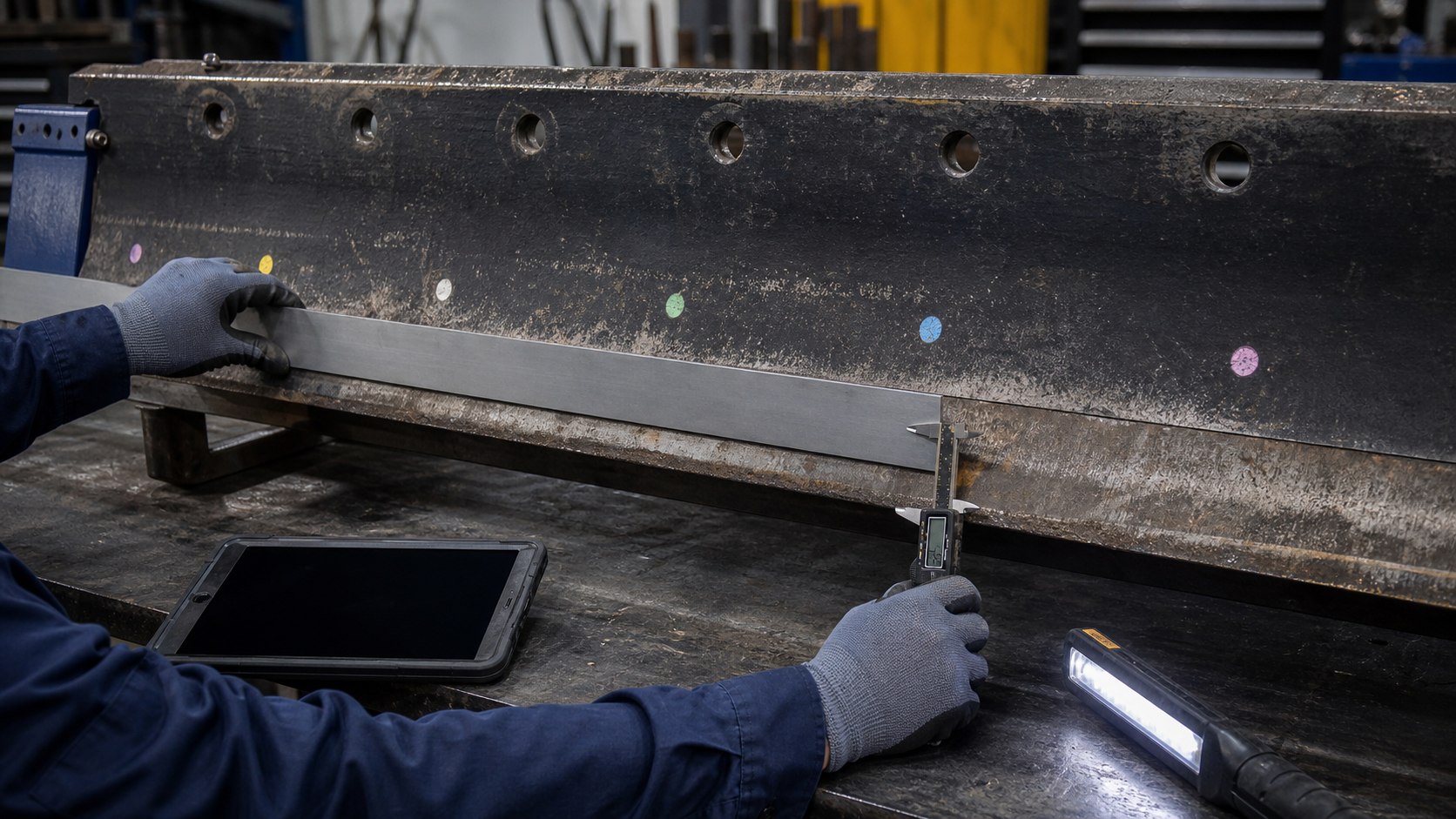
Three marked points, one gauge, every service. The trend matters more than any single reading.
Edge thickness at each marked point, the hours or lane-kilometres since the last measurement, and any note about the surface. That is enough to calculate a wear rate per operating hour and to forecast the change date instead of reacting to it.
Look for cracks starting from the carbide, bolts that have started to fret, and skid shoes that have worn past their adjustment. Those three find most problems that a thickness reading will not, and they take seconds.
Measure thickness at the same marked points every time, record the operating hours since the last reading, and compare the trend rather than the absolute number.
When the edge stops clearing the surface. That is the operational limit, and it is more useful to crews than a millimetre figure with no context.
Usually a crown or dish in the road combined with insufficient blade length or rigidity. The middle takes the load while the ends lose contact, so the fix is width or flexibility rather than material.
Yes, from the road side at the marked points. Removing the edge for inspection is only necessary when you are checking the carrier or the fasteners.
Impact damage from obstacles rather than wear. It points at edge material or sectioning, and it will recur until the shock path through the mounting is addressed.
What actually decides how long an edge lasts.
Pre-season and in-season inspection routines.
Turning a measurement into a replacement programme.
Photograph the worn edge and tell us the hours it took. We will tell you what the pattern points to.
✓ Photograph of the worn edge
✓ Hours or lane-kilometres on the edge
✓ Machine, plow and mounting details
✓ Surface type and route class
Email: [email protected]