




Measuring Blade Wear and Setting Changeout Thresholds
Thresholds beat guesses. A fleet that replaces blades on a measured number knows what its edges cost and when they fail; one that replaces on "it looks worn" is guessing, and the guess is…
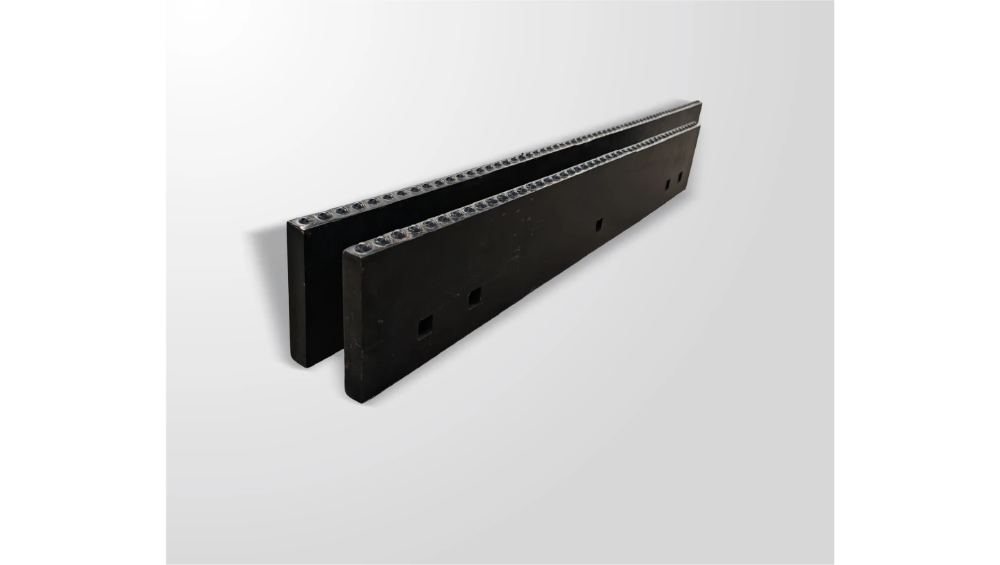
Thresholds beat guesses. A fleet that replaces blades on a measured number knows what its edges cost and when they fail; one that replaces on “it looks worn” is guessing, and the guess is wrong in both directions: blades changed too early waste money, and blades changed too late damage the equipment and the service. The measurement is the fix, and it is a fix that SENTHAI’s blade line supports with the product reference and the engineering guidance.
This article covers measuring blade wear and setting changeout thresholds: the tools and measurement points, setting thresholds for the fleet’s routes, recording the wear, and adjusting the thresholds with the field data.
Thresholds beat guesses
The changeout decision is a cost decision, and the cost is only manageable with a number. The threshold defines the point where the blade’s remaining life is not worth the risk: the edge is too worn to clear properly, and the continued use damages the moldboard or the service.
The measurement converts the maintenance judgment into a standard:
- The same tool, the same points, and the same thresholds across the fleet;
- A record that shows the trend and the cost;
- A decision that the crew can apply without debating.
The threshold is the fleet’s own number, set from its own routes and refined with its own data. The article that follows is the method for finding it.
What tools and measurement points do you need?
The tools are simple, and the points are defined:
| Tool | What it measures |
|---|---|
| Caliper | Thickness measurements at the defined points |
| Tape measure | Length and wear-band width |
| Straightedge | Straightness and flatness checks |
| Wear gauge or manufacturer’s reference | Remaining life, where the product provides one |
| Record form | The measurement points marked and the values recorded |
The measurement points should be the same on every blade:
- The thickness at the center and the quarter points;
- The cutting edge height at the defined positions;
- The wear band width where the edge has worn;
- The corner conditions at both ends.
The fixed points are what make the measurements comparable across blades, trucks, and seasons. A fleet that measures the same points every time has a dataset; one that measures wherever the caliper lands has a sketch.
The measurement habit should also include the new blade baseline: measure each blade at receiving, record the values with the batch, and compare the changeout measurements against the baseline. The baseline is what makes the wear rate, not just the final thickness, visible, and the rate is what the threshold and the forecast are built on.
The same baseline protects the receiving check: a blade that arrives below the new-blade reference is a finding at the dock, where it costs a return, instead of at the changeout, where it costs the service.
What is the new-blade baseline for? It is the reference the wear rate is measured against. The baseline, recorded at receiving, turns the changeout thickness into a rate, and the rate is the forecast and the threshold input.
How do you set thresholds for your routes?
The threshold starts from the manufacturer’s guidance and the fleet’s own observations:
- Confirm the product’s wear reference, where the manufacturer provides one;
- Measure the new blade’s dimensions as the baseline;
- Watch the worn blades at the changeout and record the measurements that still performed;
- Set the threshold at the point where the service quality and the hardware protection are both preserved;
- Apply the same threshold across the fleet, with route adjustments where the evidence justifies them.
The threshold is a starting point, not a law: the first season’s data may show that the route wears differently than expected, and the threshold adjusts with the evidence.
The threshold should also be communicated to the crew in the same units the measurement uses. A threshold stated as a thickness, with the measurement points on the form, is a standard the crew can apply; one stated as “when it looks worn” is a guess that changes with the reader.
The same communication extends to the changeout decision: the crew should record the measurement at the changeout, so the threshold’s performance is verified with the actual data rather than assumed.
What if the blade still clears well at the threshold? That is a signal to review the threshold: the blade that clears at the threshold may justify a lower one, and the review should confirm the service quality before the change.
Recording wear across the fleet
The record is the fleet’s dataset:
- The truck, the blade type, and the batch;
- The installation date and the route group;
- The measurements at the inspection and the changeout;
- The reason for the changeout and the service events;
- The threshold decision and the remaining life estimate.
The record turns the measurement into the fleet’s own wear curve: the thickness loss per mile, the changeouts per route, and the thresholds that held. The curve is the input to the rotation plan, the stock plan, and the next specification.
The curve also feeds the cost-per-mile number: the blade cost divided by the miles at the changeout is the metric the fleet presents, and the measurement record is its evidence. The number is only as good as the measurement, which is why the fixed points matter.
The same record should be reviewed with the manufacturer at the specification stage, because the wear curve tells the supplier which configuration the routes need. The review turns the fleet’s data into the next order.
The next order, built on the curve, is the specification that matches the route, and the matched specification is the blade that lasts. The measurement, the curve, and the order are one system, and the system is the fleet’s wear management.
The wear management, reviewed each season, is the difference between a fleet that replaces blades and one that manages their lives. The measurement is the management.
And the management is the maintenance department’s core work, measured in numbers instead of impressions.
The numbers, recorded and reviewed, are the fleet’s wear management, and the management is the changeout cost’s control.
The control, applied every season, is the measurement’s reward, and the reward is the blade budget’s honesty.
The honesty, kept with the records, is the fleet’s own standard, and the standard is the maintenance routine’s point.
And the point is the measurement’s place in the routine.
How often should the wear be measured? At the weekly inspection for the heavy routes, at the changeout for every blade, and at the season’s midpoint for the review. The frequency follows the duty.
Adjusting thresholds with field data
The threshold should be reviewed, not fixed forever:
- Compare the measured wear with the service outcomes at the changeout;
- A blade changed at the threshold that still cleared well suggests a lower threshold;
- A blade that failed service before the threshold suggests a higher one;
- A route with a different wear curve may justify a route-specific threshold;
- Record the adjustment and the reason, so the change is traceable.
The adjustment is the control loop: the fleet’s data refines the fleet’s standard, and the standard improves the cost and the service. The threshold that never changes is a threshold that never learns.
Make measurements part of the routine
The measurement belongs in the weekly inspection and the changeout, with the tools staged and the form ready. The carbide snow plow blade page is the product reference, and the contact page is where the wear reference and the specification are confirmed.
Send the fleet’s measurement data and the route profile through the contact page and ask for the wear reference and the configuration recommendation. The threshold is the fleet’s own number, and the measurement is how it finds it.
Expert view — SENTHAI engineering team: “The threshold is the fleet’s own number, and the caliper is its voice. Measure the same points every time.”
Frequently Asked Questions
Why set changeout thresholds? Because the changeout is a cost decision, and a measured threshold beats a guess in both directions: too early wastes money, too late damages the equipment and the service.
What tools do I need? A caliper, a tape measure, a straightedge, a wear gauge where available, and the record form with the points marked.
What points should I measure? The thickness at the center and the quarter points, the edge height, the wear band width, and the corner conditions, at the same points every time.
How do I set the threshold? Start from the manufacturer’s reference and the new-blade baseline, watch the changeouts, and set the threshold where the service and the hardware are both protected.
How do I record the wear? Per truck, blade, and route: the dates, the measurements, the reason, and the threshold decision. The record is the fleet’s dataset.
When should I adjust the threshold? When the field data shows it is wrong: a blade that clears at the threshold suggests a lower one, and a service failure before the threshold suggests a higher one.
Does SENTHAI provide a wear reference? The product pages and the engineering team can confirm the wear reference and the configuration; the threshold itself comes from the fleet’s data.
Sources
Related articles
 Best Snow Plow Blade Family for Your Fleet: Top 5 ScenariosKnowledge
 Top 10 Snow Plow Blade Types for Winter Fleets (Ranked by Duty Fit)Knowledge
 Top 5 Best Carbide Blade Configurations for Highway PlowingKnowledge
 Best Snow Plow Blade Materials Ranked: Steel vs Carbide vs Cladding vs Rubber-CarbideKnowledge