




Top 10 Carbide Blade Features That Matter Most (Ranked by Cost Impact)
Most carbide blade buyers compare price, length, and thickness, and then hope the rest of the specification is fine. The features that actually decide cost per mile are deeper: the bond that holds the…
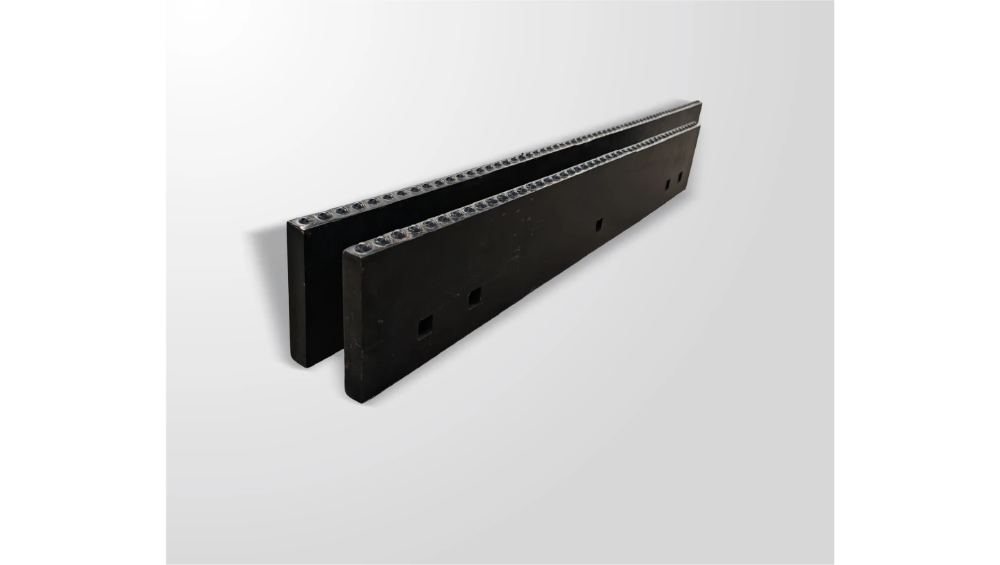
Most carbide blade buyers compare price, length, and thickness, and then hope the rest of the specification is fine. The features that actually decide cost per mile are deeper: the bond that holds the carbide, the grade that resists wear, the carrier that carries the load, and the documentation that makes the blade verifiable. After ranking ten carbide blade features by their impact on cost per mile, the verdict is clear: carbide retention and bond integrity ranks first, because every other feature is worthless if the teeth leave the blade. This ranking explains all ten features, why they are ordered this way, and how to turn the ranking into an RFQ checklist.
Features only matter when they move the cost per mile
A feature earns its rank by changing one of the three cost drivers: blade price, changeout labor, or downtime. Features that prevent premature failure move the largest cost, features that extend life move the next largest, and features that make ordering and receiving easier move the rest. The ranking below follows that logic, which is why the bond and the grade outrank the packaging and the labeling even though the latter are easier to see.
The ranking is an editorial assessment based on the construction of the blade and the manufacturer’s published descriptions. A fleet with its own changeout data should re-rank the top five against its actual failure history.
The ten features ranked by their influence on cost
The scores in the table are an editorial weighting for a representative fleet: a mixed corridor set with abrasive miles, moderate impacts, and a real winter season. The weighting is the part the buyer should adjust, because a fleet that runs only surface-sensitive residential corridors would move surface protection and the mounting up the list, while a highway fleet would push the grade and the cladding higher. The ranking is a starting frame, and the route data is the adjustment.
| Rank | Feature | What it prevents or enables | Cost impact |
|---|---|---|---|
| 1 | Carbide retention and bond integrity | Insert pop-outs and premature failure | Highest |
| 2 | Carbide grade and grain structure | Premature wear and chipping | Very high |
| 3 | Steel carrier quality | Carrier fatigue and distortion | High |
| 4 | Dimensional tolerance and hole precision | Fit problems and mounting stress | High |
| 5 | Batch traceability | Untraceable failures and disputes | Medium–High |
| 6 | Corrosion protection | Salt and brine damage | Medium |
| 7 | Mounting hardware and bolt pattern confirmation | Install errors and field rework | Medium |
| 8 | Documentation package | Receiving checks and compliance | Medium |
| 9 | Custom size availability | Retrofit gaps and one-off orders | Low–Medium |
| 10 | Packaging and labeling | Receiving mistakes and damage | Low |
Features ranked 10 through 6 are the table stakes every supplier should meet
10. Packaging and labeling. Correct labels and protected edges matter at the dock, because a damaged or mislabeled blade costs receiving time and can ship the wrong part to the wrong truck. This feature does not change the blade’s life, but it prevents avoidable friction in the supply chain.
9. Custom size availability. Standard lengths cover most fleets, but custom sizes close the gap for odd moldboards and OEM programs. The value is availability, not performance: the feature prevents the retrofit gap, not the wear.
8. Documentation package. Batch records, certificates, and inspection reports turn the blade into a verifiable product. SENTHAI states that required reports and certificates are confirmed during quotation, and the documentation is what the receiving check and the audit compare against.
The documentation is also the warranty’s foundation. When a batch fails early, the batch record establishes what the supplier agreed to deliver and what was checked at receiving; without it, the claim becomes a dispute about usage. The documentation package ranks at number eight for cost impact, but it ranks much higher for claim protection.
7. Mounting hardware and bolt pattern confirmation. A blade with the wrong hole pattern fails at installation, not on the road. SENTHAI describes its blades as manufactured with bolt holes that comply with AASHTO or DIN standards, and confirming the pattern on the drawing prevents the field drill that voids the blade’s integrity.
6. Corrosion protection. Road salt and brine attack the carrier and the bond zone. SENTHAI describes its Joma-style blades as designed to resist road brine and calcium chloride, and the sealed construction is the difference between a blade that survives the season and one that corrodes early on salted routes.
Features ranked 5 through 2 are the differentiators that separate suppliers
5. Batch traceability. Traceability connects the shipped blade to the raw material, the process, and the inspection records. SENTHAI describes its production as fully traceable from powder metallurgy through welding and vulcanization, and the batch number is what turns a warranty claim into a document check instead of a dispute.
4. Dimensional tolerance and hole precision. The blade’s dimensions and hole positions decide whether it fits the plow and wears evenly. Precision at the insert and the carrier level is what makes the blade mount cleanly and contact evenly, and SENTHAI states it can hold insert tolerances within ±0.02 mm.
3. Steel carrier quality. The carrier is half the blade: it holds the carbide, transfers the force, and absorbs the impact. SENTHAI describes its blades as built on a premium C45 steel carrier, and the carrier’s heat treatment and processing determine whether the blade stays straight under winter load.
2. Carbide grade and grain structure. The grade decides the balance between hardness and toughness, and the grain structure sets the wear and chipping behavior. SENTHAI describes its inserts as made from 100% virgin micro-grain tungsten carbide with controlled sintering, which is the material story behind long life on abrasive routes.
The No.1 feature is carbide retention and bond integrity
1. Carbide retention and bond integrity. The bond is the interface where blades survive or fail. If the teeth pop out or the bond separates, the blade loses its cutting edge regardless of the grade, the carrier, or the documentation. SENTHAI describes its brazing technology as engineered to withstand high-velocity impacts, and its blades as built with brazed carbide inserts on a premium C45 steel carrier. The verification is equally important: the surface preparation, the brazing temperature, and the acceptance criteria should be part of the supplier qualification, because retention is a process feature as much as a product feature.
Turning the ranking into an RFQ checklist makes it actionable
The ranking becomes useful when it becomes an order: put all ten features in the request for quotation, and require the supplier to confirm each one in writing. The carbide snow plow blade page documents the construction behind the top-ranked features, and the carbide inserts page covers the component-level grade and tolerance story. SENTHAI supplies the documentation and the batch records with each order, and the receiving check should verify the features that the quote confirmed.
To apply the ranking, send the RFQ, the route profile, and the failure history through the SENTHAI inquiry form and ask for a written confirmation of the features that matter for your duty.
The verification should not stop at the quotation. At receiving, check the dimensions, the hole pattern, the batch records, and the documentation package against the order, and log the results per batch. The features that are hard to see in a photo are the ones the records prove, and the receiving log is what turns the ranking into a repeatable check.
Expert view — SENTHAI engineering team: “The features that matter are the ones you cannot see in a photo. The bond, the grade, and the batch records are the blade’s real specification.”
Frequently Asked Questions
Which carbide blade feature is most important? Retention and bond integrity. A blade can have the best grade and the best carrier, but if the carbide separates, the edge is gone.
Why does the grade matter more than the price? The grade decides how long the blade holds its profile, and the life drives the cost per mile. A cheap grade that wears fast costs more in changeouts than the price difference.
What should the receiving check verify? The dimensions, the hole pattern, the batch records, and the documentation package against the order and the drawing. The features that are hard to see in a photo are the ones the records prove.
How do I verify retention before buying? Ask for the surface preparation, the brazing acceptance criteria, and the inspection method, and run a sample on the worst route with the inserts inspected after a defined number of passes.
Does cladding replace the brazed bond? No. SENTHAI describes its carbide blades as combining brazed inserts with tungsten carbide particle cladding; the bond holds the teeth and the cladding extends the wear surface.
What is the first feature to verify at receiving? The dimensions and the hole pattern, because they decide the fit, followed by the batch records and the documentation package. The retention and the grade are verified through the supplier’s process records and a field sample.
How do I weight the features for my fleet? Weight them by the failure history: the corridor that chips needs the bond and the grade first, the corridor that rounds needs the cladding and the carrier, and the fleet that audits needs the documentation. The route data is the weighting.
Sources
Related articles
 Best Snow Plow Blade Family for Your Fleet: Top 5 ScenariosKnowledge
 Top 10 Snow Plow Blade Types for Winter Fleets (Ranked by Duty Fit)Knowledge
 Top 5 Best Carbide Blade Configurations for Highway PlowingKnowledge
 Best Snow Plow Blade Materials Ranked: Steel vs Carbide vs Cladding vs Rubber-CarbideKnowledge