




Carbide Edge Storage and Handling: Protecting Material and Records
Carbide edge storage and handling guidance: racking, labelling, moisture protection and the records that keep next season's decisions evidence-based.

Most edge damage that appears at the start of a season did not happen during that season. It happened while the blade was stacked against a wall, on damp ground, with its cutting edge carrying the weight of the assembly above it. Storage and handling are maintenance activities, and they are usually the ones with no procedure and no record.
What Carbide Edge Storage Has to Protect
Storage protects three things at once.
It protects the cutting edge from mechanical damage, the steel body and joint from corrosion, and the record attached to each edge from being lost, which is what makes the next season’s rotation and specification decisions possible.
Mechanical protection is mostly about load. An assembly resting on its cutting edge concentrates force on the carbide, which is the hardest and least tolerant part of the blade. Racking or timber dunnage that supports the blade body keeps that load off the working surfaces and eliminates a class of damage that is otherwise attributed to the previous season’s service.
Corrosion protection matters because winter work exposes edges to de-icing salts and abrasive slurry, and residue left on the joint line holds moisture for months. Cleaning before storage is therefore not cosmetic: removing dried salts and grit from the mounting face and insert bases is what prevents corrosion from developing where it matters. Background on how the carbide is joined to the body, and why the joint area is the vulnerable part, is published by TWI.
Storage Failures and What They Signal on Carbide Edge Storage and Handling
Storage failures are recognisable once the fleet knows what to look for. Deformation of the flex element on a segmented blade appears when the section has been stored leaning or hanging, and it shows up as poor surface contact rather than as visible damage. Corrosion along the joint line appears as discolouration and, at the extreme, as movement in service. Damage to the cutting edge appears as chips or localised deformation on a blade that was retired with material remaining.
Record loss is the fourth failure, and it is the most expensive because it is invisible. An edge stored without its measurement and history cannot be rotated on evidence, cannot be compared with the previous season and cannot be matched to the batch record it came from. A rack of unlabelled assemblies forces re-measurement before any decision can be made, and in a busy preparation week that measurement is often skipped in favour of using whatever is closest to hand.
There is a commercial consequence as well. Where a fleet cannot say what it holds or what condition it is in, it orders spares against uncertainty rather than against consumption, and the rack grows while the seasonal shortage still occurs. A labelled inventory with measured condition is what turns the spares holding into a calculation, and it is the same record that makes an off-season purchase decision defensible.
The signals are worth recording because they point to a procedure that needs changing rather than to a single incident. Where corrosion is found on stored edges, the storage environment needs attention. Where deformation is found, the racking does. Where records are missing, the discipline of labelling at the point of storage is what has to change, and it is a ten-minute job at the end of a season rather than a project.
Inspection Points Before and After Storage
Two inspections bracket the storage period, and both are short. The pre-storage check records the final measured wear at the fixed reference points used during the season, notes any joint or mounting condition that needs attention, and confirms the edge is clean and dry. The pre-season check compares the stored edge with that record and confirms nothing has changed over the storage period.
The pair matters because it isolates storage as a variable. Where the pre-season reading differs from the pre-storage reading, the difference occurred in storage and no amount of specification analysis will explain it. Where the readings match, the condition at the start of the season is known, which is exactly the baseline a rotation and replacement plan needs.
Measurement should use the same points and the same method as the in-season routine, and the results should be recorded against the edge rather than on a sheet that will be filed elsewhere. SENTHAI inspects and archives every batch and works to plus or minus 0.02 mm dimensional tolerances on carbide components, so an edge can be compared with the drawing it was produced to if a dimensional question arises; the wider record discipline is described on the quality control and traceability page.
Conditions That Change What Storage Has to Withstand
Storage conditions vary more than most fleets assume. An unheated building with a concrete floor holds moisture against anything resting on it, and repeated condensation cycles over a winter are enough to develop corrosion on unprotected steel. An outdoor location without cover adds rain and snowmelt, and a location near a salt store or a road-salt loading area adds airborne exposure.
Humidity and temperature cycling are the two factors worth assessing. Where a storage area cycles between warm and cold, condensation forms on cold surfaces repeatedly, and the joint line and mounting face are the most vulnerable. Where humidity is consistently high, a corrosion inhibitor on exposed steel and joint edges is a cheap intervention compared with replacing an edge early.
Duration matters as well. Edges stored for a few weeks between rotations need less protection than a set held over a full off-season, and spares held for several years need periodic inspection rather than a single check. Labelling the storage date with each edge is what reveals which items have been in the rack longest and should be used first.
Handling Practices That Prevent Damage
Handling causes more edge damage than storage, and it also causes most injuries during edge work. Assemblies are heavy, awkward to grip and often sharp, and moving them without equipment tends to concentrate load on one person and one edge. Lifting equipment or a second person for positioning, and gloves sized for the task, are basic measures that pay for themselves in both damage and injury terms.
Assessment principles for load handling are published by the UK Health and Safety Executive, and general workshop requirements for hand and power tool use are set out in the OSHA occupational safety and health standards. Both are worth reviewing against the way edges are actually moved in the workshop, because the procedure on paper and the practice in the yard often differ.
Three habits reduce handling damage directly. Carry or lift assemblies by the body rather than the cutting edge. Set them down on a support rather than directly on the ground. And keep packaging or dunnage available at the point of use, so that an edge can be set down safely without improvised support. Each takes seconds and removes a category of damage that is otherwise recorded as service wear.
Where a fleet changes edges in the field rather than in a workshop, the same habits matter more, because the ground is uneven and the support is improvised. A practical arrangement is to carry a pair of timber bearers on the service vehicle, so the removed edge can be set down clear of the ground and off its cutting edge. That single item prevents both the corrosion that comes from resting on wet ground and the edge damage that follows.
Racking, Labelling and Inventory Records for Carbide Edge Storage and Handling
Racking should support the blade body, allow air movement around it and keep assemblies off the floor. Flat storage is preferable for segmented blades, because it avoids holding the flex element under load. Where vertical storage is unavoidable, the blade should rest on a support that engages the body rather than the edge.
Labelling should be permanent and legible, showing the specification or revision, the measured wear at the last check, the storage date and the truck group the edge belongs to. A tag that survives a winter and a label written on tape are not the same thing; the point is that the information should still be readable when the edge is pulled from the rack a year later.
The inventory record should mirror the labels so that the fleet can see, without walking the rack, which edges are held, what condition they are in and when they were stored. That visibility is what makes a rotation plan possible before the season, when there is still time to act on it. Material verification for stored edges, where a grade question arises, can be referenced to the test methods published by ASTM, and the material background published by the International Tungsten Industry Association helps a non-specialist interpret a grade sheet. Pattern references for dimensions and bolt spacing are published through AASHTO standards.
Season-End Preparation and Pre-Season Checks
Season-end preparation should be a scheduled task with a defined sequence: clean the edge, inspect the joint and mounting face, measure wear at the fixed points, photograph from the standard position, label with the specification and storage date, and place it on supported racking. Done as a sequence, it takes a few minutes per edge and produces everything the pre-season check will need.
The pre-season check reverses the process: read the label, compare the measurement, inspect the joint and mounting face, and decide whether the edge is issued, rotated or retired. Where the fleet holds an inventory record, the decisions can be taken before the season starts and the edges issued deliberately rather than by convenience.

Storage and handling protect the edge, the material condition and the record. Supporting the blade body, cleaning before storage, protecting against moisture and labelling each assembly are the practices that prevent damage and preserve the evidence a fleet needs.
Bracket the storage period with two short inspections and record the results against the edge. Where the readings match either side of the off-season, the start of the season is a known quantity, and rotation and replacement decisions can be made from records rather than from appearance.
Send SENTHAI your storage arrangements, edge volumes and off-season routine, and the technical team will review the handling, racking and record practices for the fleet.
Frequently Asked Questions
How should carbide cutting edges be stored between seasons?
Flat, off the ground and supported under the blade body rather than the cutting edge, in a dry location with air movement around the assemblies. Clean the edge and remove abrasive residue from the joint line and mounting face before storage, and apply a corrosion inhibitor to exposed steel where humidity is high. Label each edge with its specification, measured wear and storage date.
Does stacking edges on their cutting edge cause damage?
It concentrates load on the carbide and the joint, which are the least tolerant parts of the assembly. Damage may not be visible immediately, and it appears later as chipping, deformation or joint movement attributed to service. Racking or dunnage that supports the blade body keeps the load away from the working surfaces and prevents a category of damage altogether.
What should be recorded when an edge goes into storage?
Record the specification and revision, the measured wear at the fixed reference points, the condition of the joint and mounting face, the route group the edge ran with, and the storage date. Photograph it from the standard inspection position. That record is what allows the pre-season check to be a comparison and what makes rotation or retirement decisions possible before the season starts.
Should spares be inspected during long storage?
Yes, particularly where they are held for more than one season. A periodic check of joint condition and corrosion on stored spares costs little and prevents issuing an edge that has deteriorated in the rack. Labelling the storage date makes the oldest items visible, so they are used first rather than accumulating at the back of the rack.
Related articles
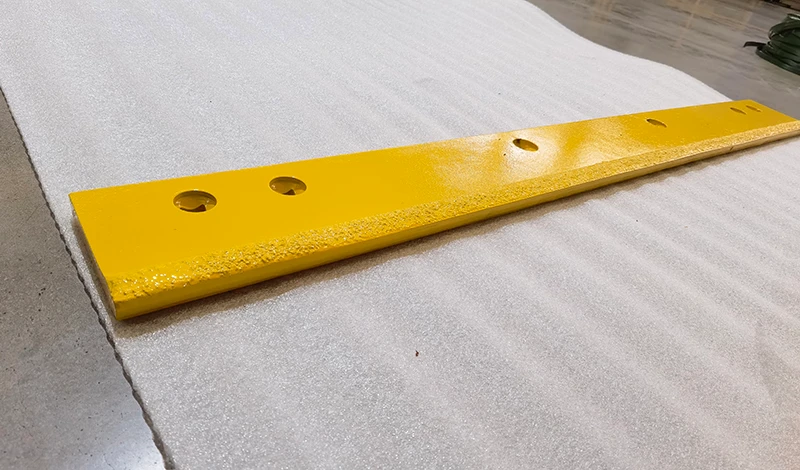 Choosing a Carbide Edge by Surface Type: Matching the Spec to the RoadCarbide snow plow blades
 Carbide Edge Reorder Continuity: Keeping the Same SpecificationCarbide snow plow blades
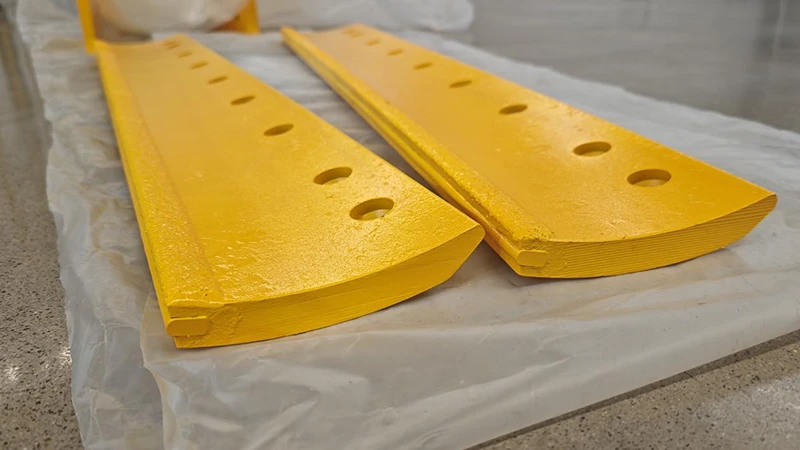 Carbide Edge Cost Model: The Inputs a Programme NeedsCarbide snow plow blades
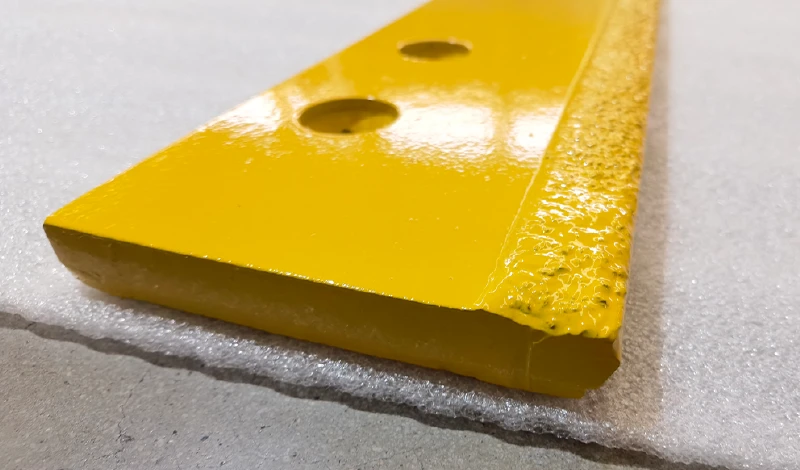 Carbide Edge Failure Analysis: Reading the EvidenceCarbide snow plow blades