




Carbide Edge Reorder Continuity: Keeping the Same Specification
Carbide edge reorder continuity explained: how to hold a specification across repeat orders, what to attach to each PO and how to plan reorder timing.

A reorder looks like the simplest purchase a fleet makes and it is the one that most often changes the product. A blade ordered nine months after the last delivery can differ in grade, tolerance or hardware requirement without anyone intending it, and the difference appears as a season that performs differently from the previous one. Continuity is a specification discipline rather than a commercial one.
What Carbide Edge Reorder Continuity Has to Deliver
It has to deliver the same edge as last time.
The reorder should reproduce the specification that was supplied, measured and accepted, with the same grade, tolerances, pattern and hardware set, so that the fleet’s performance records continue to describe the product it is buying.
That purpose has two parts. The first is technical: grade, dimensional tolerance and fitment should not drift between orders, because a drift in any of them changes the wear record without changing the fleet’s route or operating practice. The second is administrative: the fleet should be able to demonstrate which specification revision it ordered and what arrived, which is what makes a query about performance answerable.
Achieving both is mostly a matter of what is attached to the order. Where a purchase order references a specification revision and the supplier confirms production to that revision, the reorder is defined. Where it references a part name or a previous invoice, the specification is whatever the supplier decides it to be, and the fleet has delegated a technical decision to a commercial process.
How Consistent and Changing Specifications Differ in Service
Consistent specifications make records comparable.
Where each reorder reproduces the same grade and tolerance, the fleet’s wear readings describe the route and the operating practice. Where the specification drifts, the same reading can be caused by the material, the geometry or the fitment, and none of the three can be isolated.
The effects of drift appear in specific places. A change in grade shows up as a different failure mode: edges that used to wear evenly begin to chip, or edges that used to chip begin to lose height faster. A change in tolerance shows up in fitting, as edges that need to be drawn into position or that leave a gap at the centre of the moldboard. A change in hardware requirement shows up as loosening in the first weeks of service.
Each of those symptoms is manageable if it is attributed correctly and expensive if it is not. A fleet that changes a grade to solve a problem caused by tolerance, for example, spends a season on the wrong correction and then has two changes in its history rather than one. Holding the specification across reorders is what keeps the diagnosis to a single variable at a time.
There is a second benefit that appears at budgeting. Where a specification is stable across several years, the fleet can compare cost per metre between seasons and see whether a change in cost came from the routes, the price or the product. Where the specification drifts, every comparison contains an unexplained component, and the purchasing conversation returns to unit price because nothing else can be relied on.
Specification Inputs You Need Before Reordering
Five inputs should be attached to every reorder. The specification revision the edge is to be produced to, including grade properties and hardness with the test method, dimensions with tolerances, and insert type and spacing. The mounting pattern, with hole diameter and centre spacing. The hardware set, including bolt length and torque value. The documentation package required with delivery. And the quantity by vehicle group rather than as a fleet total.
Where the original specification was never written down because the first order was placed from a catalogue reference, the reorder is the point to fix that. Measure an edge from the previous delivery, record its dimensions and check the grade data on file, then use that as the baseline. SENTHAI inspects and archives every batch and works to plus or minus 0.02 mm dimensional tolerances, which makes a retrospective specification measurable rather than nominal.
One input is often omitted and worth including: the acceptance conditions. State what will cause a delivery to be rejected, such as a pattern that does not match the drawing or an edge that does not seat flat. Written into the order, it gives the receiving inspection a basis for action that does not depend on a later conversation.
Fitment, Hardware and Installation Consequences of a Reorder
A reorder should not create installation work. Where the specification is held, the hardware set remains the same and the fitting procedure transfers without change. Where any dimensional or section change occurs, the hardware requirement should be re-confirmed, because a longer fastener under the same torque value behaves differently even when the pattern is unchanged. SENTHAI validates fitment against AASHTO and DIN bolt patterns before release, with AASHTO published standards as the reference for agency specifications and DIN covering European and export conventions.
Where an OEM mounting interface is involved, the fitment check should reference the equipment documentation rather than the previous delivery alone, and SAE standards for mobile machinery describe the interfaces those designs were built around. This matters most where a fleet has changed equipment since the last order: the specification may still be correct for the fleet but wrong for one new unit, and the pattern list attached to the reorder is what reveals it.
Installation consequences are worth stating because they are the visible result of a continuity failure. Where a fleet finds that a reorder requires different fasteners, or that edges seat differently from the previous batch, the first question should be whether the specification changed rather than whether the workshop did something differently.
A practical safeguard is to keep one set of hardware identified for each specification in the stores, and to replace fasteners with the specified set when they are discarded. Where a fleet runs several revisions at once during a transition, labelling the hardware by revision prevents the mixture of bolt lengths that produces inconsistent preload and makes a continuity failure look like a workshop error.
Cost Per Metre and Replacement Logic Across Reorders
Cost per metre is only comparable across reorders when the specification is held. The model structure is set out on the cost per mile page; continuity affects three inputs directly.
| Input | When the specification is held | When it drifts |
|---|---|---|
| Purchase price | Comparable between orders and years | Price changes cannot be attributed to material or to specification |
| Measured interval | Readings describe the route, so the interval can be planned | Readings mix material and route effects |
| Fitting labour | Procedure and hardware unchanged | Hardware may need changing without notice |
| Failure handling | Batch traceability makes a query answerable | Cause cannot be isolated to one variable |
| Inventory planning | Consumption per group is predictable | Holding levels become guesses |
Replacement logic follows from the interval. Where the specification is held, the fleet knows when to reorder because it knows how fast each group consumes edges. Where the specification drifts, the interval moves without an operational reason, and the reorder point becomes a buffer against uncertainty rather than a calculation.
Documentation and Traceability With Each Reorder
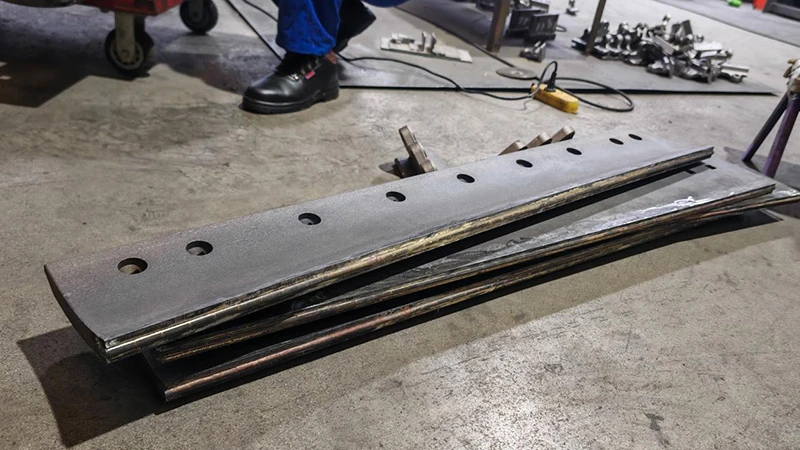
Each reorder should arrive with the same document set as the first delivery. Lot-level traceability linking the delivery to its production batch, dimensional inspection results at the mounting holes and cutting edge, grade data referenced to a test method such as those published by ASTM, and a fitment confirmation against the pattern supplied. SENTHAI inspects and archives every batch, so the record behind a reorder is a routine output rather than a special request; the quality control and traceability page describes what it contains.
Where inserts are supplied fitted to a blade, the joining process and how bond integrity is controlled should be stated as part of the same package, since brazing carries load from the insert into the body and is not visible after assembly. Where a fleet changes supplier, this documentation is the mechanism for holding continuity during the transition.
Public procurement adds its own requirements. Supplier registration for federal awards is handled through SAM.gov, and general procurement guidance is published by GSA. Where a standing offer or framework agreement is used, confirm that repeat orders under it are produced to the same revision rather than simply priced under the same contract.
Reorder Timing and Continuity Planning
Timing should follow consumption rather than a fixed date. Once a group has a measured interval and a known number of units, the reorder point becomes a calculation: consumption across the season, adjusted for the weeks when replacements cluster and for the lead time the supplier needs. Holding to that pattern keeps capital out of the rack while ensuring the busiest weeks are covered.
Two habits support continuity across the year. First, keep the specification revision in the fleet’s own record, so a reorder can be raised against it without reconstructing the details from an invoice. Second, ask the supplier to confirm in writing that the reorder will be produced to that revision, and compare the documentation that arrives against it. Where a change is proposed, record what changed and why, so the fleet’s history stays readable. The wider specification discipline behind this is covered in the guidance on specifying a carbide snow plow blade.
Reorder continuity is the practice of buying the same edge again, deliberately. It requires a written specification revision, a pattern and hardware list attached to the order, and a documentation package that arrives with each delivery.
The benefit is that wear records keep describing the fleet’s routes rather than the supplier’s variation. Where the specification is held and the intervals are measured, reordering becomes a calculation, and any change in performance can be attributed to a single variable rather than argued about.
Send SENTHAI your specification revision, pattern list and consumption records, and the technical team will confirm the reorder against the same revision and documentation package.
Frequently Asked Questions
What should be included with a carbide edge reorder?
Attach the specification revision, including grade properties, dimensions with tolerances and insert details; the mounting pattern with hole diameter and centre spacing; the hardware set with torque value; the documentation package required; and the quantity by vehicle group. Also state the acceptance conditions. A reorder raised against a part name or a previous invoice leaves the specification open to interpretation.
How can a fleet tell whether a reorder matches the previous delivery?
Compare the documentation and check a sample. Confirm the dimensions against the drawing, the grade data against the specification, the pattern against the previous measurement and the hardware set against the installation record. A receiving check of this kind takes minutes per edge and catches drift before the season, when a return is disruptive and expensive.
Is it a problem if the supplier proposes an improved material on a reorder?
Not if the change is deliberate and documented. Ask which requirement the new material changes and what evidence supports the improvement, then decide whether to accept it as a new specification revision. The risk lies in accepting an undisclosed substitution, because the fleet’s wear record then mixes two materials and cannot be used to evaluate either.
How far ahead should edge reorders be placed?
Plan against consumption and lead time rather than a calendar date. Once a group has a measured interval and a known number of units, the quantity becomes a calculation, and the order date follows from the supplier’s confirmed lead time plus a margin for the weeks when replacements cluster. Confirm both the schedule and the documentation package when the reorder is placed.
Related articles
 Carbide Edge Storage and Handling: Protecting Material and RecordsCarbide snow plow blades
 Choosing a Carbide Edge by Surface Type: Matching the Spec to the RoadCarbide snow plow blades
 Carbide Edge Cost Model: The Inputs a Programme NeedsCarbide snow plow blades
 Carbide Edge Failure Analysis: Reading the EvidenceCarbide snow plow blades