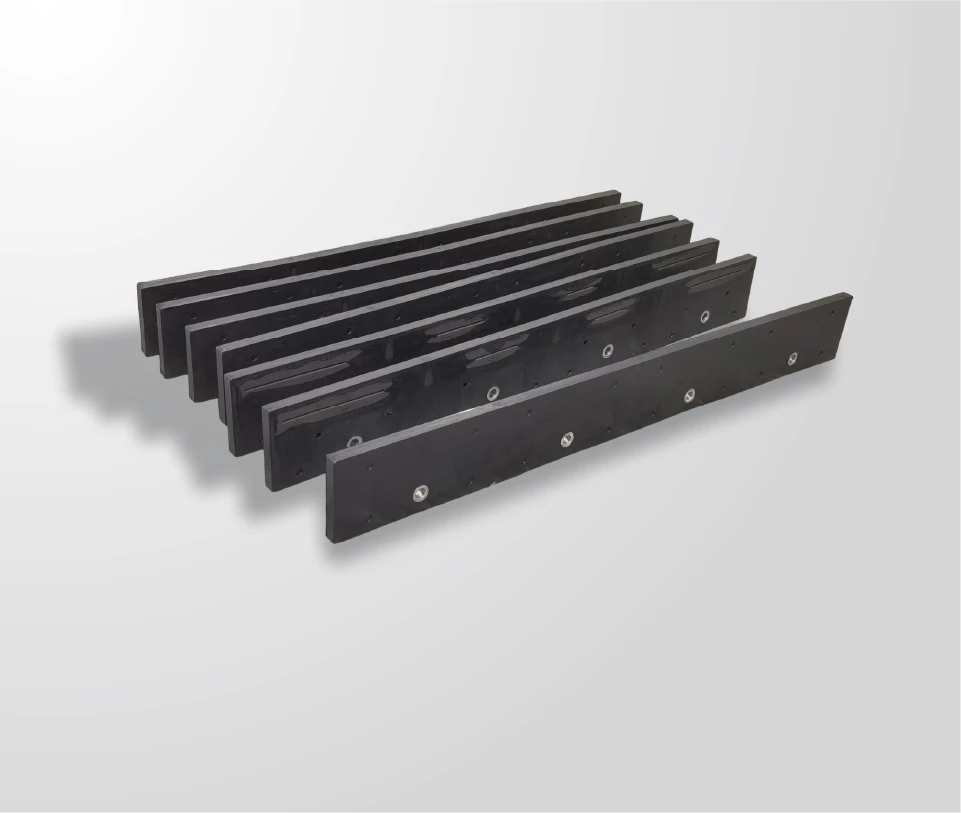
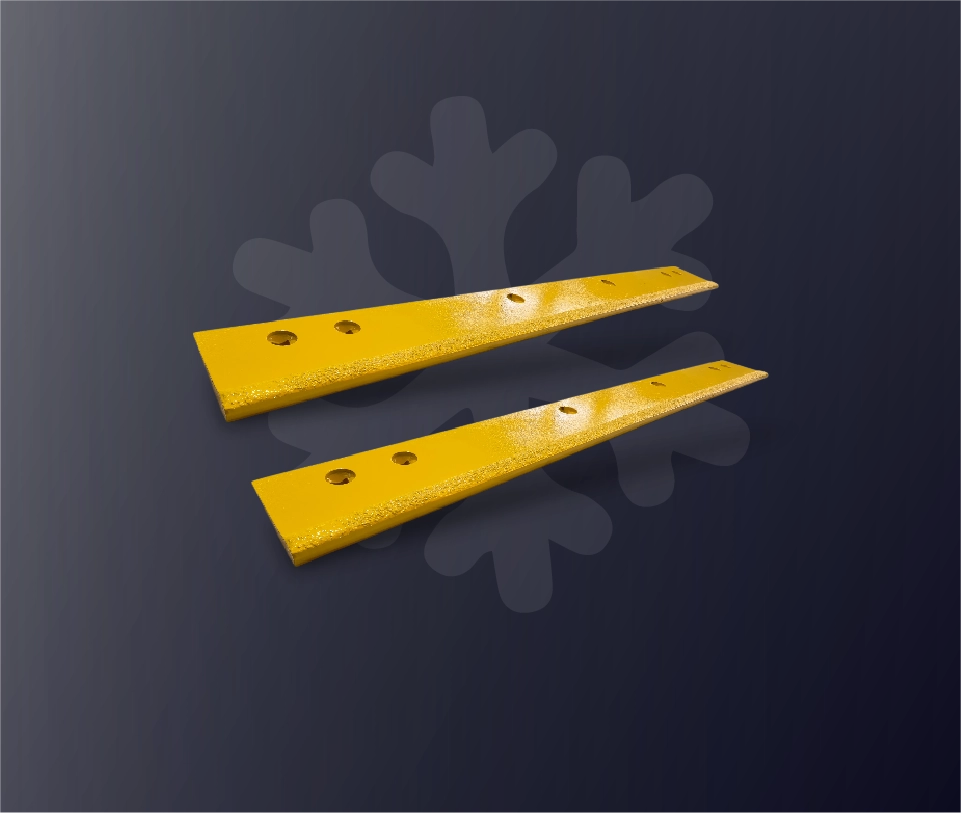
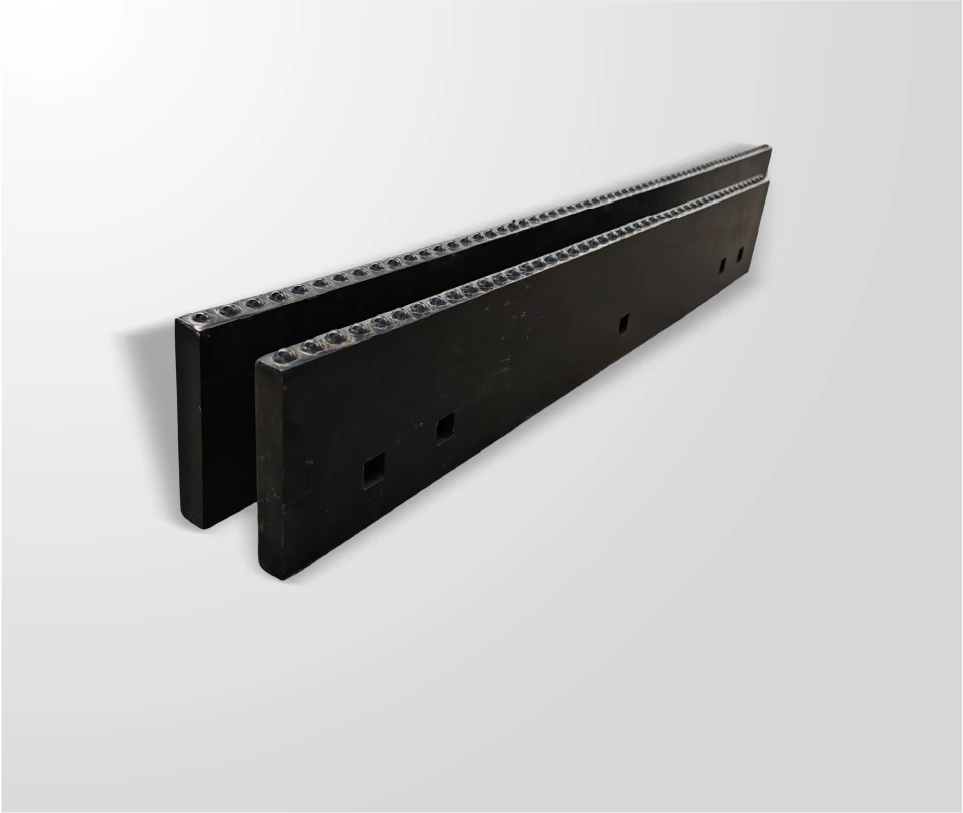
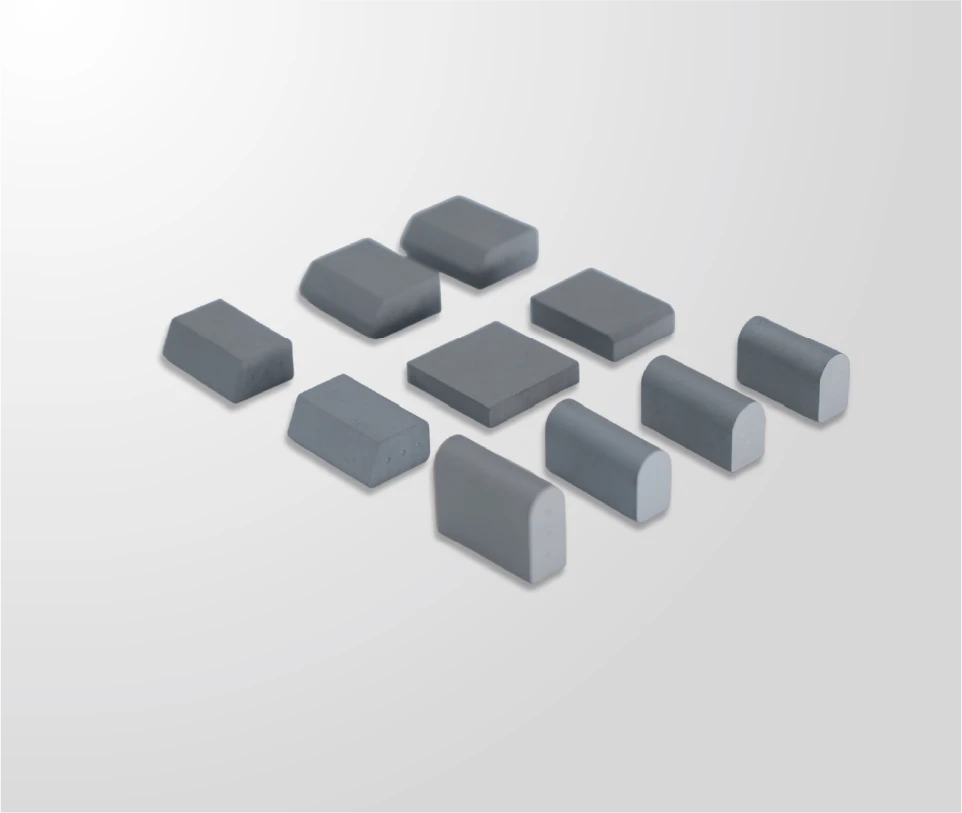

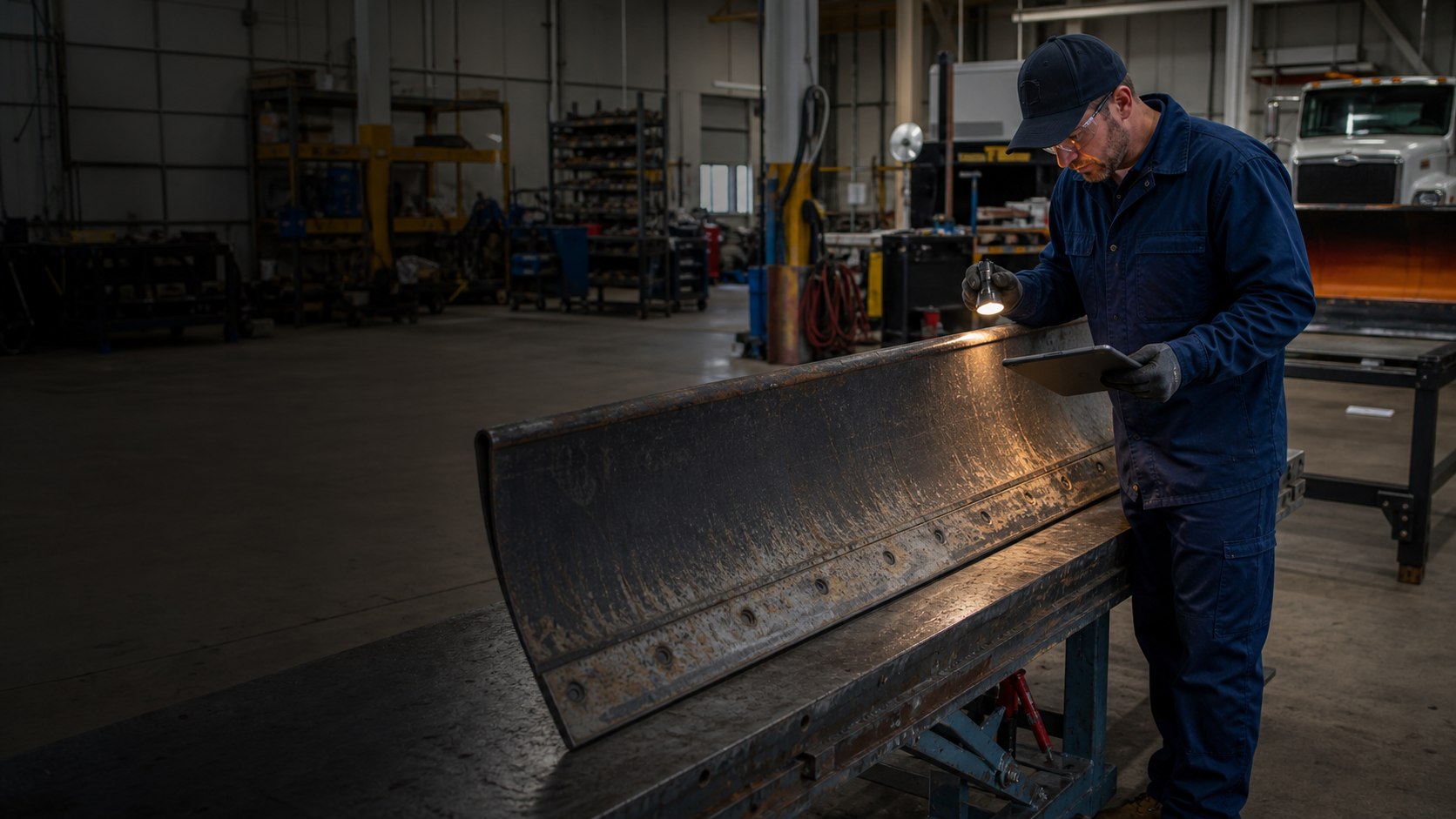
The carbide inserts wear through abrasion; the rubber body ages through UV, cold-cycling and compression set. They fail on different timelines.
Inserts wear as they would on any carbide edge. The rubber ages in ways a steel edge never does — hardening in cold, cracking under UV and taking a permanent compression set at the clamps. Inspect both, because a sound insert on perished rubber is still a failed segment.
Uneven wear across a segmented edge usually points at segment alignment or a moldboard that is not level rather than at the segments themselves. Read the pattern before ordering replacements, or the new sections will wear the same way.
Damaged or worn-out sections come off individually. The question is whether waiting for the rest of the edge to finish is cheaper than replacing early.
Rotate segments to even out wear across the edge, and replace a section when it stops clearing or when the rubber has lost its compliance. Running a hardened, set rubber body past that point damages the moldboard and the surface it works on.
Hold spares of each segment length in use, because a mixed blade with one missing section clears badly and loads its neighbours harder. Availability of individual segments is one of the practical reasons to standardise the length across the fleet.
It depends on surface and duty. The useful measure is metres of cutting edge per season, and the sections can be replaced individually so a single damaged segment does not end the blade.
It will clear badly and load the neighbouring sections harder, so no. Keep spares of each length you use and replace as soon as a section is finished.
Sometimes. Rubber that has hardened, cracked or taken a compression set reduces the compliance the design depends on, even when the inserts still have life.
Yes, if the mounting pattern allows it. Rotation evens out wear across the blade and spreads the cost of replacement over more of the edge.
A segment that has stopped clearing leaves ice behind, which means repeat passes and more de-icer. That cost usually exceeds the price of the section within a few storms.
Choosing lengths so spares stay simple.
Fitting practice that protects the flex.
The fleet-wide rotation programme.
Measuring wear so replacement is planned.
Tell us what is wearing out and how the blade is configured, and we will recommend a rotation and spare policy.
✓ Current segment lengths and configuration
✓ Wear pattern and hours
✓ Surface conditions
✓ Spares currently held
Email: [email protected]
Browse the guides assigned to this topic.