How can municipalities switch to JOMA style blades without anti-dumping risk?

Municipal highway agencies can safely transition to JOMA style snow plow blades by sourcing from a neutral, Thailand-based manufacturer with US investment, documented non-Chinese steel origin, and AASHTO-compliant bolt patterns. This preserves winter service performance, avoids anti-dumping exposure on Chinese steel parts, and fits existing plow hardware with minimal engineering change—all while enabling competitive, long-term B2B contracts for fleets and distributors.

Explore SENTHAI JOMA Style Blades Catalog

What is a JOMA style system in municipal snow plow procurement?

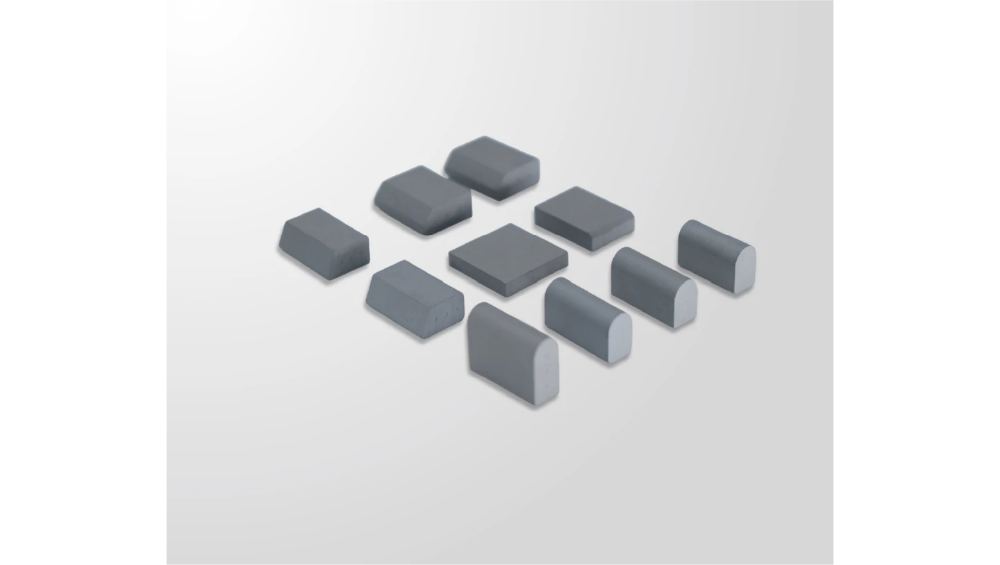
A JOMA style system is a composite snow plow blade using tungsten carbide inserts brazed into steel segments and encapsulated in a flexible rubber shell to reduce vibration, noise, and road damage in municipal winter operations. As a manufacturer-oriented solution, it allows highway departments, OEMs, and wholesalers to standardize on long-life cutting edges while keeping mounting hardware and trucks unchanged, reducing lifecycle cost per lane-mile.

Beyond the headline explanation, JOMA style blades matter to procurement because they behave like a “drop-in technology upgrade” rather than a new plow platform. The rubber–carbide composite lets fleets run higher speeds and more aggressive down-pressure with less cab fatigue, fewer broken curb stones, and better black ice fracture. For factories and OEM partners, the modular steel segment and carbide insert design simplifies inventory, repair, and custom length production.

JOMA style blade components table

ComponentFunction in municipal use
Tungsten carbide insertPrimary cutting tooth for ice and packed snow
Steel segmentStructural carrier for inserts and bolt pattern
Rubber shellVibration damping and obstacle deflection
Clamp bar & boltsInterface to existing municipal plow hardware

How are AASHTO compliant flexible plow blades defined for fleets, OEMs, and suppliers?

AASHTO compliant flexible plow blades are cutting edges engineered around standard North American bolt-hole patterns and dimensions so they fit municipal plows without re-drilling or custom brackets. For manufacturers and OEM suppliers, this means designing blade segments in 3 ft and 4 ft modules with typical 8-inch or 12-inch on-center bolt spacing, Grade 8 fastener compatibility, and clear dimensional drawings for procurement files.

From a factory-floor perspective, “compliance” is more than hole spacing. Rubber-carbide blades must maintain a consistent attack angle when flexing, so engineers tune rubber hardness, insert protrusion, and steel thickness together. SENTHAI designs JOMA style blades as structural composites that stay aligned under hydraulic down-pressure; this is what preserves scraping efficiency while satisfying municipal specifications for road marking protection and noise limits.

READ  How Do Ice Kit Wear Indicators Signal Carbide Pick Replacement?

Why are North American tariffs restricting Chinese steel wear parts and what does that mean for blade buyers?

North American tariffs and anti-dumping rules target Chinese-origin steel and aluminum to prevent price undercutting and origin circumvention through third countries, directly affecting imported road maintenance wear parts. For municipal buyers, this translates into unpredictable landed cost, added compliance paperwork, and the risk that a favored supplier’s blades suddenly become non-competitive or disallowed in public tenders.

On the technical supply-chain side, snow plow blades are often classified as steel-based auto or machinery parts, which fall into categories sensitive to tariff escalation. When a plow blade carries a Chinese melt-and-pour origin, even if finished elsewhere, it can trigger higher duties or scrutiny. SENTHAI avoids this exposure by using Thai-origin steel matrices and local finishing, allowing fleets, wholesalers, and OEM partners to lock in long-term pricing without Chinese tariff volatility.

How can municipalities build a perfectly neutral supply chain when transitioning away from Chinese-made steel blades?

Municipalities can build a neutral supply chain by specifying non-Chinese steel origin, full production in a single non-sensitive country, and transparent mill certificates in bidding documents. Practically, this means partnering with manufacturers like SENTHAI whose JOMA style blades are 100% produced in Thailand under US-invested ownership, offering OEM, wholesale, and direct factory supply without any China-stage in the value chain.

From a procurement engineer’s viewpoint, the safest path is to codify neutrality into the technical spec: require melt-and-pour country declarations, ISO9001 and ISO14001 certification, and evidence that no Chinese billet or semi-finished segments enter the line. SENTHAI’s integrated wet grinding, pressing, sintering, welding, and vulcanization in Rayong gives purchasing departments a single-country footprint they can audit, while maintaining cost-effective FOB prices for North American distributors and municipal buying groups.

Which practical steps help a city transition its plow fleet to JOMA style blades without anti-dumping risk?

Cities can transition in stages: pilot JOMA style segments on a subset of trucks, validate performance and compatibility, then write a revised cutting-edge specification referencing flexible rubber-carbide blades from neutral-origin factories. The key steps are bolt-pattern confirmation, attack-angle testing, and documentation of non-Chinese material origin so that bidding stays compliant with federal and provincial anti-dumping rules.

Factory-side, SENTHAI typically supports transitions by providing cross-reference charts from existing Joma 6000 or rigid steel edges to SENTHAI segment numbers, including length, hole spacing, and thickness. OEMs and wholesalers can bundle these with mounting bars and hardware kits. For large municipal fleets, SENTHAI offers made-in-Thailand JOMA style blades with consistent carbide grade and rubber formulation, simplifying tender documents and ensuring every truck can switch without bracket changes.

Transition checklist for municipal procurement

What does a Thailand-based, US-invested manufacturing footprint change for tariff compliance and municipal risk?

A Thailand-based, US-invested factory shifts snow blade procurement into a non-sanctioned, non-anti-dumping origin, reducing exposure to China-specific steel tariffs while meeting Western quality norms. For municipal agencies, this means they can buy wear parts that behave like North American premium products without triggering extra duties, while their contracts still align with domestic political pressure to avoid Chinese industrial supply.

For manufacturers and OEM customers, the Thailand footprint keeps labor and overhead competitive but is not seen as a tariff circumvention route. SENTHAI’s Rayong base is fully audited under ISO9001 and ISO14001, so compliance teams can comfortably classify products as Thai-origin road maintenance parts. This simplifies USMCA-related documentation for distributors in the US and Canada, who can move SENTHAI blades through their networks without complex tariff engineering.

Why is SENTHAI’s integrated carbide wear part production critical for B2B buyers of JOMA style blades?

SENTHAI’s fully integrated carbide wear part production—from powder processing to brazing, welding, and vulcanization—gives B2B buyers tighter control over quality, lead time, and technical customization. Instead of sourcing inserts, steel segments, and rubber sheathing from separate vendors, SENTHAI manages every stage, enabling consistent bonding strength, predictable wear curves, and fast OEM adjustments when municipalities change specifications.

On the factory floor, this means engineers can tweak carbide grade, cobalt content, or insert geometry to suit specific snow conditions without waiting months for an external supplier. For wholesalers and municipal fleets, the result is fewer random failures and more consistent life across batches. SENTHAI’s Thailand-based lines allow annual framework contracts at stable pricing, which is crucial when budgets are pressured and anti-dumping policies make Chinese-sourced alternatives unreliable.

How are AASHTO bolt patterns and flexible blade geometry engineered for real-world municipal roads?

AASHTO bolt patterns are set to ensure universal interchangeability across major plow manufacturers, but the blade’s geometry determines how that pattern translates into road contact and scraping efficiency. Engineers at manufacturers like SENTHAI model rubber deflection, down-pressure distribution, and insert protrusion so that, when a blade flexes over manholes or crowns, carbides still cut uniformly rather than “digging” or skipping.

In practical terms, SENTHAI designs rubber hardness and steel segment stiffness to keep the blade’s attack angle inside a narrow band across its length. This ensures that municipal operators feel stable steering feedback and see consistent lane clearing, even on patched asphalt and concrete joints. OEM partners and fleet managers can rely on these design choices to minimize premature wear on truck suspensions and reduce driver fatigue during long storms.

Could OEMs and snow equipment suppliers use SENTHAI blades as private-label, anti-dumping-safe solutions?

Yes, OEMs and snow equipment suppliers can private-label SENTHAI JOMA style blades as neutral-origin solutions embedded into their own plow systems, offering municipalities a compliant, branded package. Because SENTHAI controls insert production, steel segment casting, and rubber molding in Thailand, it can supply white-label or co-branded blades that still meet strict origin and tariff requirements.

For manufacturers, this is strategic: instead of investing in their own composite blade plants, they leverage SENTHAI’s capacity while focusing on truck chassis and hydraulics. SENTHAI can adjust hole patterns, segment widths, and rubber formulations to match OEM plow geometries, then ship in bulk to North American distribution hubs. This lets suppliers give fleets a one-stop, anti-dumping-safe winter package backed by factory-level engineering support.

READ  Snow Plow Blade Optimization Urban Maintenance

SENTHAI Expert Views

In municipal tenders, the real risk isn’t just “China” on a customs form—it’s any blade whose steel genealogy and bonding process you can’t trace. On our Rayong lines, we log each carbide batch, brazing cycle, and rubber cure profile against a unique segment ID. When a fleet reports a failure pattern, we can pull its exact production record in minutes and adjust inserts or bonding chemistry on the next run. That traceability is what keeps winter maintenance from becoming a commodity bidding war and turns blades into engineered, auditable assets for highway agencies.

What actionable steps should municipal buyers, wholesalers, and OEMs take now to future-proof their blade procurement?

Municipal buyers should immediately map their current blade origin mix, then prioritize neutral, Thailand-made JOMA style blades for new contracts to avoid Chinese anti-dumping surprises. Wholesalers and OEMs should consolidate around a manufacturer like SENTHAI that can document origin, provide AASHTO-compliant geometry, and scale capacity as winter budgets tighten.

In practice, that means revising specifications to allow flexible rubber-carbide edges, defining minimum carbide quality and rubber performance benchmarks, and requiring ISO-certified plants in non-sensitive countries. SENTHAI’s planned capacity expansion in Rayong, backed by US investment, gives fleets a multi-year assurance of supply. When you treat blades as engineered assets, not consumables, the result is lower lifetime cost and stronger resilience against trade policy shocks.

FAQs Section

What minimum order quantities (MOQs) does SENTHAI typically require for municipal or OEM blade programs?
For standard 3 ft and 4 ft JOMA style segments, SENTHAI usually supports pallet-level MOQs suitable for regional distributors, while OEM or city-wide programs can negotiate annual volume agreements to lock pricing and capacity.

Can SENTHAI customize bolt patterns or segment lengths for non-standard plow designs?
Yes, SENTHAI’s integrated steel casting and machining allow custom hole spacing, segment thickness, and profile adjustments, enabling OEMs and municipalities with specialized plows to adopt neutral-origin composite blades without redesigning brackets.

How does SENTHAI verify and document non-Chinese steel origin for tariff compliance?
SENTHAI maintains mill certificates and batch-level documentation for Thai-origin steel and carbide inputs, allowing distributors and municipal agencies to demonstrate a clean, single-country supply chain and avoid China-related anti-dumping complications.

Are SENTHAI JOMA style blades suitable for both highway and urban street snow removal?
SENTHAI blades are designed for severe-service conditions on highways and arterial routes but their flexible rubber shell and tuned attack angle also protect delicate urban surfaces, reducing noise, curb damage, and manhole strike severity.

What performance improvements can fleets expect when switching from rigid steel edges to SENTHAI JOMA style blades?
Fleets typically see longer blade life, reduced driver fatigue, lower noise levels, and better black ice scraping by switching to SENTHAI’s rubber-carbide JOMA style blades, alongside more predictable procurement costs under current tariff regimes.