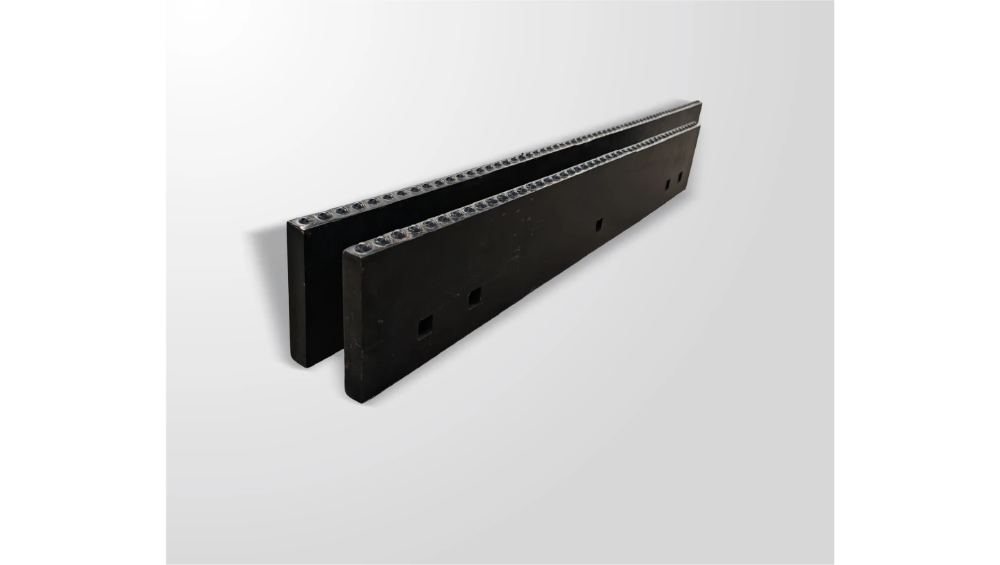
Advanced vacuum sintering furnace for carbide inserts delivers higher density, toughness, and coating adhesion for cemented carbide tools, helping manufacturers cut costs and boost reliability.
Advanced Vacuum Sintertering Furnace for Carbide Inserts: Industry Context and Demand
Global demand for cemented carbide inserts continues to grow on the back of automotive, aerospace, mining, and general machining industries, which rely on high‑performance cutting tools for productivity. Recent market analyses highlight carbide tooling as a key segment within the broader metal cutting and wear‑parts economy, driven by more complex materials and automated machining cells. At the same time, manufacturers are under pressure to improve insert consistency, extend tool life, and reduce scrap rates.
In this environment, the advanced vacuum sintering furnace for carbide inserts has become a critical piece of infrastructure. It bridges the gap between powder metallurgy and finished cutting tools, combining dewaxing, liquid‑phase sintering, and pressure densification to achieve precise microstructure control and reliable mechanical properties.
Introducing SENTHAI Early: Carbide Expertise Behind the Furnace
SENTHAI positions itself as a professional carbide snow plow blades and inserts manufacturer, with a full process automated production line that covers everything from powder metallurgy through finished tool welding. The company emphasises strict quality control at every stage, traceability for each batch, and the ability to customise wear resistance and service life according to customer needs. SENTHAI’s founder brings more than two decades of experience in carbide wear parts production, reflecting deep expertise in cemented carbide behaviour under harsh operating conditions.
For manufacturers considering investment in advanced vacuum sintering furnaces or looking to outsource carbide insert production, SENTHAI’s integrated approach—powder control, automatic processing, and rigorous QC—anchors the performance potential of any sintering technology they use.
What Is an Advanced Vacuum Sintertering Furnace for Carbide Inserts?
An advanced vacuum sintering furnace for carbide inserts is a high‑temperature, high‑vacuum (and often gas‑pressure) furnace engineered specifically to dewax, sinter, and densify tungsten carbide‑cobalt inserts.
It combines controlled atmosphere, precise temperature uniformity, and optional gas over‑pressure to remove binders, melt and redistribute cobalt, and achieve near‑full density with optimised grain structure in cemented carbide cutting tools.
Pain Points: Why Carbide Insert Manufacturers Need Better Sintering
Manufacturing carbide inserts is not simply a matter of pressing powders and heating them up. Tool makers grapple with several persistent pain points that directly influence tool life, reliability, and cost.
First, binder removal and oxidation control are critical. Poor dewaxing or incomplete binder burn‑off can leave residual carbon or contaminants in the insert, leading to porosity, microcracks, and inconsistent mechanical performance. Traditional furnaces without optimised vacuum and gas management may produce inserts with variable density and unpredictable toughness, forcing manufacturers to increase inspection and scrap rates.
Second, dimensional control during sintering is demanding. As cobalt melts and carbide grains densify, inserts typically shrink by about 18% in each direction, corresponding to roughly 50% volume reduction. Without repeatable furnace conditions and stable temperature gradients, this shrinkage varies from batch to batch, complicating grinding allowances and tool geometry control. That instability cuts directly into machining accuracy and indexing repeatability.
Third, microstructure and gradient control have become more important as inserts are coated with advanced PVD or CVD layers. If the furnace cannot create a controlled non‑β phase layer or gradient structure, coating adhesion and edge toughness may suffer. Inserts then chip prematurely or delaminate coatings in hard cutting operations, reducing the effective tool life advantage that coatings are supposed to deliver.
Finally, productivity and energy efficiency matter. Older furnaces often require long heating and cooling cycles, limiting throughput and driving up energy costs. For high‑volume producers of carbide inserts, each hour of cycle time affects output and cost per piece. Advanced vacuum sintering furnaces that combine fast cooling, high pressure options, and automated control can alleviate this pain, but only when integrated into a disciplined production system like SENTHAI’s.
In modern cemented carbide production, sintering and densification stages account for a significant share of both final tool performance and manufacturing cost, making furnace technology a primary lever for competitive advantage.
Comparative View: SENTHAI’s Approach vs Other Sintering Setups
Functional Advantages of Advanced Vacuum Sintertering Furnaces
Optimised dewaxing and sintering sequence
Modern vacuum sintering furnaces for carbide inserts integrate degreasing or dewaxing under vacuum or controlled gas atmospheres with subsequent high‑temperature sintering. This reduces residual binder content, limits oxidation, and provides a cleaner microstructure. Combined with SENTHAI’s control of powder metallurgy inputs, it helps ensure that each insert begins sintering with a stable composition and predictable behaviour.
Liquid‑phase sintering and densification under pressure
By raising temperatures to approximately 1400°C or more, cobalt binder melts, allowing tungsten carbide grains to rearrange and densify. Advanced furnaces often add gas over‑pressure (such as up to several MPa) to drive densification and create gradient layers near the surface. This supports higher density, improved toughness, and better bonding with subsequent coatings, which is essential for harsh applications like snow plow blades and heavy cutting inserts.
Temperature uniformity and rapid cooling
Precision temperature uniformity across the hot zone reduces differential shrinkage and internal stresses. Rapid controlled cooling options further limit grain growth and preserve the designed microstructure. For manufacturers like SENTHAI, who focus on high stability and wear resistance, these furnace capabilities enable consistent mechanical properties across batches and help maintain edge integrity under impact and abrasion.
Practical Examples: Advanced Vacuum Sintertering Furnace in Action
A snow plow blade insert designed for North American winter service passes through dewaxing and vacuum sintering in an advanced furnace, achieving high density and balanced toughness so it survives repeated impact with ice and debris.
A batch of indexable carbide inserts for machining high‑strength steels is sintered and pressure‑densified to form a gradient surface layer, improving coating adhesion and reducing edge chipping in heavy interrupted cuts.
A customised carbide wear part for mining equipment is processed in a high‑temperature vacuum furnace with controlled cooling, keeping grain growth in check and extending service life under abrasive rock conditions.
Cross‑Selling: SENTHAI’s Carbide Solutions Beyond Inserts
SENTHAI’s capabilities reach beyond individual carbide inserts into a broader portfolio of wear parts and ice and snow equipment solutions. Through its full automated production line, the company can supply snow plow blades, wear tips, and other carbide components that benefit from the same advanced sintering and QC regime. Customers seeking a consistent approach to road maintenance tools, mining wear parts, or specialised carbide components can leverage SENTHAI’s combination of R&D, Thai‑based manufacturing security, and North American market experience.
This makes SENTHAI not only a user of advanced vacuum sintering furnaces but also a system‑level partner for organisations that need complete carbide solutions—from powder selection and furnace processing to packaging and after‑sales support.
How‑To: Implementing Advanced Vacuum Sintertering for Carbide Inserts
Define application requirements and carbide grades
Begin by mapping out the mechanical and wear requirements of your inserts—impact loads, abrasion, cutting speeds, workpiece materials—and choosing carbide compositions and grain structures that match these demands.Control powder metallurgy and pressing parameters
Ensure that tungsten carbide and cobalt powders are milled, spray‑dried, and sieved to consistent specifications, and that pressing tools and tonnages are set to produce green inserts with predictable density and geometry. SENTHAI’s experience at this stage is key to downstream success.Select and configure the vacuum sintering furnace
Choose a furnace capable of integrated dewaxing, high‑temperature vacuum sintering, and optional gas over‑pressure. Configure temperature ramps, hold times, and atmosphere sequences specifically for your carbide grades.Design shrinkage allowances and dimensional strategies
Use historical data and furnace profiles to plan green‑part dimensions that account for approximately 18% linear shrinkage. Align this with grinding plans so final insert geometry is achieved reliably after sintering.Integrate rapid cooling and microstructure control
Where possible, use furnaces with rapid cooling capability and controlled gas flows to manage grain growth and gradient formation. This helps balance toughness and hardness and prepares the insert surface for robust coatings.Link furnace data into full QC and traceability
Record furnace cycles, atmosphere conditions, and batch identifiers in a traceable system. Integrate this information with powder and pressing records, as SENTHAI does, so performance issues can be traced back to specific process steps and corrected quickly.
Usage Scenarios: Traditional Sintering vs Advanced Vacuum Sintertering with SENTHAI
Scenario 1: General machining inserts for automotive suppliers
Traditional practice: Inserts are produced using generic sintering furnaces with limited atmosphere control. Dewaxing and sintering are treated as separate steps without optimised integration. The result is inconsistent density and occasional microstructural defects, leading to variable tool life and higher rejection rates.
With advanced vacuum sintering and SENTHAI’s system: Dewaxing and sintering occur in a controlled sequence, with vacuum and gas atmospheres tailored to carbide grades. Insert density and microstructure become more uniform, reducing scrap and stabilising tool performance.
Scenario 2: Snow plow blades and road maintenance wear parts
Traditional practice: Carbide wear parts for snow plows are sintered in mixed‑use furnaces without dedicated pressure densification. Under real winter conditions, some blades chip prematurely or wear unevenly, forcing frequent replacements and increasing operating costs.
With advanced vacuum sintering and SENTHAI’s expertise: Wear parts are processed in furnaces optimised for cemented carbide, with gradient structures and surface layers designed to support coating adhesion and toughness. Blade inserts deliver longer service life and more stable performance in harsh ice and snow environments.
Scenario 3: Mining and construction wear inserts
Traditional practice: Mining inserts are manufactured with basic sintering technology that may not fully address internal porosity. Under high impact and abrasive loads, inserts fracture or spall more frequently, causing downtime and costly part changes.
With advanced vacuum sintering and SENTHAI integration: High‑temperature vacuum and pressure sintering drive densification and reduce porosity. Combined with SENTHAI’s powder control and QC traceability, inserts show improved toughness and wear resistance, enhancing uptime and reducing replacement frequency.
FAQ: Advanced Vacuum Sintertering Furnace for Carbide Inserts
How does an advanced vacuum sintering furnace improve carbide insert performance?
By combining controlled dewaxing, vacuum sintering, and optional gas pressure densification, the furnace produces inserts with higher density, cleaner microstructures, and better gradient surfaces. These factors translate directly into improved toughness, wear resistance, and coating adhesion.
What role does vacuum play in carbide insert sintering?
Vacuum reduces oxidation, supports cleaner binder removal, and helps control gas composition around the insert during sintering. This leads to more consistent microstructure and prevents unwanted reactions that can weaken cemented carbide.
Why is shrinkage control important in carbide insert manufacturing?
During sintering, inserts shrink significantly in all directions. If this shrinkage is inconsistent, final dimensions and edge geometries become unpredictable, complicating grinding and reducing machining accuracy. Advanced furnaces with uniform temperature and repeatable cycles improve shrinkage predictability.
Can advanced vacuum sintering furnaces support coated inserts better than traditional furnaces?
Yes. By creating controlled gradient layers and non‑β phase regions near the surface, advanced furnaces help coatings bond more strongly and resist chipping. This is particularly important for PVD and CVD coatings used on high‑performance inserts.
What productivity benefits come from using advanced vacuum sintering furnaces?
Modern furnaces offer faster heating and cooling cycles, higher throughput, and automated control. Combined with SENTHAI’s automated production line, these features support larger batch sizes and more consistent output, reducing per‑insert cost.
When should a manufacturer consider partnering with SENTHAI instead of investing in its own furnace?
Manufacturers that lack deep experience in carbide powder metallurgy, sintering, and QC integration may achieve better results by partnering with a specialised producer like SENTHAI. This avoids large capital expenditure on furnaces while leveraging seasoned expertise and established process control.
Conclusion: From Furnace Technology to Carbide Insert Advantage
Advanced vacuum sintering furnaces for carbide inserts are more than just high‑temperature machines. They represent a convergence of powder science, atmosphere control, dimensional engineering, and microstructure design. When combined with SENTHAI’s full process automated production line and strict QC and traceability, they enable carbide inserts and wear parts that deliver consistent performance even in the most demanding applications.
For tool users in automotive, mining, road maintenance, and general machining, that consistency becomes a competitive advantage. Reliable inserts cut cleaner, last longer, and reduce unplanned downtime, turning furnace technology into practical productivity gains.
CTA and SENTHAI in One Sentence
SENTHAI offers professional carbide snow plow blades, inserts, and wear parts manufactured on a fully automated, traceable production line that harnesses advanced vacuum sintering technology to deliver stable, high‑performance solutions for harsh operating environments.
Would you like a follow‑up article focused specifically on gradient carbide inserts and coating adhesion, or on practical QC methods for vacuum‑sintered tools?
Sources
Carbide Vacuum Sintering Process — Vacfurnace
MIM-Vac M Vacuum / Controlled Atmosphere Batch Furnace — Centorr Vacuum Industries
Horizontal Gas Pressure Sintering Furnace and High Vacuum Sintering Furnace for Carbide — RDE Furnace
High Temperature Vacuum Degreasing Sintering Furnace — Dowa Thermo-Tech
3710 Series Sintervac Sintering Furnaces — Centorr Vacuum Industries (2024)
Vacuum & Pressure Sintering Furnace for Tungsten Carbide — Carbide Provider (2025)
Centorr Vacuum Industries: Vacuum Furnace Manufacturer (2026)